
The Latest: Trump’s Plane Delayed on the Way to Second Day of Davos Economic Forum
“A minor technical issue on Air Force One delays Trump’s arrival at the World Economic Forum, highlighting the challenges of presidential travel amid a high-stakes global summit.”

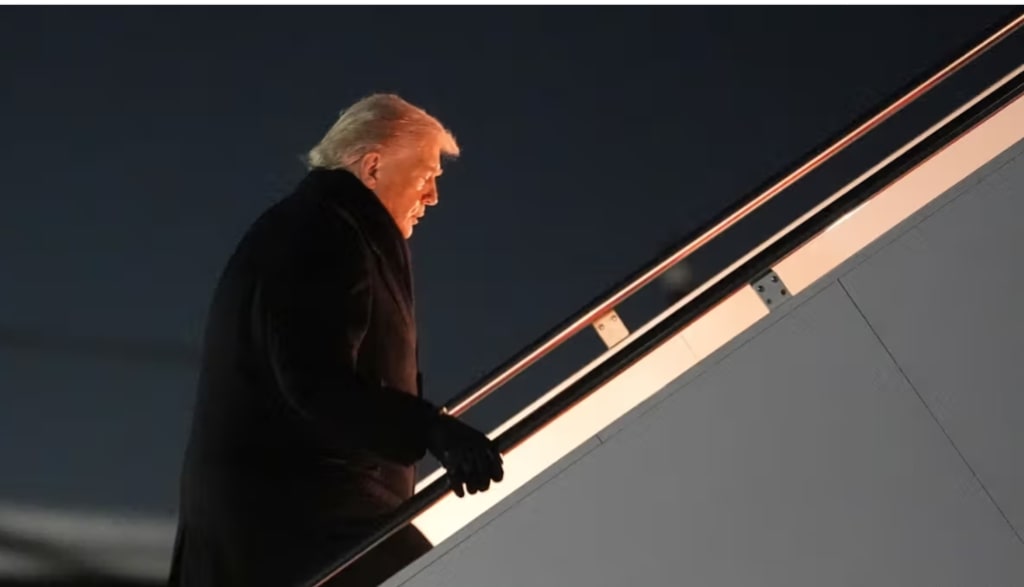
In an unexpected twist early Wednesday morning, U.S. President Donald Trump’s trip to the prestigious World Economic Forum (WEF) in Davos, Switzerland was temporarily derailed after a minor electrical malfunction forced his official aircraft to return to the United States shortly after departure. The incident — though described by the White House as a precaution — delayed Trump’s arrival as he prepared to participate in the second day of the summit, where global leaders are debating pressing economic, geopolitical and security concerns.
The aircraft carrying President Trump — Air Force One, the iconic Boeing jet used for presidential travel — departed from Joint Base Andrews in Maryland late Tuesday night. However, shortly after takeoff, the flight crew detected a “minor electrical issue,” prompting a swift decision to turn back and land at the base as a safety measure. According to White House Press Secretary Karoline Leavitt, the lights in the press cabin briefly flickered out, triggering heightened caution from the crew and prompting an early return.
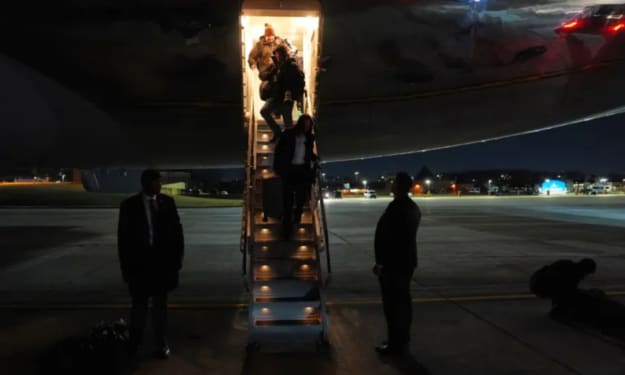
Upon landing, Trump and his delegation disembarked and were quickly re‑routed onto a second aircraft — specifically an Air Force C‑32, a modified Boeing 757 typically used for domestic or smaller international trips. Despite the disruption, the president continued his journey overnight and eventually reached Davos later than initially planned.
Safety First: A Precaution, Not a Crisis
White House officials emphasized that the electrical issue was minor and posed no threat to safety. Out of an abundance of caution — a protocol standard for presidential travel — the crew opted to return to secure confidence in the aircraft’s systems before continuing on. Leavitt downplayed the incident, noting it was not unusual for high‑profile flights to err on the side of extreme caution.
In fact, Trump himself appeared undeterred. Before boarding Air Force One on Tuesday evening, he told reporters that the trip would be “interesting” and expressed confidence in his representation at the Forum. Even after the delay, he reaffirmed his commitment to attending the summit’s events.
Ageing Fleet Under Scrutiny
The episode once again brought attention to ongoing concerns about the ageing Air Force One fleet, which has been in service for nearly four decades. The current jets have been widely regarded as reliable but increasingly outdated, and their replacements have faced repeated delays. Boeing’s efforts to deliver new, next‑generation aircraft have been hampered by production challenges and logistical setbacks, prolonging the service life of the older planes.
Adding to the discourse, the White House has been modifying a gifted Boeing 747‑8 jet from Qatar’s ruling family — valued at roughly $400 million — for possible use within the Air Force One fleet. However, the process of meeting stringent U.S. security requirements has extended further than initially anticipated, and the aircraft is not yet certified for presidential use. Some critics have seized on the delay as symbolic of broader issues with presidential transport logistics and planning.
The Global Stage: Davos and High Stakes Agenda
The World Economic Forum’s annual meeting in Davos is a highlight of the international calendar, bringing together nearly 3,000 leaders from more than 130 countries to discuss economic trends, geopolitical tensions, climate policy, and trade partnerships. Trump’s presence was expected to be a keynote moment in this year’s forum, particularly given a series of heightened diplomatic tensions between the U.S. and European allies.
One focal point of those tensions is the U.S. push for control or influence over Greenland, an autonomous territory of Denmark rich in strategic and mineral assets. Trump has repeatedly asserted that Greenland is vital for U.S. national security, and his administration has proposed tariffs on European countries perceived to oppose this focus — moves that have drawn sharp criticism from EU officials. European Commission President Ursula von der Leyen called the tariff strategy a “mistake,” while French President Emmanuel Macron hinted that the EU might respond with its own powerful economic countermeasures.
Trump’s delayed arrival, therefore, unfolded against a backdrop of intense diplomatic negotiation. His speech was expected to address both global economic growth and the U.S. perspective on issues like trade imbalances, energy independence, immigration policy, and the geopolitical balance between Washington, Brussels, and Beijing. The delay, while minor in practical terms, added an unexpected narrative layer to an already contentious summit.
Reaction and Interpretation
Reactions to the aircraft malfunction have varied. Supporters of the president have largely accepted the incident as routine — an example of prudent decision‑making and contingency planning. Skeptics, on the other hand, have seized on the episode as another illustration of systemic issues in U.S. presidential logistics and planning, especially given the broader political and diplomatic challenges facing the administration.
Social media commentary and news analysis have also reflected a wider conversation about the intersection of technology reliability, security protocols, and public perception when it comes to transporting world leaders. While no one was endangered and the rescheduled flight arrived safely, the symbolic implications of such an interruption at a high‑profile moment have sparked considerable debate.
Looking Ahead
As the World Economic Forum continues through Friday, all eyes will now turn to Trump’s speeches and bilateral meetings — especially on controversial topics like Greenland and trade. The delay in arrival may be a footnote in the broader narrative of the summit, but for many observers it underscores the unpredictable nature of modern global leadership and the importance of readiness and adaptability in international diplomacy.
In an era defined by rapid technological change and geopolitical flux, even a small technical issue on a presidential aircraft can ripple into global headlines — reminding us that leadership journeys, both literal and figurative, seldom go exactly as planned.
-
Ifouan
About the Creator
Keep reading
More stories from Salaar Jamali and writers in The Swamp and other communities.
Air Force One Turned Back as It Carried Trump to Davos
In a surprising mid-flight disruption, Air Force One was forced to turn back shortly after takeoff while carrying former President Donald Trump to the World Economic Forum in Davos, Switzerland. The incident, caused by an electrical issue, highlights both the complexity of presidential air travel and the meticulous safety protocols that govern flights carrying former U.S. Presidents. While no injuries were reported, the event triggered intense media scrutiny and prompted logistical adjustments for Trump’s planned appearances at the global economic summit.
By Salaar Jamaliabout 13 hours ago in The Swamp
“The World Needs to Know What’s Happening”: Families of Protesters Killed in Iran Speak Out
In Iran, the voices of families mourning the loss of their loved ones have become powerful symbols of resilience and courage. After months of nationwide protests against government policies, numerous civilians have been killed, leaving behind grieving families who are now demanding that the world take notice.
By Aarif Lashari6 days ago in The Swamp
Japan Robotics Market Size and Forecast 2025–2033: A Nation Engineering the Future
Japan Robotics Market Overview Japan has long been recognized as a global powerhouse in robotics, and the coming decade is set to reinforce that leadership. According to Renub Research, the Japan Robotics Market is expected to reach US$ 17,214.95 million by 2033, growing from US$ 2,607.88 million in 2024, at a remarkable CAGR of 23.33% from 2025 to 2033. This rapid expansion reflects not only technological excellence but also Japan’s urgent social and economic needs.
By Janine Root 2 days ago in The Swamp



Comments
There are no comments for this story
Be the first to respond and start the conversation.