
The Cyprus Problem — A Wound That Refuses to Heal.
Is This the Year That Everything—or Nothing—Changes?

Cyprus has been divided for over half a century. Most people in the world either don’t know, or don’t care. But for those of us who live here, it’s a daily reminder that history doesn’t always move forward. Sometimes, it just…stalls
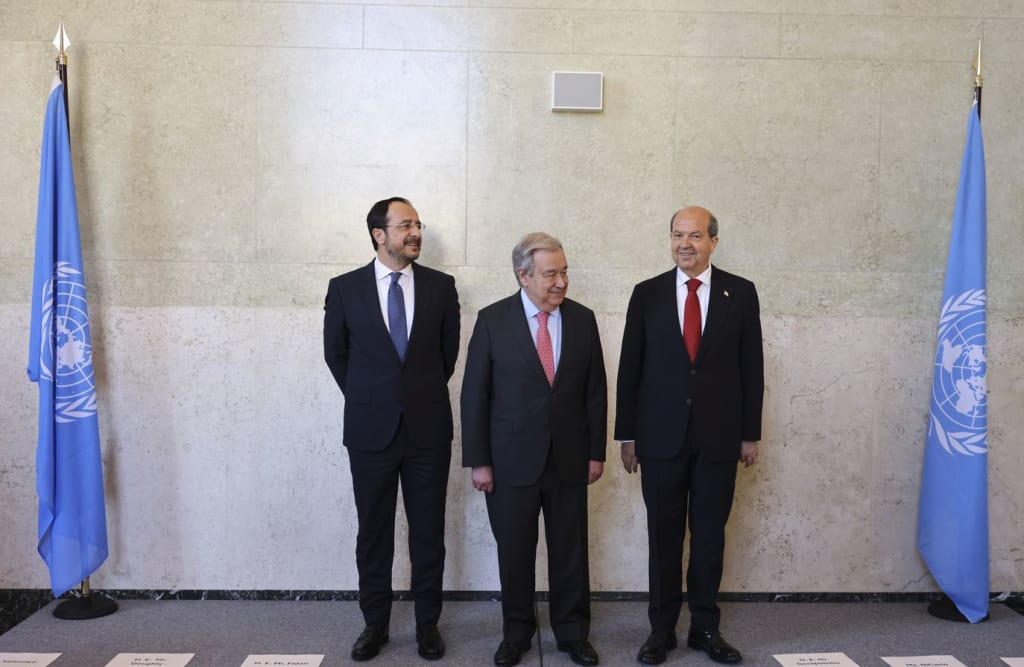
Two weeks removed from the enlarged talks on the Cyprus Problem in Geneva, skepticism remains over whether any real progress was made. Despite the fact that UN Secretary-General announced that a total of four new crossing points will open between Cyprus’ two sides, with talks resuming again in July, critics on both sides argue that the meeting was more symbolic than substantive.
For a more realistic perspective, we only need to look back two months, where negotiators from either side couldn't come to a simple agreement on the opening of crossing points in the eastern Nicosia suburb of Mia Milia and in the village of Louroujina. Instead of sensible diplomacy and negotiations, the talks devolved into an embarrassing blame game. Who is at fault is beside the point, the real issue is that both leaderships went back from these talks and immediately briefed the press, with each blaming the other for the crossing points not opening. Not a good look. Still, despite this setback, there was cautious optimism leading up to the Geneva talks on March 17th. These hopes were further reinvigorated by the news that the European Union would also be sending an envoy to the talks.
Shifting Geopolitics: EU’s Renewed Interest in Cyprus.
It's clear to see why the EU is eager to be involved. Since the election of President Trump in the USA, the geopolitical landscape has shifted dramatically, especially in regards to the ongoing war in Ukraine. The new administration has embraced an isolationist stance, and with an increasing demand on the other NATO members to increase their share of defense spending, matching the percentage the US has committed for years. With Washington no longer seen as a reliable ally, especially following the antics in the White House with President Zelenskyy, the EU no longer wants to rely on NATO purely for security. As such they have begun to move closer to Turkey and the UK, with the aim establishing future security guarantees for the war torn nation. This sentiment isn’t just shared by Brussels, President Erdogan has also expressed a commitment, that as a prospective EU candidate, Turkey would be ready to help solve all of the EU's security problems.
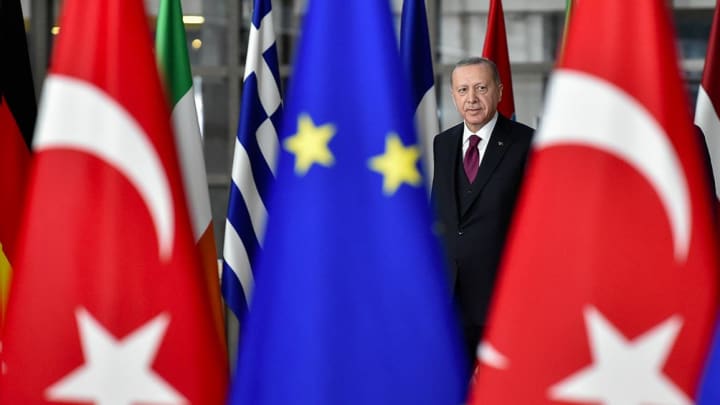
We are all aware that Turkey's EU membership is out of the question at this point in time; the situation is just far too complex. However, following a telephone call between the President of the European Council, António Costa, and President Erdogan, it is very clear that the EU is ready to strengthen ties with Turkey and ensure lasting peace in Ukraine, Syria, and Cyprus too. This sentiment was echoed by Commission President Ursula von der Leyen during her address to the European Parliament in Strasbourg, where she stated that “if Turkey is willing to engage with the EU, to respect international law and fundamental rights, we should be ready to respond positively.” This shift in tone signaled a constructive opening, especially in the context of the Cyprus Problem. For the first time in years, both Brussels and Ankara appeared aligned, at least rhetorically speaking anyway, on the importance of diplomacy and dialogue. These developments injected a renewed sense of optimism into the atmosphere surrounding the Cyprus issue, creating momentum that carried into the Geneva talks that followed. For many, it marked a rare moment of cautious hope that long-stalled negotiations might finally move forward.
Inside the Geneva Talks: Expectations vs. Reality.
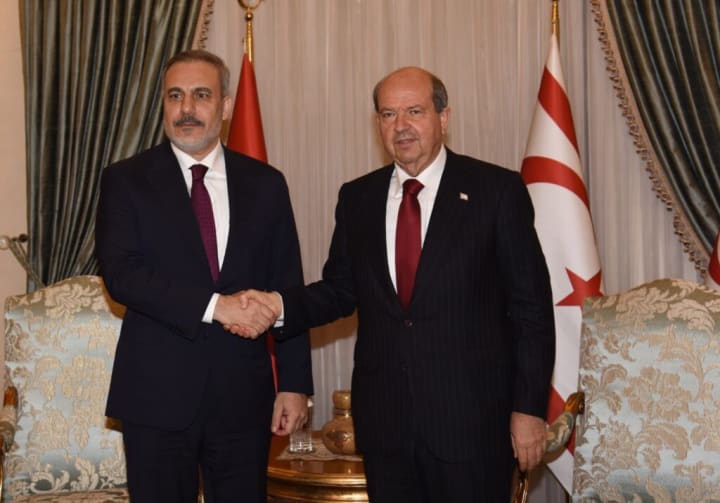
As such, the day of the Geneva Talks came, and from the get-go it was clear that TRNC President Ersin Tatar and Turkey’s Foreign Minister Hakan Fidan came into the talks with different objectives. Tatar was not happy with the EU’s involvement—even in a purely supervisory role—and saw them as a direct obstacle to his aims. That became even clearer in the days that followed, when he openly criticised the EU to the press, doubling down on his position and framing them as fundamentally biased against Turkish Cypriots and against his vision for a two-state solution.
The talks began, but Day 1 was little more than theatrical posturing. A six-party dinner took place, the actual “talks” were brief and vague, and they wrapped up just a few hours later with no statements to the press, no substance, and definitely no breakthroughs. The whole thing felt more like a diplomatic charade than a genuine negotiation. Behind the scenes, frustration was already brewing, especially on the Turkish Cypriot side. Prominent lawyer Mine Atlı, after being briefed, didn’t hold back, calling it “the most pointless, least productive summit of all time.” And honestly, it’s hard to disagree. She accused the Turkish Cypriot leader of showing a severe lack of leadership at the talks and allowing Fidan to do his own check boxing activities instead of focusing on the main reason of the talks themselves.
But here’s the thing, it wasn’t just theatrics. Sure, Day 1 was a bit of a circus, and nobody walked out with a sense of achievement that transcends anything we have already seen. But a few gears moved. Nothing major, but enough to keep the machine from running its course entirely. And maybe, just maybe, that’s all we can ask for right now? There’s a deep-rooted obsession in our political culture with claiming to “know better,” especially when it comes to Cyprus talks. Facts matter less than the performance of certainty. One of those gears was the letter sent by European Council President Antonio Costa and European Commission President Ursula von der Leyen to UN Secretary-General António Guterres, following multiple phone calls with Christodoulides and everyone else mentioned prior. The significance of this letter, is that it establishes a commitment by both the EU and the UN to not put the issue on the shelf, and to keep it up very much at the forefront.
This came despite the fact, Turkey and the TRNC blocked EU direct participation in the summit, so the letter is all we can get at the moment. With Mavroyiannis strongly hinting that María Ángela Holguín Cuéllar—the one figure in recent memory who seemed to gain genuine traction in this mess, may be reappointed to her role, and with the EU signaling stronger participation in the matter, the matter really rests with the Turkish Cypriots despite Tatar and Turkey's positions.
Looking Ahead: Is There Hope for Resolution?
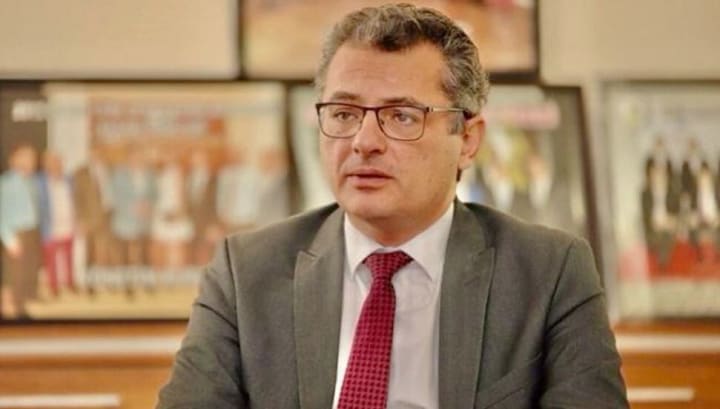
This brings us back to why Tatar is so strongly opposed to EU and UN involvement. Tatar is under real pressure. He knows it, and so does Ankara. His standing isn’t as solid as it once appeared. There’s growing discontent, even from within. And the prospect of a leader like Tufan Erhürman, someone who supports a federal model and is willing to challenge Turkey’s line, is becoming more than just a theoretical possibility as the October elections come closer.
It cannot be stressed enough how important the October elections in the TRNC are. Tatar’s policy has dragged diplomatic talks back 30 years. His push for a two-state solution marked a major departure from his predecessor Mustafa Akıncı’s approach, one that, if certain sources are to be believed, had already resolved 95% of the solution, with only a few loose ends left to tie up. Now, under Tatar, the past few years have been full of unnecessary conflict and rejection, all where diplomacy once had momentum.
That’s why Tatar is fighting so hard to keep both the EU and the UN at arm’s length. The last thing he needs, especially when he feels threatened, is any sort of international presence that might validate criticism of his leadership or even worse for him, there are supervisors present to ensure the election goes smoothly and proper. If the elections are seen as legitimate and he loses, that’s a blow not just to him but to the whole two-state narrative Ankara’s been working to cement so very unsuccessfully. So the pushback against external oversight isn’t just paranoia, it’s a strategy. The ground beneath him is really starting to shake.
So, is this the year that everything changes, or nothing at all?
If Holguín Cuéllar is reappointed and the EU then goes as far as integrating the Cyprus issue into its broader security plans, we could be finally seeing some movement. But let's not kid ourselves. There are two major roadblocks: the Tatar's two-state initiative and the refusal to even let the EU in the room. Geneva showed us that the talks are still stuck in a loop of theatrics; they are not getting anywhere until real change happens on the Turkish Cypriot side. Wild card? The elections in October. If Tatar loses, and if the opposition actually steps up, things could shift fast.
So will it change at all? Maybe. Or maybe we'll look back and say we missed our chance. Either way, this year's a turning point; what happens next depends on who decides to act.
About the Creator
Marios Loizides
I'm a law graduate deeply interested in global affairs, justice, and diplomacy. From youth politics to European advocacy, I write to explore the complex issues that shape our world — especially those that hit close to home.
Keep reading
More stories from Marios Loizides and writers in The Swamp and other communities.
Between Bombs, Bluster and Broken Treaties
For over 30 years, Israeli Prime Minister Benjamin Netanyahu has warned the world that Iran is “months away” from building a nuclear bomb. On 13 June 2025, with his Arab neighbours destabilised, the moment he had been waiting for became reality when Israel began military action on key Iranian nuclear and military sites. What transpired after, brought the region and the rest of the world, one step closer to the point of no return.
By Marios Loizides6 months ago in The Swamp
Service Door of Crans-Montana Bar Where 40 Died in Fire Was Locked From Inside, Owner Says
A devastating fire at a bar in the Swiss resort town of Crans-Montana that claimed the lives of 40 people has taken a troubling turn, after the bar’s owner said a key service door was locked from the inside during the blaze. The revelation has intensified scrutiny of safety procedures, emergency exits, and possible negligence, as investigators work to determine how one of Switzerland’s deadliest nightlife fires in decades unfolded so catastrophically.
By Aarif Lashari7 days ago in The Swamp



Comments
There are no comments for this story
Be the first to respond and start the conversation.