
Between Bombs, Bluster and Broken Treaties
A history of broken promises and deception.

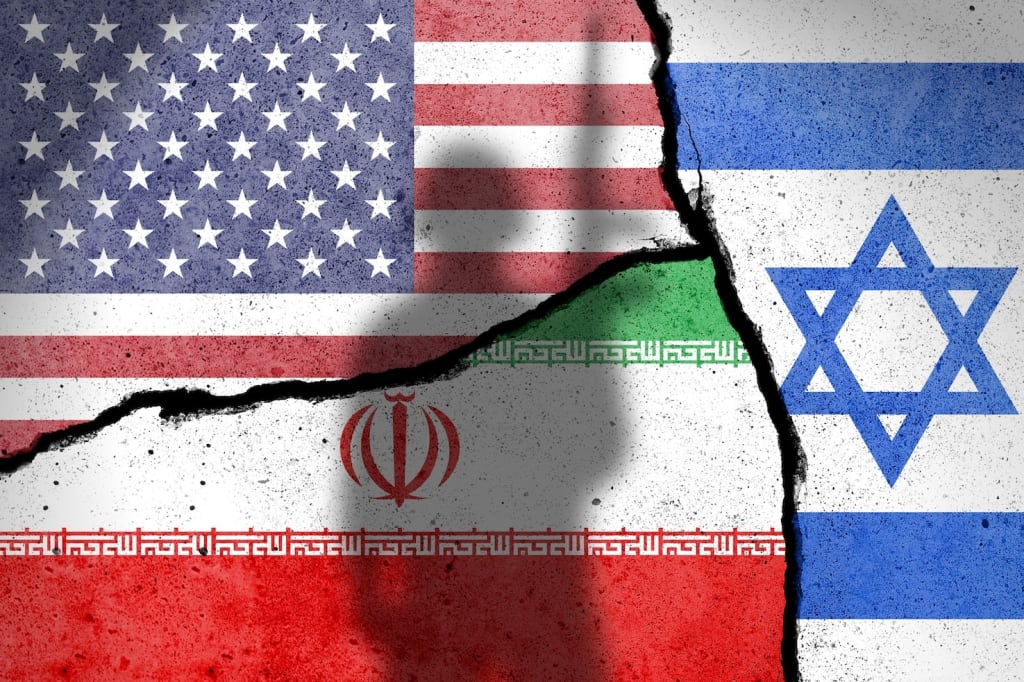
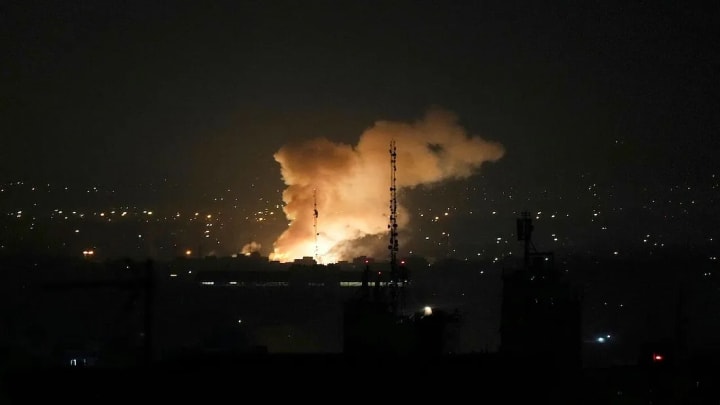
For over 30 years, Israeli Prime Minister Benjamin Netanyahu has warned the world that Iran is “months away” from building a nuclear bomb. On 13 June 2025, with his Arab neighbours destabilised, the moment he had been waiting for became reality when Israel began military action on key Iranian nuclear and military sites. What transpired after, brought the region and the rest of the world, one step closer to the point of no return.
But as bombs fall and rhetoric spikes, several questions must be asked. Israel, the only real nuclear power in the Middle East, has never signed the Non-Proliferation Treaty (NPT), nor allowed international inspections, and nor has been sanctioned. Iran, brutal and flawed in its own right, has done all three.
There is nothing patriotic about owning a weapon that can vapourise cities and destroy generations at a click of a button. States on the right side of Western interests remain unchecked, and uninterrupted, thus exposing the nuclear double standard.
Israel’s Nuclear Secret and the Western Shield
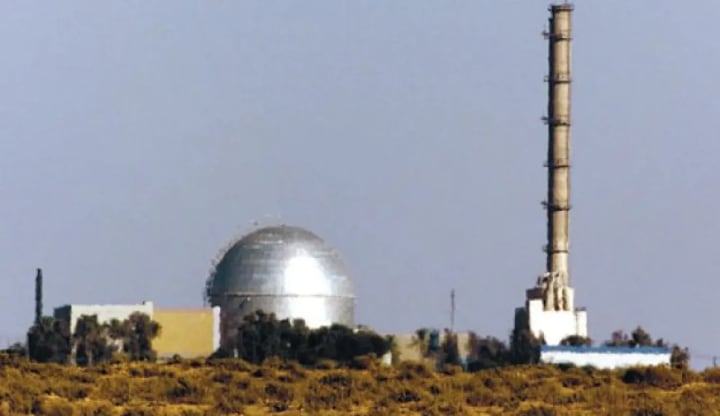
Israel’s nuclear programme began in 1958 at the Dimona Nuclear Facility in the Negev Desert. When US intelligence first caught wind of this in the early 1960s, Israel repeatedly lied and refused inspectors claiming it was just a textile factory. Nevertheless, once the heavy-water reactor went critical in the late 1960s, they started amassing nuclear weapons. In 1968, when the NPT was established to stop the spread of such weapons, Israel refused to sign it and still to this day maintains a policy of “nuclear ambiguity.”
According to the latest studies by the Stockholm International Peace Research Institute, Israel is believed to possess up to 90 nuclear warheads. Yet, Israel’s nuclear arsenal has escaped international consequences.
Western governments have silently safeguarded Israel’s lack of transparency for decades. For instance, when journalist Helen Thomas questioned President Obama in 2009 about whether any Middle Eastern nation possessed nuclear weapons, he “did not wish to speculate.” This "don’t ask don’t tell" approach has influenced both Israeli and Western foreign policies. The UN Security Council has never imposed sanctions on Israel or called for inspections, partly because of frequent vetoes. Meanwhile in 2006, Iran was referred to the Security Council and encountered several rounds of sanctions, despite United States intelligence assessments that have consistently determined Iran ceased weaponisation efforts as early as 2003.
Iran: From US Ally to Global Pariah
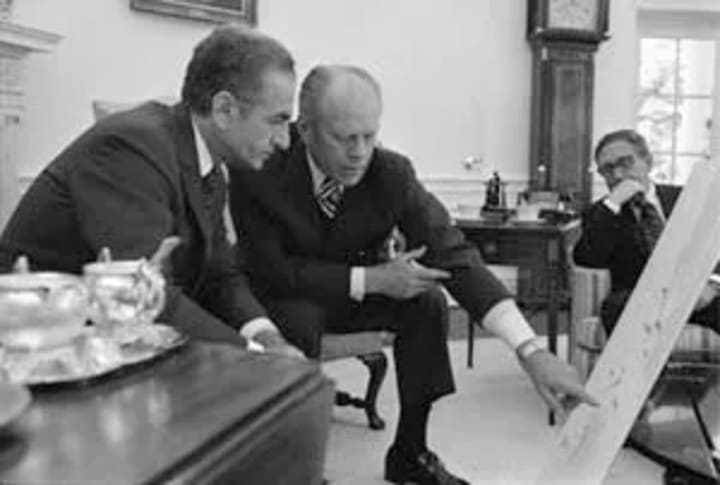
When it comes to Iran, its nuclear journey began with the same intentions of most who pursued enrichment. Yet Iran, a state often labeled a rogue actor, has done what Israel never has, in 1970 it signed the NPT. In fact under the Shah and when Iran was a close ally to Washington, it was the US itself who provided the Iranians with their first reactor. Since then, Iran has allowed IAEA inspections for decades, often reluctantly but still consistently. However, after the 1979 Islamic Revolution in Iran and the fall of the Shah, Iran's nuclear mission became a global obsession.
This obsession only grew, particularly for Benjamin Netanyahu, for whom history shows that he has stuck to the very same narrative since 1992. In fact it has become almost like a political ritual for him. It started with him claiming in the Knesset that Iran was "three to five years" away and published a book in 1995, using the same claim. By 2002, in an address to Congress he claimed both Iraq and Iran were on the verge of weapons of mass destruction, a claim that has since been proven wrong.
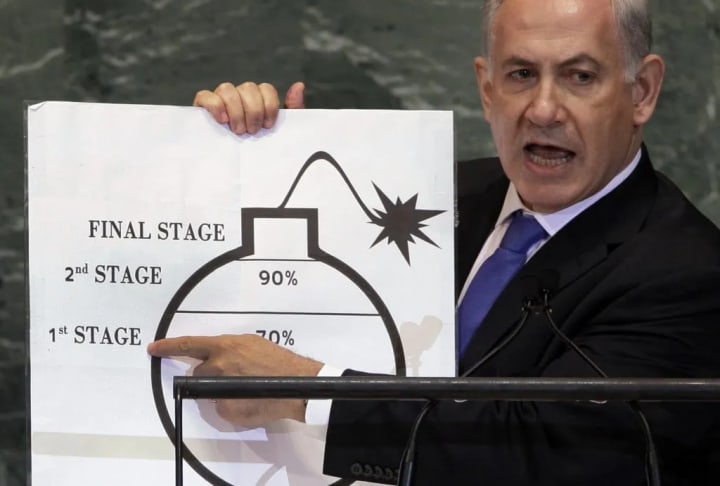
Then in a 2012 speech at the United Nations, he held up a cartoon bomb warning the world that Iran was “months, maybe weeks” away from the threshold. In 2015, he told Congress that lifting sanctions under the JCPOA would allow Iran to “build many, many nuclear bombs.” And in 2025, after launching strikes on Iranian facilities, Netanyahu recycled the same tired claim: Iran could produce a weapon “in months, even weeks".
Yet the bomb never came.
In fact, if Netanyahu were to be believed, we would already be in our 30th Armageddon by now. The theatrics and warnings remain, but the IAEA and the US intelligence community have continued to say the same thing. No imminent breakout. No conclusive evidence of any weapon. The consistency of Netanyahu’s message is matched only by its failure to materialise. But truthfully, accuracy has never been the point.
Fear Always Sells
Fear has always been the point. Fear sells his idea to the Western political world. Fear provides political cover. Fear legitimises massive military action. By drumming up fear, Israel can claim the moral licence to act in order to prevent a "nuclear fallout.”
What drives this obsession with Iran though? Many regimes, including those who directly oppose Israel and Western interests already possess nuclear weapons, so why the worry about Iran which if everything is to believed are not even close to one?
For Iran, the pursuit of enrichment has never been about regional influence, energy, or power. It has always been about survival. Hostile regimes like Russia, North Korea, or an increasingly assertive Turkey and even Israel in this situation all have two things in common. They all possess nuclear weapons and they do not get regime-changed. That is the brutal truth of this. Once you have the bomb, no one dares bomb you. Both the West and Tehran understand this unspoken rule perfectly. It’s why North Korea still stands, why no one challenges Russia directly and why even Turkey’s rhetoric is treated more delicately. It establishes a sovereignty that the West and Israel can’t allow Tehran to have.
Fear Always Sells
Fear has always been the point. Fear sells his idea to the Western political world. Fear provides political cover. Fear legitimises massive military action. By drumming up fear, Israel can claim the moral licence to act in order to prevent a "nuclear fallout.”
What drives this obsession with Iran though? Many regimes, including those who directly oppose Israel and Western interests already possess nuclear weapons, so why the worry about Iran which if everything is to believed are not even close to one?
For Iran, the pursuit of enrichment has never been about regional influence, energy, or power. It has always been about survival. Hostile regimes like Russia, North Korea, or an increasingly assertive Turkey and even Israel in this situation all have two things in common. They all possess nuclear weapons and they do not get regime-changed. That is the brutal truth of this. Once you have the bomb, no one dares bomb you. Both the West and Tehran understand this unspoken rule perfectly. It’s why North Korea still stands, why no one challenges Russia directly and why even Turkey’s rhetoric is treated more delicately. It establishes a sovereignty that the West and Israel can’t allow Tehran to have.
Fear Always Sells
Fear has always been the point. Fear sells his idea to the Western political world. Fear provides political cover. Fear legitimises massive military action. By drumming up fear, Israel can claim the moral licence to act in order to prevent a "nuclear fallout.”
What drives this obsession with Iran though? Many regimes, including those who directly oppose Israel and Western interests already possess nuclear weapons, so why the worry about Iran which if everything is to believed are not even close to one?
For Iran, the pursuit of enrichment has never been about regional influence, energy, or power. It has always been about survival. Hostile regimes like Russia, North Korea, or an increasingly assertive Turkey and even Israel in this situation all have two things in common. They all possess nuclear weapons and they do not get regime-changed. That is the brutal truth of this. Once you have the bomb, no one dares bomb you. Both the West and Tehran understand this unspoken rule perfectly. It’s why North Korea still stands, why no one challenges Russia directly and why even Turkey’s rhetoric is treated more delicately. It establishes a sovereignty that the West and Israel can’t allow Tehran to have.
So what is this really about? Power. Deterrence. Hypocrisy. Because if the world were truly committed to non-proliferation, we would start by disarming everyone. Alternatively, if we were serious about stopping the further spread of nuclear weapons specifically in those that possess nuclear capacity, we’d start by applying the same rules to everyone. Instead we are left with a system that even when you play it by the book, and even when you don’t really want to, you still get punished. The clearest example? The JCPOA.
The JCPOA: Diplomacy Dismantled
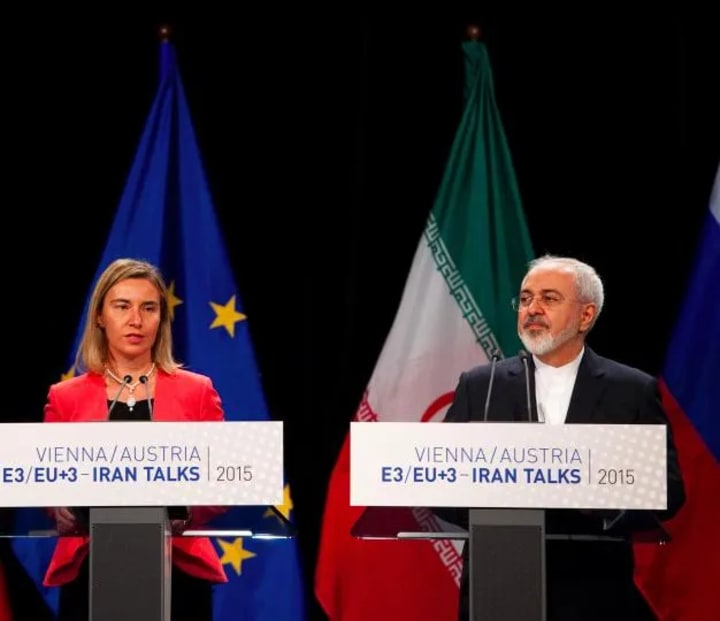
The 2015 nuclear agreement was not flawless, but it was effective. Iran limited uranium enrichment to 3.67%, reduced its stockpile by 98%, dismantled centrifuges, and permitted the most thorough inspection regime ever established at its sites. In exchange, it received relief from sanctions. The agreement was based on validation, not reliance. For three consecutive years, the IAEA confirmed complete adherence. There wasn't any bomb. No explosion. No emergency.
In 2018, Donald Trump dismantled everything.
He unilaterally withdrew from the agreement, disregarding the warnings of US allies and the conclusions of his own intelligence agencies. Sanctions were reinstated. Iran was cornered. Hardliners in Tehran, who had cautioned that the West was untrustworthy, were vindicated. Predictably, enrichment increased. Faith disintegrated. The opportunity for diplomacy abruptly closed.
However, let us tackle the obvious issue: Iran has not got completely clean hands. It has consistently backed and armed groups such as Hezbollah and the Houthis, who have each caused undeniable suffering for civilians, and its regime remains profoundly authoritarian. Human rights, particularly for women, have been suppressed, and such matters cannot be overlooked or justified.
In June 2025, the IAEA determined that Iran was in “violation of its nonproliferation commitments” because of lingering queries regarding undisclosed nuclear material, but refrained from affirming weaponisation. Director-General Rafael Grossi cautioned against military actions, stressing that diplomacy and moderation are the sole lasting approach for achieving peace in the area. However, what unfolded over the last 12 days shows that international law is dead.
Yet again, the double standard rears its head. When Tehran provides weapons to proxies or violates non-proliferation commitments, it is referred to as state- sponsored terrorism. When Israel finances unlawful settlements, manages military bases in occupied lands, strictly adheres to a policy of nuclear uncertainty, or bombards Gaza, it’s portrayed as self-defence. One is judged harshly. The alternative is validated or silently overlooked. Both actions create instability. Both take civilian lives. Both warrant scrutiny. Both are unworthy of exemption.
The Rule of Law, Ruled Out
And so here we are. Missiles flying. Diplomacy buried. And amidst the rubble, international law lies next to it. As a true believer in the rule of law as a real proper foundation of global order, this moment rings alarm bells for me. In fact, it is more than just alarming. It is outright damning. The UN Charter states that the use of force is confined by the principles of necessity and proportionality. The Geneva Conventions dictate that nuclear facilities should be safeguarded due to their ability to inflict extensive civilian damage. Nevertheless, Israeli and American attacks on Iran's nuclear facilities have not been regarded as breaches, but as inevitable outcomes.
This is dangerous, the principles of which our society has been held for decades are slowly crumbling, and there is really nothing and nobody that can halt it in its tracks, other than proponents themselves. The IAEA’s authority is side-stepped, the NPT applied selectively, and Security Council mechanisms reduced to stage props leave the world with no enforcement, no accountability and with no calls for international law to be upheld. If international law is unable to shield the world from its most fundamental weapon, then what remains of its promise?
If treaties can be disregarded, inspections circumvented, and accountability dismissed depending on who possesses the weapon and who is in favour with the West, then the international order we assert to maintain is an empty show.
This is no longer about Iran or Israel. It is, above all, about a reality in which power surpasses ethics, where fear negates truth, and where regulations are enforced only on those too vulnerable to break them.
So ask yourself: if international law cannot stop a war, cannot stop a bomb, and cannot stop a lie, then what purpose does it serve at all?
About the Creator
Marios Loizides
I'm a law graduate deeply interested in global affairs, justice, and diplomacy. From youth politics to European advocacy, I write to explore the complex issues that shape our world — especially those that hit close to home.
Keep reading
More stories from Marios Loizides and writers in The Swamp and other communities.
The Cyprus Problem — A Wound That Refuses to Heal.
Cyprus has been divided for over half a century. Most people in the world either don’t know, or don’t care. But for those of us who live here, it’s a daily reminder that history doesn’t always move forward. Sometimes, it just…stalls
By Marios Loizides9 months ago in The Swamp
‘Miracle Baby’ Born in a Tree Above Mozambique Floodwaters Dies Aged 25
In 1998, a harrowing flood swept through Mozambique, leaving devastation in its wake. Among the stories of survival, one captured global attention: a baby born in the branches of a tree, rescued from rising waters, and hailed as a “miracle baby.” Today, the world mourns as this remarkable individual, who defied the odds from the very beginning, has died at the age of 25. The story of this “miracle baby” was a symbol of resilience and hope during a time of immense tragedy, and its passing reminds the world of both the fragility and strength of human life. The 1998 Mozambique Floods Mozambique, a southeastern African nation prone to seasonal flooding, experienced one of its deadliest natural disasters in 1998. Torrential rains caused rivers to overflow, destroying homes, displacing thousands, and claiming countless lives. Amid the chaos, families scrambled to find safety, often climbing trees or makeshift platforms to escape the rising waters. It was during this desperate struggle that the “miracle baby” was born, suspended above the floodwaters in a tree. The infant’s survival was nothing short of extraordinary, and the story quickly spread worldwide, capturing the attention of humanitarian organizations and media outlets alike. A Birth Against All Odds According to accounts from local witnesses, the mother had no access to medical care and found herself clinging to a tree as floodwaters engulfed the village. In the midst of life-threatening conditions, she gave birth to a baby who would come to symbolize hope for a nation reeling from disaster. Doctors later described the baby’s survival as a rare and remarkable event. Despite being born in an extremely precarious situation, the child thrived, demonstrating an early resilience that would define their life. International media dubbed the newborn the “miracle baby,” and the story became a symbol of human endurance amid natural catastrophe. Growing Up Under a Global Spotlight The child grew up in Mozambique, in a country still recovering from both natural disasters and the long-lasting effects of civil conflict. Despite the challenges, they led a life marked by perseverance and community support. Throughout childhood, the “miracle baby” remained a figure of inspiration for locals and people around the world. Stories of their survival were shared in classrooms, humanitarian campaigns, and media features, reinforcing the importance of hope and determination even in the face of overwhelming adversity. A Life of Inspiration Those who knew the young adult described them as resilient, compassionate, and committed to helping others. They frequently participated in local community initiatives and became an advocate for disaster preparedness, speaking to young people about the importance of resilience in the face of adversity. The “miracle baby” became a living testament to human survival, symbolizing the enduring spirit of Mozambique and the ability to overcome unimaginable odds. Their life was intertwined with the collective memory of a nation that had experienced loss and devastation but found hope in extraordinary stories like theirs. Passing at 25 Tragically, the “miracle baby” passed away at the age of 25. While the cause of death has not been widely publicized, local sources confirm that the community and those who followed their story worldwide are mourning this loss deeply. News of the passing has sparked an outpouring of condolences, tributes, and reflections on the journey of a life that began in such extraordinary circumstances. Social media users, humanitarian groups, and journalists have shared memories and expressed admiration for a life that became emblematic of survival and hope. Reflections on a Life Lived The story of this “miracle baby” serves as a reminder of the unpredictable nature of life and the power of resilience. Being born in the middle of a catastrophic flood and surviving against overwhelming odds is a narrative few can comprehend. Yet, this individual not only survived but contributed to their community, inspiring countless others along the way. Their story also sheds light on the broader context of Mozambique’s challenges, including climate-related disasters, poverty, and the ongoing efforts to strengthen disaster preparedness and community resilience. Legacy of Hope Though the “miracle baby” has passed, their legacy lives on. Humanitarian organizations and local communities often cite their story as motivation to continue building programs that protect vulnerable populations during floods and other natural disasters. Educational campaigns now frequently reference this narrative to illustrate the importance of resilience, courage, and community solidarity. For many, the story serves as a reminder that even in the darkest moments, hope and determination can shine through. Conclusion: Remembering a Symbol of Survival The death of Mozambique’s “miracle baby” at 25 is a moment of reflection for a nation and the world. From being born in a tree above raging floodwaters to inspiring generations, this life symbolized human endurance, courage, and hope. While their time was tragically short, the story continues to resonate, reminding humanity of the extraordinary strength that can emerge in the face of adversity. As communities remember this remarkable individual, their journey from a tree in a flooded landscape to a young adult impacting lives will forever remain a testament to resilience and the enduring power of hope.
By Aarif Lashari4 days ago in The Swamp
Miss Persephone's Manual to a Seemingly Ordinary Life
Miss Persephone was found at the dining table, her blue eyes swollen, her tears arriving and retreating like the tides of the ocean. Earlier that day, her family had visited her in the retirement home where she had lived for eight years. It was her eightieth birthday.
By Imola Tóth2 days ago in Fiction




Comments
There are no comments for this story
Be the first to respond and start the conversation.