
The Curious Case of Kilmar Abrego Garcia: A Satirical Tale of Bureaucratic Ballet
Kilmar Abrego Garcia was protected by a court order, deported anyway, imprisoned abroad, then charged with crimes upon his return. In this twisted saga of government missteps, satire practically writes itself.

The Curious Case of Kilmar Abrego Garcia: A Satirical Tale of Bureaucratic Ballet
American bureaucracy often feels like a theater where no one knows the script, yet the show must go on. Within that chaotic performance, one man stumbled into the spotlight—not by choice, but by paperwork. His name is Kilmar Abrego Garcia, and his story might be the most unintentionally comedic tragedy of the year.
Kilmar had lived in Maryland since 2011. He was granted protection from deportation by a U.S. immigration court in 2019, based on credible threats from violent gangs in El Salvador. This was not a grey-area case. It was clear. Stay in the U.S., court said. You’ll be safer here.
Fast forward to 2025, and Kilmar was suddenly whisked away in an unmarked van, sent on a one-way flight to El Salvador with nothing but the clothes on his back and the full confidence of an administration that seemingly couldn’t read court orders. The deportation? An “administrative mistake,” officials later claimed. If this were a restaurant, that would be like bringing you rat poison instead of ravioli and blaming a mix-up on the line cook.
Life in a Salvadoran Prison
Upon arrival, Kilmar didn’t find family or friends. He found CECOT—the infamous Salvadoran mega-prison reserved for gang members and high-level criminals. Authorities in El Salvador were puzzled. Why would the U.S. send a guy they themselves said was at risk from gangs… directly into a prison full of them?
This part of the script read like a satire. Picture it: an innocent man, wrongfully deported, locked up among the very people he fled. If Kafka had collaborated with Monty Python, this would have been their masterpiece.
Fashion Crimes and Government Logic
Back in Washington, rather than admit wrongdoing, the administration decided to retrofit a justification. They claimed Kilmar was a gang member. The evidence? A Chicago Bulls cap and a hoodie with dollar signs on it. According to officials, these items “matched known gang attire.” Apparently, anyone who shops at Foot Locker now qualifies for federal surveillance.
The charges escalated quickly from hoodie-wearing to accusations of running an international smuggling operation. This is the classic government move: throw every possible charge at the wall and hope one sticks. Prosecutors started whispering about conspiracy, human trafficking, even indirect involvement in deadly migrant truck crashes. It was like watching a soap opera where the villain keeps returning with a new disguise.
The Court Fights Back
Eventually, the courts got tired of being ignored. The U.S. Supreme Court ruled unanimously that Kilmar’s deportation had been illegal and ordered the government to bring him back. One might assume this ruling would trigger an immediate apology and a red-eye flight to retrieve the man. But no. The administration dragged its feet, citing “logistical hurdles.” In other words, they just didn’t feel like it.
Meanwhile, Democratic lawmakers stepped in. Senator Chris Van Hollen even flew to El Salvador, making it more of a rescue mission than a fact-finding one. He called Kilmar’s case a “shameful embarrassment,” and for once, that wasn't an exaggeration. Kilmar became a symbol not only of bureaucratic dysfunction, but of what happens when ideology takes priority over basic reading comprehension.
The Return and the Charges
Eventually, Kilmar returned to the U.S. in June 2025, with no ticker tape parade, no formal apology, and no government statement accepting responsibility. Instead, federal prosecutors greeted him with an indictment. Welcome back, now face 20 years in prison.
They claimed Kilmar had been running a migrant transport ring since 2016. Thousands of people. Money exchanged. Tragedies covered up. It was the plot of a Hollywood thriller stapled to a man’s legal file. Kilmar’s defense team called the charges absurd and cruel, especially given that he had been unlawfully deported in the first place. How, they asked, could someone operate a criminal enterprise from inside a Salvadoran prison while simultaneously trying to avoid being murdered?
This defense was met with blank stares, followed by more press releases from the Department of Justice.
The Political Firestorm
Naturally, the case lit a fire under both parties. Democrats accused the Trump administration of violating due process and abusing executive power. Republicans countered that Kilmar was a dangerous figure who never should have been here to begin with. Both sides flooded cable news with half-baked theories and blurry screenshots of court documents.
To no one’s surprise, the debate quickly spiraled into talking points and campaign ads. Kilmar’s story wasn’t just a personal tragedy anymore. It had become a meme. A symbol. A debate topic at town halls. A new kind of political currency where legality and facts came second to narrative control.
What This Says About the System
Kilmar Abrego Garcia is not the first person to get caught in the gears of American bureaucracy. But his case stands out because of its sheer absurdity. A man protected by the courts was deported anyway. That same man was imprisoned in another country for months without cause. Then, upon return, he was prosecuted by the very country that wronged him.
If the government can do this to someone with a court order on file, what can it do to everyone else? This is no longer about border policy or criminal records. It is about a system that plays by its own rules, makes up new ones when convenient, and only follows court rulings when it has exhausted every other option.
Conclusion: A Ballet With Broken Shoes
Kilmar’s story is not over. His trial will move forward, his defense will be heard, and the political circus around him will continue spinning. Regardless of the outcome, his case already speaks volumes about the fragile balance between power and accountability.
In the end, this isn’t just a legal case. It is a tragic ballet of government blunders, poor judgment, and the absurd lengths leaders will go to avoid admitting they were wrong. The curtain may fall, but the spotlight is still on.
About the Creator
Keep reading
More stories from The political Rift and writers in The Swamp and other communities.
Golden Dome: $500 Billion Umbrella to Block Logic and Missiles
America has built bridges to nowhere, roads paved with pork, and now, under President Trump 2.0, it aims skyward with a defense plan that sounds like it was drafted between cheeseburgers and cable reruns: the Golden Dome. Not a Vegas casino. Not a reality TV spinoff. This is Trump’s proposed nationwide missile shield, a glowing forcefield designed to protect the homeland, and his legacy, from falling objects and rising scrutiny.
By The political Rift8 months ago in The Swamp
By Dumping Tonnes of Sand into the Ocean for 12 Years, China Has Created Brand New Islands from Scratch
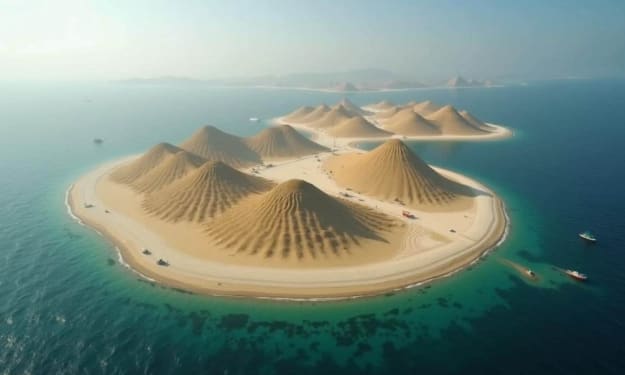
Imagine looking out over the South China Sea and seeing islands that weren’t there a decade ago. That’s exactly what’s happening. For 12 years, China has been dredging millions of tonnes of sand from the seabed and dumping it onto shallow reefs. The result? Massive artificial islands with runways, harbors, and even radar systems — entirely built from scratch. It’s an extraordinary engineering achievement. But it’s also a deeply controversial story that touches on geopolitics, environmental damage, and international law. How Do You Build an Island From the Ocean? The process is intense, complicated, and massive in scale. Specialized ships called cutter-suction dredgers scoop up sand and crushed coral from the seabed. That slurry is pumped through pipelines onto reefs, layer by layer, until the area rises above the high-tide line. Once land starts forming, engineers reinforce it with rock and concrete to protect it from storms. Roads, runways, and harbors soon appear, along with radar and communication systems. What was once just a coral reef becomes a fully functional island capable of hosting military aircraft and ships. From a technical standpoint, it’s impressive. From an environmental and geopolitical standpoint, it’s far more complex. Why These Islands Matter The South China Sea is one of the most strategic waterways in the world. About one-third of global maritime shipping passes through here every year, and the sea is rich in oil, gas, and fish. Several countries — including Vietnam, the Philippines, Malaysia, Brunei, and Taiwan — have claims in the region. China, however, claims almost the entire South China Sea under the so-called “nine-dash line.” Artificial islands give China a physical presence in contested waters, turning submerged reefs into military and logistical hubs. Once an island has a runway or a port, it changes the balance of power. It’s no longer just sand; it’s a foothold that can influence maritime traffic, regional security, and international diplomacy. From Coral Gardens to Concrete Islands There’s a darker side to this story. These islands are built on coral reefs — ecosystems that took thousands of years to form. Dredging and dumping sand destroys these reefs almost instantly. Sediment plumes cloud the water, smothering coral and blocking sunlight. Fish nurseries vanish, and entire marine ecosystems collapse. Nearby fishing communities in countries like the Philippines and Vietnam report lower catches as fish populations decline. What was once a thriving marine environment becomes, for many species, a barren landscape. Geopolitical Tensions Artificial islands aren’t just about sand and concrete; they’re about power projection. Once they host ports, airstrips, and radar systems, they act like permanent military outposts in the middle of contested waters. Even after a 2016 international tribunal ruled that China’s expansive claims were legally invalid, Beijing continued construction. Its neighbors are responding: Vietnam has built its own artificial islands, and the U.S. conducts freedom-of-navigation operations to challenge China’s dominance. These islands are flashpoints for tension, with ships and planes moving constantly to assert influence. What began as an engineering project has become a high-stakes geopolitical chessboard. Legal Questions According to the United Nations Convention on the Law of the Sea (UNCLOS), artificial islands do not generate territorial waters or exclusive economic zones. So technically, China cannot claim surrounding seas just because it built land there. But in practice, perception matters. Once an island is equipped with infrastructure and personnel, it becomes a de facto presence that is difficult to ignore. Countries, ships, and planes start operating around it, effectively shifting influence without officially changing borders. International law is struggling to keep up with technological possibilities. Creating new land from the ocean wasn’t something lawmakers imagined when defining maritime rights. Environmental and Strategic Impacts The environmental consequences are serious: coral reefs, fish populations, and coastal ecosystems are destroyed. Yet these islands also reshape the geopolitical map. They allow China to extend its reach in the South China Sea, assert military presence, and strengthen supply chains across contested waters. This raises a broader question: how should the world balance technological innovation with environmental protection and international norms? Artificial islands like these may be an engineering triumph, but they come with costs that ripple across oceans and generations. The Takeaway China’s decade-long project to create islands from the sea is more than a feat of engineering. It’s a story about power, ambition, and the lengths nations will go to secure influence. These islands are now military bases, geopolitical tools, and environmental scars all at once. As technology advances, creating land where none existed will become easier. But the lessons of the South China Sea are clear: reshaping the earth may give a country strategic advantages, but it also disrupts ecosystems, challenges international law, and sparks regional tension. Sand and sea may seem endless, but the consequences of building on top of them will last for generations.
By Muhammad Hassan5 days ago in The Swamp



Comments
There are no comments for this story
Be the first to respond and start the conversation.