
The Call for Transparency: Top Government Figures Under Pressure to Hand Over Private Messages with Peter Mandelson
A Deep Dive into the Growing Demand for Accountability in Political Communication and Its Implications for Governmental Integrity
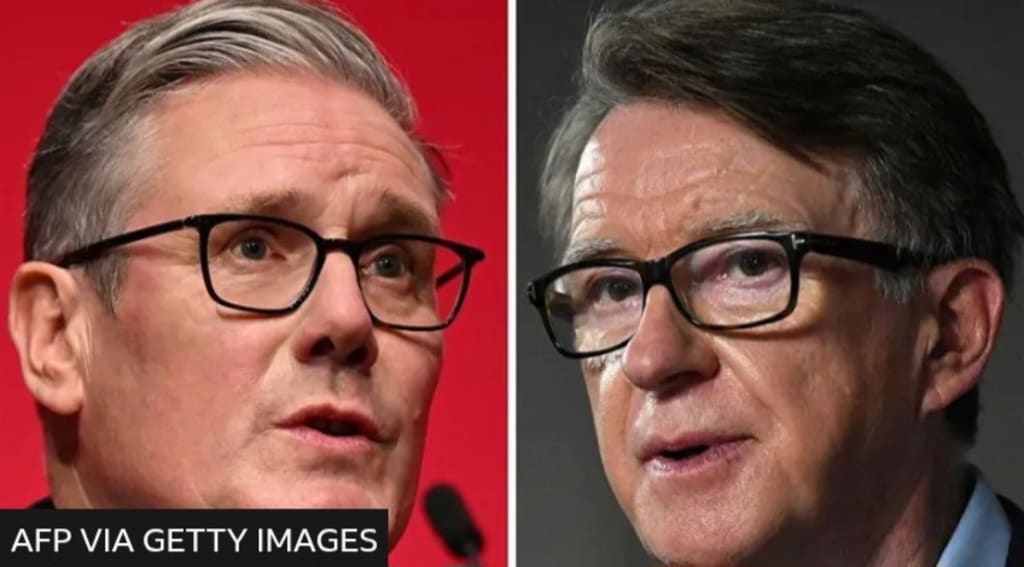
In a world where public figures' communications are increasingly scrutinized, the pressure for transparency in political dealings is stronger than ever. One of the most recent and notable examples of this is the growing demand for top government figures to hand over private messages with Peter Mandelson, a key figure in British politics. Known for his role in the Labour Party and his connections to both Tony Blair and Gordon Brown, Mandelson's relationships and communication strategies have long been a topic of public and political interest.
This call for accountability comes as part of a wider trend in which public officials are being urged to disclose their private communications to ensure they are working in the public's best interest, not behind closed doors with private or corporate entities. In this article, we will explore why these private messages are so significant, the controversy surrounding their release, and the broader implications for government transparency and accountability.
The Peter Mandelson Controversy: An Overview
Peter Mandelson, often referred to as one of the most influential political figures in modern British politics, has been embroiled in several high-profile controversies throughout his career. Known for his strategic thinking and involvement in New Labour’s rise to power, Mandelson has consistently had a hand in shaping government policies, even during the most contentious of times.
His tenure as the Secretary of State for Northern Ireland, followed by his role as Business Secretary, earned him both admiration and criticism. However, it is his close relationships with other political figures and business leaders that have made him the subject of much speculation.
Recently, the spotlight has once again fallen on Mandelson due to calls for the release of his private messages with current government ministers. These communications are seen by many as potential proof of behind-the-scenes maneuvering or perhaps evidence of undue influence in government decision-making processes. As government transparency becomes a major issue in the digital age, the idea that private messages—whether via text or encrypted chat services—could be pivotal in assessing the true nature of political decision-making has sparked intense debate.
Why the Pressure to Hand Over Private Messages?
The demand for top government figures to disclose their private messages with Mandelson stems from several key concerns:
Accountability and Transparency: In any functioning democracy, citizens expect their elected officials to act in the best interests of the public. The release of private communications can shed light on whether decisions are made transparently or if political figures are being unduly influenced by private interests or external parties.
The Role of Private Influence in Politics: Private communications between politicians and influential figures like Mandelson can raise suspicions about potential conflicts of interest, corruption, or backroom deals. These messages could potentially expose a disconnect between what public officials say publicly and how they behave privately.
Digital Privacy and Public Interests: With the rise of encrypted messaging apps like WhatsApp, Signal, and Telegram, private communications between government officials and others are increasingly difficult to access, leading to concerns about how much public officials can hide from scrutiny. The release of such messages could provide insight into whether politicians are following the law or circumventing it for personal or partisan gain.
Public Perception and Trust: If these private communications were to be released, it could either bolster public trust in the government's decision-making processes or severely damage the credibility of those involved. Public officials are often under scrutiny for their actions, and the release of these messages could either dispel or confirm accusations of improper conduct.
Legal and Ethical Implications of Releasing Private Messages
The release of private communications between government figures and figures like Mandelson is not without its complications. Legally, there are concerns regarding privacy and the potential for political sabotage or selective leaking of information. The ethics of releasing such messages also come into question: should private exchanges be made public, or is the protection of personal privacy paramount, even for politicians?
In the UK, as in many countries, there are laws surrounding data protection, confidentiality, and national security, which complicate matters further. For example, if the messages pertain to national security issues or confidential state business, their release could jeopardize sensitive information.
Ethically, the question arises whether politicians should be held to a higher standard of accountability, particularly when their actions could directly impact the public's welfare. While transparency is vital in any democracy, some argue that releasing private messages could have unintended consequences, including damaging personal relationships or setting a dangerous precedent for the political landscape.
Political Reactions and the Call for Accountability
Political reactions to the push for releasing these messages have been mixed. Some lawmakers argue that releasing the messages is essential for ensuring political accountability and that the public has a right to know how decisions are being made. They assert that transparency will restore trust in the government, especially in the face of accusations of political cronyism and corruption.
On the other hand, some politicians and public figures defend the privacy of communication, arguing that private messages should remain private, even for those in the public eye. They believe that releasing such communications could undermine the free exchange of ideas and the trust needed to maintain effective governance.
One of the central figures opposing the release of private messages is Peter Mandelson himself. Mandelson has long been known for his strategic use of communication, and it is unlikely that he would publicly welcome the release of his private messages with government ministers. However, the growing momentum for transparency in political communication suggests that the pressure to release these messages may only increase.
Conclusion: The Balance Between Transparency and Privacy
The call for top government figures to hand over private messages with Peter Mandelson reflects a larger conversation about transparency, privacy, and accountability in the political realm. While there are strong arguments on both sides, the underlying question remains: to what extent should public officials be required to disclose their private communications in the interest of the public?
As digital communications continue to play an increasing role in political decision-making, the debate over transparency and privacy will likely become even more critical. Whether or not these private messages will ultimately be released, the demand for greater political transparency is a reflection of the public’s growing desire for integrity, honesty, and accountability in the political process. In the age of digital communication, it seems that there is no turning back from the increasing calls for openness and the fight for a more transparent and accountable government.
About the Creator
Keep reading
More stories from Ayesha Lashari and writers in The Swamp and other communities.
US and Iran Talks: A Critical Step to Prevent Direct Conflict
The world’s attention has once again shifted towards the ongoing tension between the United States and Iran, with the two nations set to engage in crucial diplomatic talks aimed at averting the looming threat of direct conflict. This new development comes at a time when the geopolitical landscape in the Middle East is fraught with escalating tensions, military posturing, and deep-rooted animosity between the two countries. As fears of an all-out war intensify, there is a growing realization that dialogue may be the only feasible solution to prevent a catastrophic confrontation.
By Ayesha Lashari3 days ago in The Swamp
Why Black History Matters in America?
The United States of America is celebrating their 250th anniversary in 2026. I'm proud to be an American and as someone who was born here, I wouldn't imagine myself living anywhere else. This is a country where opportunities are possible. Where anyone can be successful in anything they desire to do. Equality, community, and togetherness are the backbones of what America is and should be about. However, we have an administration who wants to erase and disregard those who have made positive, meaningful impacts in our country, specifically Black figures, such as Martin Luther King, Jr., Rosa Parks, and Maya Angelou. President Trump and his administration have been constantly complaining and fighting against what they call the "Woke agenda". They use this excuse as a distraction from other issues they refuse to address, such as the high cost of living, climate change, and inflation. That equality is dividing America, when in reality, it's bringing us together. Being woke is not tied to a specific political party. No matter where you stand on the political spectrum, you can still care about other people and their plights. Compassion and empathy for others isn't tied to a political party, either. We were taught as children to treat others the way we want to be treated and not judge others because they're different from us. Caring about others isn't a personal attack on your beliefs. It doesn't make you any less of a person. People who are easily offended over African American figures, past or present, or anything related to it, are grasping at straws. Current and future generations need to know who people like Harriet Tubman and Shirley Chisholm were, especially in the classroom. Black History is part of American History. It should be recognized, not hidden or forgotten. Besides, you can't shield children from everything, just because your feelings are easily hurt.
By Mark Wesley Pritchard 7 days ago in The Swamp
Venezuela’s Return Won’t Dethrone Latin America’s Oil Leaders
Despite renewed hopes that Venezuela’s oil sector might regain its footing following political upheavals and shifting U.S. policies, analysts say Caracas’s comeback will fall short of upending the region’s current oil hierarchy. Argentina, Brazil and Guyana are poised to outpace Venezuela as Latin America’s key oil producers and investment magnets, underscoring deep structural and geopolitical barriers that still limit Venezuela’s prominence in the global energy market. OilPrice.com A Legacy of Lost Capacity Venezuela once stood as Latin America’s dominant oil force. At its peak in the early 2000s, the nation produced more than 3 million barrels per day (bpd), and its state oil company Petróleos de Venezuela, S.A. (PDVSA) was among the region’s most influential energy players. However, decades of underinvestment, political mismanagement and international sanctions have dramatically eroded that stature. Today, Venezuela’s output is less than one-third of its former capacity, frequently reported around 0.9–1.1 million bpd — a fraction of its historic highs and far below its regional rivals. Medium Analysts note that rebuilding Venezuela’s oil industry is not a matter of simply flipping a switch. Infrastructure that has degraded over years will need massive capital injections to be rehabilitated, even if sanctions ease. Estimates suggest that reviving the sector to meaningful levels could take years and require tens of billions of dollars. Medium Regional Leaders Set to Surge In contrast, other Latin American producers are enjoying momentum supported by investment, technology and strategic resource development. Argentina’s Vaca Muerta shale formation continues to attract billions in investment, bolstering that country’s export potential. Meanwhile, Brazil’s offshore pre-salt fields remain a major growth engine, with output projected to exceed 4.2 million bpd in 2026 — making it the dominant supplier in the region. Guyana’s deepwater discoveries also promise substantial production increases as new projects come online. OilPrice.com These dynamics mean that, even if Venezuela regains some output, it is unlikely to dethrone its neighbors anytime soon. Latin America’s oil production in 2026 is forecast to exceed 8.8 million bpd, led by countries that are both investing heavily and attracting foreign partners with clearer legal and economic frameworks. OilPrice.com Investment Hurdles and Political Risks International oil companies have historically been wary of Venezuela due to legal uncertainty and the politicized nature of its oil sector. Under leaders such as Hugo Chávez and Nicolás Maduro, Caracas imposed strict national control over PDVSA and required majority state ownership of projects, driving away major operators and curtailing foreign investment. Although recent political changes and U.S. policy shifts have opened new channels for cooperation, many firms remain cautious. Some traders and smaller firms are exploring structured opportunities in Venezuela that lower upfront capital requirements, yet supermajors still express concern about underwriting long-term projects in an environment with lingering institutional risk. OilPrice.com The types of crude that Venezuela produces — particularly heavy oil from the Orinoco Belt — also pose market challenges. Heavy crude is more expensive to refine and requires specific blending and processing infrastructure. As a result, it often sells at a discount compared with lighter grades preferred by many refineries in the United States and elsewhere. Anadolu Ajansı Geopolitical Complexity Venezuela’s oil prospects have long been intertwined with geopolitics. U.S. sanctions imposed in recent years targeted both PDVSA and the country’s ability to export oil, significantly constraining output and trade. Although recent developments — including temporary sanction waivers and new export licenses — have allowed some increase in shipments, these are still subject to geopolitical volatility. U.S. sanctions policy remains a critical wild card, capable of re-tightening and affecting operations again if political benchmarks are not met. AInvest China, historically a major buyer and investor, continues to play a role, absorbing a significant share of Venezuelan exports even as global market conditions fluctuate. This external reliance can offer short-term revenue but does little to reposition Venezuela at the forefront of Latin American energy leadership. Structural Constraints and Long Road Ahead The underlying structural weaknesses in Venezuela’s oil system also complicate any rapid recovery. Years of underinvestment have left pipelines, refineries and extraction equipment in poor condition. Skilled labor has left the sector, and decades of fiscal reliance on oil revenues have contributed to economic fragility. Experts say that, without sustained reforms and stable governance, the industry will continue to lag behind regional peers that enjoy more predictable operating climates. Medium While Venezuela’s vast proven crude reserves — among the world’s largest — provide a theoretical advantage, realizing that potential in a meaningful way remains a formidable challenge. The island nation’s oil wealth is undeniable, but translating it into sustained production growth and regional leadership will require overcoming hurdles that go far beyond the lifting of sanctions. Anadolu Ajansı Conclusion: A Return, but Not a Reversal Venezuela’s partial return to the oil market symbolizes a noteworthy shift from years of stagnation. However, it is unlikely to fundamentally alter the regional energy landscape dominated by Brazil, Argentina and Guyana. The combination of structural decay, political risk, commodity economics and strong performance by other producers suggests that Venezuela’s resurgence will be modest at best and gradual at worst. Rather than dethroning Latin America’s oil leaders, Venezuela’s evolving oil role underscores the fragmented nature of the region’s energy future. Multiple actors with diverse resources and strategies are shaping a complex landscape in which Caracas may feature again — but not at the forefront. OilPrice.com
By Fiaz Ahmed a day ago in The Swamp
Writing About Writing: The Rainbow Trap
The good thing about living in modern times is that LGBTQ representation in media is increasing. Not just in niche and Independant media, either, but also in mainstream media. Books, movies, TV shows, comics... they're finally catching on that LGBTQ+ people form a significant part of their audience, and deserve to see themselves on screen and in fiction, not just as victims in documentaries and true crime shows.
By Natasja Rose5 days ago in Writers



Comments
There are no comments for this story
Be the first to respond and start the conversation.