
The Buyout: How the "War" for Greenland Was Just a Distraction
While the world panicked over a military invasion, a quiet cartel of billionaires was already finalizing the lease.

We all just breathed a sigh of relief.
For the last three weeks, the world watched in horror as President Trump threatened to take Greenland "one way or the other." We saw Danish troops mobilizing in the North Atlantic. We saw NATO invoking Article 5. We saw the doomsday clock tick forward.
Then, at Davos, he blinked. The military threat was dropped. The tariffs were canceled. The news cycle celebrated the "triumph of diplomacy" and moved on to the next crisis.
We are fools.
While we were panicking about a military invasion that was never going to happen, the ink was drying on the real deal. The "framework" announced this week isn't a peace treaty. It’s a lease agreement.
The mistake we make on the Left is thinking the enemy plays by the rules of 19th-century conquest. They don't need to put a US flag over Nuuk to own it. They just need to own the assets that keep the lights on.
This isn’t about national security. It never was. It is a documented corporate strategy called "Realestateism"—a worldview that treats entire nations not as homelands, but as distressed asset classes. And the invasion has been underway for years, led not by generals, but by a billionaire cartel that realized something crucial: You can’t buy a country, but you can buy its government.
The Long Game
To understand what just happened, you have to stop looking at Trump’s tweets and start looking at the ledger.
The US has wanted Greenland for a century. In 1946, Harry Truman offered Denmark $100 million in gold bars for the island. He was rejected. In 2019, Trump revived the idea. He was laughed at. The Danish Prime Minister called it "absurd," and we all had a good chuckle about the Orange Man wanting to buy a new golf course.
But when the front door of diplomacy slammed shut, the back door of private equity swung open.
Ronald Lauder, the cosmetics heir and long-time Trump confidant, didn’t give up. He executed a tactical pivot. If the state couldn't buy the territory, private capital would buy the infrastructure.
He established Greenland Development Partners in Delaware. Why Delaware? Because in Delaware, you don't have to tell anyone who the money really belongs to. It’s a black box. This allowed a consortium of US interests—rumored to include the "Silicon Valley group"—to pool their capital anonymously.
They bypassed Copenhagen entirely. They stopped calling the Foreign Ministry in Denmark and started texting the local elites in Nuuk. They found the pressure point: The Greenlandic desire for independence.
The Human Shield
The takeover didn't start with tanks or threats. It started with a water bottle.
Lauder’s group bought a stake in Greenland Water Bank, effectively securing rights to the Lyngmark Spring on Disko Island. To sell this to the public, they didn't use a corporate raider. They used a diplomat.
They appointed Josette Sheeran, a former US Deputy Secretary of State and head of the UN World Food Programme, to run the operation. Sheeran is the perfect cover. She travels to Nuuk and talks about "sharing the gift of true purity" and "humanitarian missions."
It’s classic soft power. You wrap the iron fist in a velvet glove of NGO-speak. By owning the water rights, they bought a legitimate reason to be on the ground. They bought access to mayors and community leaders. They bought a seat at the table.
But beneath the humanitarian branding lies a transaction that would make a mob boss blush.
The Conflict of Interest
In any functioning democracy, what I’m about to tell you would bring down the government.
The Greenland Water Bank—the company Lauder’s group poured millions into—was co-owned by a man named Jørgen Wæver Johansen. Johansen is not just a businessman; he is a former minister and a heavyweight in the governing Siumut party. He is the "political muscle" who makes things happen in Nuuk.
He is also the husband of Vivian Motzfeldt.
Who is Vivian Motzfeldt? She is Greenland’s Minister of Foreign Affairs.
Let that sink in. The US billionaire consortium put money directly into the household assets of the woman responsible for assessing foreign threats to Greenland.
When Motzfeldt sits across the table from US negotiators, she isn’t just negotiating for her people. She is negotiating with her husband’s business partners. It is a closed loop of influence. The dossier on this arrangement calls it a "systemic vulnerability," but that’s too polite. It’s a bribe. It ensures that when the US comes knocking for bigger prizes, the door is already unlocked.
The Kill Switch
The water was just the appetizer. The main course is Lake Tasersiaq.
Located south of the Kangerlussuaq Fjord, Tasersiaq is a massive body of water fed by the ice sheet. For years, the aluminum giant Alcoa looked at it, mapped it, and did the environmental studies. They left behind a "shovel-ready" mega-project capable of generating industrial-scale hydropower.
Lauder’s consortium is now moving to seize this asset. But they don't want to build a smelter. The "Silicon Valley" faction backing this deal—figures adjacent to Peter Thiel and the Paypal Mafia—have a different vision.
They view the Arctic as the ultimate "Empty Space." They see a land with no regulations, cheap energy, and natural cooling. They want to turn Tasersiaq into the engine room for a massive server farm, powering AI data centers and Bitcoin mining operations.
This is the "Sovereignty Trap."
The Siumut party leadership believes this project is their ticket to freedom. They think the revenue from the dam will replace the $600 million annual block grant they get from Denmark. They think this buys them independence.
They are wrong.
If Greenland swaps Danish subsidies for American corporate revenue, they haven't gained freedom. They have just changed masters. And unlike Denmark, which is a democratic state bound by laws and voters, a Delaware LLC is bound only to its shareholders.
If a future Greenlandic government tries to raise taxes, enforce labor laws, or protect a caribou migration route, the consortium can simply threaten to turn off the lights. It is an economic "Kill Switch." By building the dam, the US consortium becomes the guarantor of the state’s solvency.
The Fantasy of "Freedom City"
There is a deeper, uglier ideology at work here.
These investors are obsessed with the concept of "Praxis" or "Freedom Cities"—libertarian utopias built outside the reach of Western governments. They look at Greenland and they don’t see a society with 56,000 people, a distinct language, and thousands of years of Inuit history. They see a tabula rasa. A blank slate.
They want to turn the island into a laboratory for anarcho-capitalism. A place where they can test new technologies and social structures without the "interference" of democracy or regulation. The locals? In this worldview, they are just tenants in their own land, easily bought off with a few jobs in the server rooms.
The False Peace
This brings us back to this week.
We laughed at Trump in 2019. In January 2026, we congratulated ourselves for "avoiding" a US takeover because the tanks didn't roll.
But we missed the sleight of hand. The threat of force was just leverage. It was designed to scare Copenhagen into accepting the "commercial framework" as the lesser of two evils. It was designed to make the sale of Lake Tasersiaq look like a diplomatic victory rather than a surrender.
Make no mistake: The "For Sale" sign is up, and the deposit has already been paid.
The US doesn't want Greenland for national security. That's the cover story. They want it for the rare earth minerals in the ground and the hydropower in the rivers. They want the billions of dollars in "stranded assets" that they can now extract without interference.
They didn't need to conquer the island. They just needed to buy the mortgage. And while we were busy watching the soldiers, the check cleared.
About the Creator
Keep reading
More stories from Radical Left Scum and writers in The Swamp and other communities.
The $7.4 Million Wire The Big Banks Hoped You'd Ignore
For twenty years the corporate media has fed us a fairy tale and hoped we wouldn't notice. Said Jeffrey Epstein was a "lone wolf" pervert who somehow tricked the world’s smartest bankers. They want you to believe compliance departments at JPMorgan and Deutsche Bank were just asleep at the wheel.
By Radical Left Scum4 days ago in Trader
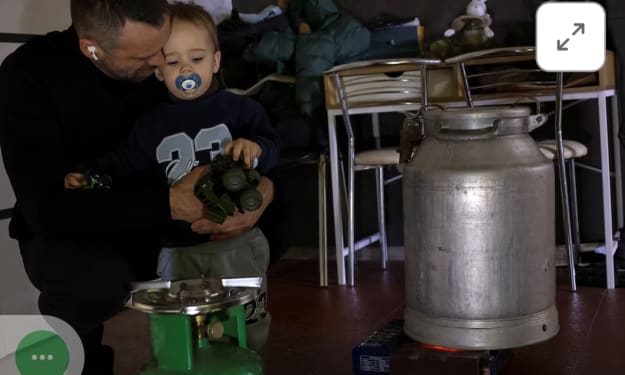
Ukraine Endures Its Bitterest Winter as Russia Targets Heating and Power
As winter grips Ukraine with unprecedented severity, millions of citizens are confronting not only freezing temperatures but also a growing energy crisis caused by ongoing Russian attacks on heating and power infrastructure. The combination of harsh weather and targeted strikes has left families, hospitals, and essential services struggling to cope, raising concerns about humanitarian and civilian safety amid the war.
By Aarif Lashari4 days ago in The Swamp


Comments
There are no comments for this story
Be the first to respond and start the conversation.