
The Blue Wall That Never Was: How Trump’s 2024 Victory Redrew the Political Map
FIVE States Trump SAVED From TURNING BLUE!


Donald Trump didn’t just win in 2024 — he reshaped the modern political battlefield. Sure, the headline was 312 electoral votes, but the real story lies beneath the surface. It was how he won — and more importantly, where — that’s left political operatives on the left stunned and scrambling.
For years, Democrats banked on a theory: shifting demographics, urbanization, and increasing diversity would make certain red states permanently blue. That theory has now hit a brutal wall of reality. Instead of locking Republicans out of power, five major states Democrats once considered future safe havens now look more like conservative fortresses.
Let’s break it down state by state and unpack why the long-predicted Democratic dominance never materialized.
North Carolina: The Blue Hope That Stayed Red
North Carolina was supposed to be Kamala Harris’s crown jewel — the tipping point in a “New South” coalition driven by young voters and suburban professionals. And to be fair, parts of the Research Triangle — Raleigh, Durham, Chapel Hill — did shift ever so slightly left. But outside the bubble? A different story.
Retirees flocking to Eastern North Carolina, particularly in undercounted areas, pulled the region further right. Trump’s growing support among Black voters — especially in the northeast and even in Mecklenberg County — chipped away at Democratic margins in urban cores. Suburbs like Union County? They moved even more firmly into the Republican column.
Despite some turnout bumps and minor suburban shifts, the GOP held the line. Post-election voter registration numbers favor Republicans, and statewide candidates down-ballot rode Trump’s coattails — even with a controversial figure like Mark Robinson on the ticket. Democrats' hopes of a permanent flip have dimmed. This isn’t a runaway red state like Florida, but it’s a state where Democrats face increasingly uphill odds.
Florida: From Swing State to Republican Stronghold
The biggest surprise? Maybe. But maybe not. Florida has been trending red since 2016, but Trump’s 2024 performance sealed the deal. A state once decided by razor-thin margins is now a Republican stronghold — Trump won it by 1.5 million votes, a 13-point landslide.
So, what changed?
First, the Hispanic coalition shifted — and not just Cuban voters in Miami. Venezuelans, Colombians, and even a surprising number of Puerto Ricans went red. Remember the media uproar over Trump’s comments in 2020? He still flipped the most Puerto Rican-heavy county in the nation.
Even the long-anticipated influx of newly re-enfranchised felon voters didn’t break Democrat. The myth that the state would shift blue due to these changes simply didn’t hold up to scrutiny.
Even ballot measures pushed by Democrats, like legalizing marijuana and protecting abortion rights, failed to hit the 60% threshold. In a state once defined by its swing status, the GOP now enjoys dominance that mirrors California's Democratic control — just on the opposite end of the spectrum.
Texas: Blexit, Tejanos, and the GOP Revival
Texas — the one Democrats believed was on the cusp of flipping thanks to the infamous “Blexit” theory. The idea was that the growing Hispanic population and changing suburban demographics would turn the Lone Star State blue.
It never happened.
Sure, Beto O’Rourke came close in 2018, and Trump’s 2020 margin was narrower than usual. But in 2024? Trump roared back, posting margins not seen since the Romney years. And he did it with a coalition shift — not just rural whites, but also Hispanic voters in South Texas and younger Black men across metro areas.
Counties like Laredo, McAllen, and even Brownsville flipped — places that had never gone red before. That’s no fluke. This is generational realignment. Third-generation Hispanic Texans, particularly Tejanos with deeper cultural ties to Texas itself rather than recent immigration, are increasingly voting Republican.
Even suburban counties like Collin — where the GOP was expected to hemorrhage support — broke 11 points in favor of Republicans. Democrats dumped millions into this state trying to make it competitive. Ted Cruz, who squeaked by in 2018, expanded his margin to double digits.
Texas isn’t just holding the line — it’s getting redder. Barring a radical demographic upheaval (and even that’s becoming a less reliable predictor), Texas is not flipping anytime soon.
Arizona: A Mirage in the Desert
Arizona had Democrats dreaming big in 2020 after Biden narrowly flipped it. The suburban shift in Phoenix seemed like the future. But that dream quickly dissipated in 2024.
Younger voters — across race and class — moved right. Working-class Latinos in South Phoenix and Tucson leaned redder. Maricopa County, once considered the bellwether for Democratic resurgence, swung six points back toward Trump.
The GOP now leads in voter registration. They were on the brink of losing their edge, but not only did they hold — they grew. Arizona’s looking more and more like it did in the early 2000s, when it was reliably Republican.
Democrats banked too hard on one election cycle. But the realignment happening now? It's deeper and broader. It’s happening among young voters, the very demographic Democrats thought they had in the bag.
Nevada: The Silent Flip
The fifth and final state on the list — Nevada — has flown under the radar, but it's just as significant.
Despite union strength and a solid Democratic machine in Clark County (Las Vegas), the cracks are showing. Trump nearly flipped Clark, and Reno’s Washoe County was another near-miss. The state is deeply working class — one of the lowest percentages of “professional class” voters in the country — and that’s bad news for Democrats in the current political climate.
Republicans have gained over 100,000 net new registered voters since 2020. And these aren’t just paper numbers — they translated almost directly into Trump’s 46,000-vote margin of victory in the state.
Vegas nightlife, tourism, and working-class grit used to mean union loyalty and Democratic margins. Now, they just might mean Republican pickups.
The 2030s Electoral Map: A Republican Fortress?
With these five key states trending red — or already solidly there — the GOP enters future elections with an electoral advantage Democrats once dreamed of.
Looking ahead to the 2030s (based on projected electoral vote reallocation), Republicans could start with 263 electoral votes practically out of the gate. They’d only need to flip one medium-sized state — maybe Pennsylvania, maybe Michigan — and they’re at the finish line.
Meanwhile, Democrats face trouble in deep-blue bastions. Illinois, New Jersey, New York — even New Mexico — are seeing slow but meaningful rightward shifts, especially in rural and suburban working-class areas.
So here’s the big question: Could the so-called “electoral winter” Democrats forecasted for Republicans actually become their reality?
If they don’t adapt — if they can’t stop bleeding support among minority men, working-class voters, and the youth — then yeah, that’s a real possibility.
Conclusion: Red Isn’t Dead — It’s Dominating
Trump’s 2024 victory wasn’t just about beating Joe Biden. It was about reversing decades of political assumptions. The five states Democrats once considered “future proof” now look like cornerstones of the Republican coalition.
This realignment isn’t permanent — nothing in politics is. But it’s real, it’s happening now, and if the Democrats want to compete again, they’ll have to learn a hard lesson: demographics aren’t destiny — persuasion still matters.
About the Creator
Lawrence Lease
Alaska born and bred, Washington DC is my home. I'm also a freelance writer. Love politics and history.
Keep reading
More stories from Lawrence Lease and writers in The Swamp and other communities.
The Day the Berlin Wall Came Down
Sometimes history flips on a single, unexpected moment. November 9, 1989, was one of those nights. What started as a routine press conference in East Berlin ended with people from both sides of a divided city climbing the Berlin Wall, hammering it apart, and dancing on the rubble. It was chaos, it was joy, and it was the beginning of the end for the Cold War.
By Lawrence Lease12 months ago in The Swamp
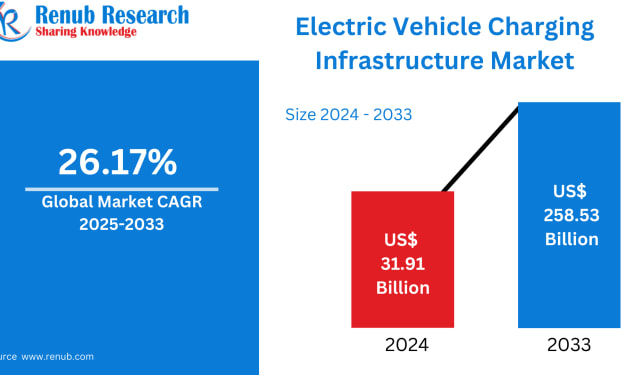
EV Charging Infrastructure Market Size and Forecast 2025–2033
Introduction: The Backbone of the Electric Mobility Revolution The electric vehicle (EV) transition is no longer a future promise—it is an unfolding reality reshaping transportation systems worldwide. At the heart of this transformation lies one indispensable element: charging infrastructure. Without a dense, reliable, and intelligent network of charging points, even the most advanced electric vehicles would remain limited in reach and appeal.
By Aaina Oberoi6 days ago in The Swamp



Comments
There are no comments for this story
Be the first to respond and start the conversation.