
Talks Intensify to Avert Shutdown as White House and Senate Leaders Eye Last-Ditch Deal
High-stakes negotiations gain momentum as funding deadline approaches

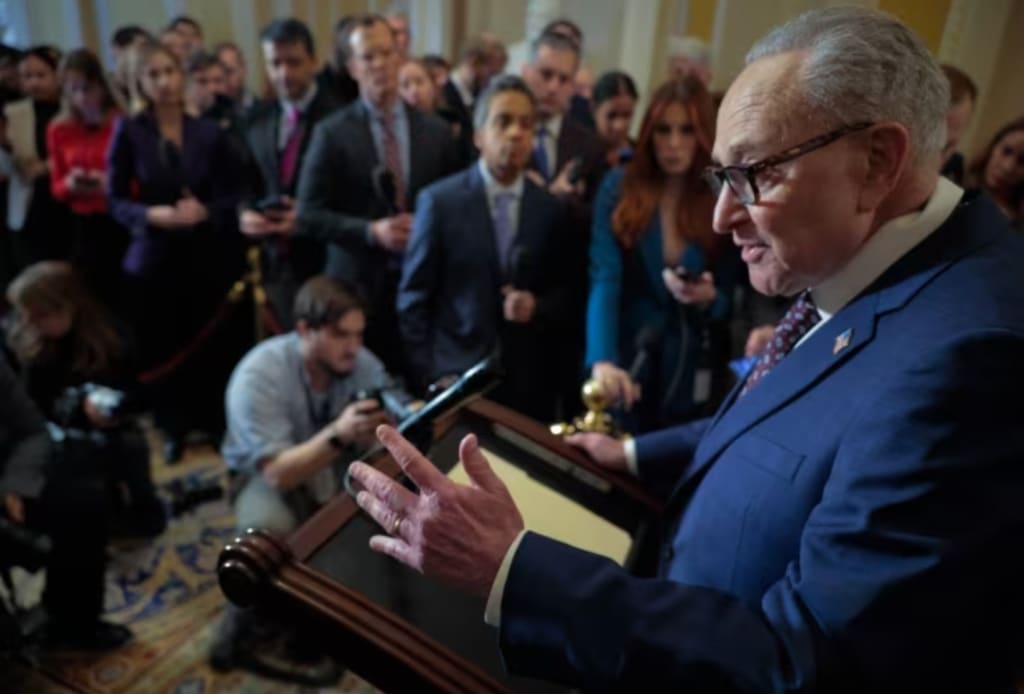
With a federal funding deadline fast approaching, negotiations in Washington have entered a critical phase as the White House and Senate leaders intensify talks to avert a looming government shutdown. The discussions, described by insiders as “last-ditch,” reflect growing concern across political, economic, and social spheres about the consequences of another shutdown and the pressure mounting on lawmakers to deliver a workable compromise.
Government shutdowns occur when Congress fails to pass appropriations bills or a temporary funding measure to keep federal agencies operating. In recent years, these standoffs have become almost routine, often driven by partisan disagreements over spending levels, policy riders, or broader ideological disputes. Yet each shutdown carries real costs, from furloughed federal workers and delayed public services to shaken investor confidence and economic uncertainty.
This time, the urgency appears sharper. Senior White House officials and Senate leaders from both parties are reportedly engaged in near-continuous talks, signalling recognition that time is running out. At the centre of the negotiations is a stopgap funding proposal designed to keep the government open while lawmakers continue broader budget discussions. Such continuing resolutions are imperfect solutions, but they are often the only viable option when consensus on a full budget proves elusive.
For the White House, avoiding a shutdown is a priority tied closely to economic stability and public confidence. Administration officials have warned that even a short shutdown could disrupt essential services, undermine recent economic gains, and place unnecessary strain on federal workers already grappling with cost-of-living pressures. The administration has framed its position around maintaining basic government functions while preserving key spending priorities in areas such as defence, healthcare, and infrastructure.
Senate leaders, meanwhile, are walking a tightrope between compromise and party unity. Senate Majority Leader Chuck Schumer has emphasised the need for a clean funding extension free of controversial policy provisions, arguing that attaching divisive issues to must-pass legislation risks derailing talks entirely. Minority leaders, while expressing openness to negotiation, have underscored concerns about fiscal discipline and long-term spending trajectories.
The intensifying talks highlight the complex dynamics at play. On one hand, there is broad agreement across Washington that a shutdown would be politically damaging and economically disruptive. On the other, deep-seated disagreements remain over how much the government should spend and where cuts or increases should be made. These tensions are further amplified by internal divisions within both parties, where small but vocal factions can exert outsized influence.
Markets and businesses are watching developments closely. Past shutdowns have rattled investor confidence, disrupted government contracts, and delayed regulatory approvals. While the broader economy has often proven resilient, repeated episodes of brinkmanship contribute to uncertainty and can dampen long-term planning. Business groups have urged lawmakers to set aside partisan differences and provide stability, warning that uncertainty at the federal level trickles down to private sector decision-making.
Federal employees, many of whom would face furloughs or delayed paychecks in the event of a shutdown, are also anxiously awaiting an outcome. Unions representing government workers have stressed the human cost of political deadlock, noting that workers are often treated as leverage in budget negotiations despite having little influence over the process. The psychological toll of repeated shutdown threats, they argue, is an often overlooked consequence of Washington’s dysfunction.
Despite the high stakes, scepticism remains about whether a deal can be finalised in time. Even if Senate leaders and the White House reach an agreement, the path to passage is far from guaranteed. Any proposal must clear procedural hurdles and secure sufficient support in both chambers of Congress. In the House, where margins can be narrow and ideological divisions sharp, leadership often struggles to corral enough votes for compromise legislation.
Still, there are signs of cautious optimism. The fact that talks have intensified rather than stalled suggests that key players understand the cost of failure. Some lawmakers have signalled willingness to accept a short-term extension as a bridge to more comprehensive negotiations later in the year. While this approach does little to solve underlying budget disputes, it can prevent immediate disruption and create space for cooler-headed discussions.
Critics, however, argue that reliance on last-minute deals perpetuates a cycle of crisis governance. They contend that repeated use of stopgap measures undermines long-term fiscal planning and erodes public trust in government institutions. Calls for reform, including multi-year budgeting or changes to the appropriations process, have grown louder, though consensus on such reforms remains elusive.
As the deadline nears, the coming days will test whether pragmatism can prevail over partisanship. A successful deal would spare the country another shutdown and demonstrate a measure of functional governance in an often gridlocked capital. Failure would likely deepen public frustration and reinforce perceptions of a political system unable to manage basic responsibilities.
For now, all eyes remain on Washington. The intensified talks between the White House and Senate leaders underscore both the fragility and necessity of compromise in moments of crisis. Whether this last-ditch effort succeeds will shape not only the immediate fate of federal operations but also the broader narrative of governance in an increasingly divided era.
About the Creator
Keep reading
More stories from Salaar Jamali and writers in The Swamp and other communities.
Trump and Schumer Move Toward Possible Deal to Avert a Shutdown
As the threat of a US government shutdown looms once again, an unexpected development has emerged from Washington’s deeply polarised political landscape. Former President Donald Trump and Senate Majority Leader Chuck Schumer appear to be moving toward a possible agreement aimed at averting a shutdown, raising cautious optimism among lawmakers, federal employees, and markets alike. While details remain fluid, the talks signal a rare moment of potential cooperation between two figures who have often stood on opposite sides of America’s political divide.
By Salaar Jamaliabout 10 hours ago in The Swamp
Trump News at a Glance: President’s ‘Board of Peace’ Takes Shape
In the ever-evolving world of Trump news, one phrase has recently captured attention across political media: the president’s so-called “board of peace.” As discussions around foreign policy, global conflict, and American influence resurface, this emerging advisory group is being framed as a core pillar of Donald Trump’s broader geopolitical vision.
By Aqib Hussain6 days ago in The Swamp


Comments
There are no comments for this story
Be the first to respond and start the conversation.