politics
Politics does not dictate our collective cultural mindset as much as it simply reflects it; We've got to look in the mirror sometimes, and we've got one.
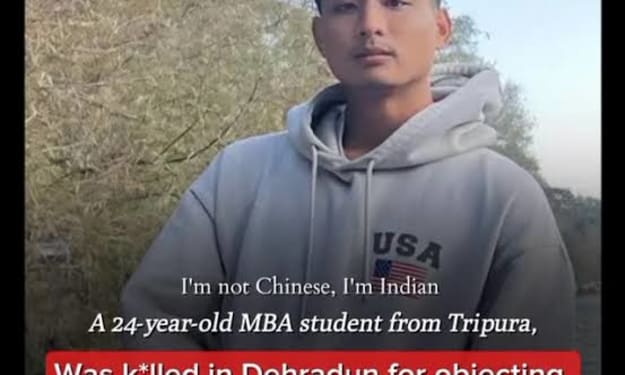
“How Do We Look Indian?”: Student’s Killing Puts Spotlight on Racism in India. AI-Generated.
The killing of a young student has reignited a long-simmering conversation in India about racism, identity, and the dangerous consequences of prejudice. The question reportedly asked during the incident — “How do we look Indian?” — has echoed across social media and public debates, forcing the country to confront uncomfortable truths about how discrimination operates within its own borders. A Tragic Incident That Sparked a National Debate The student’s death, allegedly linked to racial profiling and targeted violence, is not just an isolated crime. It has become a symbol of a deeper, systemic problem: the idea that being “Indian” has a specific look, language, or cultural marker. While India prides itself on diversity, this tragedy highlights how certain communities — particularly people from the Northeast, tribal regions, migrants, and religious minorities — are often treated as outsiders in their own country. As details of the incident emerged, public outrage grew. Candlelight vigils, student protests, and online campaigns demanded justice, but also something broader: acknowledgment that racism exists in India, even if it is often denied or downplayed. Racism Beyond Borders — And Within Them Racism in India is frequently discussed in the context of colonial history or discrimination faced by Indians abroad. Far less attention is paid to internal racism. Yet stereotypes based on skin color, facial features, accents, and regional origins are deeply ingrained. Students from northeastern states have long reported harassment in metropolitan cities, ranging from racial slurs and mockery to physical violence. African students and migrants have also faced attacks driven by misinformation and prejudice. In many cases, victims are asked to “prove” their Indian identity — a demand that reveals how narrow and exclusionary some definitions of nationality have become. The student’s killing has forced many to ask: who gets to decide what an Indian looks like? The Role of Stereotypes and Media Popular culture has played a significant role in reinforcing racial stereotypes. Films, television shows, and advertisements often portray fair skin as desirable and associate darker skin or distinct features with inferiority or comic relief. These portrayals seep into everyday thinking, shaping how people perceive one another. Social media, while amplifying voices calling for change, also exposes the scale of the problem. In the wake of the killing, countless individuals shared their own experiences of being followed, questioned, or attacked simply for not fitting a dominant image of “Indianness.” Students at the Center of the Struggle Educational institutions, which should be safe spaces for learning and inclusion, have increasingly become flashpoints for discussions about discrimination. Students from marginalized communities often face isolation, biased treatment, and lack of institutional support when incidents occur. The killing has intensified calls for universities and schools to adopt stronger anti-discrimination policies, offer cultural sensitivity training, and establish clear reporting mechanisms. Many student groups argue that without structural changes, expressions of solidarity will remain symbolic rather than transformative. Legal Frameworks and Their Limitations India’s constitution guarantees equality and prohibits discrimination, but enforcement remains inconsistent. While hate crimes and racially motivated violence are punishable under existing laws, activists argue that India lacks a comprehensive legal framework that explicitly addresses racism. The student’s death has renewed demands for clearer hate-crime legislation, better policing practices, and accountability for authorities who fail to protect vulnerable communities. Critics note that cases involving marginalized victims are often slow to progress, reinforcing a sense of injustice. A Moment of Reckoning What makes this incident particularly significant is the national introspection it has triggered. Commentators, educators, and public figures are questioning long-held assumptions about unity and diversity. The narrative of “unity in diversity,” while powerful, can sometimes mask inequalities that persist beneath the surface. Acknowledging racism does not weaken national identity — many argue it strengthens it. By confronting prejudice honestly, societies can move toward more inclusive definitions of belonging. The Way Forward Justice for the slain student is the immediate demand, but many see this moment as an opportunity for deeper change. Experts emphasize the need for education reforms that teach empathy, history, and respect for diversity from an early age. Media responsibility, institutional accountability, and public dialogue are all crucial steps. Most importantly, there is a growing call to listen — to the voices of those who have long felt unseen or unwelcome. Their experiences challenge the notion that racism is a “foreign problem” and remind us that discrimination can thrive anywhere it goes unchallenged. Conclusion The question “How do we look Indian?” cuts to the heart of a painful reality. India is not defined by a single face, language, or culture, yet rigid ideas of identity continue to fuel exclusion and violence. The student’s killing is a tragedy, but it has also become a catalyst for reflection. Whether this moment leads to lasting change depends on what follows — not just in courts and classrooms, but in everyday attitudes. Confronting racism requires courage, honesty, and sustained effort. The hope is that this loss will not be forgotten, and that it will push the nation toward a more inclusive understanding of what it truly means to be Indian.
By Fiaz Ahmed 16 days ago in The Swamp
Ukraine calls on allies to raise pressure as Russia fires Oreshnik missile. AI-Generated.
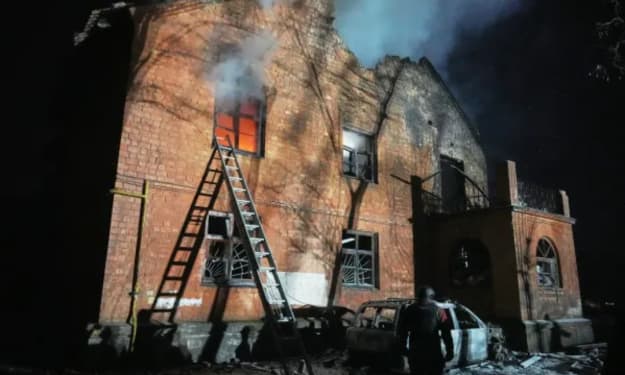
As the war in Ukraine grinds on with no clear end in sight, Kyiv is urging its international partners to significantly intensify pressure on Moscow following Russia’s reported use of the Oreshnik missile, a weapon Ukrainian officials describe as both symbolically and strategically alarming. The latest strike underscores the evolving nature of the conflict, where military escalation is increasingly paired with diplomatic messaging aimed at shaping global opinion. A Missile With a Message Ukrainian authorities say the Oreshnik missile was launched during a recent wave of Russian attacks targeting infrastructure and military positions. While details about the missile remain limited, analysts believe Oreshnik represents a newer or modified system designed to test Ukrainian air defenses and signal Russia’s ability to adapt despite sanctions and battlefield losses. For Kyiv, the missile’s use is not just another attack—it is a deliberate escalation meant to demonstrate resilience and intimidate both Ukraine and its allies. Ukrainian defense officials argue that Moscow is using advanced or unfamiliar weaponry to pressure Western governments into slowing or limiting military aid. “This is not just about destruction,” a senior Ukrainian official said in a briefing. “It is about sending a message that Russia believes it can outlast international resolve.” Ukraine’s Call for Stronger Action In response, Ukraine has renewed its appeal to allies across Europe and North America to increase military, economic, and diplomatic pressure on the Kremlin. Officials argue that incremental support is no longer enough as Russia adapts its tactics and continues to mobilize resources for a prolonged conflict. Kyiv is specifically asking for: Faster delivery of advanced air defense systems Longer-range weapons to deter missile launches Tighter enforcement of sanctions Stronger action against countries and entities helping Russia bypass restrictions Ukrainian leaders stress that every delay in assistance increases the human and economic cost of the war, not just for Ukraine but for regional stability as a whole. What Is the Oreshnik Missile? Although Russia has not released full technical details, defense experts suggest the Oreshnik missile may be designed for precision strikes with enhanced maneuverability, making interception more difficult. Whether entirely new or an upgraded variant of existing systems, its reported use highlights Russia’s ongoing investment in missile technology despite years of international sanctions. Military analysts caution that even limited deployment of such weapons can force Ukraine to expend valuable air defense resources, creating vulnerabilities elsewhere. This, they argue, is part of a broader strategy to stretch Ukrainian defenses thin while testing Western commitment. A Test of Western Unity The missile strike comes at a sensitive time for Ukraine’s allies. Political divisions, election cycles, and economic pressures have complicated long-term support commitments. Ukraine fears that Russia is deliberately escalating at moments when Western unity appears fragile. European leaders have condemned the attack, reiterating support for Ukraine’s sovereignty. However, debates continue behind closed doors about how far military assistance should go, particularly regarding weapons capable of striking deep into Russian territory. For Kyiv, the concern is clear: hesitation sends the wrong signal. Ukrainian officials warn that failing to respond decisively now could encourage further escalation not just in Ukraine, but in other regions where authoritarian states may test international resolve. The Human Cost Behind the Headlines Beyond strategic calculations, the missile strike has once again disrupted civilian life. Power outages, damaged infrastructure, and psychological trauma remain daily realities for millions of Ukrainians. Each new weapon introduced into the conflict deepens fears among civilians who have endured years of air raid sirens and uncertainty. Human rights groups continue to document the impact of missile attacks on non-military targets, calling for accountability and renewed diplomatic efforts to protect civilians. What Comes Next? As Ukraine pushes for stronger action, the coming weeks may prove pivotal. Decisions made by NATO members and key partners could shape the next phase of the conflict—either deterring further escalation or emboldening Moscow to press ahead. For Ukraine, the message is urgent and unambiguous: the war is evolving, and so must the response. The use of the Oreshnik missile is being framed not as an isolated incident, but as a warning of what continued inaction could invite. In a conflict increasingly defined by endurance as much as firepower, Ukraine is betting that renewed international pressure can still alter the trajectory of the war—before escalation becomes the new normal.
By Fiaz Ahmed 16 days ago in The Swamp
Iran’s Khamenei Lashes Out as Tehran Struggles to Quell Protests. AI-Generated.
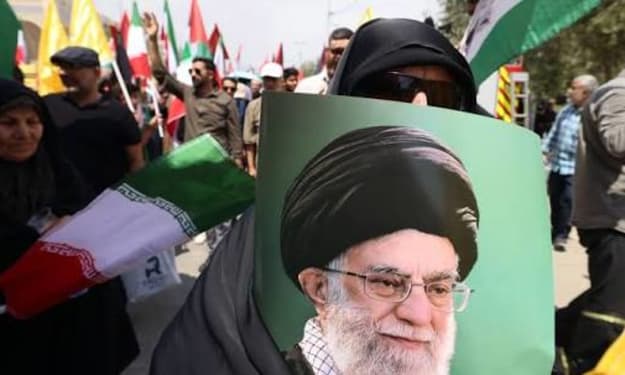
Iran is once again gripped by widespread unrest as protests erupt across multiple cities, exposing deep fractures between the state and society. Supreme Leader Ayatollah Ali Khamenei has responded with fiery rhetoric, blaming foreign enemies, media manipulation, and “sedition” for the growing dissent. His sharp tone reflects not confidence, but pressure. As Tehran struggles to contain demonstrations fueled by economic hardship, social restrictions, and political frustration, Khamenei’s remarks underline a leadership facing one of its most serious legitimacy challenges in years. The latest wave of protests did not emerge overnight. Years of inflation, unemployment, and sanctions have eroded living standards for ordinary Iranians. The collapse of the national currency has made basic necessities increasingly unaffordable, while corruption scandals involving elites continue to circulate widely on social media. For many protesters, the issue is not a single policy failure but a system that appears unresponsive to their daily struggles. Khamenei’s reaction has followed a familiar pattern. In speeches broadcast on state television, he has accused Western governments, especially the United States and its allies, of orchestrating unrest to weaken Iran from within. He has also criticized Iranian dissidents abroad, calling them “tools of foreign intelligence agencies.” While such rhetoric resonates with hardline supporters, it has failed to calm the streets. Instead, many Iranians see these statements as an attempt to deflect responsibility rather than address real grievances. Security forces have been deployed heavily in major cities, including Tehran, Isfahan, Mashhad, and Shiraz. Reports from human rights groups suggest mass arrests, internet restrictions, and the use of force to disperse crowds. Despite this, protests have continued in waves, often reigniting after nighttime lulls. The persistence of demonstrations suggests that fear is no longer as effective a deterrent as it once was. A notable feature of the current unrest is the diversity of participants. Students, workers, women, shopkeepers, and even retirees have joined protests, each bringing their own demands. While some chant against economic mismanagement, others openly question clerical rule — a red line in Iran’s political system. This broad coalition makes it harder for authorities to isolate the movement or dismiss it as the work of a single group. Women have played a particularly visible role, challenging strict social codes and demanding greater personal freedoms. Their participation has transformed the protests from isolated economic demonstrations into a broader cultural and political movement. This shift has alarmed the leadership, which views challenges to social control as threats to the ideological foundations of the Islamic Republic. Khamenei’s lashing out also reflects growing unease within Iran’s power structure. While the Supreme Leader remains the ultimate authority, cracks are appearing beneath the surface. Some officials have called for dialogue and limited reforms, while hardliners insist on zero tolerance. This internal tension complicates the government’s response, as mixed signals weaken its ability to present a unified front. Internationally, the protests have drawn renewed scrutiny of Iran’s human rights record. Western governments have condemned the crackdown and imposed additional sanctions on Iranian officials and security bodies. Tehran, however, has doubled down on its narrative of foreign interference, expelling diplomats and restricting foreign media coverage. This confrontation further isolates Iran at a time when it is already struggling economically and diplomatically. The economic dimension of the crisis cannot be overstated. Sanctions linked to Iran’s nuclear program have cut off vital revenue streams, while mismanagement has discouraged foreign investment. Ordinary citizens feel trapped between international pressure and domestic policy failures. For many protesters, the leadership’s defiant posture offers little comfort when jobs are scarce and prices soar. Despite the unrest, the Iranian state still commands significant tools of control: loyal security forces, state media, and a network of ideological institutions. Khamenei’s authority, while challenged, remains intact for now. Yet history shows that prolonged unrest can gradually reshape political realities, even in tightly controlled systems. Each protest, each chant, chips away at the narrative of unanimous support. The critical question is whether Iran’s leadership will adapt or continue relying on repression and rhetoric. Khamenei’s harsh words may rally his base, but they do little to bridge the widening gap between rulers and ruled. Without meaningful economic relief and social reforms, protests are likely to resurface, regardless of how forcefully they are suppressed. For the Vocal Media audience, Iran’s unfolding crisis offers a stark reminder that stability built on fear is fragile. As Tehran struggles to quell protests, Khamenei’s lashing out reveals a leadership under strain, confronting not just dissent in the streets, but a deeper reckoning over Iran’s future direction.
By Fiaz Ahmed 16 days ago in The Swamp
Internet Blackout After Huge Iran Marches as Supreme Leader Says Protesters Are ‘Trying to Please Trump’. AI-Generated.
Iran imposed a widespread internet blackout following some of the largest public marches seen in recent years, cutting off millions of people from online communication as protests spread across major cities. The move came shortly after Iran’s Supreme Leader accused demonstrators of acting to “please Trump,” framing the unrest as foreign-driven rather than domestically motivated.
By Aarif Lashari16 days ago in The Swamp
Greenland: Vance Warns Europe to Take Trump's Threats Seriously. AI-Generated.
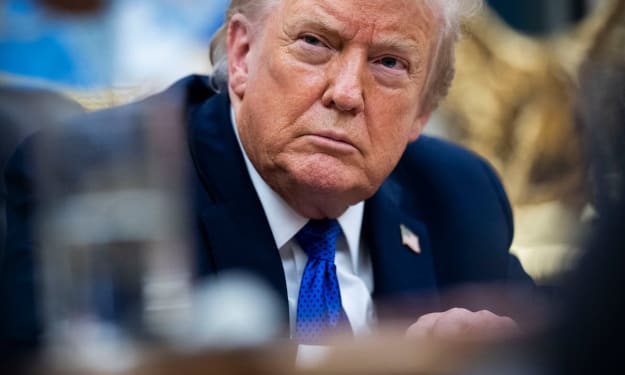
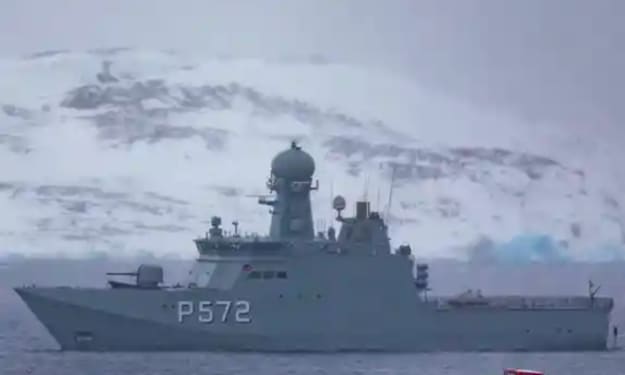
The Greenland debate has escalated from a peculiar historical footnote to a contentious geopolitical issue in the 21st century. Former U.S. President Donald Trump’s interest in purchasing the world’s largest island has resurfaced, causing ripples not just in Washington but across Europe. In recent weeks, various experts and politicians have been warning Europe to take Trump’s ambitions seriously. One such figure, foreign policy expert Vance, has urged European leaders to prepare for what could be a challenging diplomatic situation. Trump’s Greenland Obsession: A Resurging Threat In 2019, Donald Trump made headlines by expressing interest in purchasing Greenland, a move that was met with widespread disbelief. The island, which is an autonomous territory of Denmark, was never up for sale, and Denmark’s leaders quickly rejected the idea. However, Trump's fixation on Greenland has never truly gone away. As the geopolitical landscape evolves, so does his interest in the island, which boasts significant natural resources and strategic importance. The Trump administration's stance on Greenland wasn’t just about territorial expansion; it was also linked to broader U.S. foreign policy goals. Greenland's location between North America and Europe has made it strategically vital, especially in the context of the Arctic’s changing geopolitical dynamics. The region’s rich mineral deposits, including rare earth metals and uranium, have further piqued global interest, and Trump’s desire to control Greenland was viewed by some as an attempt to secure these resources for American use. Vance’s Warning: Europe Needs to Prepare Vance, an experienced international relations expert, has recently sounded an alarm regarding the ongoing Greenland situation. His remarks focus on the dangers of underestimating Trump's intentions. According to Vance, Europe has largely brushed aside the possibility of a renewed push for Greenland, but that could be a fatal mistake. “I think Europe is making a grave error by assuming that Trump’s previous attempt was just a passing fancy,” Vance explained in a recent interview. “Given his track record and the growing importance of Greenland in global geopolitics, Europe must take this seriously and start preparing for all potential outcomes.” The warning isn’t just about the potential for Trump to try again. Vance also expressed concerns about how the U.S. might attempt to leverage its military presence in Greenland to sway Denmark and other European allies. The U.S. already operates the Thule Air Base in Greenland, a vital asset for its defense and intelligence capabilities in the Arctic. A stronger American presence, according to Vance, could lead to mounting pressure on Denmark to entertain the idea of a deal once more. The Danish and European Dilemma From a European perspective, the prospect of the U.S. attempting to purchase Greenland is a delicate issue. Denmark, as Greenland’s sovereign nation, would be the key decision-maker, but any move involving the island’s future could have far-reaching consequences for the entire European Union. For Denmark, the situation is complicated by both internal and external pressures. Greenland’s native Inuit population has expressed concerns about their cultural and political autonomy should the island fall under U.S. control. Meanwhile, many European leaders are wary of the growing tensions between the U.S. and Russia in the Arctic. The region has become a new frontier for geopolitical competition, with both superpowers seeking to establish dominance. Vance suggests that if the U.S. continues to press its case for Greenland, it could place Denmark in an awkward position. “The U.S. is not known for backing down when it has its sights set on something,” Vance warned. “Denmark’s ties to the EU and its own position in the Arctic are crucial, and the pressure from Washington could become overwhelming. Europe needs to think ahead about how it will respond.” The Strategic Significance of Greenland Greenland’s strategic value has only grown in recent years, as climate change continues to open up previously impassable routes and untapped resources. The Arctic’s melting ice has revealed new shipping lanes and access to minerals that were once inaccessible. Russia and China have already started to invest heavily in the region, both in terms of economic opportunities and military positioning. For the U.S., controlling Greenland would offer significant advantages. Not only would it solidify its presence in the Arctic, but it would also provide a staging ground for any future operations in Europe or the Northern Hemisphere. Moreover, access to Greenland’s vast natural resources could help America’s economic interests, reducing its dependence on foreign imports for key materials like rare earth elements. Vance argues that Europe needs to recognize the increasing importance of the Arctic in global power dynamics. “Europe cannot afford to overlook the Arctic anymore. It’s not just about climate change or environmental concerns; it’s a matter of global security,” he emphasized. “Europe must act quickly to secure its own interests in the region and ensure that it remains an equal player in the Arctic race.” Preparing for the Worst: A Call to Action As the situation with Greenland continues to develop, Vance’s advice to Europe is clear: preparation is key. He urges European governments to engage in strategic talks, not just with Denmark, but with other Arctic nations, to ensure that the region remains under international governance and not solely under U.S. influence. At the same time, Vance advises that Europe should bolster its defense and diplomatic efforts in the Arctic. Strengthening partnerships with key Arctic powers like Canada, Norway, and Sweden will be crucial in ensuring that Europe has a voice in any future discussions about Greenland’s status. Vance also stresses the importance of diplomatic engagement with the U.S. to mitigate the risks of any aggressive U.S. actions in the region. “Europe needs to have a unified response to Trump’s actions,” he said. “The stakes are high, and the time to act is now.” Conclusion: The Need for Global Cooperation As Trump’s ambitions toward Greenland continue to shape international discussions, it’s clear that this issue will have lasting ramifications for both the U.S. and Europe. Vance’s warning should not be taken lightly. Europe’s ability to navigate this complex geopolitical issue will require strong leadership, strategic foresight, and, above all, cooperation among European states and their allies. The future of Greenland may very well depend on how the global community responds to the growing power play in the Arctic. The coming months will undoubtedly test the resolve of European leaders and their ability to safeguard their interests in a rapidly changing world.
By Muhammad Hassan16 days ago in The Swamp
Democrats Threaten to Withhold Funding After ICE Killing in Minneapolis. AI-Generated.
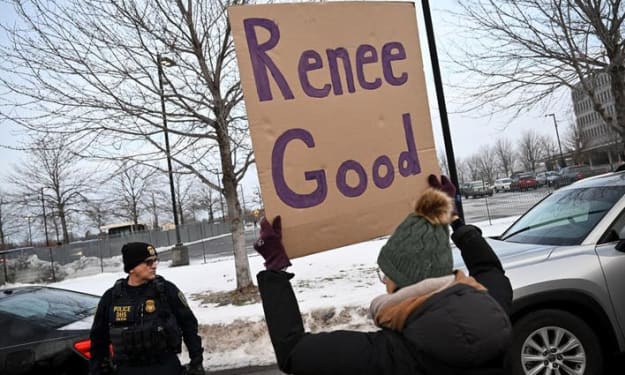
The political temperature in Washington rose sharply after reports emerged of a fatal incident involving Immigration and Customs Enforcement (ICE) officers in Minneapolis. The case, which has ignited protests and renewed scrutiny of federal immigration enforcement, prompted several Democratic lawmakers to threaten withholding federal funding unless meaningful reforms are enacted. The standoff reflects a broader national debate over public safety, accountability, and the role of federal agencies operating within local communities.
By Aadil shanawar17 days ago in The Swamp