
Iran’s Khamenei Lashes Out as Tehran Struggles to Quell Protests
Public Anger Grows as Economic Pressure, Social Restrictions, and Political Repression Fuel Nationwide Unrest

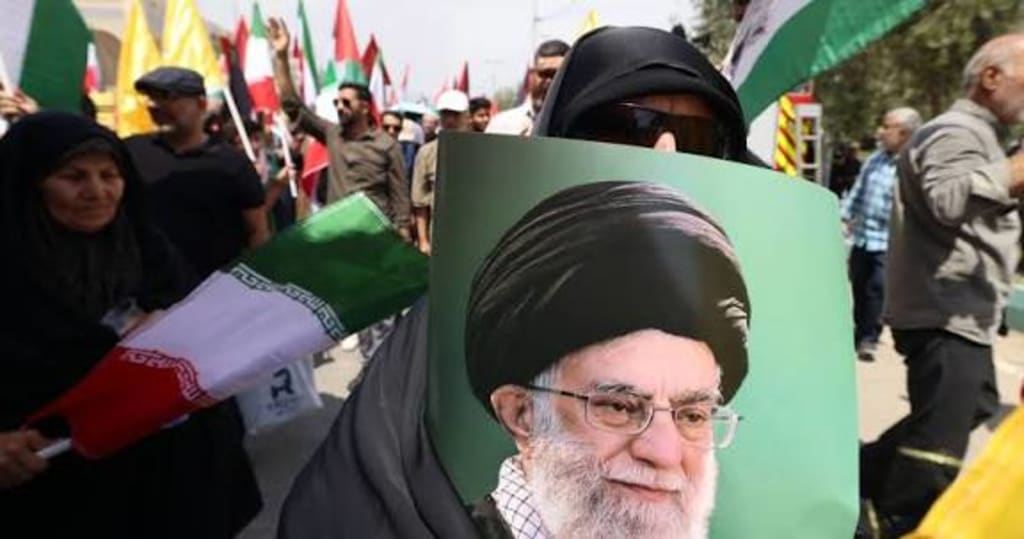
Iran is once again gripped by widespread unrest as protests erupt across multiple cities, exposing deep fractures between the state and society. Supreme Leader Ayatollah Ali Khamenei has responded with fiery rhetoric, blaming foreign enemies, media manipulation, and “sedition” for the growing dissent. His sharp tone reflects not confidence, but pressure. As Tehran struggles to contain demonstrations fueled by economic hardship, social restrictions, and political frustration, Khamenei’s remarks underline a leadership facing one of its most serious legitimacy challenges in years.
The latest wave of protests did not emerge overnight. Years of inflation, unemployment, and sanctions have eroded living standards for ordinary Iranians. The collapse of the national currency has made basic necessities increasingly unaffordable, while corruption scandals involving elites continue to circulate widely on social media. For many protesters, the issue is not a single policy failure but a system that appears unresponsive to their daily struggles.
Khamenei’s reaction has followed a familiar pattern. In speeches broadcast on state television, he has accused Western governments, especially the United States and its allies, of orchestrating unrest to weaken Iran from within. He has also criticized Iranian dissidents abroad, calling them “tools of foreign intelligence agencies.” While such rhetoric resonates with hardline supporters, it has failed to calm the streets. Instead, many Iranians see these statements as an attempt to deflect responsibility rather than address real grievances.
Security forces have been deployed heavily in major cities, including Tehran, Isfahan, Mashhad, and Shiraz. Reports from human rights groups suggest mass arrests, internet restrictions, and the use of force to disperse crowds. Despite this, protests have continued in waves, often reigniting after nighttime lulls. The persistence of demonstrations suggests that fear is no longer as effective a deterrent as it once was.
A notable feature of the current unrest is the diversity of participants. Students, workers, women, shopkeepers, and even retirees have joined protests, each bringing their own demands. While some chant against economic mismanagement, others openly question clerical rule — a red line in Iran’s political system. This broad coalition makes it harder for authorities to isolate the movement or dismiss it as the work of a single group.
Women have played a particularly visible role, challenging strict social codes and demanding greater personal freedoms. Their participation has transformed the protests from isolated economic demonstrations into a broader cultural and political movement. This shift has alarmed the leadership, which views challenges to social control as threats to the ideological foundations of the Islamic Republic.
Khamenei’s lashing out also reflects growing unease within Iran’s power structure. While the Supreme Leader remains the ultimate authority, cracks are appearing beneath the surface. Some officials have called for dialogue and limited reforms, while hardliners insist on zero tolerance. This internal tension complicates the government’s response, as mixed signals weaken its ability to present a unified front.
Internationally, the protests have drawn renewed scrutiny of Iran’s human rights record. Western governments have condemned the crackdown and imposed additional sanctions on Iranian officials and security bodies. Tehran, however, has doubled down on its narrative of foreign interference, expelling diplomats and restricting foreign media coverage. This confrontation further isolates Iran at a time when it is already struggling economically and diplomatically.
The economic dimension of the crisis cannot be overstated. Sanctions linked to Iran’s nuclear program have cut off vital revenue streams, while mismanagement has discouraged foreign investment. Ordinary citizens feel trapped between international pressure and domestic policy failures. For many protesters, the leadership’s defiant posture offers little comfort when jobs are scarce and prices soar.
Despite the unrest, the Iranian state still commands significant tools of control: loyal security forces, state media, and a network of ideological institutions. Khamenei’s authority, while challenged, remains intact for now. Yet history shows that prolonged unrest can gradually reshape political realities, even in tightly controlled systems. Each protest, each chant, chips away at the narrative of unanimous support.
The critical question is whether Iran’s leadership will adapt or continue relying on repression and rhetoric. Khamenei’s harsh words may rally his base, but they do little to bridge the widening gap between rulers and ruled. Without meaningful economic relief and social reforms, protests are likely to resurface, regardless of how forcefully they are suppressed.
For the Vocal Media audience, Iran’s unfolding crisis offers a stark reminder that stability built on fear is fragile. As Tehran struggles to quell protests, Khamenei’s lashing out reveals a leadership under strain, confronting not just dissent in the streets, but a deeper reckoning over Iran’s future direction.
About the Creator
Fiaz Ahmed
I am Fiaz Ahmed. I am a passionate writer. I love covering trending topics and breaking news. With a sharp eye for what’s happening around the world, and crafts timely and engaging stories that keep readers informed and updated.
Keep reading
More stories from Fiaz Ahmed and writers in The Swamp and other communities.
Russia Escalates Attacks on Key Ukrainian Region of Odesa
Russia has intensified its military campaign against Ukraine by sharply escalating attacks on the southern port city of Odesa, a region critical to Ukraine’s economy, security, and global trade routes. The renewed assault marks a dangerous phase in the ongoing war, signaling Moscow’s determination to cripple Ukraine’s access to the Black Sea and weaken its international connections.
By Fiaz Ahmed 20 days ago in The Swamp
Greenland: Vance Warns Europe to Take Trump's Threats Seriously
The Greenland debate has escalated from a peculiar historical footnote to a contentious geopolitical issue in the 21st century. Former U.S. President Donald Trump’s interest in purchasing the world’s largest island has resurfaced, causing ripples not just in Washington but across Europe. In recent weeks, various experts and politicians have been warning Europe to take Trump’s ambitions seriously. One such figure, foreign policy expert Vance, has urged European leaders to prepare for what could be a challenging diplomatic situation. Trump’s Greenland Obsession: A Resurging Threat In 2019, Donald Trump made headlines by expressing interest in purchasing Greenland, a move that was met with widespread disbelief. The island, which is an autonomous territory of Denmark, was never up for sale, and Denmark’s leaders quickly rejected the idea. However, Trump's fixation on Greenland has never truly gone away. As the geopolitical landscape evolves, so does his interest in the island, which boasts significant natural resources and strategic importance. The Trump administration's stance on Greenland wasn’t just about territorial expansion; it was also linked to broader U.S. foreign policy goals. Greenland's location between North America and Europe has made it strategically vital, especially in the context of the Arctic’s changing geopolitical dynamics. The region’s rich mineral deposits, including rare earth metals and uranium, have further piqued global interest, and Trump’s desire to control Greenland was viewed by some as an attempt to secure these resources for American use. Vance’s Warning: Europe Needs to Prepare Vance, an experienced international relations expert, has recently sounded an alarm regarding the ongoing Greenland situation. His remarks focus on the dangers of underestimating Trump's intentions. According to Vance, Europe has largely brushed aside the possibility of a renewed push for Greenland, but that could be a fatal mistake. “I think Europe is making a grave error by assuming that Trump’s previous attempt was just a passing fancy,” Vance explained in a recent interview. “Given his track record and the growing importance of Greenland in global geopolitics, Europe must take this seriously and start preparing for all potential outcomes.” The warning isn’t just about the potential for Trump to try again. Vance also expressed concerns about how the U.S. might attempt to leverage its military presence in Greenland to sway Denmark and other European allies. The U.S. already operates the Thule Air Base in Greenland, a vital asset for its defense and intelligence capabilities in the Arctic. A stronger American presence, according to Vance, could lead to mounting pressure on Denmark to entertain the idea of a deal once more. The Danish and European Dilemma From a European perspective, the prospect of the U.S. attempting to purchase Greenland is a delicate issue. Denmark, as Greenland’s sovereign nation, would be the key decision-maker, but any move involving the island’s future could have far-reaching consequences for the entire European Union. For Denmark, the situation is complicated by both internal and external pressures. Greenland’s native Inuit population has expressed concerns about their cultural and political autonomy should the island fall under U.S. control. Meanwhile, many European leaders are wary of the growing tensions between the U.S. and Russia in the Arctic. The region has become a new frontier for geopolitical competition, with both superpowers seeking to establish dominance. Vance suggests that if the U.S. continues to press its case for Greenland, it could place Denmark in an awkward position. “The U.S. is not known for backing down when it has its sights set on something,” Vance warned. “Denmark’s ties to the EU and its own position in the Arctic are crucial, and the pressure from Washington could become overwhelming. Europe needs to think ahead about how it will respond.” The Strategic Significance of Greenland Greenland’s strategic value has only grown in recent years, as climate change continues to open up previously impassable routes and untapped resources. The Arctic’s melting ice has revealed new shipping lanes and access to minerals that were once inaccessible. Russia and China have already started to invest heavily in the region, both in terms of economic opportunities and military positioning. For the U.S., controlling Greenland would offer significant advantages. Not only would it solidify its presence in the Arctic, but it would also provide a staging ground for any future operations in Europe or the Northern Hemisphere. Moreover, access to Greenland’s vast natural resources could help America’s economic interests, reducing its dependence on foreign imports for key materials like rare earth elements. Vance argues that Europe needs to recognize the increasing importance of the Arctic in global power dynamics. “Europe cannot afford to overlook the Arctic anymore. It’s not just about climate change or environmental concerns; it’s a matter of global security,” he emphasized. “Europe must act quickly to secure its own interests in the region and ensure that it remains an equal player in the Arctic race.” Preparing for the Worst: A Call to Action As the situation with Greenland continues to develop, Vance’s advice to Europe is clear: preparation is key. He urges European governments to engage in strategic talks, not just with Denmark, but with other Arctic nations, to ensure that the region remains under international governance and not solely under U.S. influence. At the same time, Vance advises that Europe should bolster its defense and diplomatic efforts in the Arctic. Strengthening partnerships with key Arctic powers like Canada, Norway, and Sweden will be crucial in ensuring that Europe has a voice in any future discussions about Greenland’s status. Vance also stresses the importance of diplomatic engagement with the U.S. to mitigate the risks of any aggressive U.S. actions in the region. “Europe needs to have a unified response to Trump’s actions,” he said. “The stakes are high, and the time to act is now.” Conclusion: The Need for Global Cooperation As Trump’s ambitions toward Greenland continue to shape international discussions, it’s clear that this issue will have lasting ramifications for both the U.S. and Europe. Vance’s warning should not be taken lightly. Europe’s ability to navigate this complex geopolitical issue will require strong leadership, strategic foresight, and, above all, cooperation among European states and their allies. The future of Greenland may very well depend on how the global community responds to the growing power play in the Arctic. The coming months will undoubtedly test the resolve of European leaders and their ability to safeguard their interests in a rapidly changing world.
By Muhammad Hassan3 days ago in The Swamp


Comments
There are no comments for this story
Be the first to respond and start the conversation.