politics
Politics does not dictate our collective cultural mindset as much as it simply reflects it; We've got to look in the mirror sometimes, and we've got one.
North Korea Vows Response as It Accuses the South of Flying Drones Across the Border. AI-Generated.
Tensions on the Korean Peninsula have once again intensified as North Korea accuses South Korea of flying drones across their shared border. In a strongly worded statement, Pyongyang warned that it would respond decisively to what it described as a serious violation of its sovereignty. The accusation has raised fresh concerns about stability in the region, especially at a time when military technology, political signaling, and psychological warfare are becoming increasingly intertwined.
By Aqib Hussain15 days ago in The Swamp
CNBC Daily Open: Trump’s Greenland Ambitions Have Global Repercussions. AI-Generated.
When former U.S. President Donald Trump floated the idea of buying Greenland, the world reacted with a mix of disbelief, humor, and concern. To many, it sounded like an offhand remark or a real-estate joke taken too far. But beneath the surface, Trump’s Greenland ambitions revealed something far more serious: a changing global order where the Arctic has become a strategic prize, great powers are recalculating influence, and even seemingly improbable ideas can signal long-term geopolitical intent.
By Aqib Hussain15 days ago in The Swamp
Iran Medics Describe Overwhelmed Hospitals as Protests Continue. AI-Generated.
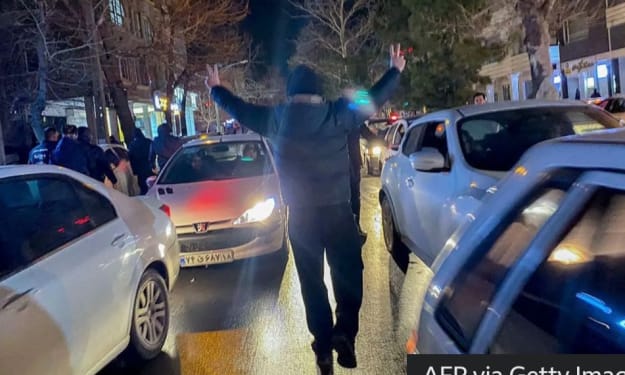
As protests continue across Iran, medical workers are describing hospitals pushed beyond capacity, struggling to treat a growing number of injured patients amid ongoing unrest. Doctors, nurses, and emergency responders say the influx of wounded protesters and bystanders has placed unprecedented strain on already fragile healthcare systems.
By Aarif Lashari15 days ago in The Swamp
Greenland Claims: How Close Have NATO Members Come to Fighting Each Other?. AI-Generated.
When most people think of NATO, they imagine unity — dozens of nations bound together by shared security interests, standing firm against outside threats. But history tells a more complicated story. The recent debate surrounding Greenland, a strategically vital territory governed by Denmark, has reopened an uncomfortable but important question:
By Aqib Hussain15 days ago in The Swamp
Minnesota to Review ICE Shooting After FBI Blocks State Agents From Case. AI-Generated.
Introduction Minnesota officials have announced plans to conduct a separate review into a fatal shooting involving an Immigration and Customs Enforcement (ICE) agent after the FBI blocked state investigators from participating in the federal case. The move has triggered a sharp response from state and local leaders, who argue that excluding Minnesota authorities raises serious concerns about transparency, accountability, and public trust.
By Mohammed Azam15 days ago in The Swamp
Two Wounded in a Shooting with U.S. Federal Agents in Portland, Oregon. AI-Generated.
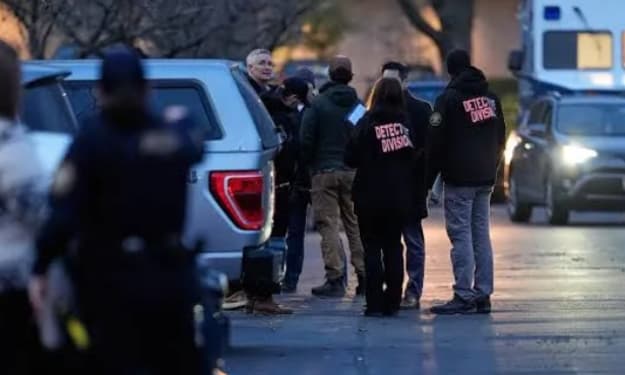
Portland, Oregon, once again found itself at the center of a national debate after two people were wounded in a shooting involving U.S. federal agents in early January. The incident, which unfolded in a residential area of Southeast Portland, has raised serious questions about the role of federal law enforcement in American cities, the use of force during immigration operations, and the growing divide between federal agencies and local governments. As investigations continue, the shooting has become more than a single law-enforcement encounter. It now symbolizes deeper political, legal, and social tensions that have been simmering for years in Portland and across the United States. What Happened in Portland According to initial reports, the incident occurred during what federal authorities described as a targeted enforcement operation. Agents from the Department of Homeland Security, including officers connected to Customs and Border Protection, attempted to stop a vehicle in Southeast Portland. Federal officials claim that during the stop, the situation escalated rapidly. They allege that the driver attempted to use the vehicle as a weapon, placing agents in immediate danger. In response, at least one federal agent discharged a firearm, striking two individuals inside the vehicle. The wounded individuals later sought medical assistance, prompting local Portland police to respond. Importantly, city police confirmed they were not involved in the federal operation itself and only became aware of the incident after emergency calls were made. Both individuals were transported to a hospital and were reported to be in stable condition. One of the wounded was later taken into federal custody following treatment. Conflicting Narratives and Unanswered Questions As with many high-profile law-enforcement shootings, competing narratives quickly emerged. Federal authorities framed the shooting as a matter of self-defense, emphasizing that agents faced a life-threatening situation. They also suggested that the individuals involved may have been connected to organized criminal activity, though these claims have not been independently verified in court. Local leaders and civil rights advocates, however, expressed alarm. Portland officials questioned why heavily armed federal agents were conducting operations in residential neighborhoods without coordination with local law enforcement. Critics argue that such actions increase the risk of violence and undermine public trust. At the heart of the controversy is transparency. Many residents are demanding the release of body-camera footage, clear explanations of the agents’ authority, and answers about whether de-escalation tactics were used before gunfire erupted. Reaction from City and State Leaders Portland’s city leadership responded swiftly. The mayor and several city council members publicly called for a pause on federal immigration enforcement operations within city limits until a full investigation is completed. Oregon’s governor echoed those concerns, describing the shooting as “deeply troubling” and emphasizing the need to protect community safety while respecting the rule of law. The state attorney general announced an independent review to determine whether the federal agents acted within legal boundaries. This pushback reflects a long-standing tension between Oregon’s state policies — which emphasize sanctuary protections — and federal enforcement strategies that prioritize aggressive immigration operations. Community Response and Public Protests The shooting sparked immediate protests across Portland. Demonstrators gathered near federal buildings and downtown streets, holding signs calling for accountability and chanting against what they described as the “militarization” of immigration enforcement. For many community members, especially immigrants and people of color, the incident intensified existing fears. Advocacy groups warned that federal operations conducted without local oversight can create a climate of fear, discouraging residents from reporting crimes or cooperating with authorities. Protesters also linked the Portland shooting to a broader national pattern, citing other recent incidents involving federal agents and civilians. To them, the shooting was not an isolated case, but part of a systemic issue demanding national attention. A Broader National Debate The Portland incident comes at a time when the United States is deeply divided over immigration policy and federal power. Supporters of strong federal enforcement argue that agents must be allowed to act decisively to combat serious crime, including gang activity and human trafficking. They contend that restricting federal operations would leave dangerous individuals free to operate. Opponents counter that aggressive tactics often blur the line between law enforcement and military action. They argue that without accountability and local cooperation, federal agents risk violating civil liberties and escalating routine encounters into deadly confrontations. Legal experts also point out that holding federal agents accountable can be challenging due to complex jurisdictional rules and legal protections, further fueling public frustration. What Happens Next Investigations into the shooting are ongoing, with federal and state authorities reviewing evidence, witness statements, and operational protocols. Whether disciplinary action, policy changes, or legal consequences will follow remains uncertain. What is clear is that the shooting has reignited a conversation Portland knows well — about who holds power, how it is exercised, and at what cost. For now, the city waits. Residents, activists, and officials alike are watching closely, aware that the outcome of this case could shape the future of federal enforcement not only in Portland, but across the country.
By Muhammad Hassan15 days ago in The Swamp
South Africa’s Strained Ties With the U.S. Face New Test After War Games With China, Iran, and Russia. AI-Generated.
Introduction South Africa’s already fragile relationship with the United States is facing renewed scrutiny following its participation in joint military exercises with China, Iran, and Russia. The war games have drawn attention from Western governments and analysts, who see the drills as a symbolic and strategic signal at a time of heightened global tensions.
By Mohammed Azam15 days ago in The Swamp
Two Wounded in a Shooting with US Federal Agents in Portland, Oregon. AI-Generated.
A tense encounter between U.S. federal agents and civilians in Portland, Oregon, has left two people wounded, once again placing the city at the center of a national conversation about immigration enforcement, law enforcement accountability, and community trust.
By Aqib Hussain15 days ago in The Swamp
E.U. and South America Agree to Form Massive Free-Trade Zone Spanning 700 Million People. AI-Generated.
Introduction The European Union and a group of South American nations have reached a landmark agreement to create a vast free-trade zone encompassing nearly 700 million people, marking one of the most significant global trade developments in recent years. The deal aims to reduce tariffs, streamline regulations, and strengthen economic cooperation between two regions seeking to diversify trade partnerships amid global uncertainty.
By Mohammed Azam15 days ago in The Swamp
Russia-Ukraine War: Key Developments on Day 1,416 of the Conflict. AI-Generated.
Introduction The Russia-Ukraine war has reached day 1,416, marking nearly four years since the full-scale invasion began. What was initially expected by many to be a short conflict has evolved into one of the most prolonged and consequential wars in modern European history. Each passing day brings new military developments, diplomatic signals, and humanitarian consequences that continue to reshape regional and global politics.
By Mohammed Azam15 days ago in The Swamp
Former Top U.S. Officials Urge White House to Reject Any Greenland Invasion Plans. AI-Generated.
Introduction A group of former top U.S. officials has written a strongly worded letter to the White House opposing any suggestion of a U.S. invasion of Greenland, calling the idea dangerous, unlawful, and deeply damaging to America’s global standing. The letter, signed by former diplomats, defense officials, and national security advisers from both major political parties, reflects growing concern over rhetoric that appears to challenge long-standing international norms and alliances.
By Mohammed Azam15 days ago in The Swamp
Trump’s Warning Looms Over Iran Protests Response. AI-Generated.
As protests spread across Iran, the response from authorities is unfolding under the shadow of renewed warnings from former US President Donald Trump, whose rhetoric has once again entered the global spotlight. While Iran’s leadership insists that demonstrations are driven by foreign manipulation, Trump’s statements have complicated an already volatile situation, influencing both internal decision-making and international perceptions.
By Aarif Lashari15 days ago in The Swamp