
E.U. and South America Agree to Form Massive Free-Trade Zone Spanning 700 Million People
Landmark agreement promises economic growth, expanded market access, and closer ties between Europe and South America
Introduction
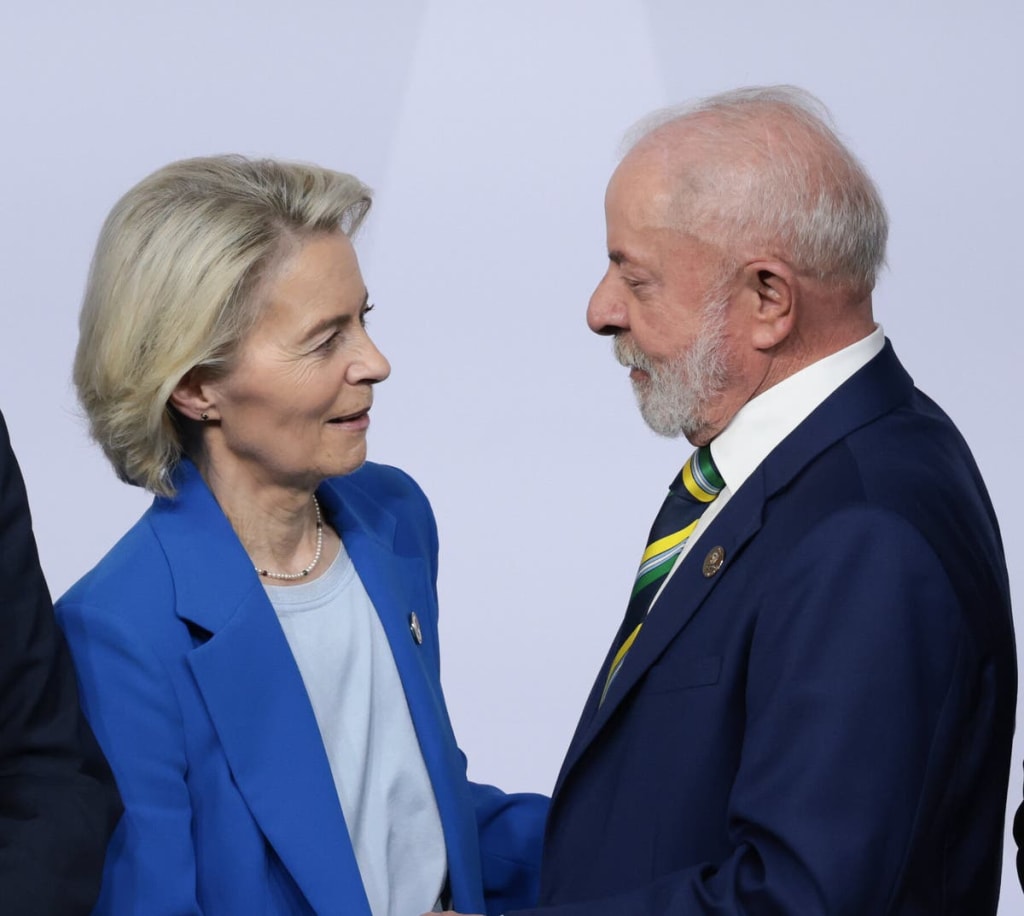
The European Union and a group of South American nations have reached a landmark agreement to create a vast free-trade zone encompassing nearly 700 million people, marking one of the most significant global trade developments in recent years. The deal aims to reduce tariffs, streamline regulations, and strengthen economic cooperation between two regions seeking to diversify trade partnerships amid global uncertainty.
Supporters hail the agreement as a major step toward economic integration, while critics caution that environmental and labor concerns must be carefully addressed before full implementation.
What the Trade Agreement Covers
The agreement links the European Union with South America’s Mercosur bloc, which includes Brazil, Argentina, Uruguay, and Paraguay. Together, the regions represent a powerful economic force with extensive agricultural, industrial, and consumer markets.
Key elements of the deal include:
Reduction or elimination of tariffs on thousands of products
Improved access for European manufactured goods and services
Expanded export opportunities for South American agricultural products
Enhanced rules on intellectual property, digital trade, and dispute resolution
Once fully ratified, the agreement would create one of the world’s largest free-trade areas.
Economic Impact and Growth Potential
Economists estimate that the free-trade zone could generate billions of dollars in additional trade annually, benefiting exporters, manufacturers, and consumers on both sides. European companies are expected to gain greater access to South America’s growing middle class, while South American exporters could benefit from easier entry into European markets.
Supporters argue that lower trade barriers will reduce costs for consumers, increase competition, and boost job creation across multiple sectors, from automotive manufacturing to agriculture and renewable energy.
Strategic Importance in a Shifting Global Economy
The agreement comes at a time when global trade is increasingly shaped by geopolitical tensions and protectionist policies. By strengthening ties with South America, the E.U. aims to reduce dependence on a narrow set of trading partners and reinforce a rules-based global trade system.
South American leaders see the deal as a chance to attract foreign investment, modernize industries, and integrate more deeply into global supply chains. Analysts say the agreement also sends a strong signal that multilateral trade cooperation remains viable.
Environmental and Labor Concerns
Despite its economic promise, the deal has faced criticism, particularly from environmental groups and labor advocates. Concerns have been raised about deforestation, climate commitments, and labor standards in parts of South America.
E.U. officials have emphasized that the agreement includes sustainability clauses requiring adherence to environmental protections and international labor standards. However, enforcement mechanisms will likely face close scrutiny as the deal moves through ratification.
Political Hurdles Ahead
While the agreement has been announced, it still requires approval from E.U. member states and South American legislatures. Previous trade negotiations have faced delays due to political opposition and domestic concerns.
Some European farmers worry about increased competition from South American agricultural imports, while labor unions have called for stronger worker protections. These debates could influence how quickly the deal is finalized.
What This Means for Consumers and Businesses
For consumers, the agreement could lead to lower prices and greater product variety, from food items to cars and electronics. Businesses, particularly small and medium-sized enterprises, may benefit from simplified trade rules and expanded export opportunities.
Trade experts note that long-term success will depend on effective implementation and continued cooperation between the regions.
Conclusion
The creation of a free-trade zone between the European Union and South America marks a historic step in global economic cooperation, potentially linking 700 million people through expanded trade and investment. While the agreement promises growth and strategic benefits, its ultimate success will hinge on addressing environmental concerns, securing political approval, and ensuring fair implementation. As the world navigates an increasingly fragmented trade landscape, this deal stands as a bold effort to reaffirm the value of international partnership and open markets.
About the Creator
Keep reading
More stories from Mohammed Azam and writers in The Swamp and other communities.
Russia-Ukraine War: Key Developments on Day 1,416 of the Conflict
Introduction The Russia-Ukraine war has reached day 1,416, marking nearly four years since the full-scale invasion began. What was initially expected by many to be a short conflict has evolved into one of the most prolonged and consequential wars in modern European history. Each passing day brings new military developments, diplomatic signals, and humanitarian consequences that continue to reshape regional and global politics.
By Mohammed Azama day ago in The Swamp
With Its 337 Meters and 100,000 Tons, the World’s Largest Aircraft Carrier Rules the Oceans
Stretching an astonishing 337 meters in length and weighing close to 100,000 tons, the world’s largest aircraft carrier is not just a ship—it is a floating symbol of modern military power, engineering excellence, and global influence. Often described as a mobile airbase at sea, this colossal vessel dominates the oceans, reshaping how naval warfare, diplomacy, and power projection are conducted in the 21st century. A Giant of the Seas To grasp the scale of this aircraft carrier, comparisons help. At 337 meters, it is longer than three football fields placed end to end. Its displacement of around 100,000 tons makes it heavier than many skyscrapers combined. Powered by advanced nuclear reactors, the carrier can operate for decades without refueling, allowing it to remain at sea for extended missions across the globe. This immense size is not for spectacle alone. The carrier is designed to support a full air wing of more than 70 aircraft, including fighter jets, early warning planes, helicopters, and unmanned aerial systems. Its flight deck is a carefully choreographed space where aircraft take off and land every few minutes, day and night, in all weather conditions. Engineering at Its Finest Building such a vessel is one of the most complex engineering challenges humanity has mastered. Thousands of engineers, technicians, and naval architects work for years to bring an aircraft carrier to life. From its reinforced steel hull to its advanced radar systems, every component is designed to withstand extreme conditions, including rough seas, combat damage, and long-term deployment. The nuclear propulsion system is a defining feature. Unlike conventional ships, this carrier does not rely on diesel or gas fuel. Its reactors generate enormous power, not only for propulsion but also for onboard systems such as radar, weapons, and aircraft launch mechanisms. This allows the ship to reach high speeds and maintain them over vast distances without logistical constraints. A Floating City Life aboard the world’s largest aircraft carrier resembles that of a small city. More than 5,000 sailors and aviators live and work on the ship during deployments. There are sleeping quarters, medical facilities, kitchens capable of serving thousands of meals a day, gyms, and even onboard shops. The crew operates around the clock, ensuring that the carrier remains combat-ready at all times. Pilots train continuously, engineers maintain critical systems, and command staff coordinate operations that may span multiple regions. Discipline, precision, and teamwork are essential, as a single mistake on such a complex platform can have serious consequences. Power Projection and Global Influence Beyond its technical marvels, the true significance of the world’s largest aircraft carrier lies in its strategic role. Wherever it sails, it sends a powerful message. An aircraft carrier strike group—typically consisting of destroyers, cruisers, submarines, and supply ships—represents one of the most formidable military forces on Earth. This capability allows its operator to respond rapidly to crises, whether through combat operations, humanitarian assistance, or deterrence. From disaster relief missions to enforcing no-fly zones, aircraft carriers offer unmatched flexibility. Their presence alone can influence diplomatic negotiations, reassure allies, or discourage potential adversaries. Changing the Nature of Warfare Modern aircraft carriers have evolved far beyond their World War II predecessors. Advanced sensors, stealth aircraft, electronic warfare systems, and missile defenses have transformed them into highly resilient platforms. The integration of unmanned systems is further expanding their reach, allowing surveillance and strike missions without putting pilots at risk. However, the rise of advanced anti-ship missiles and submarine technologies has also sparked debate. Critics argue that such massive vessels are vulnerable targets in high-intensity conflicts. Supporters counter that layered defenses, mobility, and escort fleets make aircraft carriers far more survivable than they appear. A Symbol of National Ambition Possessing the world’s largest aircraft carrier is also a matter of prestige. It reflects a nation’s industrial capacity, technological sophistication, and long-term strategic vision. Only a handful of countries have the resources and expertise to build and operate such ships, making them exclusive symbols of great-power status. For the public, these carriers often capture the imagination. Images of jets launching from their decks, crews working in synchronized precision, and the sheer scale of the vessel inspire awe and curiosity, reinforcing their status as icons of modern naval power. Conclusion At 337 meters long and weighing around 100,000 tons, the world’s largest aircraft carrier truly rules the oceans. It is a masterpiece of engineering, a floating city, and a central pillar of modern military strategy. While debates continue about the future of naval warfare, one thing remains clear: as long as nations seek to project power, protect interests, and influence global events, these colossal carriers will remain at the heart of maritime dominance.
By Fiazahmedbrohi about 12 hours ago in The Swamp
Standing While Falling
Quotation from Friedrich Nietzsche "He who wrestles long with monsters should beware lest he himself become a monster. And if you gaze long into an abyss, the abyss also gazes into you. Man is not destroyed by suffering, but by the meaning he makes of it."
By LUCCIAN LAYTH5 days ago in Critique



Comments
There are no comments for this story
Be the first to respond and start the conversation.