history
Past politicians, legislation and political movements have changed the course of history in ways both big and small. Welcome to our blast to the past.
ALL OF AUSTRALIAN
The first human inhabitants of the Australian continent and their descendants have been referred to by the English as Aboriginal people since 1789. The name Aborigines and formerly Australians are also used in Dutch. The word aborigines comes from the Latin ab origine, which means by origin, so the original inhabitants.
By BJV LEAVITT5 years ago in The Swamp
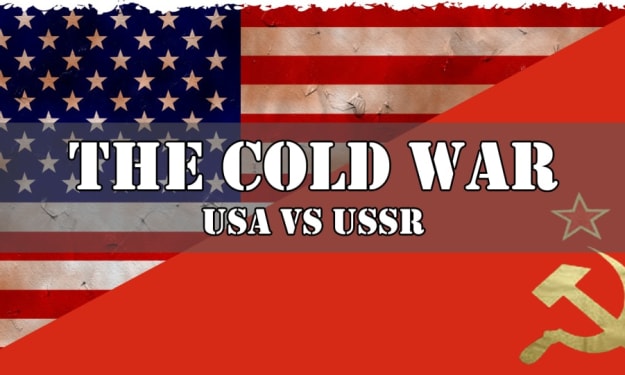
COLD WAR: IMPACTS ON THE WORLD AND SOUTH ASIA
" There is nothing permanent but change " (Heraclitus) but it goes with saying that change might be stagnant for sometimes, but war is permanent there is no way to overcome it and peace is just the preparation for another war. It is believed that Cold War has been started in after WWII but that was its actual emergence but nonetheless it is stated that during 1917 Soviet Union’s Revolution under Vladimir Lenin Cold war was initiated.
By Engr. Muhammad Waseem Khan5 years ago in The Swamp
Lincoln the Unifier
The war was raging yet Lincoln kept his light on the good of the union and the good of his countrymen and countrywomen. With every twist and every turn, he did not waver in his ability to negotiate. He remembered from his mother's last words, to never change and never compromise character to stay the same honest. He felt that his position gave him the greatest opportunity to use eloquence and diplomacy to get the right earning from the intense labor like a farmer, he was ever patient even with little time. This is how he educated himself, a little at a time until the heart desired more. Lincoln worked for everything he had in life and was too poor for privilege until he found himself. As president, he knew that the due season harvested will come on time. Lincoln secretly wanted to save his three living predecessors who were tortured and trapped by the Confederates. Even though he did not agree with his predecessors' stance, he believed that serving the highest office is a privilege that requires careful and dignified actions. With all-partisan set-aside, he knew that he had to act and to act quickly. Who knows what they might say about the union and who knows what they've been put through? Good, Old Lincoln answered the call because he believed that they can help him negotiate the future of America. He always thought about building America again and better including every issue that has been left out to restore the justice needed to last forever. This climax his decision to make sure that he makes the South yield to a truce because he saw how brutal their ambition was and how they dreaded the union. Lincoln had no other choice but to advance the war and keep the peace of the North, he saw that the South wanted to utterly destroy the Union and he was not going to let that happen. He remembered the belief of Van Buren who entrusted the presidency to him before he died winning his vote and support. Lincoln reminded Van Buren of the son who went to the Navy and served his country proudly. Van Buren had a son named Abraham and Lincoln had relatives in New York and it is believed that he came to New York, his relative Andrew Lincoln had a clothing company in East Rochester, New York like Washington came to Pittsford in the 16th Century. Lincoln's resolve was " That we remained one country and united but with no divisions." He knew this task would seem impossible but he did not waver in doing so making it known to his closest allies. And he knew his death would be on the line for taking the side of the liberation and using peaceful devices but also he was prepared and he prepared the union with leaders who were like him to win the nation over. He did not want to die a death in vain but a death that will bring the Union back together remembering that we need each other and that we need to be united for the good of all. That we have a mission to this land and this world to not tarry in ourselves but to avail ourselves as equal and no maltreatment or division has enough strength to divided us when too much blood united us. Lincoln kept the Radical Republicans at bay and always seeing the light manage to edge victory. For he felt each day that he is living and standing for something, it is not in vain. Lincoln believed this despite losing children and not having much of his birth family behind him but through faith and friendship enlightened the world. He was never afraid to defend friends and allies, something he learned all the time with Susan B. Anthony introducing him to supporters to win the presidency, Sojourner Truth as his personal minister who taught him about the struggles of everyday Americans. Frederick Douglass as his loyal friend who visited his house not too long after being freed, and Ulysses Grant, the general he renamed, his most faithful successor. Abraham Lincoln found friends and allies in all walks of life.
By Distinguished Honorary Alumni Dr. Matthew Primous5 years ago in The Swamp
Tit for tat.
This is the story of Wagons-Lits Co. carriage 2419D, which went from serving sauteed veal and boeuf bourguignon to passengers in the seaside town of Deauville to serving as a crucible for world peace while stopped in the middle of a forest in Compiegne.
By Diptangshu Karmakar5 years ago in The Swamp
We will Never Forget
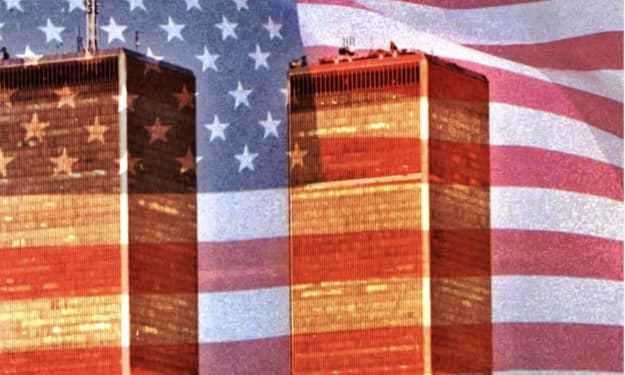
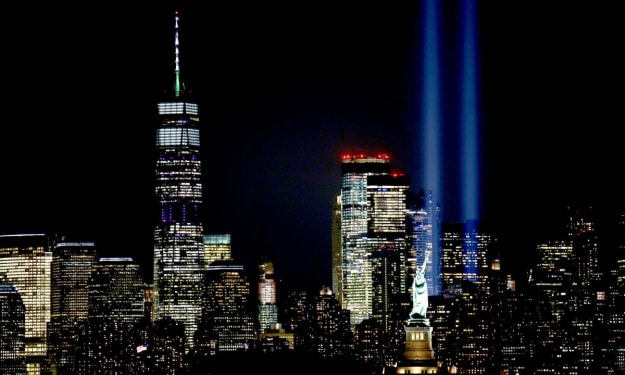
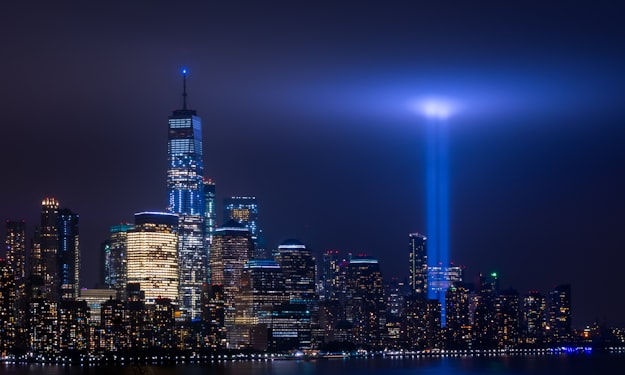
It’s been 19 years since the fateful day of September 11, 2001. No one ever thought that America could Ever be Attacked but it happened and shook us to our core and at the same time brought us together. In a brief moment, everything was normal and then everything changed as that first plane hit the World Trade Center. Of course we thought it was an accident until tower two was hit and then we knew America had been attacked. Every Americans day and life changed in a split second. You’re going to work, school, starting your day then at 8:46am see a plane crash into the north tower. Probably think nothing much of it until the south tower is hit at 9:03 am. Then you realize something is really wrong. Try to make sense of it and you can’t as it’s all over the news and then you hear the president speak realizing we’ve been attacked.
By Abby Morton5 years ago in The Swamp
9/11 A Day Forever Remembered
It started off as a typical Tuesday morning for me. I was fifteen years old and a freshman in high school. I was sitting in my first period civics class preparing for a test the next morning. Suddenly the principal came over the loudspeaker announcing a plane crash that had just taken place. President Bush had asked for the nation to stop and say a prayer for the lives that were lost. I was confused at first, plane crashes, although very tragic, was not an uncommon thing. We didn’t realize it at that moment, but this was not just a typical plane crash. As we were able to gather more information, it became clear that nothing would be the same for our country, for mankind. The day, September 11, 2001, would forever go down in our history books as the day that we were attacked by terrorists. Nearly 3,000 innocent lives were lost when those planes hit the trade center.
By Judith Jascha5 years ago in The Swamp
We Can't Forget, Even If It Hurts
It’s been nineteen years since 9/11/2001, and it’s really hard to say what hasn’t already been said. I know I could say a million and one different things, and hope it sticks out among the rest. However, I won’t try to do that. I’ll just try to go through the memory of this awful event for what it is, something we can’t forget, even if the memory hurts.
By Chloe Medeiros5 years ago in The Swamp
What September 11 Taught Me About How Much America Cares About Its Own.
On the morning of September 11, 2001, I was sitting in my AP US History Class in Valley Stream, New York. A girl from our class came upstairs from dropping off attendance to tell us that everyone in the office was crying and that something horrible had happened but she didn't know what. Shortly thereafter, our principal came over the PA to tell us that all schools in New York City and surrounding areas were on lockdown, the school was shutting down immediately and we were all to go directly home. News and rumours started spreading like wildfire and then another teacher came in to inform our teacher of what had happened. I remember her collapsing into tears because her husband worked for Time Magazine at the time and his office was in the building right next to the World Trade Centre towers. Other classmates began crying as it started to sink in that their parents or family members worked in or around the city. Initially we didn't know it was a terrorist attack on American soil. We heard early reports of a plane accidently flying into the building. As we filled out and left the school, I distinctly remember being able to see the first tower burning from the third floor as the front of my school had a clear view towards Manhattan. It wasn't until I got to the pizzeria on the corner of Merrick Blvd and Central Ave and walked in to see the second plane fly clearly into the second tower that we all knew this was not an accident. The pizzeria was packed and dead silent. Everyone stood frozen in their tracks as New Yorkers, trying to process what we were watching right before our eyes. I remember walking home in a complete daze. I had never witnessed anything like that in my life and because it was happening live, there was no censoring of anything. When I got home, my dad was sitting on the couch watching CNN. I walked in and we both sat silently and watched what was happening. We watched as human beings jumped from the highest floors of the towers, some burning alive as they did. Then in horror, we watched both towers completely collapse in on themselves. We witnessed people die in real time right in front of us on tv.
By Whitney Smart5 years ago in The Swamp
Henry VII - Your Next History Lesson...
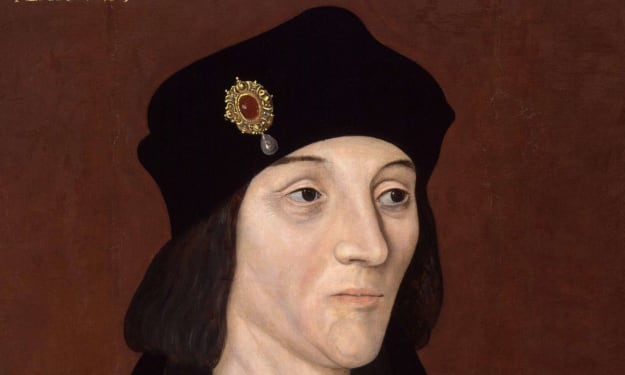
To What Extent Did Henry VII Initiate a New Approach to Kingship? Kingship, the essence of a ruler and having ‘an aptitude for kingly duties,’ seems to fit with the image of Henry VII, through his new approaches. For example: the creation of the Star Chamber, aiding England to stay on her feet, bringing about the rise of the Tudor state since the fall of Richard III. Although it could also be argued that these apparent ‘new approaches’ were not unique to the Tudor king, “the rise of the Tudor state, itself, implies that something new had been created, either from nothing or from the ruins of something that had earlier fallen,” and such ‘initiations’ carried out, much like replacing the Exchequer and keeping the money in his own chambers, was similar to Edward IV - showing a lack of new approaches to the system.
By Rebecca Smith5 years ago in The Swamp