history
Past politicians, legislation and political movements have changed the course of history in ways both big and small. Welcome to our blast to the past.
A Review of Common Sense by Thomas Paine
If anyone asks me what I’ve been doing to get in the spirit of the Fourth of July, I will respond, in the words of Angelica Schuyler, “I’ve been reading Common Sense by Thomas Paine…” I read excerpts from Common Sense in my American Literature class last semester and I bought a copy of the full work in the gift shop of the Concord Bridge battlefield site and thought it would be a good idea to read it in honor of Independence Day.
By Rachel Lesch9 years ago in The Swamp
The Failure of the War on Drugs
The Failure of the War on Drugs and How It Can Be Rectified On July 14, 1969, Richard Nixon made a speech to Congress, identifying drugs as a serious national threat. Additionally, he called for federal and state anti-drug policy. Nearly two years later Richard Nixon officially declares a “war on drugs,” similar to L.B.J. ‘s (Lyndon B. Johnson) “war on poverty.” Reasons cited for his new “public enemy No. 1” were the increase in crime and juvenile arrest rates from 1960 to 1967. A little over two years later, the DEA is formed in an attempt to coordinate all other agencies in the new war on drugs (Timeline: America’s War on Drugs). With the sixties nearing their close, it seemed that society, at least some fringe groups, had embraced various drugs. For example, at the fringes of the anti-Vietnam War protests, marijuana and lysergic acid diethylamide (LSD) was used. Richard Nixon needed a way to deal with the vehemently anti-Vietnam War protesters, as well as the black community, which Nixon had a horrible track record with. The solution that his administration came up with would later be known as “The War on Drugs.”
By Kent Prion9 years ago in The Swamp
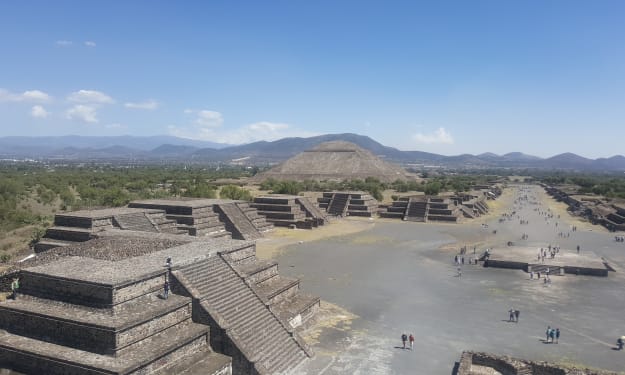
A Journey Through Mexico City
Colonialism is the immovable stain on the fabric of humanity. A nation free from its grasp may strive to erase its dark past, yet its indelible marks remain on the land and its people. Survival of the fittest, they brand it, the strong devouring the weak has become the blueprint for mass murder, providing ample justification for military occupation, the raping and pillaging of lands, the dehumanization of a people ultimately stripping an entire nation of its identity. Those that opt to defend and protect their homeland face imprisonment and death. The skewed and twisted ideologies borne out of greed, racism and a flawed theology inspire men to lay waste to whole communities. Only when submission is seen as the only viable option is hegemony allowed to run its course, convincing a nation that their actions are morally justified, its people now contained inside the walls of their invisible prison, enjoying faux freedoms. Despite the efforts to take control of an occupied land and its indigenous people, resistance remains and victory is measured in terms of independence. And yet, as much as any oppressed nation feels a sense of liberation, the shackles of influence left behind are harder to remove.
By Jermaine Lebert9 years ago in The Swamp
Free Speech and the New Left
In 1964, the University of California Berkeley was engaging in what would come to be known as The Free Speech Movement. During this time subversive ideas were plentiful, though not all embraced, especially by federal and local law enforcement. At the same time, a mass of students at UC Berkeley were engaged in passively handing out civil rights literature in an attempt to challenge the status quo. While this would be seen as perfectly acceptable by most standards today, Hollander Savio spoke to NPR News about how contemptible these acts were at the time by law enforcement. According to NPR News, Savio recalls that she watched a former mathematics graduate student being arrested for distributing civil rights literature (Gonzales). Fast forward to circa 2016, so called “safe spaces” are being advocated, or more appropriately characterized as demanded, by the New Left. Safe spaces as defined by The Chicago Tribune are areas which serve to shelter students from speakers and/or topics that may be traumatizing, uncomfortable or offensive (Rhodes, Vivanco). One should be shocked that this censorship and disabling of free speech and open discourse comes from the “descendants” of the Berkeley Free Speech Movement. Not only has the New Left abandoned one of the Old Left’s defining historical moments, it’s abandoned the idea that free speech is in place to protect a citizen’s right to speak openly about unpopular ideas and that that same right should be granted to all citizens without prejudice.
By Kent Prion9 years ago in The Swamp
Multiculturalism
Multiculturalism, a word so many of us know but one so many of us still do not fully understand. To me, it's the promise of liberty, freedom for all men and women united under the flag of our species. Here in the western world, it is called many names, the true north strong and free, the American dream, or really just a better life, a fresh start for weary travelers seeking a fresh start.
By John Ames Birch9 years ago in The Swamp
Propaganda or Smart Policy?: An Objective Look at North Korea’s Defense of Its Nuclear Program
Unless you have been living in a cave or under a rock, you are probably already aware of the situation going on between North Korea and the United States. With the recent events that have taken place involving not only missile tests, but now the death of Otto Warmbier, tensions between the two countries are much higher than usual. We have already covered this situation, but today we are going to take a look at why North Korea wants nuclear weapons in the first place.
By Frank Bursese9 years ago in The Swamp
What Would George Washington Think?
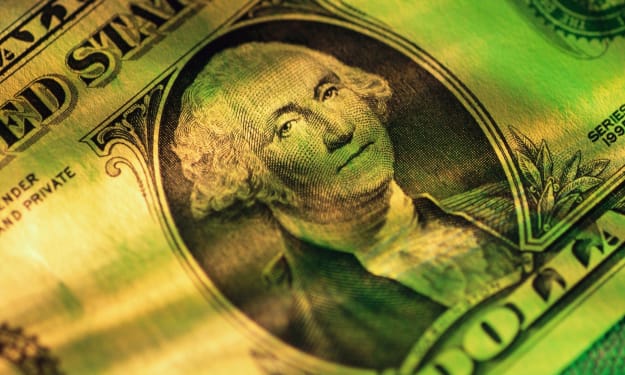
I had a dream. There I was on the set of my my own talk show, and in the guest chair was the original president. George Washington hit his peak when you could send a first-class letter using a three-cent stamp with his face on it. The polls show that Washington hasn't stood the test of time. Gone from the charts and from our hearts, in his time he was number one at everything. Real groundbreaking stuff. Washington, whose sales are slumping, is still one of only four Americans to make it onto the side of Mount Rushmore.
By Frank White9 years ago in The Swamp
Dear Black People
Before slavery, the inferiority of Africans did not exist and definitely not in the way it is perpetrated now. People from different parts of the world were not reduced down to the basic epithets of ‘black’ and ‘white’ but were referred to by their nation name. Slavery changed all that, making it necessary to label African people in a particular way to fuel the trade and stem any early counter arguments against it. The problem is, people across the world have taken these lies as gospel and that is the basis for much of modern racism against African peoples.
By Dre Joseph9 years ago in The Swamp
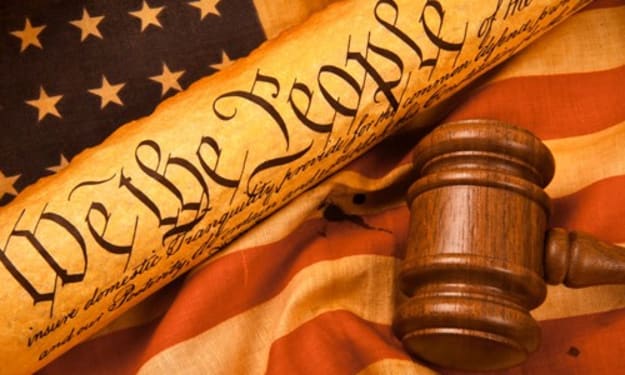
The End of the US Constitution
Reading that title what first comes to mind? Do you think I am anti-American? Do you immediately assume I am a rebelling millennial? Do you assume I don't know any better? Or perhaps you are intrigued? You have come across something you have thought about, but never dreamed of speaking aloud?
By Brian Paredes9 years ago in The Swamp