history
Past politicians, legislation and political movements have changed the course of history in ways both big and small. Welcome to our blast to the past.
Julius Caesar: Friend or Foe?
Julius Caesar and Pompey shared a special love/hate relationship within their personal and political life. To Caesar, Pompey represented a father figure to him; yet Caesar saw within himself to one day surpass and conquer Pompey for the throne of Rome. Caesar tolerated Pompey solely for the purpose of gaining his knowledge and wisdom---to later overthrow Pompey’s power in a civil war. Caesar and Pompey struggled for power which ultimately ended in luck on Caesar’s behalf. In 48 B.C., again erupts another civil war (which lasts until the year 45 B.C.) where Caesar utterly defeats everyone and assumes position as emperor of the Roman Empire. As emperor, Caesar adopts Octavian, to further advance his political and popularity status, which surprisingly backfired on Caesar’s original plans he had for Octavian. “Having outcompeted his rivals one by one, Octavian was now by far the most powerful man in the Roman empire … he was basically a military dictator with almost unlimited power (Sommer, 34).” Octavian, as he got older, proved to be far more advanced in his comprehension and skills than Caesar had anticipated, which played to Caesar’s advantage as Octavian willingly shared his insight with Caesar in planning war strategies for Caesar’s army. After Caesar’s death, he left everything he owned to his successor Octavian in his will. With his newfound power and wealth, Octavian decided to donate it all to the poor (in honor of Caesar’s wish). In doing so, Octavian gains prestige with the people of Rome---getting help and support from them to refinance and rebuild his power again. After the Senate went into hiding from killing Julius Caesar, Octavian then takes it upon himself to avenge Caesar’s death by hunting down and killing off each of the members of the Roman Senate. While Caesar was still alive though, he accentuated his supremacy by pleading to the Senate for a force unanimous decision of making him dictator of Rome.
By Robyn Welborne8 years ago in The Swamp
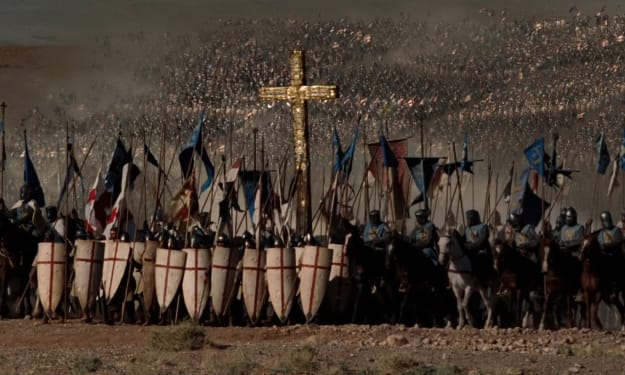
The Church, the Tribes, and the Roman Empire
“Pride goeth before destruction, and an haughty spirit before a fall. (Proverbs 16:18) Usually we just abbreviate it to “pride goeth before a fall”.” (Glen, ‘The King’s English’). A universally famous quote from the King James Bible sums up how too much of a good thing will eventually lead to ruin. History has a way of repeating itself. Just like the Grecian Empire before them, the mighty Roman Empire also experienced a great ‘fall’. But, was the Romans defeated by pride …or fear? Rome fell in August 410 at the hands of Alaric the Visigoth, erecting Alaric as the next successor to the Romans’ fragile legacy lineage. After Alaric’s death, Ostrogothic King Theodoric emerges through the challenges and responds by preserving what was left of the Roman Empire and merging its cultures with the Germanic tribes. Out from all of this chaos, the ‘true successors’ of Rome came to be the Roman Catholic Church; their peaceful influence over the invading barbarians showed how the Germanic leaders were just ‘inheritors’ to what the Catholic Church had already established. Although the Visigothic leader Alaric conquered Rome, and the Ostrogoth King Theodoric, after him, saved its traditions and history; the Roman Catholic Church still remains the only real successors of the fallen Roman Empire by providing stability for the Medieval Period.
By Robyn Welborne8 years ago in The Swamp
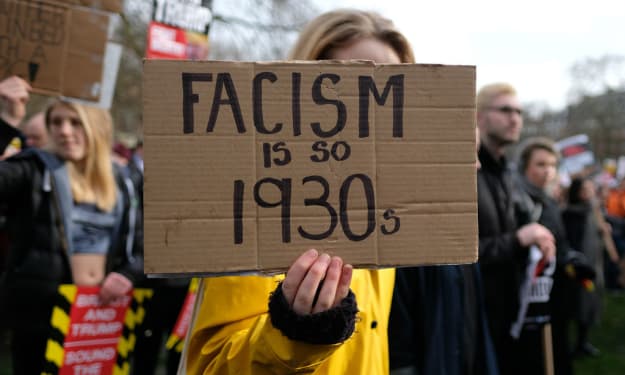
The Rise of 20th Century Fascism
To acolytes of Fascist ideology, the First World War served to reiterate their deep-seated belief that Liberal Democracy was essentially antiquated. They believed a heavily nationalistic, autocratic form of authoritarianism was required to transmogrify Europe; redefining the traditional constructs of social order in the process. Michael Mann in his book ‘Fascists’ discusses the rise of right wing authoritarianism through his IEMP model, this model refers to the means and distributions of social power; Ideological, Economic, Military and Political. I will be drawing upon the Mann’s IEMP model to coherently discuss the role that fear of the revolutionary left played in the proliferation of Fascism during the 20th century.
By T.P Schofield8 years ago in The Swamp
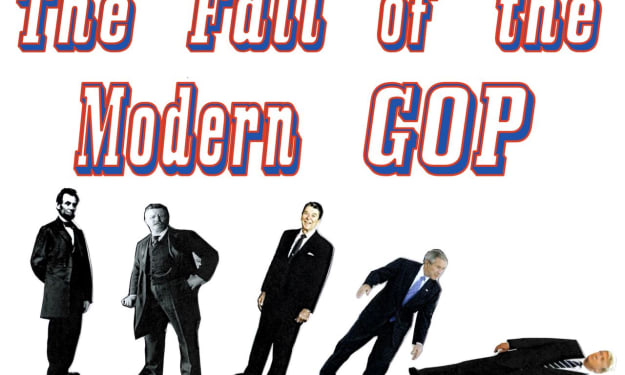
The Fall of the Modern GOP
This ain't your daddy's GOP anymore. The Republican party has undergone many transformations in its 160 year existence. It was the birthplace of modern progressivism, at least that's what Teddy Roosevelt would tell you. It was a little more complex than that, with the party doing much as the modern Democratic party is doing with folks to its left, which is gobbling up all of the good ideas in order to co-opt any challengers. Now, one could say that the Republican party tried to do the same to folks on its right. Well, that is true and that is what has landed the GOP in its current predicament.
By Peter Carriveau8 years ago in The Swamp
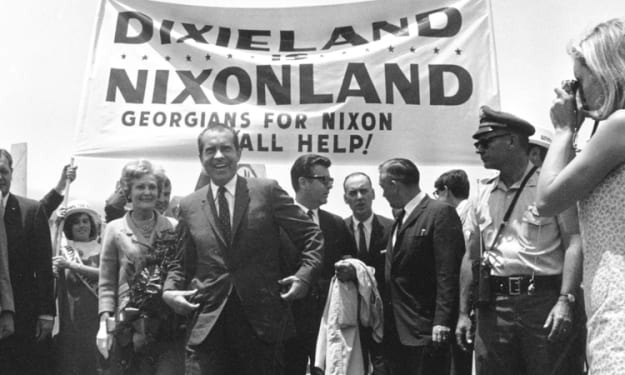
President Trump Is the Logical Conclusion of the Republican Party
Today’s Republican party is unrecognizable from 1865. In that year, Republican President Abraham Lincoln and future Republican President Ulysses Grant oversaw the defeat of the southern Confederacy, thus freeing African Americans from slavery. For decades, the Republicans were the progressive party while Democrats, such as Klu Klux Klan sympathizer President Woodrow Wilson, advocated for Jim Crow racial segregation laws. Today, the Grand Old Party is the purported purveyor of conservative values, and Democrats are the supposed liberals. What happened?
By Robert Wells8 years ago in The Swamp
Equiano
Throughout the journey from Africa to Montserrat, Equiano possessed a strong conscience, curiosity, dedication, and overall, high morals. Even though he was separated from his sister in the process, he maintained even the smallest amount of hope. With those traits, he was able to improve himself and be favored by those he came across. He builds confidence as well as bravery from each situation he was faced with.
By Selena Huerta8 years ago in The Swamp
Winston Churchill - The Fraud
Winston Churchill’s demigod-like status is unrivaled in the field of British political history; he was a personification of "Britishness" encompassing the very values that put the "Great" in Great Britain. It is wholly unsurprising that in 2002 he was declared the "Greatest Briton" via a BBC nationwide poll, beating such luminaries as Shakespeare, Brunel, and Cromwell. However, is Winston Churchill’s prodigious legacy well deserved? Or are our impressions of him distorted; a mere propaganda-funded stratagem designed to dress up the atrocities of our modern history in the form of strong leadership.
By T.P Schofield8 years ago in The Swamp
How John F. Kennedy Became a Cultural Icon. Top Story - June 2018.
Tensions reached new heights due to marches on civil rights, women’s rights, the never-ending war in Vietnam and farmworker conditions. Although the majority of these movements began peacefully, the ongoing hostility from those opposing made violence inevitable.
By Shandi Pace8 years ago in The Swamp
The Origins of the Term Socialized Medicine and How Mad Men Sank Our Chance for National Healthcare in 1948
Back in 2008, the smoke cleared, we wiped our noses, and finally got healthcare reform. Gesundheit!! Well, sort of… With a universal acceptance of a system in dire need of repair, I envisioned congress intelligently fighting it out. As a result, the best of both worlds would create compromise that could not be beholden to any one political ideology or sustainable business model. Oh my God, what was I smoking back then?
By Rich Monetti8 years ago in The Swamp