history
Past politicians, legislation and political movements have changed the course of history in ways both big and small. Welcome to our blast to the past.
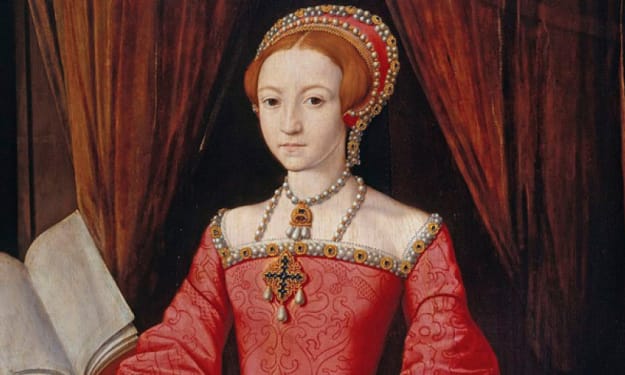
Before Queen Elizabeth, There Was Princess Elizabeth
She was stern, she was smart and cunning, she cared for her people among all else, she refused to be tricked or used, and she was The Virgin Queen. Queen Elizabeth 1 did not pop out of the ground one day with all of her knowledge, characteristics, and political savvy that made her great, she was born and through her childhood and young adult life she learned these things and her character was molded, helping her in her reign. Not much is said on Elizabeth’s childhood and young adult life before she took the throne, so maybe a deeper look at Elizabeth’s younger years will help explain her older ones just a bit more.
By Catherine Agati7 years ago in The Swamp
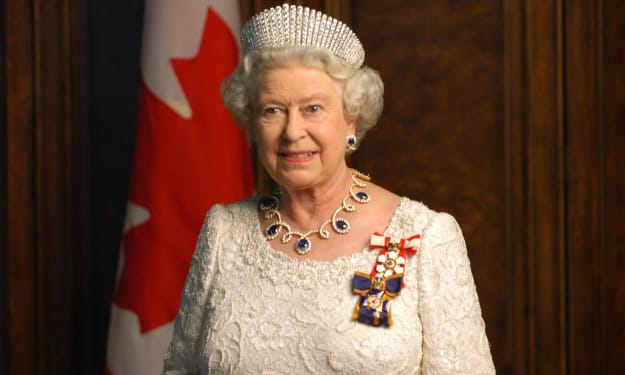
Queen Elizabeth Has Legal Custody of Archie Harrison Mountbatten-Windsor
The royal family has hundred of royal rules and traditions that other families don't have. Most of the rules go back hundreds of years, and are still observed today. One of those rules dates back to 1717 that states the monarch must have legal custody of minor royal children.
By Margaret Minnicks7 years ago in The Swamp
Pre-Determined Destinies
Of all our founding fathers it was Thomas Jefferson who understood that education was vital for the preservation of our liberty. He also knew that the abuses of power would undermine, and eventually destroy, the republic. Today, too many of our elected officials are out of control. Case in point: the Trump Administration. It is our education that is fundamental for the preservation of our heritage. But too much of that has been omitted. For over one hundred years, America continues to operate on fiction of law. What we mean by fiction of law is when, "something known to be false is assumed to be true." This is stated by Ryan v. Motor Credit co., 130 N.J.Eq. 531,23 A.2d 607,621. "That statute which would deprive a citizen of the rights of person or property without a regular trial according to the course and usage of common law, would not be the law of the land."
By Dr. Williams7 years ago in The Swamp
A Democratic War
Democracy started a couple millennium ago, back in 500 B.C. in the ancient Greek city of Athens, created by an Athenian named Cleisthenes. All men, whether rich or poor, were allowed to vote by the Government. Great for men, a problem for women, who were shut out of the political power that they had during the Archaic period.
By Luke Rodgers7 years ago in The Swamp
Milosevic
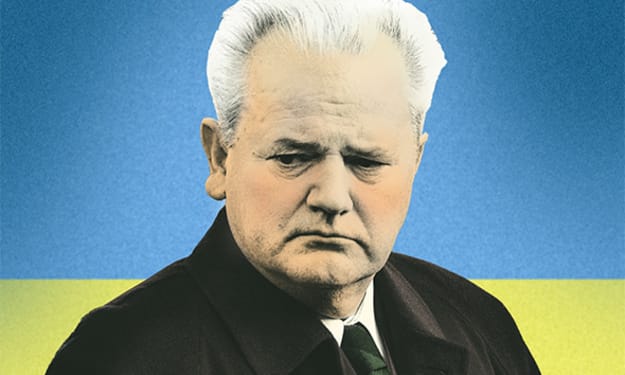
Milošević’s rise to power deserves careful scrutiny, not only because it has long served as the dominant narrative of these historical events, but because it reflects the broader power-structure of socialist states in general. Despite Milošević’s prominence in European history, his rise to power is widely contested and shrouded in mystery. Traditional historians argue that Milošević rose to power due to the broad appeal of his centrist political program. Revisionist historians have challenged this view. They believe it was Milošević s populist charisma and nationalist appeal that enabled him to both gain and maintain power. In the upcoming paper, I am going to analyze how Milošević gained and maintained control over Serbia. Firstly, I am going examine Milošević’s rise to power. Discussing the context of post-Tito Yugoslavia, the catalyst of Kosovo and the charisma of Milošević. I am then going to discuss how Milošević maintained control over Serbia. Firstly, I will analyze how Milošević manipulated the media in order to facilitate his fear and victimhood rhetoric. I will then discuss Milošević’s rejection of the Rambouillet Formula; an event which epitomizes his overall strategy for maintaining power. Though I will be tackling Milošević’s rise and maintenance of power separately. The general trends of opportunism and ethnic nationalism remain prevalent throughout both sections.
By T.P Schofield7 years ago in The Swamp
The Tito-Stalin Split
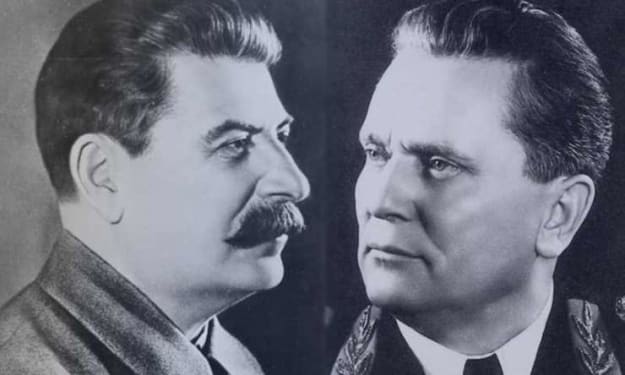
What were the reasons for and consequences of the split between Yugoslavia and the Soviet Union in 1948? On 28th June 1948, news of the Communist Party of Yugoslavia’s (CPY) expulsion from Cominform reverberated amongst the astounded Western world. Yugoslavia’s expulsion from Cominform, or Tito-Stalin split as it’s now entitled, marked a crack in the monolithic Soviet Bloc, whilst providing a future point of reference to those Communist party’s that wanted to become ideologically and politically emancipated from Moscow. In the upcoming essay, I am going to analyze the rationale behind the Tito-Stalin split, before evaluating the impact of the split; both on Yugoslavia’s development and the Eastern European Communist movement.
By T.P Schofield7 years ago in The Swamp
The Importance of Cesar Chavez, Now and Then
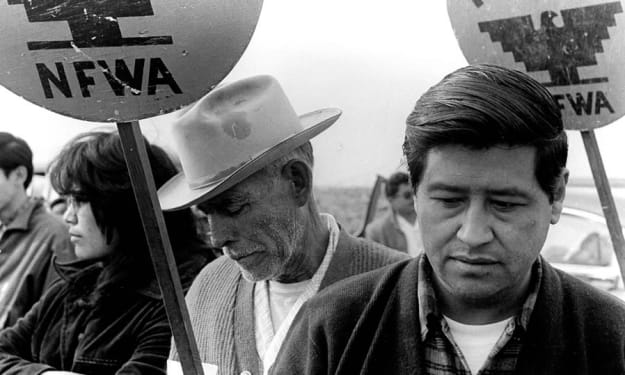
As a young student, I learned about Martin Luther King, Abraham Lincoln, Malcolm X, John F. Kennedy, Harriet Tubman, and other great American activists and leaders, all of whose stories had an incredible impact on American history.
By Jose Antonio Soto7 years ago in The Swamp
The 24th Amendment
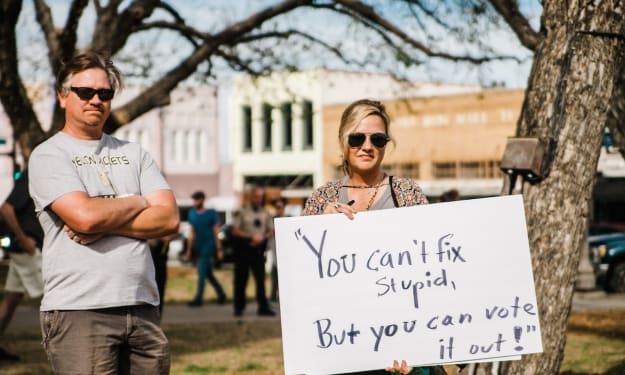
The 24th Amendment is what stops Congress and any state from allowing the right to vote to be predicated on a payment poll of taxes, or any kind of tax for that matter. Voting is supposed to be free. Congress wrote the 24th Amendment, and it was proposed to the States on August 27, 1962. It was then passed on January 23, 1964. The Southern states who used to be a part of the Confederacy, had adopted poll taxes in the late 19th Century, because they wanted to make sure that former slaves did not vote much if at all.
By Iria Vasquez-Paez7 years ago in The Swamp
A Worthy Coronation
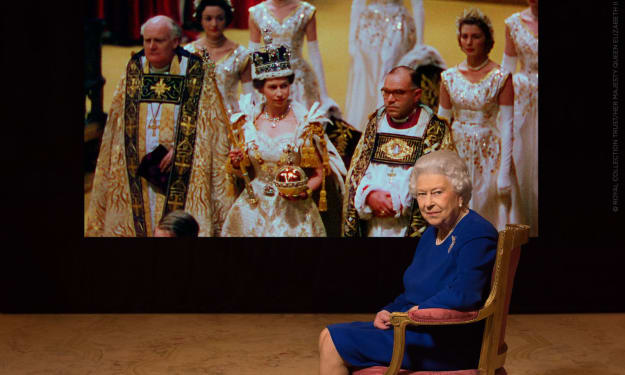
“Will you solemnly promise and swear to govern the Peoples of the United Kingdom of Great Britain and Northern Ireland, Canada, Australia, New Zealand, the Union of South Africa, Pakistan, and Ceylon, and of your Possessions and the other Territories to any of them belonging or pertaining, according to their respective laws and customs?”
By The Rumble Online7 years ago in The Swamp
Insight into Martin Luther King Jr.'s "I Have a Dream" Speech
One of the major defining moments of the American Civil Rights Movement was when Martin Luther King Jr. delivered his famous "I Have a Dream" speech on the Lincoln Memorial steps on August 28, 1963. His rhetoric has continued to inspire Americans to strive toward achieving "Life, Liberty, the Pursuit of Happiness," and much more (par 4). Within his speech he skillfully used contrasting metaphors, a literary reference, a Biblical reference, and then he weaved it all together with an American patriotic song and an old Negro spiritual. King's plea was to fight with "soul force," not only for freedom but for unity, acknowledging that all people, black or white, share a common destiny (par 9).
By Rowan Finley 7 years ago in The Swamp