finance
Money talks; reviewing the global economy, government spending, taxes, and economic policy that affect our social and political future.
What Happens to All These Trade Deals Now?. AI-Generated.
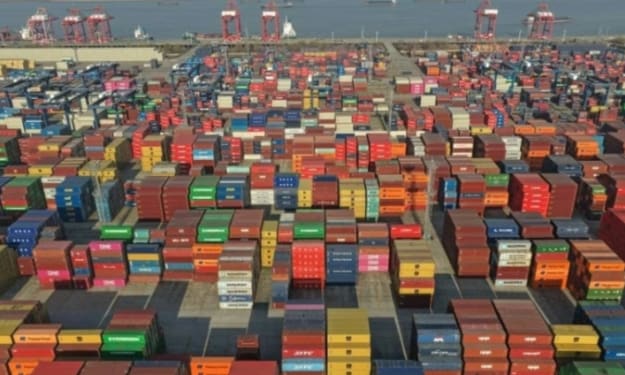
Global trade agreements negotiated over the past few years face a period of intense uncertainty as political, legal, and economic conditions shift rapidly — especially after a major U.S. Supreme Court ruling and evolving tariff strategies from Washington. Governments and businesses around the world are asking the same question: what comes next for trade deals that have been painstakingly negotiated? Legal Uncertainty in the United States The immediate trigger for trade deal confusion was a recent Supreme Court decision that struck down key U.S. tariffs previously imposed under emergency powers. The court ruled that the government lacked unilateral authority to set sweeping tariffs without explicit Congressional approval, undermining the legal foundation for many trade arrangements tied to those levies. In response, the White House has moved to impose new global tariffs under alternative authorities — including Section 122 of the Trade Act — raising levies to 15 percent on many imports for a limited 150-day period. That move has compounded uncertainty: while some deals were negotiated under the assumption of earlier tariff caps, the new rates could render those frameworks obsolete or financially unattractive. Treasury officials have publicly urged foreign governments to honor existing trade deals, saying many negotiated commitments remain intact despite the ruling, especially pacts with countries like India. However, legal experts warn that the viability of certain provisions could hinge on how tariffs are implemented moving forward. Interim Agreements and Modified Deals Not all trade arrangements are in jeopardy. In early 2026, the United States and India announced a framework for a bilateral interim trade agreement, including significant tariff reductions — from 25 percent to around 18 percent on many goods — in exchange for broader market access commitments. That deal was intended to set the stage for a full-scale Trade Agreement. Even after the tariff ruling, both Washington and New Delhi have signalled their intention to keep negotiating the interim pact, adapting to the changed legal context. New Delhi’s commerce officials suggested the reciprocal tariff figure may adjust, but that the broader deal remains a priority. The Daily Star Other deals — such as reciprocal trade frameworks with Indonesia and Bangladesh — have also been part of U.S. efforts to diversify trade ties. These agreements aim to lower tariff baselines and address non-tariff barriers, offering market access to U.S. agricultural and industrial goods while gaining concessions abroad. EU and Other Major Trade Pacts Across the Atlantic, the European Union and India are finalizing one of the world’s biggest free-trade agreements, which promises to cut tariffs on most goods and boost services access once legal reviews are complete. That pact — projected to cover roughly 25 percent of global GDP — may still proceed independently of U.S. policy shifts. However, the U.S.–EU trade framework agreed in 2025 has already been complicated by tariff unpredictability and political tensions. Several European lawmakers have paused approval of trade arrangements in reaction to ongoing U.S. tariff threats, including levies between 10 percent and 25 percent that run counter to prior commitments. Market and Strategic Shifts The knock-on effects extend far beyond legal questions. Asian and European economies are increasingly recalibrating trade routes and agreements outside U.S. direction, seeking stability amid tariff turbulence. Some analysts argue that the United States could risk being sidelined as Europe and Asia push forward with deeper integration and lowered barriers between major economic blocs. Reddit Yet others point out that structured deals — once signed — carry inertia. Even if tariffs change or legal bases shift, countries often maintain existing market access terms to preserve supply chains, stability for exporters and importers, and mutual economic interdependence. This is especially true for longstanding partners such as Canada, Mexico, and strategic markets in East Asia. Foreign Policy Looking Ahead The coming months could determine the future of many trade deals. Lawmakers in the United States might consider new legislation to clarify tariff authority, while international partners watch closely to see if interim agreements are formalised or if renegotiations become necessary. For businesses, the lesson is clear: flexibility and diversification may be more important than ever. Trade deals that once seemed settled now face legal and political stress tests, and the global trading system may evolve into a more fragmented set of regional arrangements rather than a single cohesive framework. Amid these shifts, governments and corporations alike will be watching how legal decisions, geopolitical priorities, and economic pressures intersect — and what that means for the future of global trade.
By Fiaz Ahmed 6 days ago in The Swamp
Depleted Savings and Plummeting Sales: The American Casualties of Economic Slowdown. AI-Generated.
For years, American consumers were the engine of economic growth. Stimulus checks, strong job markets, and rising wages allowed households to save more and spend freely. But that momentum is fading fast. Today, depleted savings and plummeting retail sales are becoming two of the most visible casualties of a slowing economy.
By Sajida Sikandar7 days ago in The Swamp
U.S. Economic Growth Weaker Than Thought in Fourth Quarter With Government Shutdown, Consumer Pullback
When economists first projected growth for the final quarter of the year, optimism was still in the air. But updated figures have revealed a more sobering picture: U.S. economic growth slowed far more than expected during the fourth quarter, largely due to a prolonged government shutdown and a noticeable pullback in consumer spending.
By Sajida Sikandar7 days ago in The Swamp
The Protection-of-Innocence Reciprocity Doctrine. AI-Generated.
Core Moral Premise The highest duty of any legitimate social order is the protection of innocent life. Innocent life has absolute moral primacy. Any system that systematically insulates predators, tolerates predatory asymmetry, rewards hypocrisy, or allows aggressors to retain insulation has inverted its purpose and forfeited legitimacy. Truth, justice, reciprocity, humility, mercy, forgiveness, and vertical accountability are structural necessities rather than optional virtues. Vertical accountability means recognition of and submission to a moral law higher than oneself. Authority must flow toward those who most consistently demonstrate sustained competence in moral and epistemic discipline. This competence is shown through observable conduct and trajectory over time, not through doctrinal label, tribal identity, credential alone, or self-profession.
By Peter Thwing - Host of the FST Podcast8 days ago in The Swamp