education
A place to hash out all opinions on education policy, charter schools, statewide testing, and what the political world is and isn't doing about it.
Free Speech and the New Left
In 1964, the University of California Berkeley was engaging in what would come to be known as The Free Speech Movement. During this time subversive ideas were plentiful, though not all embraced, especially by federal and local law enforcement. At the same time, a mass of students at UC Berkeley were engaged in passively handing out civil rights literature in an attempt to challenge the status quo. While this would be seen as perfectly acceptable by most standards today, Hollander Savio spoke to NPR News about how contemptible these acts were at the time by law enforcement. According to NPR News, Savio recalls that she watched a former mathematics graduate student being arrested for distributing civil rights literature (Gonzales). Fast forward to circa 2016, so called “safe spaces” are being advocated, or more appropriately characterized as demanded, by the New Left. Safe spaces as defined by The Chicago Tribune are areas which serve to shelter students from speakers and/or topics that may be traumatizing, uncomfortable or offensive (Rhodes, Vivanco). One should be shocked that this censorship and disabling of free speech and open discourse comes from the “descendants” of the Berkeley Free Speech Movement. Not only has the New Left abandoned one of the Old Left’s defining historical moments, it’s abandoned the idea that free speech is in place to protect a citizen’s right to speak openly about unpopular ideas and that that same right should be granted to all citizens without prejudice.
By Kent Prion9 years ago in The Swamp
The Talented Mr. Kersey: The Tory Pressure Group, the Diploma Mill, and the Tesco Tax Manager
In 2002, John Kersey was living with his mother, father, and sister in Enfield, London. He was a 30-year-old pianist who was struggling to find his place in society. He had been to university to study music and had started to record copyright-free classical music, mainly work from the lesser known composers of the romantic period. The internet revolution would change John Kersey’s life considerably. In July 2003, John Kersey would purchase his first fake online diploma, to become a "Doctor of Education," from Saint Regis University for $1681.00. Saint Regis was later exposed as a "Diploma Mill," also humorously nicknamed as a "Goativersity." The effort to expose Saint Regis was led by a Professor of Physics at the University of Illinois named George Gollin. Professor Gollin was a force to be reckoned with. In September 2003, Professor Gollin wrote a paper in the form of a slideshow presentation entitled "Unconventional University Diplomas from Online Vendors: Buying a PhD. from a University that Doesn’t Exist." In the piece, he exposes how the diploma mills were functioning online, compares the website design of real and fake universities, and supplies a magnificent portfolio of evidence to back up his accusations.
By Johnny Vedmore9 years ago in The Swamp
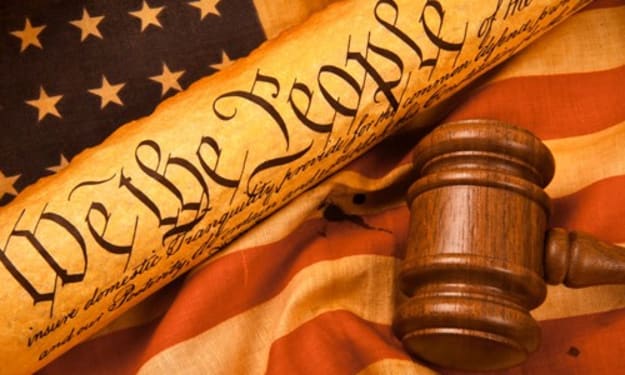
The End of the US Constitution
Reading that title what first comes to mind? Do you think I am anti-American? Do you immediately assume I am a rebelling millennial? Do you assume I don't know any better? Or perhaps you are intrigued? You have come across something you have thought about, but never dreamed of speaking aloud?
By Brian Paredes9 years ago in The Swamp
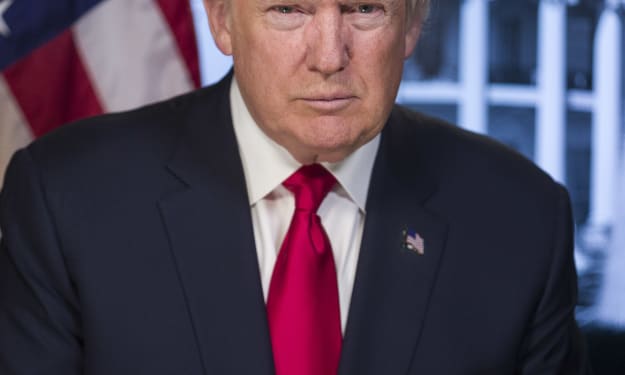
Dear President Trump, Think About Your Family
Dear Mr. Trump, In the last couple of months since you took over as President of the US, you have diminished more than just your own name, but rather, your entire family’s name too. Melania and you are in the midst of a very complicated and unusual relationship and it is believed by some that you don’t even care for each other (Is Melania really just in it for the money and fame?). Recently, you tried to grab Melania’s hand after leaving the airplane on your Middle East trip & she nudged your hand away and gave you a dirty look. Also, your daughter, Ivanka has been severely scrutinized by the media mostly because of your wrongdoings. As President, you must start to think about your family before you bring them all down. I write this letter to you, Mr. President to challenge you to change your values, integrity, and approach for the country and for your own family.
By David Lasher9 years ago in The Swamp
What Is Authenticity and Why Is It Important?
Authenticity is a term meaning real, genuine, or credible; the opposite meaning false, phony or dishonest. When ascribed to culture, it becomes rather complex. We must put into categories, then, and try to examine the meanings of authentic culture and inauthentic culture to answer the question.
By Sydnie Beaupré9 years ago in The Swamp
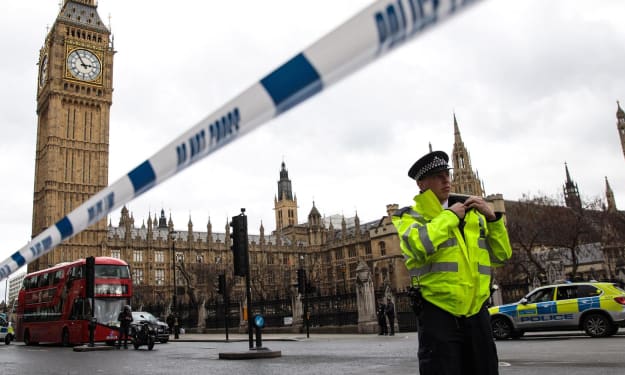
Terrorism Is a Failure to Tackle Mental Health Issues Globally
We are avoiding confronting the root cause of modern terrorism. We are to blame. Every attack that has happened in the past 50 years, whether it be the IRA or Islamic fundamentalism, has been a direct result of unresolved mental health issues. We try to pin the blame on ideology, on the religion, or the cultural divisions in society, but that’s the easy way to ignore the real issue. Terrorism is the direct result of a global inability to tackle mental health issues. It is very easy to just call people evil, but when you actually dissect what evil actually means we discover a distorted reflection of ourselves. Evil is sadness and grief left to fester in an unloved heart. Evil is somebody ending a life, or even their own. Evil are kids who have not been shown any better?
By Johnny Vedmore9 years ago in The Swamp
Epiphanies, Personal and Public
Epistemology and ontology are sciences concerned with truth, whether it exists and whether even if it does exist, it is ascertainable. They are fields of great interest to academics, especially philosophers, but provide scant confidence or comfort to the population at large which finds them ethereal, esoteric and of little quotidian use. The language of academia seems mystifying to most people. Take theories for example. Most people consider a theory an unproven hunch (e.g., the theory of evolution as perceived by creationists) but in the world of academia, theory is as close to truth as we ever get. What most people perceive as theories, academics and scientist refer to as thesis and hypothesis which evolve into the realm of theory only when successfully put to proof. The truth is that popular truths like gravity and basic mathematics are “mere” theories” while many concepts the public views as theories are mere thesis or hypothesis (e.g., intelligent design).
By Guillermo Calvo9 years ago in The Swamp
Money and the Individualist–Collectivist Divide
Politics, in large measure, deals with the art of reconciling individual and collective interests. The overwhelming majority of humanity (with the possible exception of abandoned children who grew up as hermits) inhabits both spheres. The hardiest individuals generally use money and tools and roads and water supplies, perhaps listen to radio and television, read and frequently form parts of families. The most dedicated collectivist does some things alone and usually, at least at times, values privacy.
By Guillermo Calvo9 years ago in The Swamp