education
A place to hash out all opinions on education policy, charter schools, statewide testing, and what the political world is and isn't doing about it.
66% of Students Fail Reading Test in Half the States
America’s fourth and eighth graders are losing ground in their ability to read literature and academic texts, according to a rigorous national assessment released last week. The National Center of Educational Statistics, the research arm of the Department of Education, found that two out of three children did not meet standards for reading proficiency.
By Robert Bowen6 years ago in The Swamp
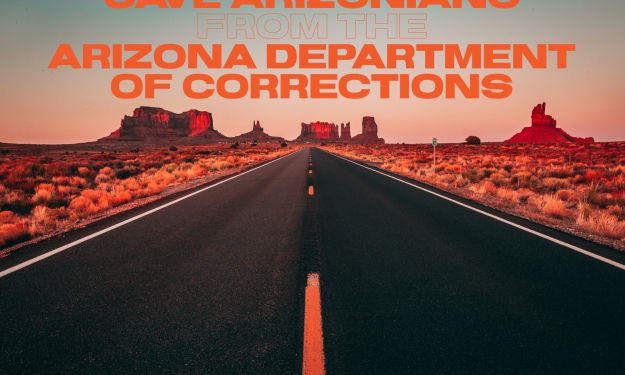
Save Arizonians from the Department of Corrections
Despite the fact that Arizona is one of the youngest states to join the United States of America, you might expect it to be a pretty progressive forward thinking place. Seeing how Arizona established itself later than majority of other states, it would only make sense that we would have taken the time to learn from the mistakes of older states, but that couldn’t be any further from the truth. Arizona may look fancy and have beautiful new homes, new construction happening often, beautiful nice communities, new shopping centers, new freeways and roads etc. In reality it’s only aesthetic.
By Taryn Thomas6 years ago in The Swamp
Examining the Modern Distrust of Science in the US
Throughout history, science has always pushed the boundary of public belief. Thankfully we have moved past the days where scientists were killed for fear of them being users of dark magic. Through general acceptance and applications of science we were able to prove its usefulness and have made great strides in our knowledge of the world around us. However, we may be moving back to the time where science is misunderstood as something bad.
By The Coffee Ghost6 years ago in The Swamp
What Every College Student Needs to Know About the Proposed Changes to Title IX
Betsy DeVos, the Secretary of Education in the United States, has proposed changes to Title IX that could have major effects on students—and yet many don't even know what this important amendment is. Despite its recent media coverage, there is still much confusion about the purpose of Title IX and what impact the proposed changes would have on college students especially.
By Sara Lipski7 years ago in The Swamp
The Constitution
The Constitution as we know it today first sprang into being September 17th, 1787. It was ratified June 21st, 1788. This document is what the United States knows as law, having been amended 27 times. The first ten amendments are called the Bill of Rights. Congress consists of a Senate and a House of Representatives. The House of Representatives is what has the power to impeach the entire current administration. It takes great courage to do this, which is why nobody has acted yet. Eventually, there will be an act done but the rest of us have to hang on for now. I’m writing this article because I want to go to law school, and, hopefully, somebody who can write a recommendation will find it.
By Iria Vasquez-Paez7 years ago in The Swamp
History Is Not for Black People
World War I. William the Conqueror. The Magna Carta. The Trenches. Elizabeth I. Oliver Cromwell and the Civil War. Jack the Ripper. World War II. The Russian Revolution. The Blitz. Nazi Germany. The Holocaust. The Tudors. These are only a few of the history units I can remember studying — or having been taught — during my time in secondary school, but there is one glaring similarity between all of them. There is not a single Black face amongst any of them; or at the very least, none important enough to mention by name. And this recognition has led myself, and many other people, to (often subconsciously) draw this one, firm conclusion:
By Lauryn Davis8 years ago in The Swamp
Let's Talk About It: Race
We often do not agree with each other on most issues and topics today and it’s no exception when it comes to how each of us perceives race. The importance of how we perceive race within schools is something we must explore deeper. Through the years, humans have been debating whether race matters or not. Meaning, some people will look at race as an important aspect to look at when it comes to how race affects people’s lives. Race is a way to represent each other’s culture and shows representation of a group or community for students within schools. As we look at each segment of how we perceive race, try to gain an understanding of how each person’s experience can affect what they believe in when it comes to race within American schools.
By Angel Tapia8 years ago in The Swamp
The Astute Rise of Islamism
In his book titled The Great Heresies, the great British historian Hilaire Belloc, in reference to the 1683 siege of Vienna, stated that ‘’It has always seemed possible, or even probable, that there will be a resurrection of Islam, and that our sons and our grandsons would see the renewal of that tremendous struggle between Christian culture, and what has been for more than a thousand years, its greatest opponent in history. The suggestion that Islam may re-arise sounds fantastic- but only because men are most powerfully affected by the immediate past:- One might say that they are blinded by it… Less than a hundred years before the declaration of Independence, Vienna was almost taken (by The Caliphate) and only saved by the Christian Army under the command of the King of Poland, on a date that ought to be among the most famous in history. September 11, 1683” (Belloc,1683). Belloc’s statement was resuscitated if not substantialized, following the attacks on the World Trade Centre on September 11th, 2001, which was arguably the most convulsive tragedy of the 21st century, after which the western world suddenly found itself vanquished with trepidation. The rest of the world, although startled, the attacks did not seem to provoke any threats. Perhaps the reason behind this was the fact that the terrorists had made clear what, or more appropriately, who their targets were, and what their underlying motivation was for their cause. Their targets, which exclusively consisted of innocent people, were not condemned to be so on the merits of the land mass or the natural resources of their respective countries, but solely because of ideological differences and were deemed as merely infidels. Their aim was not necessarily to conquer vast lands and claim natural resources, but rather, to revive the Islamic Caliphate by abolishing the economic, political and judicial systems of all infidel nations, thereby establishing a unified Islamic State under the hegemony of ‘Sharia’, which is the canon law of Islam. The end that Al Qaeda proclaimed to be to be striving towards at the time of 9/11, is shared today by the Islamic State.
By Hasan Shakeel8 years ago in The Swamp
Race to Academic Achievement: Leveling Out an Unfair Playing Field
In fall of 2016, I created a charity called VitalPacks. The organization gives care packages to the homeless population, with a primary focus on individuals living on the streets. At the end of our winter season, we had about 50 packages available, and we decided to contact a school in the South Shore area of Chicago, an area we worked in often, and asked them if we could organize a way to help some of their students. This was a local public elementary school under the Chicago Public School System. This city’s school district currently has over 18,117 homeless students, a growing rate yet with a declining district enrollment, per Chicago Coalition for the Homeless [1]. As the largest school district in the state of Illinois, Chicago Public school (CPS) is responsible for providing education for 396,683 students. With 664 total schools under the district regulations, poverty distribution is startling, with 86.02 percent of the total student body being low-income per U.S. Department of Education [3]. The majority of these students are put at a major disadvantage academically and socially, by being forced to attend the lowest 15 percent of elementary schools and high schools in the nation [2], which usually can’t even bring students up to the national grade-level standards. Academically, these inner-city children, from lower-income areas, are put at a much higher environmental disadvantage than their peers in the suburbs, such as Winnetka, or even city children from a middle-high income neighborhood. While historic discrimination on certain communities may have contributed to this, it would be ignorant to assume that de facto segregation is the sole contributor to this problem. De jure segregation, treatment occurring based on law, is the true illicit in the academic disadvantage of these poor students.
By Tayyaba Ali8 years ago in The Swamp