
Syria’s President Affirms Kurds’ Rights, in Overture to the Minority
A Cautious Signal of Reconciliation in a Long-Divided Nation

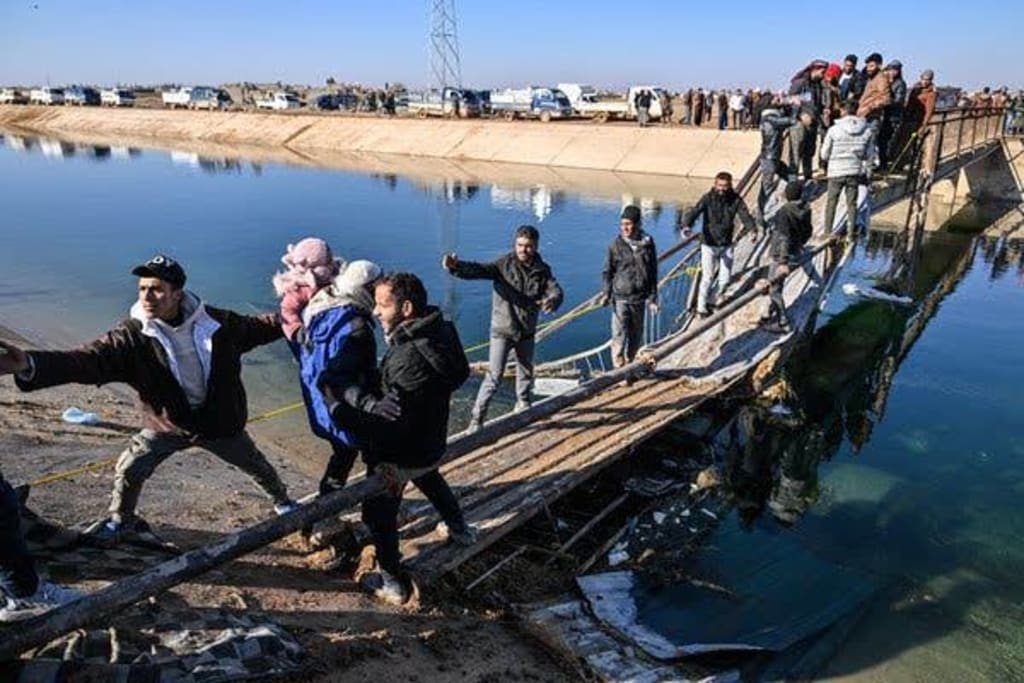
In a country fractured by more than a decade of war, any political signal aimed at reconciliation carries weight. Syria’s president has recently made such a signal by publicly affirming the rights of the country’s Kurdish population—an overture that has sparked cautious optimism, skepticism, and renewed debate about Syria’s future political settlement. For a minority that has long felt marginalized by Damascus, the statement represents a notable shift in tone, even if concrete actions remain uncertain.
A History of Marginalization
Kurds make up an estimated 10 percent of Syria’s population and are concentrated mainly in the northeast. For decades, they faced systematic discrimination. Many were denied citizenship after a controversial 1962 census, leaving generations without legal status, access to state services, or political representation. Kurdish language and cultural expression were restricted, and political organizing was tightly controlled.
The outbreak of the Syrian conflict in 2011 dramatically altered Kurdish fortunes. As government forces redeployed to fight rebels elsewhere, Kurdish groups—most notably those aligned with the Democratic Union Party (PYD)—filled the vacuum. They established autonomous administrations, built local security forces, and promoted Kurdish language and identity openly for the first time in modern Syrian history.
A Calculated Overture
Against this backdrop, the president’s affirmation of Kurdish rights appears carefully calculated. It comes at a time when Syria is seeking to reassert sovereignty over its territory, normalize relations with regional neighbors, and reduce foreign military footprints—particularly those of the United States and Turkey, both heavily involved in Kurdish-held areas.
By acknowledging Kurdish rights within a unified Syrian state, Damascus may be signaling willingness to negotiate some form of decentralization or cultural autonomy, while stopping short of endorsing federalism or independence. The message seems aimed not only at Syrian Kurds but also at regional and international actors: Syria is portraying itself as inclusive, pragmatic, and capable of internal reconciliation without external mediation.
Kurdish Reactions: Hope Tempered by Caution
Among Kurdish political actors and civilians, reactions have been mixed. Some view the statement as a long-overdue recognition of Kurdish identity and sacrifices, especially given the Kurdish-led forces’ central role in defeating ISIS. For these voices, even rhetorical acknowledgment from Damascus is a step forward.
Others are far more cautious. They point out that previous promises—such as partial citizenship restorations early in the conflict—were limited and reversible. Without constitutional guarantees, legal reforms, and real power-sharing mechanisms, affirmations risk being symbolic gestures rather than meaningful change. For many Kurds, trust in the central government remains low after decades of repression.
Regional and International Dimensions
The Kurdish issue in Syria cannot be separated from regional geopolitics. Turkey, which considers several Syrian Kurdish groups extensions of the PKK, has repeatedly opposed any form of Kurdish autonomy along its border. Damascus’s overture may be an attempt to undercut Turkey’s justification for military operations by presenting the Kurdish question as an internal Syrian matter.
At the same time, the United States has relied on Kurdish-led forces as partners against ISIS. A reconciliation between Damascus and Kurdish authorities could complicate Washington’s position and potentially accelerate a reduction of U.S. involvement. Russia, a key ally of the Syrian government, has long encouraged dialogue between Kurds and Damascus as part of its broader strategy to stabilize the country under central authority.
What Rights Could Mean in Practice
The crucial question is what “affirming Kurdish rights” actually entails. Possibilities range from cultural recognition—such as language rights and education—to administrative decentralization and local governance. Kurdish leaders have consistently demanded constitutional recognition of their identity, elected local councils with real authority, and integration of their security forces into a national framework without losing autonomy.
For Damascus, any concession must balance inclusivity with its core principle of centralized sovereignty. The government has historically rejected federalism, viewing it as a step toward fragmentation. A compromise could involve expanded local administration under a strong central state—an arrangement that would require careful negotiation and mutual guarantees.
A Test of Syria’s Post-War Vision
This overture comes as Syria enters a new phase: active conflict has diminished in many areas, but political resolution remains elusive. Reintegrating Kurdish-held regions peacefully would be a major milestone, potentially unlocking economic recovery, reconstruction aid, and broader national reconciliation.
However, words alone will not suffice. Kurdish communities will judge Damascus by concrete actions—legal reforms, inclusive dialogue, and respect for local governance structures. Similarly, the international community will watch closely to see whether this gesture marks a genuine shift or a tactical move driven by short-term pressures.
Conclusion
Syria’s president affirming Kurdish rights is a significant rhetorical moment in a long and painful history. It suggests recognition that lasting stability cannot be achieved through force alone, but through accommodation of the country’s diverse identities. Whether this overture becomes the foundation for meaningful reconciliation—or fades into another unfulfilled promise—will depend on what follows. For Syria’s Kurds, and for the country as a whole, the next steps matter far more than the words themselves.
About the Creator
Fiaz Ahmed
I am Fiaz Ahmed. I am a passionate writer. I love covering trending topics and breaking news. With a sharp eye for what’s happening around the world, and crafts timely and engaging stories that keep readers informed and updated.
Keep reading
More stories from Fiaz Ahmed and writers in The Swamp and other communities.
France and the Rafale Lose a €3.2 Billion Contract After a Last-Minute U-Turn
In a surprising turn of events, France and its flagship fighter jet, the Dassault Rafale, have reportedly lost a massive €3.2 billion defense contract following a last-minute reversal by the buyer. The decision has sent ripples through Europe’s defense industry, raising questions about geopolitics, competition in the global arms market, and the fragile nature of high-value military deals. A Deal That Once Looked Secure For months, the contract had been viewed as a diplomatic and industrial success for France. The Rafale, a multirole fighter aircraft developed by Dassault Aviation, has built a strong reputation in recent years, securing export deals with countries in Asia, the Middle East, and Europe. Known for its combat performance, advanced avionics, and operational flexibility, the aircraft has often been marketed as a reliable alternative to American and Russian fighters. The €3.2 billion agreement was expected to include not just the jets themselves, but also training, maintenance packages, weapons integration, and long-term logistical support—elements that make such contracts economically and strategically significant for both buyer and seller. The Sudden Reversal What makes this development particularly striking is the timing. According to reports, negotiations were largely complete when the buyer abruptly changed course. Such last-minute U-turns are rare in defense procurement, where deals usually take years to finalize and involve extensive political oversight. While official explanations remain limited, analysts suggest several possible reasons: shifting geopolitical alignments, pressure from allies, budgetary reassessments, or the emergence of a more politically convenient alternative. In some cases, defense purchases are less about technical superiority and more about diplomatic signaling. Competitive Pressures in the Fighter Jet Market The global fighter jet market has become increasingly crowded and politicized. The Rafale competes with U.S.-made aircraft like the F-35, Sweden’s Gripen, and emerging platforms from other defense manufacturers. The F-35, in particular, benefits from strong political backing from Washington and offers interoperability advantages for NATO and allied nations. For some countries, choosing a fighter jet is also a choice of long-term strategic alignment. Selecting American equipment often deepens military ties with the United States, while opting for European systems can signal a desire for greater strategic autonomy. The sudden loss of this contract highlights how fragile that balance can be. Economic and Industrial Impact on France A €3.2 billion contract is not just a headline number—it represents thousands of jobs, years of industrial activity, and sustained investment in research and development. While Dassault Aviation has a healthy order book, losing a deal of this scale is still a setback, particularly at a time when European defense industries are seeking to strengthen their global competitiveness. France has positioned the Rafale as a cornerstone of its defense exports, and each successful sale reinforces its credibility in future negotiations. Conversely, a high-profile loss can embolden competitors and complicate upcoming bids. Political Fallout and Strategic Questions The decision may also carry diplomatic consequences. Defense contracts often serve as pillars of broader strategic relationships, including intelligence sharing, joint exercises, and industrial cooperation. A sudden reversal can strain bilateral ties, especially if France perceives the move as politically motivated rather than purely technical. At a broader level, the incident reignites debate within Europe about defense sovereignty. As EU nations discuss reducing reliance on non-European military equipment, the loss of a major Rafale contract underscores the challenges of translating that ambition into reality. Lessons for the Future This episode serves as a reminder that even well-established defense platforms are not immune to sudden shifts. For manufacturers like Dassault, diversification of markets and deeper industrial partnerships may be key to reducing vulnerability. For governments, it highlights the importance of aligning defense exports with long-term diplomatic strategies. The Rafale remains a capable and battle-proven aircraft, and its export story is far from over. However, the loss of a €3.2 billion deal at the eleventh hour illustrates how modern defense procurement is shaped as much by politics and perception as by performance. A Wake-Up Call for Europe’s Defense Industry Ultimately, the episode is less about one lost contract and more about the evolving dynamics of global defense. As competition intensifies and geopolitical calculations grow more complex, European manufacturers may need to adapt faster, negotiate smarter, and prepare for abrupt changes—even when victory seems assured.
By Fiaz Ahmed 2 days ago in The Swamp
Trump Suspends Immigrant Visas for 75 Countries: Who’s Affected?
In a sweeping move, President Donald Trump’s administration has announced a pause on immigrant visa processing for citizens of 75 countries. The new policy, effective January 21, 2026, applies to family-based and employment-based green cards. It’s one of the broadest immigration actions in recent U.S. history and has raised questions worldwide about who exactly will be affected.
By Aqib Hussain4 days ago in The Swamp



Comments
There are no comments for this story
Be the first to respond and start the conversation.