
Trump Suspends Immigrant Visas for 75 Countries: Who’s Affected?
By [Your Name] | January 15, 2026
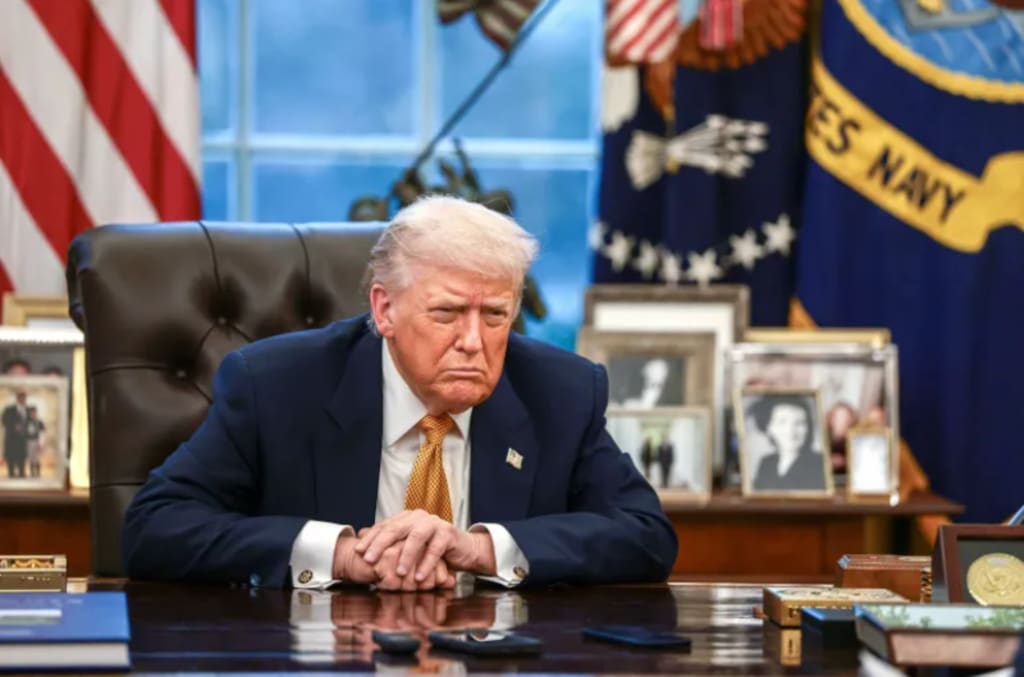
In a sweeping move, President Donald Trump’s administration has announced a pause on immigrant visa processing for citizens of 75 countries. The new policy, effective January 21, 2026, applies to family-based and employment-based green cards. It’s one of the broadest immigration actions in recent U.S. history and has raised questions worldwide about who exactly will be affected.
Why the Suspension?
According to the U.S. Department of State, the pause is meant to review visa applications more closely under the “public charge” rule. This rule allows officials to deny visas to people they believe might rely on government benefits.
The State Department says the policy aims to:
Ensure applicants won’t become a financial burden on taxpayers.
Improve the process for vetting applicants.
It’s important to note: this only affects immigrant visas — pathways to permanent residency. Tourist, student, and work visas are not impacted.
Which Countries Are on the List?
The affected countries span six regions, including Africa, Asia, Europe, the Americas, the Middle East, and island nations in the Caribbean. Some notable examples:
Asia & Middle East: Afghanistan, Bangladesh, Iran, Iraq, Pakistan, Thailand, Yemen
Africa: Nigeria, Somalia, Sudan, Sierra Leone, Ethiopia, Ghana, Tanzania
Americas & Caribbean: Brazil, Colombia, Cuba, Guatemala, Haiti, Nicaragua
Europe & Eurasia: Russia, Belarus, Albania, Georgia, Kosovo, North Macedonia
Middle East & North Africa: Egypt, Jordan, Lebanon, Morocco, Syria, Tunisia
Island nations: Bahamas, Barbados, Belize, Dominica, Saint Lucia
In total, 75 countries are affected, potentially impacting over 300,000 immigrants annually.
Who Is Not Affected?
Not everyone from these countries will feel the impact. Exceptions include:
Non-immigrant visa holders (tourists, students, temporary workers).
Dual nationals applying with a passport from a country not on the list.
People already in the U.S. on valid visas or adjusting their status.
So, while the policy is broad, it doesn’t completely shut the door for everyone.
The Human Impact
Immigration advocates are sounding the alarm. Critics argue the suspension could:
Separate families for months or years.
Slow economic growth, as many skilled workers may be delayed.
Harm refugees and vulnerable groups seeking safety or reunification.
Even allies like Brazil and Albania are on the list, showing just how wide-reaching this policy is.
Supporters, on the other hand, say it’s about protecting American taxpayers and ensuring that immigration doesn’t overburden social services.
Legal and Diplomatic Challenges
Many legal experts predict court battles ahead. Previous public charge rules have faced judicial scrutiny for:
Overly broad application.
Potential violation of due process rights.
Diplomatically, affected countries may raise concerns with the U.S., especially if the policy disrupts family connections or labor markets.
Key Takeaways
Here’s a quick summary for readers:
Who is affected? Citizens of 75 countries applying for immigrant visas.
Who is not affected? Tourist, student, and temporary work visa holders.
Why the suspension? To better enforce the public charge rule and prevent potential reliance on public benefits.
Potential impacts: Family separation, legal battles, economic consequences, and diplomatic tensions.
The new suspension marks a major shift in U.S. immigration policy. Whether it achieves its goals or sparks wider backlash, it’s clear that this will be a story with global consequences, affecting hundreds of thousands of prospective immigrants and their families.
About the Creator
Keep reading
More stories from Aqib Hussain and writers in The Swamp and other communities.
Iran and the Limits of American Power
For over 40 years, the relationship between Iran and the United States has been tense, complicated, and often confrontational. From the 1979 Islamic Revolution to today, U.S. attempts to shape Iran’s behavior — through diplomacy, sanctions, or even military threats — have often hit a wall. Despite America’s vast power, Iran has repeatedly shown the limits of U.S. influence. Understanding this dynamic is essential for anyone trying to make sense of today’s global politics.
By Aqib Hussain2 months ago in The Swamp
A Gathering of Evil Bosses
“I’m the queen of chin jutting while I smooth my hair, attacking, insulting, and deflecting to protect my appointer.” “Oh, please, Blondi, my hair is curled, highlighted, and longer than yours. I feature television commercials telling immigrants that we will give them a free plane ride home, and if they voluntarily turn themselves in, they will be allowed to legally apply for re-entry. It runs everywhere, and I look good in it! You can’t compete because of your blond hair. Mine is nicer, and my lips are prettier than yours.”
By Andrea Corwin 16 days ago in The Swamp
Iran’s Supreme Leader Ayatollah Ali Khamenei, Who Led the Islamic Republic Since 1989, Is Dead at 86
Ayatollah Ali Khamenei, the supreme leader of the Iran for more than three decades, has died at age 86, Iranian state media confirmed, marking a historic turning point for Tehran and a potential reshaping of Middle East geopolitics. His death was announced Sunday following a major joint military operation by the United States and Israel that reportedly struck his compound in Tehran over the weekend. Iran’s official broadcaster described Khamenei’s death in solemn terms, saying the supreme leader “has reached martyrdom” and announcing 40 days of public mourning across the country. Authorities declared a week-long holiday to honour him, a signal of his central role in Iran’s state identity. A Leader Who Dominated Iranian Politics Khamenei assumed the post of supreme leader in 1989 after the death of Ayatollah Ruhollah Khomeini, the founder of the Islamic Republic. Although originally seen by some as a compromise successor with weaker religious credentials, Khamenei consolidated power over time and became one of the most influential figures in Iran’s modern history. As supreme leader, he held ultimate control over the government, military, judiciary, and state media — outranking elected officials such as the president and parliament. He was the commander-in-chief of the armed forces and the final authority on foreign policy, security, and national ideology, shaping Iran’s path through repeated domestic and international crises. Domestic Hardline Rule and Crises Domestically, Khamenei’s tenure was marked by repeated unrest and government crackdowns. Major waves of protest erupted under his watch, including large-scale demonstrations in 2022 over the death of Mahsa Amini, an Iranian Kurdish woman who died in morality police custody, sparking widespread outrage. Security forces were accused of lethal force against demonstrators, intensifying international criticism of Tehran. Through periods of economic hardship, unemployment, inflation, and social restrictions, opposition to the clerical establishment grew among younger Iranians who chafed under political and cultural repression. Yet, the regime maintained control through a network of loyal institutions, including the powerful Islamic Revolutionary Guard Corps (IRGC), which became a dominant force in both security and economic spheres. Foreign Policy and Regional Influence Khamenei’s foreign policy was defined by opposition to Western powers, particularly the U.S. and Israel, and by expanding Iran’s influence across the Middle East. Tehran supported allied militias and political groups in countries such as Iraq, Syria, Lebanon, and Yemen, viewing them as part of an “Axis of Resistance” against Western influence. His resistance to U.S. pressure over Iran’s nuclear ambitions was a defining feature of his leadership. Although he issued a religious ruling that nuclear weapons were forbidden under Islam, Tehran advanced its nuclear program significantly, drawing intense scrutiny and sanctions from the West. In 2015, Iran agreed to an international nuclear deal, but the U.S. withdrawal from the pact in 2018 led to renewed escalation and reciprocal violations. The Strike and Its Aftermath According to multiple reports, Khamenei was killed on February 28, 2026, after a coordinated military operation by U.S. and Israeli forces targeting key locations in Tehran, including his residence and other strategic sites. President Donald Trump publicly confirmed the death on social media platforms, framing it as justice for the victims of the Iranian regime and a potential catalyst for change in Iran’s governance. Before Iranian state confirmation, there was confusion about his status, with semi-official outlets initially reporting that he remained “steadfast and firm.” However, the state broadcaster’s confirmation has now ended that uncertainty. Business Standard Uncertain Succession and Power Struggles Khamenei’s death leaves a significant power vacuum. Iran’s constitution empowers the Assembly of Experts, a body of senior clerics, to select his successor, but no clear front-runner has emerged. Analysts warn that factional infighting among hard-liners, conservatives, and pragmatic elements could intensify as various interests seek to shape the next era of Iranian leadership. The role of the IRGC is also critical; the powerful military institution has played a central role in maintaining internal order and executing foreign policy goals. Its influence may be decisive in determining Iran’s political direction and stability in the coming months. Regional and Global Repercussions The death of such a pivotal figure is bound to send shockwaves beyond Iran’s borders. Middle Eastern governments, global powers, and international markets are all closely watching the developments. Security measures have been heightened across the region amid fears of retaliation or escalation, while diplomatic efforts to manage tensions are likely to intensify. Oil markets, already sensitive to geopolitical risk, may also react to the leadership transition and potential instability, given Iran’s strategic position in global energy corridors. End of an Era Ayatollah Ali Khamenei’s death marks the end of an era that saw Iran transform from a revolutionary state into a formidable regional power, albeit one fraught with internal repression and international isolation. His legacy is deeply polarizing — venerated by loyalists and reviled by critics who accuse him of authoritarianism and human rights abuses. As Iran enters a period of uncertainty, questions loom about its future direction, leadership dynamics, and the broader implications for Middle East stability in an already volatile geopolitical landscape.
By Fiaz Ahmed 5 days ago in The Swamp
"Scream 7" (2026): Running out of Fresh Screams
This is the seventh time we’ve had a Ghostface crisis. Scream 7 is the latest edition of the Scream franchise. Sydney Prescott and her family are under attack by another anonymous killer dressed in a Ghostface costume. While having issues with her daughter, Tatum, they run from the bloody murders, trying to determine who is behind it all.
By Marielle Sabbag5 days ago in Horror



Comments
There are no comments for this story
Be the first to respond and start the conversation.