
France and the Rafale Lose a €3.2 Billion Contract After a Last-Minute U-Turn
How geopolitics, competition, and shifting alliances derailed a major European defense deal

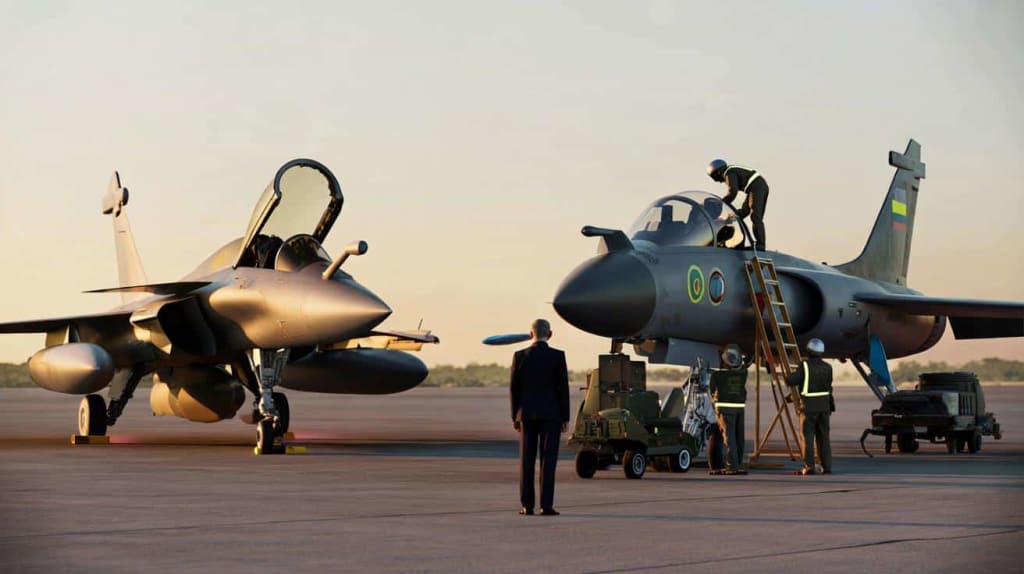
In a surprising turn of events, France and its flagship fighter jet, the Dassault Rafale, have reportedly lost a massive €3.2 billion defense contract following a last-minute reversal by the buyer. The decision has sent ripples through Europe’s defense industry, raising questions about geopolitics, competition in the global arms market, and the fragile nature of high-value military deals.
A Deal That Once Looked Secure
For months, the contract had been viewed as a diplomatic and industrial success for France. The Rafale, a multirole fighter aircraft developed by Dassault Aviation, has built a strong reputation in recent years, securing export deals with countries in Asia, the Middle East, and Europe. Known for its combat performance, advanced avionics, and operational flexibility, the aircraft has often been marketed as a reliable alternative to American and Russian fighters.
The €3.2 billion agreement was expected to include not just the jets themselves, but also training, maintenance packages, weapons integration, and long-term logistical support—elements that make such contracts economically and strategically significant for both buyer and seller.
The Sudden Reversal
What makes this development particularly striking is the timing. According to reports, negotiations were largely complete when the buyer abruptly changed course. Such last-minute U-turns are rare in defense procurement, where deals usually take years to finalize and involve extensive political oversight.
While official explanations remain limited, analysts suggest several possible reasons: shifting geopolitical alignments, pressure from allies, budgetary reassessments, or the emergence of a more politically convenient alternative. In some cases, defense purchases are less about technical superiority and more about diplomatic signaling.
Competitive Pressures in the Fighter Jet Market
The global fighter jet market has become increasingly crowded and politicized. The Rafale competes with U.S.-made aircraft like the F-35, Sweden’s Gripen, and emerging platforms from other defense manufacturers. The F-35, in particular, benefits from strong political backing from Washington and offers interoperability advantages for NATO and allied nations.
For some countries, choosing a fighter jet is also a choice of long-term strategic alignment. Selecting American equipment often deepens military ties with the United States, while opting for European systems can signal a desire for greater strategic autonomy. The sudden loss of this contract highlights how fragile that balance can be.
Economic and Industrial Impact on France
A €3.2 billion contract is not just a headline number—it represents thousands of jobs, years of industrial activity, and sustained investment in research and development. While Dassault Aviation has a healthy order book, losing a deal of this scale is still a setback, particularly at a time when European defense industries are seeking to strengthen their global competitiveness.
France has positioned the Rafale as a cornerstone of its defense exports, and each successful sale reinforces its credibility in future negotiations. Conversely, a high-profile loss can embolden competitors and complicate upcoming bids.
Political Fallout and Strategic Questions
The decision may also carry diplomatic consequences. Defense contracts often serve as pillars of broader strategic relationships, including intelligence sharing, joint exercises, and industrial cooperation. A sudden reversal can strain bilateral ties, especially if France perceives the move as politically motivated rather than purely technical.
At a broader level, the incident reignites debate within Europe about defense sovereignty. As EU nations discuss reducing reliance on non-European military equipment, the loss of a major Rafale contract underscores the challenges of translating that ambition into reality.
Lessons for the Future
This episode serves as a reminder that even well-established defense platforms are not immune to sudden shifts. For manufacturers like Dassault, diversification of markets and deeper industrial partnerships may be key to reducing vulnerability. For governments, it highlights the importance of aligning defense exports with long-term diplomatic strategies.
The Rafale remains a capable and battle-proven aircraft, and its export story is far from over. However, the loss of a €3.2 billion deal at the eleventh hour illustrates how modern defense procurement is shaped as much by politics and perception as by performance.
A Wake-Up Call for Europe’s Defense Industry
Ultimately, the episode is less about one lost contract and more about the evolving dynamics of global defense. As competition intensifies and geopolitical calculations grow more complex, European manufacturers may need to adapt faster, negotiate smarter, and prepare for abrupt changes—even when victory seems assured.
About the Creator
Fiaz Ahmed
I am Fiaz Ahmed. I am a passionate writer. I love covering trending topics and breaking news. With a sharp eye for what’s happening around the world, and crafts timely and engaging stories that keep readers informed and updated.
Keep reading
More stories from Fiaz Ahmed and writers in The Swamp and other communities.
Airbus Pulls Off a World‑First: Guiding Two Jets to the Exact Same Point Without a Collision
In a remarkable breakthrough for aviation safety, Airbus has successfully guided two commercial jets to converge on the exact same point in space without a collision, marking a world-first achievement in the field of air traffic management. This milestone, achieved through cutting-edge automation and precise navigation systems, has the potential to redefine air travel safety, efficiency, and the future of crowded skies.
By Fiaz Ahmed 11 days ago in The Swamp
Gold and Silver Prices Hit High After Tariff Threat: What’s Behind the Surge and Why It Matters
Global financial markets have recently witnessed an extraordinary surge in precious metal prices, with gold and silver hitting record highs — a development that has captured the attention of investors, economists, and everyday savers alike. The catalyst for these dramatic price movements is a renewed tariff threat by the United States, which has intensified geopolitical uncertainty and triggered a flight to traditional safe‑haven assets.
By Salaar Jamaliabout 3 hours ago in The Swamp
Miss Persephone's Manual to a Seemingly Ordinary Life
Miss Persephone was found at the dining table, her blue eyes swollen, her tears arriving and retreating like the tides of the ocean. Earlier that day, her family had visited her in the retirement home where she had lived for eight years. It was her eightieth birthday.
By Imola Tóth5 days ago in Fiction


Comments
There are no comments for this story
Be the first to respond and start the conversation.