
Syria, once home to a large Jewish community, takes steps to return property to Jews
Decades after mass exodus, Damascus reviews ownership claims of former Jewish residents Legal reforms revive hope for recognition of Syria’s vanished Jewish community Symbolic restitution highlights changing policies on minority rights A step toward reconciliation in a country reshaping its postwar identity Old land records reopened as descendants seek acknowledgment of their past Cultural preservation meets legal reform in historic neighborhoods From exile to recognition: a small but meaningful shift in Syria’s policy

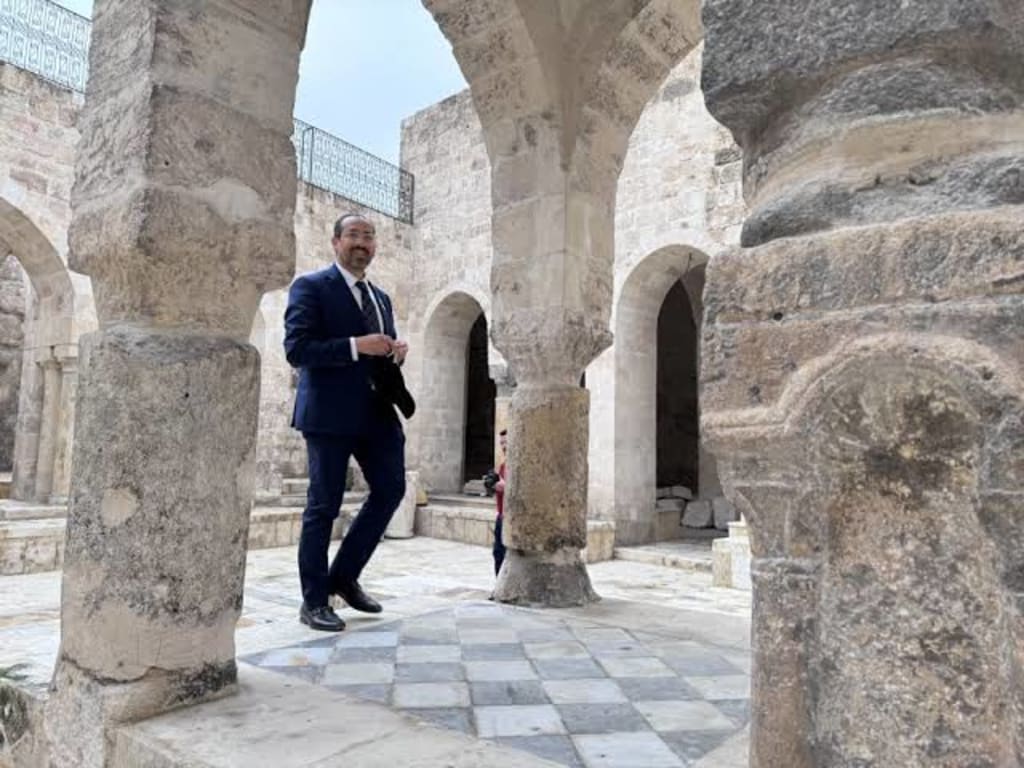
For centuries, Syria was home to one of the oldest and most influential Jewish communities in the Middle East. From Damascus to Aleppo, Jewish families played a central role in commerce, culture, and religious scholarship. Today, that community has nearly vanished, reduced to only a handful of elderly residents after decades of emigration driven by war, political repression, and regional conflict. Now, in a surprising development, Syrian authorities are taking cautious steps toward addressing long-standing property claims made by Jews who fled the country decades ago.
Officials and community representatives say recent legal and administrative moves may allow former Jewish residents or their descendants to reclaim homes, synagogues, and commercial properties confiscated or abandoned during the turbulent years following Syria’s independence and especially after the Arab-Israeli wars of the mid-20th century.
A Community That Once Flourished
Before 1948, Syria’s Jewish population numbered more than 30,000. Damascus and Aleppo hosted thriving Jewish quarters, with synagogues that dated back hundreds of years. Jewish merchants were deeply integrated into Syrian society, and many families traced their roots in the region to biblical times.
However, after the creation of Israel and subsequent Arab-Israeli wars, conditions deteriorated sharply. Jews faced increasing restrictions, including bans on travel, employment limitations, and property seizures. Many left secretly during the 1970s and 1980s with the help of international organizations. By the early 2000s, only a few dozen Jews remained in the country. Today, that number is believed to be fewer than ten.
When families fled, their properties were often taken over by the state or occupied by others. Documentation was lost, and legal ownership became deeply complicated by decades of war and bureaucracy.
A Shift in Policy
Recent reports indicate that Syrian courts and local authorities have begun reviewing old land registries and inheritance records connected to Jewish-owned property. In some cases, descendants living abroad have been contacted by intermediaries to verify ownership claims.
While officials have not announced a sweeping national policy, legal experts say the steps appear to be part of a broader effort by Damascus to show openness and restore confidence among displaced communities. Similar reviews have also been carried out for Christian and Muslim families who lost property during years of conflict.
One Syrian lawyer familiar with the process said the initiative reflects both political and economic motives. “The government wants to demonstrate that it can guarantee property rights again,” he said. “There is also interest in attracting foreign investment and rebuilding historic districts, which requires settling ownership disputes.”
Symbolic Importance
The return of Jewish property carries strong symbolic weight. It touches on sensitive issues of identity, memory, and reconciliation in a country devastated by more than a decade of civil war.
For many former Syrian Jews now living in Israel, the United States, and Europe, the possibility of reclaiming family homes is emotional rather than financial. “My grandparents’ house in Aleppo still exists,” said one descendant now living in New York. “We don’t plan to live there, but recognition of our ownership would mean acknowledgment of our history.”
Jewish organizations that document Middle Eastern Jewish heritage have cautiously welcomed the move, describing it as a small but meaningful step toward justice. However, they warn that implementation will be complex and slow.
Obstacles and Skepticism
Despite these developments, serious challenges remain. Property records were damaged or destroyed during the war. Many homes were repurposed for military use or occupied by displaced families. Courts must balance competing claims without igniting new tensions.
There is also skepticism about how far the process will go. Critics argue that the initiative could be largely symbolic, benefiting only a limited number of cases while avoiding broader restitution questions.
Human rights groups stress that true reconciliation requires transparency and legal guarantees. “Returning property to former Jewish residents would be a powerful gesture,” one regional analyst said. “But it must be done under fair judicial procedures and not selectively.”
Another concern is security. Even if ownership is restored, few former Syrian Jews are expected to return permanently due to instability and lingering fears.
Part of a Wider Rehabilitation Effort
Syria’s move comes as it seeks to re-enter regional diplomacy and rebuild ties with neighboring countries after years of isolation. Restoring minority rights and resolving property disputes helps project an image of stability and reform.
The country’s leadership has also encouraged the restoration of historic synagogues and Jewish cemeteries as part of cultural heritage preservation programs. In Damascus, one synagogue has reportedly undergone repairs, and local authorities have worked with remaining community members to protect burial sites.
Such actions align with broader efforts to preserve Syria’s diverse religious history, which includes ancient Christian, Jewish, and Muslim traditions.
Looking Ahead
For descendants of Syria’s Jewish community, the prospect of legal recognition brings mixed emotions: hope, caution, and unresolved grief. While few expect full compensation or physical return, acknowledgment of ownership represents a form of historical justice.
The process is still in its early stages and remains vulnerable to political shifts. Yet even limited steps mark a departure from decades of silence on the fate of Jewish property in Syria.
If sustained, these efforts could serve as a precedent for addressing other displaced communities’ claims and contribute to a wider conversation about reconciliation in postwar Syria.
Conclusion
Syria’s Jewish community once formed an integral part of the nation’s social and cultural fabric. The tentative move to return property to Jews who fled decades ago signals a recognition of that history and an attempt to heal old wounds. While legal, political, and security obstacles remain significant, the initiative carries deep symbolic meaning in a country struggling to rebuild not only its cities but also its relationship with its past.
Whether these steps will lead to genuine restitution or remain limited gestures depends on how consistently and fairly the policy is applied. For now, it represents a rare moment of reflection in a land long marked by conflict and loss.
About the Creator
Fiaz Ahmed
I am Fiaz Ahmed. I am a passionate writer. I love covering trending topics and breaking news. With a sharp eye for what’s happening around the world, and crafts timely and engaging stories that keep readers informed and updated.
Keep reading
More stories from Fiaz Ahmed and writers in The Swamp and other communities.
Satellite Imagery Shows Where the U.S. Military Is Positioned Near Iran
Recent satellite imagery has revealed the scope and scale of the U.S. military’s presence near Iran as tensions between Washington and Tehran remain elevated. The images, analyzed by open-source intelligence platforms and corroborated by defense reporting, show a significant buildup of U.S. forces — both in the air and at sea — across strategic locations in the Middle East. These deployments reflect America’s efforts to project power, deter Iranian escalation, and prepare contingency options amid uncertain diplomatic negotiations.
By Fiaz Ahmed 4 days ago in The Swamp
Why Black History Matters in America?
The United States of America is celebrating their 250th anniversary in 2026. I'm proud to be an American and as someone who was born here, I wouldn't imagine myself living anywhere else. This is a country where opportunities are possible. Where anyone can be successful in anything they desire to do. Equality, community, and togetherness are the backbones of what America is and should be about. However, we have an administration who wants to erase and disregard those who have made positive, meaningful impacts in our country, specifically Black figures, such as Martin Luther King, Jr., Rosa Parks, and Maya Angelou. President Trump and his administration have been constantly complaining and fighting against what they call the "Woke agenda". They use this excuse as a distraction from other issues they refuse to address, such as the high cost of living, climate change, and inflation. That equality is dividing America, when in reality, it's bringing us together. Being woke is not tied to a specific political party. No matter where you stand on the political spectrum, you can still care about other people and their plights. Compassion and empathy for others isn't tied to a political party, either. We were taught as children to treat others the way we want to be treated and not judge others because they're different from us. Caring about others isn't a personal attack on your beliefs. It doesn't make you any less of a person. People who are easily offended over African American figures, past or present, or anything related to it, are grasping at straws. Current and future generations need to know who people like Harriet Tubman and Shirley Chisholm were, especially in the classroom. Black History is part of American History. It should be recognized, not hidden or forgotten. Besides, you can't shield children from everything, just because your feelings are easily hurt.
By Mark Wesley Pritchard 6 days ago in The Swamp
Trump’s Surprising Shift: White House Talks with ‘Terrific’ Petro After Months of Feuding
For months, Donald Trump and Colombian President Gustavo Petro appeared locked in an ideological standoff that symbolized the wider rift between conservative populism and Latin America’s new left. Their exchanges—marked by sharp rhetoric, public criticism, and mutual distrust—left little room for cooperation. That is why reports of renewed talks, and Trump’s unexpected praise of Petro as “terrific,” have raised eyebrows across diplomatic and political circles.
By Ayesha Lashari4 days ago in The Swamp



Comments
There are no comments for this story
Be the first to respond and start the conversation.