
Syria Grants Immediate Citizenship to Kurds in Wake of Gains Against SDF
Historic Move Amid Shifting Power Dynamics in Post-Assad Syria

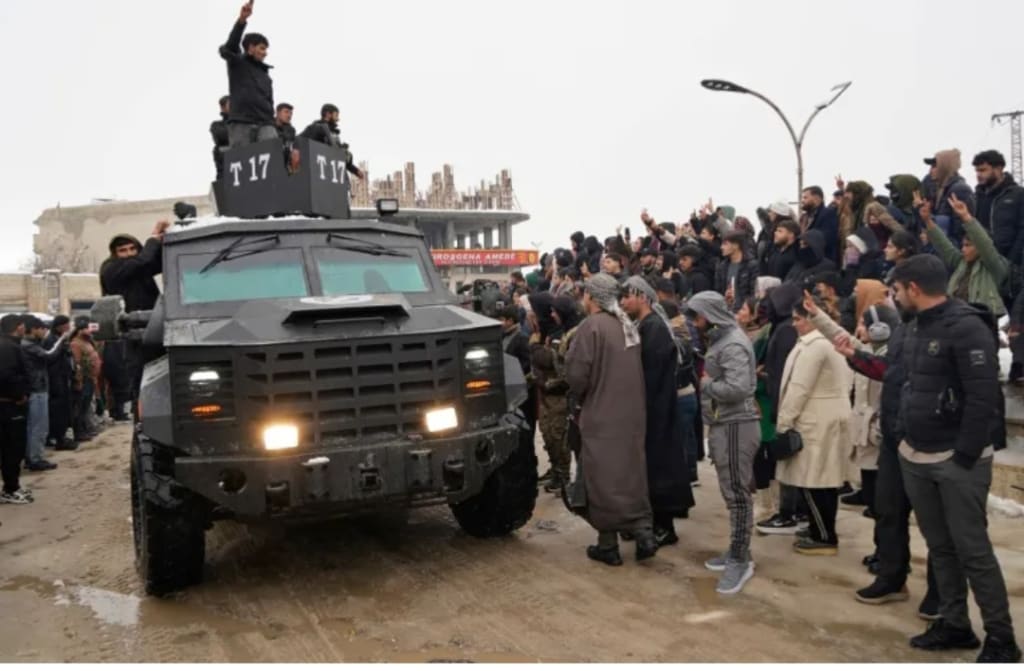
In a dramatic shift in Syrian politics and governance, the interim Syrian government has issued an urgent decree granting immediate citizenship to Kurds across the country, including those long classified as stateless. The move comes as government forces have made significant territorial gains against the Kurdish-led Syrian Democratic Forces (SDF), reshaping the political and military balance in the country’s war-scarred north.
The citizenship initiative, ordered by Syria’s Ministry of Interior under Decree No. 13 of 2026, mandates the rapid implementation of nationality rights for Kurdish residents — a group that endured decades of exclusion and legal limbo rooted in policies dating back to the 1960s.
---
A Milestone in Kurdish Rights After Decades of Exclusion
For the first time in modern Syrian history, Kurds — who comprise a substantial minority in the country — will be fully recognised as Syrian citizens with equal rights and duties. This decision annuls the legal consequences of the controversial 1962 Hasakah census, which stripped tens of thousands of Kurds of their nationality and rendered many stateless for generations.
The Interior Ministry’s directive, signed by Minister Anas Khattab, instructs all relevant authorities to issue the necessary executive procedures and complete the process by February 5, 2026, reflecting the government’s intent to act swiftly.
This move is widely seen as a historic redress of systemic exclusion that denied Kurds legal protections, access to public services, ownership rights, and full civic participation. Prior to the decree, only a fraction of the stateless Kurdish population had their citizenship restored after previous attempts at reform.
---
Expanded Cultural and Linguistic Recognition
In addition to citizenship, President Ahmed al-Sharaa’s decree formally recognises Kurdish as a national language alongside Arabic — a rare and symbolic affirmation of Syria’s cultural diversity. It also designates Nowruz (March 21), the Kurdish spring and New Year festival, as a paid national holiday.
The decree prohibits ethnic or linguistic discrimination, mandates inclusive language in state institutions, and sets penalties for incitement to ethnic strife — signalling a broader commitment to cultural rights and social inclusion.
For Kurdish communities long marginalised and frequently subject to cultural suppression, these changes represent more than administrative adjustments — they are fundamental shifts in state attitudes toward minority rights in Syria.
---
Context: Military Advances and Political Calculus
The citizenship decree did not occur in isolation. It follows a military offensive by Syrian government forces against the Kurdish-led SDF, which culminated in the recapture of major cities including Raqqa and Deir ez-Zor. The gains have resulted in the diminishing territorial control of the SDF and have paved the way for ceasefire agreements and integration talks between Damascus and Kurdish forces.
Recent developments include a comprehensive deal to integrate SDF units into the Syrian army, marking an effort to unify the fractured security landscape of the country following the overthrow of Bashar al-Assad in late 2024.
Even as a ceasefire has been extended amid ongoing tensions, these political and military shifts have bolstered President al-Sharaa’s efforts to consolidate authority and bring previously autonomous Kurdish regions closer under central governance.
---
Reactions and Regional Implications
The decision has elicited a range of responses. Some Kurdish leaders describe the decree as a meaningful step toward inclusion, though they maintain that acknowledgment of rights must be matched with genuine political participation and security guarantees. Others view it with cautious optimism, wary of whether legal citizenship will translate into substantive power or protection from future repression.
Internationally, the move comes at a time when the United States and other global actors have been recalibrating their policies in Syria following the shift in control from the Assad era to the current interim government. The rapprochement between Damascus and Kurdish forces, backed by diplomatic engagement, reflects broader efforts to stabilise Syria’s fragmented landscape after more than a decade of conflict.
Regionally, neighbouring states with significant Kurdish populations — including Iraq, Turkey, and Iran — are closely watching these changes, mindful of their potential domestic spill-overs. Particularly for Turkey, which has considered the SDF and its affiliated groups as extensions of the Kurdistan Workers’ Party (PKK), Syrian decisions on Kurdish rights carry deep strategic implications.
---
Challenges Ahead: Implementation and Trust Building
While the decree marks a historic legal shift, its success depends on effective implementation on the ground. Granting citizenship is one step; ensuring equal access to justice, economic opportunities, social services, and local governance participation requires sustained political will and resources.
There are also practical challenges: decades of discrimination and conflict have left deep mistrust between Kurdish communities and central authorities. For many Kurds, citizenship restoration must be accompanied by guarantees of security, fair representation, and protection of cultural autonomy.
Moreover, the integration of Kurdish military and administrative structures into Syrian national institutions will test both sides’ willingness to compromise and share power in a country still struggling to recover from a long and brutal civil war.
---
Conclusion: A Turning Point With Uncertain Horizons
Syria’s decision to grant immediate citizenship and cultural recognition to Kurds represents a remarkable transformation in national policy, overturning decades of statelessness and cultural marginalisation. It reflects a broader push by the interim government to rebuild a unified Syrian state after years of fragmentation and conflict.
However, the path ahead remains complex. The success of this initiative will depend not only on legal change but also on the political integration, economic inclusion, and social reconciliation that follow. As Kurds and the broader Syrian society navigate this transition, the world will be watching to see whether this historic decree leads to lasting peace and equality, or becomes another chapter in the unpredictable evolution of Middle East politics.
About the Creator
Keep reading
More stories from Salaar Jamali and writers in The Swamp and other communities.
Silver (XAG) Forecast: Outlook Turns Volatile as Speculative Buying Detaches From Demand
The silver market has captured global investor attention as prices surge to unprecedented levels, but beneath the headline numbers lies a story of intense volatility, speculative positioning, and a disconnect between price action and underlying physical demand. According to recent market analysis, the outlook for silver (XAG) — whether traded as bullion or via futures and ETFs — is entering an especially unpredictable phase, with speculative flows increasingly detaching from fundamental demand drivers.
By Salaar Jamalia day ago in The Swamp
Ukrainian Armor Develops FPV Drone With 120mm Mortar Round
Innovative military technology could change battlefield tactics Ukrainian defense engineers have announced the development of a first-person view (FPV) drone capable of carrying a 120mm mortar round, marking a significant step forward in battlefield innovation. This development comes amid ongoing conflict in the region, where both defensive and offensive technologies are evolving rapidly. The new FPV drone combines remote aerial maneuverability with heavy firepower, allowing operators to engage targets with precision while minimizing risks to personnel. Experts suggest this technology could have major implications for modern warfare, particularly in asymmetric and urban combat scenarios. What Is an FPV Drone With a Mortar Round? FPV drones allow operators to see the drone’s perspective in real time, often through goggles or a screen. Unlike standard surveillance drones, the Ukrainian FPV drone is designed to carry and deploy a 120mm mortar round, a type of explosive weapon traditionally launched from a stationary mortar tube. Key features of the drone include: Aerial maneuverability to navigate complex terrain Live video feed for accurate targeting Payload capacity to carry heavy ordnance safely Potential for precision strikes in areas inaccessible to conventional artillery This combination of technology enables soldiers to deliver firepower more flexibly, reducing exposure to enemy fire and improving operational efficiency. Potential Advantages on the Battlefield Military analysts note several advantages that FPV mortar drones could provide: Precision Targeting Operators can adjust flight paths and deploy rounds with high accuracy, reducing collateral damage. Rapid Deployment Unlike traditional mortars, which require setup and repositioning, drones can reach targets quickly from different angles. Minimized Risk to Personnel Drones can be operated remotely, keeping soldiers out of harm’s way during attacks. Urban Combat Capability The maneuverable design allows drones to navigate tight spaces in urban environments where conventional artillery might be less effective. Psychological Impact The presence of armed drones can influence enemy behavior, creating uncertainty and forcing defensive adjustments. Challenges and Considerations Despite its potential, the FPV drone with a mortar round also presents challenges: Payload Limitations: Carrying a heavy mortar round affects flight stability and battery life. Operational Training: Drone operators require specialized skills to manage flight, targeting, and ordnance deployment safely. Vulnerability to Countermeasures: Drones may be targeted by anti-aircraft systems or electronic warfare measures. Ethical and Legal Concerns: Deploying drones with explosives raises questions about rules of engagement and civilian safety. Experts stress that while innovative, such technologies must be integrated carefully into military strategy to maximize effectiveness and reduce unintended risks. Global Context of Armed Drones The development of armed drones is part of a broader trend in modern warfare. Many countries are exploring unmanned aerial systems (UAS) for precision strikes, reconnaissance, and logistics. FPV drones with heavy ordnance are particularly relevant in conflicts where: Traditional artillery may be restricted by geography or infrastructure Rapid tactical response is essential Minimizing personnel exposure is a priority Ukrainian innovation reflects this trend, combining advanced drone technology with conventional artillery in a new, potentially transformative way. Implications for Future Combat The Ukrainian FPV drone could influence how military planners approach urban combat, defensive positioning, and strike strategy. Potential implications include: Increased reliance on unmanned systems for frontline operations Evolution of anti-drone countermeasures to defend against remote strikes Integration of real-time intelligence with weapons delivery for faster decision-making Changes in tactical training to account for aerial threats in both offensive and defensive contexts Military analysts predict that innovations like this could accelerate the shift toward unmanned and semi-autonomous warfare, particularly in high-intensity conflict zones. Expert Opinions Defense experts note that combining FPV drone technology with traditional mortar rounds is a clever adaptation that leverages existing weaponry in a new format. Strategic Analyst Maria Kovalenko says: “This approach allows forces to project firepower safely and accurately, potentially redefining small-unit tactics.” Drone Technology Specialist Alexei Petrov adds: “The challenge will be balancing payload and maneuverability. If successful, it could serve as a model for other countries developing similar systems.” The technology also reflects a broader push in Ukraine to modernize defense capabilities amid ongoing geopolitical tensions. Conclusion The development of an FPV drone capable of carrying a 120mm mortar round represents a major innovation in military technology. By combining mobility, precision, and firepower, Ukrainian engineers have created a tool that could transform battlefield tactics, particularly in urban and asymmetric warfare. While challenges remain—including payload limits, operational complexity, and countermeasure vulnerability—the potential advantages in speed, accuracy, and personnel safety are clear. This development underscores the ongoing evolution of warfare, where drones increasingly play a central role in both offensive and defensive strategies. As conflicts continue to evolve, the integration of unmanned systems with traditional weaponry may become a key determinant of tactical success, highlighting the importance of innovation in modern defense.
By Fiaz Ahmed 3 days ago in The Swamp
Mexico Shelves Planned Shipment of Oil to Cuba Amid US Tensions
In a move that has caught regional analysts and policymakers by surprise, Mexico has shelved a planned shipment of oil to Cuba, signaling a potential shift in its energy diplomacy as tensions with the United States intensify. The canceled delivery, originally scheduled for mid-January, underscores how energy, politics, and foreign relations are increasingly intertwined in the Western Hemisphere.
By Aqib Hussain5 days ago in The Swamp




Comments
There are no comments for this story
Be the first to respond and start the conversation.