
Supreme Court Will Hear Birthright Citizenship Case on April 1
A constitutional showdown that could redefine the meaning of U.S. citizenship
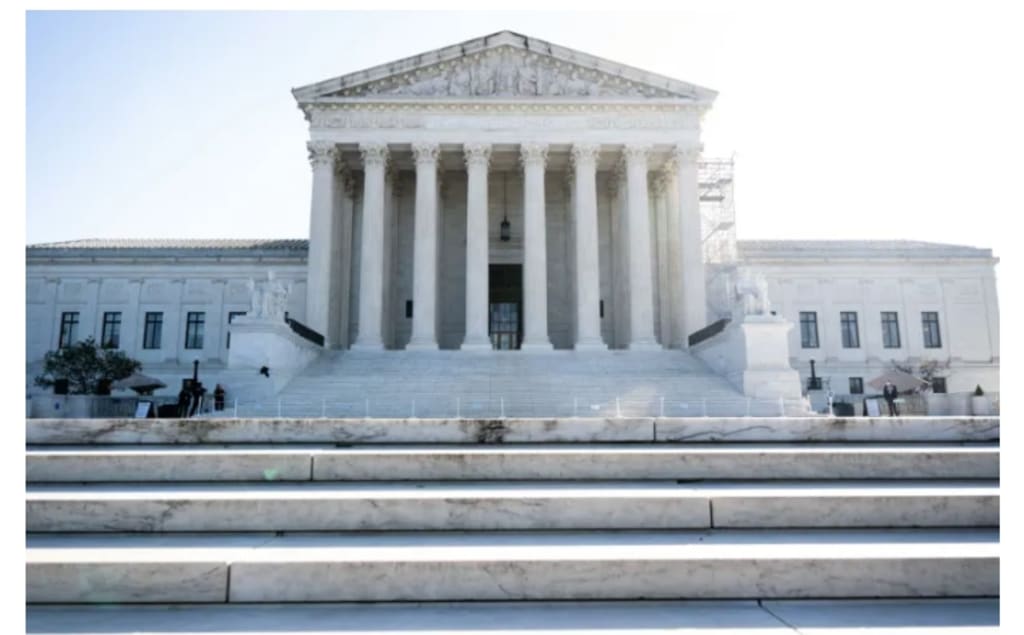
A Case With Historic Stakes
On April 1, 2026, the Supreme Court of the United States is scheduled to hear oral arguments in a case that could reshape one of the most fundamental rights in American law: birthright citizenship — the principle that virtually everyone born on U.S. soil automatically becomes a U.S. citizen. �
SCOTUSblog
The case — Trump v. Barbara — challenges the legality of an executive order issued by President Donald Trump on January 20, 2025, which sought to end automatic citizenship for children born in the United States to parents who are in the country without lawful status or only temporarily present. �
SCOTUSblog +1
Birthright citizenship is rooted in the 14th Amendment to the Constitution, ratified in the aftermath of the Civil War to ensure that “all persons born or naturalized in the United States, and subject to the jurisdiction thereof, are citizens of the United States and of the state wherein they reside.” �
SCOTUSblog
This long-standing constitutional guarantee has been widely accepted for more than a century. Now, for the first time since its creation, the nation’s highest court will weigh directly on whether that guarantee can be limited through executive action — a legal and political battle with enormous consequences.
Background: What Is Birthright Citizenship?
Birthright citizenship, also known by the legal phrase jus soli (“right of the soil”), means that almost everyone born in the U.S. is a U.S. citizen at birth, regardless of their parents’ immigration status. This right has been central to U.S. law and identity for generations.
The key constitutional foundation is the 14th Amendment’s Citizenship Clause, adopted in 1868 to ensure that formerly enslaved people and their descendants became and remained citizens. Subsequent Supreme Court precedent and legal interpretations established broad protection for birthright citizenship. �
ACLU of Maine
The Executive Order at Issue
On January 20, 2025 — his first day in office in his second term — President Trump signed an executive order titled “Protecting the Meaning and Value of American Citizenship.” The order asserted that the Citizenship Clause of the 14th Amendment was never meant to confer automatic citizenship to children born in the United States solely by virtue of their birth if their parents were illegally present or in the country temporarily. �
jurist.org
Under the proposed policy:
Children born in the U.S. to undocumented immigrants might not receive automatic citizenship.
Children born to temporary visa holders without permanent residency could also be excluded.
Only those born to U.S. citizens or lawful permanent residents would retain clear automatic citizenship.
The administration argued this policy would protect the value of citizenship and discourage unauthorized immigration. �
Washington Examiner
Legal Challenges and Lower Court Rulings
Almost immediately after the executive order was signed, civil rights groups and state plaintiffs filed lawsuits claiming it violated both the Constitution and longstanding Supreme Court precedent. �
ACLU of Maine
In Washington v. Trump, a federal judge granted a preliminary injunction barring enforcement of the order, and the Ninth Circuit Court of Appeals upheld that injunction. �
Wikipedia
Another major case, Barbara v. Trump — the class action now before the Supreme Court — was filed to challenge the order nationwide. In July 2025, a federal judge in New Hampshire issued a preliminary injunction blocking enforcement of the policy as it would apply to children born on or after February 20, 2025. �
Wikipedia
The Trump administration appealed, and in December 2025, the Supreme Court agreed to hear the consolidated case on its merits during the spring 2026 term. Oral arguments are set for April 1, and a ruling is expected by late June or early July when the Court wraps its term. �
SCOTUSblog +1
What the Supreme Court Will Decide
At the heart of Trump v. Barbara is a constitutional question:
Does the 14th Amendment’s Citizenship Clause guarantee automatic citizenship to almost everyone born on U.S. soil, or can the president limit that right through executive action? �
SCOTUSblog
Broadly speaking:
Challengers argue that the Citizenship Clause is clear and unambiguous — anyone born in the U.S., subject to its jurisdiction, is a citizen, and that this cannot be undone by executive order. �
ACLU of Maine
The Trump administration contends the Clause was originally intended to ensure citizenship for formerly enslaved people and their descendants, not to confer universal rights on children born to illegal or temporary visitors. �
Washington Examiner
If the Court upholds the executive order, it would be a watershed moment — limiting a constitutional right long accepted as settled law. If the Court strikes down the order, it would reaffirm more than a century of birthright citizenship doctrine.
Historical and Legal Context
Birthright citizenship has seldom been directly litigated at the Supreme Court — mostly because the right has been so widely accepted. However, several earlier cases provide relevant background, even if they did not squarely decide the issue:
In Perkins v. Elg (1939), the Court upheld U.S. citizenship for a child born in the United States who later lived abroad, reaffirming birthright principles. �
Wikipedia
In Miller v. Albright (1998), the Court dealt with citizenship for children born abroad to one U.S. parent, but did not overturn jus soli. �
Wikipedia
Cases like Tuaua v. United States (2015) addressed derivative citizenship but did not diminish the core jus soli concept for birth on U.S. soil. �
Wikipedia
These precedents illustrate that, while courts have explored facets of citizenship law, the basic principle that birth on U.S. soil confers citizenship remains deeply rooted.
Political and Social Implications
The case’s impact extends far beyond constitutional theory.
1. Immigration Policy
A decision limiting birthright citizenship could reshape U.S. immigration law, potentially affecting millions of children born in the United States each year to parents without lawful status — and altering patterns of migration and family rights.
2. Civil Rights and Equality
Opponents of the executive order argue that taking away automatic citizenship contravenes core civil rights principles and undermines equality under the law.
3. National Identity
Birthright citizenship has been a hallmark of U.S. identity and inclusion. Any change to that principle would reverberate across debates on national belonging, race, and citizenship.
4. Legal Precedent and Presidential Power
The case also raises broader questions about presidential authority — whether a president can reinterpret or effectively override constitutional language through executive action.
What to Expect on April 1 and Beyond
The oral arguments on April 1 will be the first time the full Supreme Court hears direct debate over the constitutionality of the birthright citizenship order. The justices will likely explore:
The historical intent of the 14th Amendment’s Citizenship Clause
The role of precedent and how it applies today
Limits on executive authority and separation of powers
Following arguments, the Court will deliberate and is expected to issue a decision by late June or early July 2026 — typically at the end of its term. That opinion could have generational consequences for U.S. constitutional law and immigration policy. �
SCOTUSblog
Conclusion: A Momentous Constitutional Question
The Supreme Court’s decision to hear the birthright citizenship case on April 1 marks a defining moment in American legal history. At stake is not only how we interpret one line of the Constitution, but how we define the nation’s commitment to equality, citizenship, and the rule of law.
With arguments approaching and outcomes uncertain, millions are watching closely — aware that the Court’s ruling will echo for decades to come.
About the Creator
Keep reading
More stories from Zahid Hussain and writers in The Swamp and other communities.
Partial Government Shutdown Begins as Funding Lapses Despite Senate Deal
On [Date of shutdown], the United States government entered a partial shutdown after federal funding lapsed at midnight, despite a Senate deal that had been expected to keep operations running. The legislative impasse underscores deep political divisions in Washington and highlights the real-world consequences when lawmakers fail to agree on federal spending. The shutdown affects large parts of the federal government, leaving hundreds of thousands of federal employees furloughed or working without pay and disrupting services that millions of Americans rely on every day. How It Happened: A Failed Stopgap In recent days, congressional leaders in the Senate had appeared close to passing a continuing resolution (CR)—a short-term funding measure designed to keep the government open while longer-term appropriations negotiations continue. The deal, backed by some lawmakers on both sides, was intended to avert exactly this outcome. But in the end: Enough senators refused to support the measure Key policy disputes and political demands derailed the agreement The funding deadline passed without a new resolution With no approved budget and no continuing resolution in place, government funding legally expired, triggering the partial shutdown. What “Partial Shutdown” Means A partial shutdown differs from a full one in that: Some parts of the federal government remain funded and operational Others pause non-essential activities Critical and emergency services continue Which parts stay open depends on whether their funding was already appropriated or exempted by law. Who Is Affected First 1. Federal Employees Hundreds of thousands of federal workers are directly impacted: Many employees are furloughed (placed on temporary unpaid leave) Others are being asked to work with no guarantee of pay Essential personnel in areas like national security, air traffic control, and law enforcement typically continue working. 2. National Parks and Museums Popular national parks, historic sites, and museums have already: Closed gates Halted tours Suspended visitor services These closures affect tourism revenue and local economies in gateway communities. 3. Public Services Programs that rely on annual appropriations face delays or interruptions, including: Non-emergency grant programs Research funding Regulatory reviews and approvals What Continues to Operate Not all government functions stop during a partial shutdown. Services funded through mandatory spending streams remain active, including: Social Security benefits Medicare and Medicaid Unemployment insurance Veteran benefits Emergency responses, including disaster relief and national defense, also continue. Political Roots of the Impasse The breakdown reflects broader legislative gridlock: Deep divides between political factions over spending priorities Disagreements about policy riders tied to funding bills A highly partisan atmosphere in both chambers of Congress Even when a deal appears within reach, internal disagreements within party caucuses — and pressure from activist wings — can block compromise. Statements from Capitol Hill Senate Leadership: Lawmakers acknowledged failure to pass the CR before the deadline. Some expressed frustration, others blamed opposition forces within their own ranks. White House Reaction: The administration criticized Congress for the lapse in funding and called for renewed negotiations to reopen the government swiftly. House of Representatives: House leadership signaled plans to revisit the funding bill, but timing and strategy remain uncertain. Economic and Social Impact A government shutdown, even partial, has measurable effects: Market Signals Investors often react to shutdown news with: Stock market volatility Pressure on consumer confidence Re‐pricing of short-term treasury yields Federal Contractors Contractors may see: Delays in payments Halted work on government projects Cash flow disruptions Public Sentiment Polls frequently show public frustration with shutdowns, and this one may deepen skepticism about government efficacy. When Could It End? The shutdown will continue until Congress passes new funding legislation and the President signs it into law. Possible scenarios include: A revised continuing resolution Full appropriations bills Short-term band-aid fix to buy more time Each option depends on political leverage and negotiation progress. Why This Matters Beyond the political theater, shutdowns have real consequences: Financial hardship for workers and contractors Disruptions to public services Reduced operational capacity for agencies And the longer the impasse persists, the deeper the impact. Conclusion: A Strained System under Stress The initiation of a partial government shutdown — despite a Senate deal — spotlights the intense political divisions in Washington and the fragility of the budgeting process. While core services continue, many everyday federal functions are now in limbo, and the human cost is mounting for those on the frontlines of government operations. For citizens, taxpayers, and businesses alike, the shutdown is a stark reminder that the functioning of government is not guaranteed—it is negotiated.
By Zahid Hussainabout 19 hours ago in The Swamp
Starmer Rejects Binary Choice: UK Will Not Be Forced to Choose Between the US or China
British Prime Minister Sir Keir Starmer has made clear that the United Kingdom will not be forced to choose between the United States and China — two of the world’s most powerful and influential nations — as he prepares for his first official trip to Beijing in eight years. Starmer’s remarks, delivered in a wide‑ranging interview ahead of the visit, signal a defining moment in British foreign policy amid intensifying global geopolitical competition. �
By Ayesha Lashari5 days ago in The Swamp
Instructions Included Challenge Winners
For the Instructions Included challenge, we asked writers to tell a story through instructions and to trust the form to carry what could not be said outright. Across the top entries, that trust paid off in many different ways.
By Vocal Curation Team4 days ago in Resources


Comments
There are no comments for this story
Be the first to respond and start the conversation.