
Sudan Tops Global Humanitarian Crisis Watchlist for Third Year as Devastating War Grips the Country
As war ravages Sudan, millions face displacement, hunger, and disease, placing the nation at the top of the global humanitarian crisis list for the third year

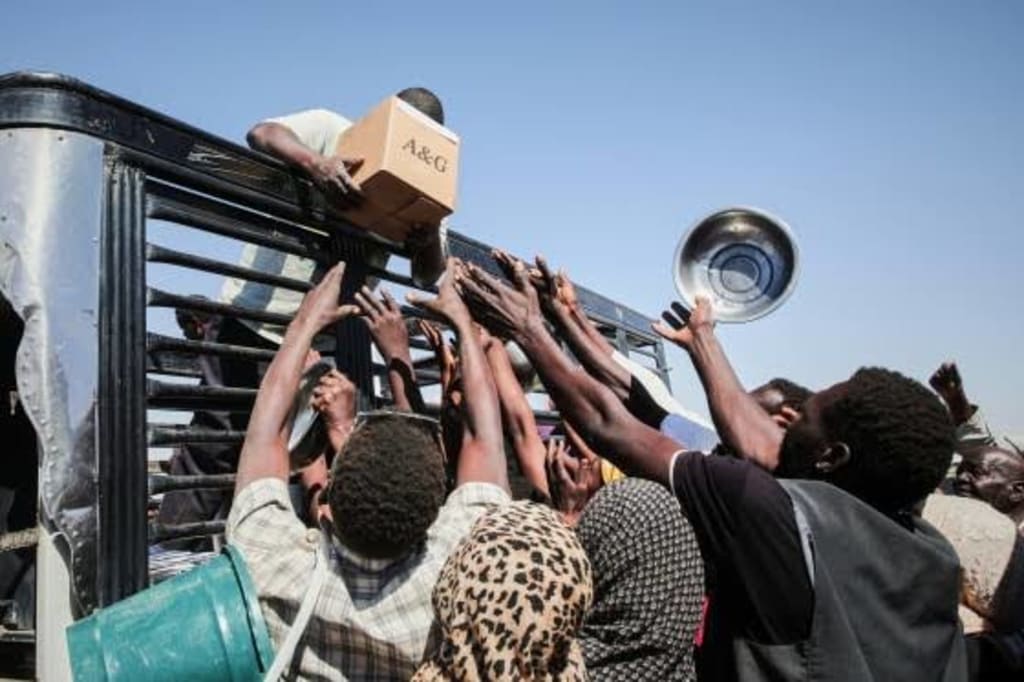
For the third consecutive year, Sudan has been ranked at the top of the global humanitarian crisis watchlist, a grim distinction that reflects the scale of suffering unfolding inside the country. What began as a power struggle between rival military factions has spiraled into a devastating war that has shattered institutions, displaced millions, and pushed an already fragile nation to the brink of collapse. As violence continues unabated, Sudan’s crisis is no longer just a regional tragedy—it is one of the world’s most severe humanitarian emergencies.
A Conflict With No End in Sight
The current war erupted in April 2023 between Sudan’s army and the Rapid Support Forces (RSF), plunging major cities, including the capital Khartoum, into chaos. Heavy fighting, airstrikes, and street battles have destroyed homes, hospitals, schools, and vital infrastructure. Civilians have found themselves trapped between warring sides, with little protection and almost no access to basic services.
Despite repeated calls for ceasefires, fighting continues across large parts of the country. The absence of a clear political roadmap and the fragmentation of armed groups have made peace efforts painfully slow. For ordinary Sudanese people, this means living in constant fear, with no certainty about when—or if—the violence will end.
Millions Displaced and Facing Hunger
One of the most alarming aspects of Sudan’s crisis is the scale of displacement. More than 10 million people have been forced from their homes, making Sudan one of the largest displacement crises in the world today. Many have fled to neighboring countries such as Chad, South Sudan, and Egypt, while others remain internally displaced, often sheltering in overcrowded camps or abandoned buildings.
Food insecurity has reached catastrophic levels. Farms have been abandoned, supply chains disrupted, and markets destroyed. Aid agencies warn that millions are at risk of famine, particularly in conflict-affected regions like Darfur and Kordofan. Children are among the most vulnerable, with rising cases of malnutrition threatening an entire generation.
A Health System in Ruins
Sudan’s healthcare system, already weak before the war, has been pushed to near total collapse. Hospitals have been damaged or occupied by armed groups, medical staff have fled, and essential medicines are in short supply. Outbreaks of preventable diseases such as cholera, malaria, and measles are spreading rapidly, fueled by poor sanitation and lack of clean water.
Women face unique and severe risks. Access to maternal healthcare has become extremely limited, increasing the dangers of pregnancy and childbirth. Reports of gender-based violence have also surged, particularly in areas where law and order have completely broken down.
Darfur: A Crisis Within a Crisis
Nowhere is the humanitarian catastrophe more visible than in Darfur. Long scarred by conflict, the region has witnessed renewed ethnic violence, mass killings, and widespread destruction. Entire communities have been wiped out, echoing the horrors of earlier atrocities that once drew global outrage.
Aid workers describe Darfur as a “crisis within a crisis,” where humanitarian access is severely restricted and civilians are targeted simply because of who they are. Many fear that without urgent intervention, the situation could deteriorate even further.
International Response Falling Short
Despite Sudan topping global crisis rankings, humanitarian funding remains dangerously inadequate. Aid agencies face huge shortfalls, forcing them to make impossible choices about who to help and who to leave behind. Insecurity and bureaucratic obstacles further limit access to those most in need.
While diplomatic efforts continue, critics argue that the international community has failed to apply enough pressure on the warring parties to protect civilians and allow humanitarian corridors. As global attention shifts to other conflicts, Sudan risks becoming a forgotten emergency—even as suffering intensifies.
Why Sudan’s Crisis Matters to the World
Sudan’s war has implications far beyond its borders. Refugee flows are straining neighboring countries, regional instability is growing, and the collapse of Sudan risks creating a long-term security vacuum. Moreover, the crisis highlights a troubling global pattern: protracted conflicts that drag on with little accountability and insufficient international action.
Humanitarian organizations stress that Sudan does not lack solutions—it lacks sustained global commitment. Immediate ceasefires, unrestricted humanitarian access, and a credible political process are essential to prevent further loss of life.
A Test of Global Responsibility
As Sudan tops the humanitarian crisis watchlist for the third year in a row, the situation represents a stark test of the world’s moral responsibility. Behind the statistics are real people—families torn apart, children growing up amid violence, and communities struggling to survive against impossible odds.
Without urgent action, Sudan’s tragedy will deepen, and history may judge the global response as one of silence and neglect. The time to act is now, before an already devastating crisis becomes an irreversible catastrophe.
About the Creator
Fiaz Ahmed Brohi
I am a passionate writer with a love for exploring and creating content on trending topics. Always curious, always sharing stories that engage and inspire.
Keep reading
More stories from Fiaz Ahmed Brohi and writers in The Swamp and other communities.
“The Last Bastion Before Collapse” – Louvre Museum Closed as Workers Begin Strike
Paris, long heralded as the cultural capital of the world, is witnessing an unusual disruption in one of its most iconic institutions. The Louvre Museum, home to masterpieces spanning centuries—from Leonardo da Vinci’s Mona Lisa to the Venus de Milo—is closed indefinitely as workers have commenced a strike, demanding better wages, improved working conditions, and stronger protections for staff. The closure has sparked a wave of concern among art lovers, tourists, and policymakers alike, as France grapples with a larger wave of labor unrest across multiple sectors.
By Fiaz Ahmed Brohiabout a month ago in The Swamp



Comments
There are no comments for this story
Be the first to respond and start the conversation.