
Starmer to Meet Xi Jinping in Beijing as UK Seeks to Reset Ties With China
Prime minister’s visit signals cautious re-engagement after years of strained relations


Introduction
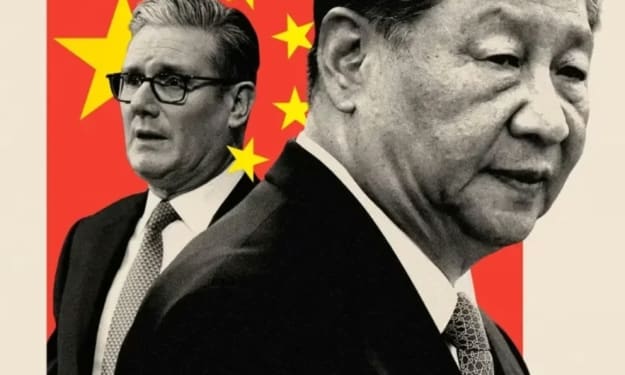
UK Prime Minister Keir Starmer is set to meet Chinese President Xi Jinping in Beijing as part of an official visit aimed at stabilising and resetting relations between the two countries. The meeting marks the most significant diplomatic engagement between London and Beijing in several years and reflects a shift toward structured dialogue after a prolonged period of tension.
The visit comes at a time when global politics are increasingly shaped by competition between major powers, economic uncertainty, and debates over national security. For the UK, the trip is framed as a pragmatic effort to protect national interests while engaging with one of the world’s largest economies. For China, the meeting represents an opportunity to improve ties with a major Western country amid broader geopolitical challenges.
---
Background to Strained UK-China Relations
Relations between the UK and China have deteriorated steadily over the past decade. Areas of disagreement have included human rights concerns in Xinjiang, the political situation in Hong Kong, cyber security, and the role of Chinese technology companies in British infrastructure.
Previous UK governments adopted a more cautious approach toward Beijing, describing China as a “systemic competitor” while limiting official engagement. High-level visits became rare, and cooperation agreements were either frozen or reviewed under tighter security rules.
Starmer’s visit does not erase these disagreements, but it signals a shift away from diplomatic distance toward managed engagement. Officials in London have stressed that dialogue does not mean endorsement, but rather an attempt to handle differences through direct communication.
---
Why the Meeting Matters Now
The timing of the meeting reflects changing international conditions. Many countries are reassessing their relationships with China amid global economic pressures, supply chain disruptions, and uncertainty around US foreign policy priorities.
The UK government has indicated that disengagement has limits, particularly when economic stability and global cooperation are at stake. China remains a major trading partner, and areas such as climate policy, financial regulation, and public health require cooperation despite political differences.
For China, hosting the UK prime minister sends a signal that Beijing remains open to dialogue with Western nations, even as relations with the United States and some European partners remain strained.
---
Economic Considerations at the Center
Trade and investment are expected to feature prominently in discussions. China is one of the UK’s largest trading partners outside Europe, and British businesses continue to operate across Chinese markets despite growing regulatory and political scrutiny.
The UK is seeking clearer market access for financial services, education, and green technology firms. At the same time, British officials are expected to raise concerns about fair competition, intellectual property protection, and regulatory transparency.
China, meanwhile, has expressed interest in attracting foreign investment as it seeks to stabilise economic growth. The visit provides an opportunity for Beijing to present itself as open to business at a time when investor confidence has been uneven.
---
Security and Strategic Concerns
Despite the focus on economic cooperation, security issues remain a major point of tension. The UK has tightened rules on foreign investment in sensitive sectors and increased scrutiny of Chinese involvement in infrastructure projects.
Starmer has made clear that national security remains a priority and that engagement with China will operate within firm boundaries. British officials are expected to raise concerns about cyber activity, espionage risks, and regional security issues, including the situation in the South China Sea and Taiwan.
China has consistently rejected accusations of hostile intent, arguing that such claims are used to justify containment policies. Beijing is likely to push back against security-focused narratives and emphasise principles of sovereignty and non-interference.
---
Human Rights on the Agenda
Human rights are also expected to be discussed, though likely behind closed doors. The UK has previously raised concerns about treatment of ethnic minorities in Xinjiang, political freedoms in Hong Kong, and restrictions on civil society.
Starmer has said that the UK will continue to speak out on values while engaging diplomatically. Chinese officials, however, maintain that these issues are internal matters and often view public criticism as a barrier to cooperation.
The challenge for the UK will be balancing its stated commitment to human rights with its desire to keep diplomatic channels open.
---
China’s View of the Visit
From Beijing’s perspective, the visit fits into a broader strategy of re-engaging selectively with Western governments. Chinese officials have framed recent diplomatic outreach as evidence that dialogue remains possible despite ideological differences.
China also sees value in engaging with a UK government that has signaled a more measured tone than some of its predecessors. The meeting with Starmer allows Beijing to test whether relations can move toward predictability rather than confrontation.
State media in China has portrayed the visit as a chance to stabilise ties and focus on shared interests, particularly economic cooperation and global governance.
---
Domestic Reactions in the UK
The visit has drawn mixed reactions within the UK. Some lawmakers and security experts have warned against moving too quickly toward engagement, arguing that China continues to pose strategic risks.
Others have welcomed the visit as a necessary step toward realism in foreign policy. They argue that refusing dialogue limits the UK’s ability to influence outcomes and protect its interests.
Public opinion remains divided, with concerns about security and values balanced against economic realities and the need for global cooperation.
---
International Implications
Other countries are closely watching the visit, particularly allies in Europe and North America. How the UK manages its engagement with China may influence similar approaches elsewhere.
The meeting may also shape China’s broader diplomatic strategy, especially if it leads to renewed cooperation frameworks or regular dialogue mechanisms.
While no major agreements are expected to be announced immediately, the visit could set the tone for future engagement and help define how mid-sized powers navigate relations with China.
---
Managing Expectations
Both sides have taken care to manage expectations. UK officials have stressed that the visit is about communication, not dramatic breakthroughs. Chinese officials have similarly avoided framing the meeting as a reset that resolves all disputes.
This cautious approach reflects lessons from previous engagement efforts that raised hopes but delivered limited results. The emphasis now appears to be on consistency and clarity rather than symbolic gestures.
---
Conclusion
Keir Starmer’s meeting with Xi Jinping in Beijing marks an important moment in UK-China relations. It reflects a shift toward pragmatic engagement after years of tension, without abandoning concerns over security, values, and global competition.
The visit underscores the reality that cooperation and rivalry can exist side by side in modern diplomacy. For the UK, the challenge lies in engaging China while safeguarding national interests. For China, the meeting offers a chance to rebuild trust with a major Western partner.
Whether this visit leads to lasting change will depend on what follows. Dialogue alone does not resolve deep differences, but it may help prevent misunderstandings and create space for managed cooperation in an increasingly complex global landscape.
About the Creator
Saad
I’m Saad. I’m a passionate writer who loves exploring trending news topics, sharing insights, and keeping readers updated on what’s happening around the world.
US Officially Leaves World Health Organization
The United States has officially withdrawn from the World Health Organization (WHO), marking a major shift in global health governance and international cooperation. The move, confirmed by US officials, ends decades of American membership in the world’s leading public health body and has sparked widespread debate about its consequences for global disease response, diplomacy, and public health funding.
By Aarif Lashari6 days ago in The Swamp


Comments
There are no comments for this story
Be the first to respond and start the conversation.