
US Officially Leaves World Health Organization
“Withdrawal raises concerns over global health cooperation, funding, and future pandemic response”

The United States has officially withdrawn from the World Health Organization (WHO), marking a major shift in global health governance and international cooperation. The move, confirmed by US officials, ends decades of American membership in the world’s leading public health body and has sparked widespread debate about its consequences for global disease response, diplomacy, and public health funding.
The decision places the US outside the framework of an organization that coordinates responses to pandemics, supports vaccination campaigns, and provides health assistance to developing nations.
What the World Health Organization Does
Founded in 1948, the World Health Organization is a specialized agency of the United Nations responsible for directing and coordinating international health efforts. Its work includes:
Monitoring global disease outbreaks
Providing guidance during health emergencies
Supporting vaccination and maternal health programs
Setting international health standards
The WHO played a central role during recent global health crises, including the COVID-19 pandemic, coordinating research, data sharing, and emergency responses across borders.
Why the US Decided to Leave
US officials cited long-standing concerns over governance, accountability, and political influence within the WHO as reasons for the withdrawal. Critics within the US government have argued that the organization failed to respond quickly and transparently during major health emergencies and did not adequately challenge member states accused of withholding information.
Supporters of the decision say leaving allows the US to pursue a more independent health strategy and redirect funding to bilateral health initiatives rather than multilateral institutions.
Financial Impact on Global Health
The United States has historically been one of the WHO’s largest financial contributors, providing hundreds of millions of dollars annually through assessed and voluntary contributions. Its exit is expected to leave a significant funding gap.
Public health experts warn that reduced funding could affect programs focused on:
Polio eradication
Tuberculosis and malaria prevention
Emergency health responses in conflict zones
Disease surveillance in low-income countries
While other nations may attempt to increase contributions, analysts say replacing US funding will be difficult in the short term.
Reactions From the International Community
Global reaction to the US withdrawal has been swift and largely critical. Leaders from Europe, Africa, and Asia have emphasized the importance of multilateral cooperation in addressing cross-border health threats.
The WHO released a statement expressing regret over the decision, noting that global health challenges “do not respect national borders” and require collective action.
Some countries, however, acknowledged the need for reform within the organization, suggesting the US departure could increase pressure for internal changes.
Domestic Debate in the United States
Within the US, the decision has deepened political divisions. Supporters argue that international organizations should be held to higher standards and that US taxpayers should not fund institutions they believe are ineffective.
Opponents counter that withdrawing weakens America’s global leadership and reduces its ability to shape international health policy. Public health professionals have warned that disengagement could leave the US more vulnerable to future pandemics by limiting access to early warning systems and global research networks.
Implications for Future Pandemics
One of the most significant concerns is how the US will coordinate responses to future global health emergencies. The WHO serves as a central hub for data sharing and outbreak alerts, and its absence could complicate international collaboration.
Experts note that diseases can spread rapidly in a globalized world, making cooperation essential. Without formal participation in the WHO, the US may need to rely on alternative bilateral or regional arrangements.
Shifts in Global Health Leadership
The US exit may create space for other countries to increase their influence within the WHO. Analysts suggest that nations such as China and members of the European Union could take on larger roles in shaping global health priorities and standards.
This shift could have long-term implications for how international health policies are developed and implemented.
What Happens Next
Legally and operationally, the withdrawal process involves ending financial contributions and participation in WHO decision-making bodies. US agencies will need to establish new mechanisms to replace functions previously handled through the organization.
Meanwhile, the WHO will continue its work with remaining member states, adapting to the financial and political changes brought about by the US departure.
Conclusion
The United States officially leaving the World Health Organization represents a historic turning point in global health diplomacy. While supporters view the move as a necessary step toward accountability and reform, critics warn it could weaken international cooperation at a time when global health threats are becoming more complex.
As the world adjusts to this change, the long-term impact on disease prevention, emergency response, and global health leadership remains uncertain. What is clear is that the decision will shape international health policy discussions for years to come.
About the Creator
Keep reading
More stories from Aarif Lashari and writers in The Swamp and other communities.
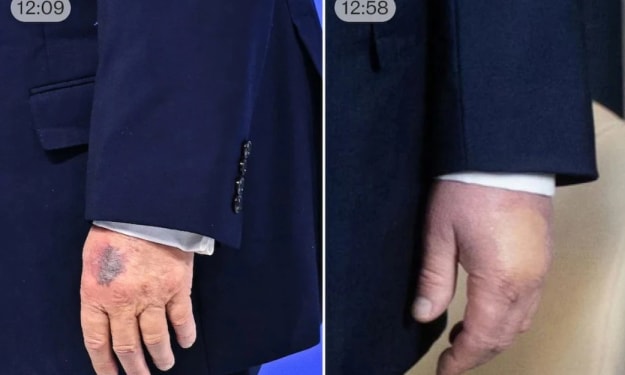
Trump Injured Hand in Davos Signing Ceremony, White House Claims
A routine signing ceremony at the World Economic Forum in Davos unexpectedly drew attention this week after the White House confirmed that former U.S. President Donald Trump sustained a minor hand injury during the event. The incident, which occurred amid high-profile meetings and media scrutiny, sparked speculation online before officials clarified the nature of the injury.
By Aarif Lasharia day ago in The Swamp
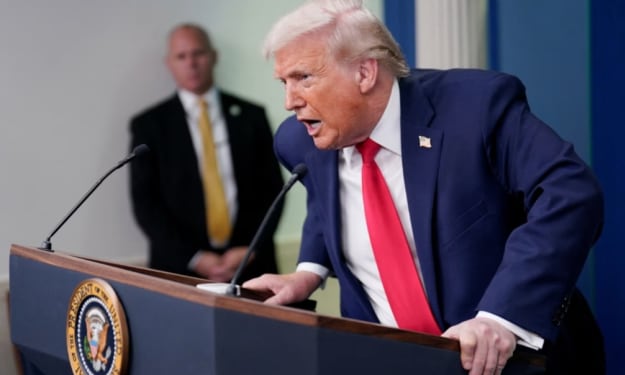
Trump’s Presser Set the Stage for a Doozy at Davos
Donald Trump’s pre-Davos press conference was supposed to be a scene-setter. Instead, it became a spectacle that sent shockwaves through diplomatic circles and boardrooms alike, ensuring that this year’s World Economic Forum in Davos would be anything but routine. In trademark fashion, Trump used the presser to air grievances, make sweeping claims, and sketch out a vision of global economic relations that left allies uneasy and critics energized. By the time he boarded his plane for Switzerland, it was clear that Davos was bracing for what many attendees privately described as “a doozy.”
By Salaar Jamali3 days ago in The Swamp
Company Fined £433,000 After Machine Crash Leaves Worker with Life-Changing Injuries
A packaging firm has been fined a substantial £433,333 after a worker at its Scottish facility suffered a severe skull fracture and permanent life-altering injuries when a heavy machine fell on him in an incident that authorities described as “entirely preventable.” �
By Ayesha Lashari2 days ago in The Swamp


Comments
There are no comments for this story
Be the first to respond and start the conversation.