
Silver Price Today: Silver Holds Near Record Highs as Traders Brace for U.S. PCE Data
“Traders eye key U.S. inflation data as silver hovers near historic highs, supported by industrial demand and tight supply”

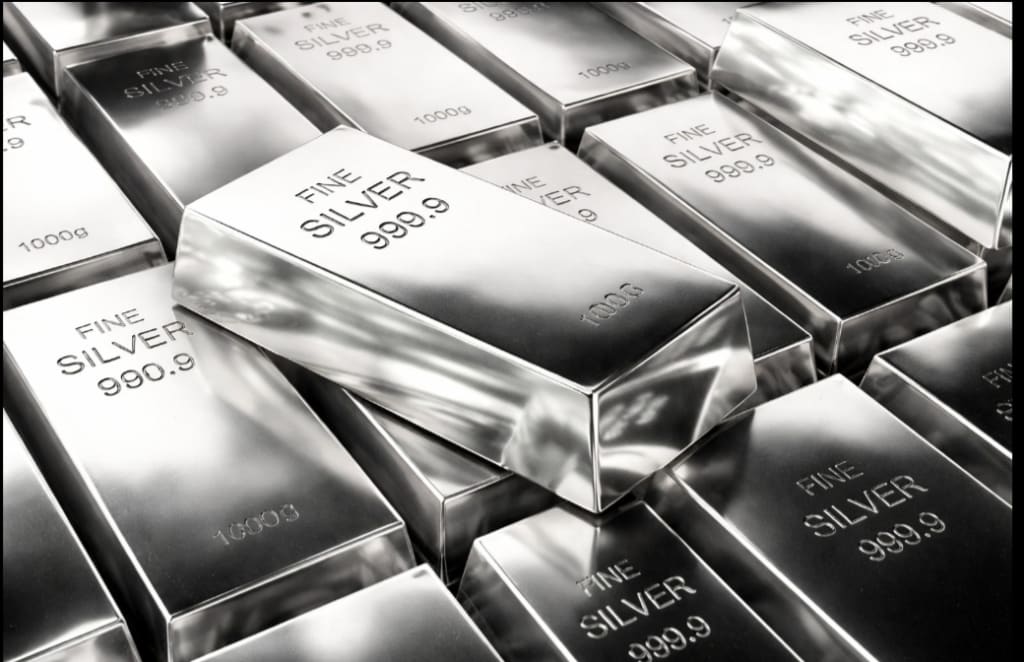
Silver has once again captured global markets’ attention — trading near all‑time highs as traders and investors prepare for the release of the U.S. Personal Consumption Expenditures (PCE) Price Index, a key inflation indicator that could influence monetary policy and market direction in 2026. The precious metal’s remarkable performance highlights its evolving role not only as a traditional safe‑haven asset, but also as a commodity with growing industrial relevance and speculative momentum.
Silver’s Price Action: Near Record Territory
In premarket U.S. trading, spot silver climbed about 0.5% to $93.71 per ounce early on Thursday, maintaining a position just below Tuesday’s record peak of $95.87 per ounce. This shows how tight and responsive the metals market has become to macroeconomic cues and shifting investor sentiment.
This run towards historic levels follows a steep rally earlier in the week, fueled by geopolitical headlines and renewed interest in precious metals. Silver’s price swings have been larger and more erratic compared with gold — reflecting its dual nature as both an industrial commodity and a safe‑haven store of value.
Why Traders Are Watching U.S. PCE Data
The Personal Consumption Expenditures Price Index is the Federal Reserve’s preferred gauge of inflation, as it offers a comprehensive picture of how prices are changing for consumers. Traders are keenly awaiting this data release because it informs expectations around future U.S. interest rate policy. A hotter‑than‑expected PCE reading could reduce the likelihood of rate cuts or even prompt hawkish policies, strengthening the dollar and typically putting downward pressure on silver prices. Conversely, a softer PCE — showing slower inflation — may reinforce expectations of more accommodative policy, which can boost precious metals by lowering real yields and weakening the dollar.
Interest rates matter significantly for silver because, unlike interest‑bearing assets or currencies, silver offers no yield. When real yields (interest rates adjusted for inflation) fall, non‑yielding assets like silver become more attractive relative to bonds and cash.
Safe‑Haven Versus Risk Appetite
Silver’s market behavior this week has also showcased how fluctuating risk appetite affects volatile assets. Risk‑on sentiment, driven by easing geopolitical tensions and reduced fears around potential tariffs — particularly after a U.S. administration softened its stance on controversial trade measures linked to Greenland — helped lift broader markets and slightly tempered demand for traditional “safe havens.” Nonetheless, silver has remained resilient, holding near its highs even as equities advanced and volatility declined.
This interplay between risk assets and precious metals underscores silver’s unique position: it behaves like gold during risk‑off episodes, yet exhibits heightened sensitivity to economic data and rate expectations, often resulting in sharper moves than bullion.
Industrial Demand and Structural Market Forces
While macroeconomic drivers dominate headlines, structural demand fundamentals are equally compelling. Silver’s role in industrial applications — from solar photovoltaic cells to electric vehicles, electronics, and advanced data infrastructure — has grown substantially over the past decade. This industrial demand now accounts for more than half of total silver consumption, creating a persistent structural force that underpins long‑term price support.
At the same time, supply dynamics have tightened. Global silver mine output has struggled to keep pace with expanding demand due to lower ore grades, rising production costs, regulatory hurdles, and underinvestment in new mining projects. Recycling only partially offsets these gaps, leaving the market structurally constrained. These supply deficits have become one of silver’s most persistent bullish undercurrents, in many cases amplifying price moves far beyond short‑term macroeconomic triggers.
Emerging Geopolitical and Market Signals
Geopolitical tensions and global macro uncertainty remain significant catalysts. Recent moves in silver prices have been driven not only by economic data anticipation but also by risk hedging stemming from global trade frictions, shifting policy expectations, and central bank positioning in unorthodox economic environments. These external headwinds elevate silver’s appeal among investors seeking diversification and portfolio protection.
Moreover, physical markets — particularly in major consuming regions such as India — have experienced sharp premium spikes, reflecting tighter supply availability and speculative positioning ahead of anticipated policy announcements.
Volatility and the Path Ahead
Despite its march toward record levels, silver’s price trajectory remains vulnerable to sudden reversals. Should PCE data surprise on the upside, the resulting expectation of tighter monetary policy could strengthen the dollar — usually a bearish signal for silver and other precious metals. Additionally, silver’s historically sharp moves mean that profit‑taking by traders can lead to rapid swings, especially in thinly traded markets or during geopolitical calm.
Still, many analysts see silver’s extended run as more than a short‑term sneaker wave. The convergence of structural industrial demand, ongoing supply challenges, and macroeconomic shifts — including expectations of future rate cuts — suggests that silver’s bullish narrative could persist beyond transient headline reactions.
Conclusion
Silver’s current position near record highs reflects a unique confluence of forces: elevated investor risk awareness, anticipation of crucial economic data like the U.S. PCE index, strengthening industrial demand, and long‑term structural supply constraints. While the path ahead may be volatile — especially around major data releases — silver’s evolving role in both financial markets and the global industrial ecosystem makes it a compelling barometer of broader economic and geopolitical trends.
About the Creator
Keep reading
More stories from Salaar Jamali and writers in The Swamp and other communities.
Train Driver Killed and Dozens Injured After Train Derails in Spain
A tragic train derailment in Spain has left the nation in shock after a train driver was killed and dozens of passengers were injured in a serious rail accident. The incident has once again raised urgent questions about railway safety, infrastructure maintenance, and emergency response preparedness in one of Europe’s busiest rail networks.
By Aarif Lasharia day ago in The Swamp
WEF: Donald Trump Set to Dominate Davos 2026
When world leaders, billionaires, CEOs, and policy architects gather in the Swiss Alps for the World Economic Forum (WEF) in Davos, they usually arrive with carefully balanced messages about cooperation, stability, and long-term planning. But in 2026, one figure is expected to overshadow all others—Donald J. Trump. According to analysts and political observers, Trump’s influence is set to dominate Davos 2026, whether he appears in person or not. His policies, rhetoric, and potential return to the White House are already shaping conversations about trade, security, globalization, and the future of Western democracies. For an event traditionally associated with liberal internationalism, Trump’s looming presence marks a dramatic shift. Why Trump Matters at Davos The World Economic Forum has long been a symbol of elite global consensus—an annual meeting where governments, multinational corporations, and international institutions attempt to align their visions. Donald Trump, by contrast, has consistently positioned himself as an outsider to that system. During his previous presidency, Trump openly criticized global institutions, questioned NATO commitments, challenged free-trade agreements, and promoted a fiercely nationalist “America First” agenda. Those policies reshaped global markets and alliances, making Trump impossible to ignore—even for the very elites he often criticized. As Davos 2026 approaches, Trump’s political comeback has forced attendees to confront an uncomfortable reality: global decision-making may once again revolve around a leader who rejects many of the forum’s foundational ideas. A Forum Forced to Adapt Unlike past years, Davos 2026 is expected to focus less on long-term climate targets and more on immediate geopolitical uncertainty. Trump’s potential return to power has triggered renewed debate over tariffs, defense spending, and global supply chains. Executives attending the forum are reportedly recalculating investment strategies in anticipation of stricter U.S. trade policies. Trump’s past willingness to impose tariffs—even on allies—has made corporations wary of overreliance on globalized production networks. At the same time, European leaders are preparing for the possibility of reduced U.S. commitment to multilateral agreements. Trump’s skepticism toward institutions like the World Trade Organization and the Paris Climate Agreement remains a central concern at Davos. Trade, Tariffs, and Economic Nationalism Few topics are expected to dominate Davos discussions more than trade protectionism. Trump’s previous presidency saw aggressive tariff policies aimed at China, the European Union, and even Canada. Those moves disrupted global markets but also appealed to voters who felt left behind by globalization. At Davos 2026, business leaders are expected to debate whether the era of unrestricted global trade is permanently over. Trump’s influence has legitimized economic nationalism in ways that many global elites once dismissed. For emerging economies, this shift raises difficult questions. Should they continue betting on export-driven growth, or pivot toward regional self-sufficiency? Trump’s worldview has forced Davos attendees to reconsider assumptions that defined the post-Cold War global economy. Security and NATO Back on the Agenda Trump’s approach to security alliances is another reason his presence looms so large. His past criticism of NATO—especially his insistence that European allies increase defense spending—changed the alliance’s internal dynamics. At Davos 2026, security experts are expected to openly discuss whether the U.S. would remain a reliable security guarantor under another Trump administration. This uncertainty has already pushed European nations to rethink military budgets and strategic autonomy. For global investors, geopolitical instability is no longer an abstract risk. Trump’s unpredictability, supporters argue, brings leverage; critics say it introduces dangerous volatility. Either way, Davos cannot ignore the impact. Climate Policy in Trump’s Shadow Climate change has traditionally been a centerpiece of the World Economic Forum. However, Trump’s skepticism toward international climate agreements has complicated that narrative. While global corporations continue to promote sustainability goals, there is growing concern that political momentum may shift away from aggressive climate regulation if Trump regains power. At Davos 2026, climate discussions are expected to reflect a more cautious tone—focused on market-driven solutions rather than binding international commitments. This represents a significant shift for a forum that once championed ambitious global climate action as inevitable. Why Trump Dominates Even Without Attending What makes Trump’s influence unique is that he doesn’t need to attend Davos to dominate it. His policies, rhetoric, and political movement have reshaped the global conversation. Panels discussing China, supply chains, AI regulation, defense spending, and even democracy itself are all framed by a single question: How would a Trump-led America respond? In many ways, Trump has forced the World Economic Forum to confront its own limitations. The assumption that global elites can guide the world toward consensus no longer holds. Political polarization, nationalist movements, and voter backlash against globalization have changed the rules. A Divided Reaction Among Davos Attendees Reactions to Trump’s looming dominance are deeply divided. Some executives privately welcome his transactional approach, arguing that it brings clarity and decisive action. Others fear that his unpredictability undermines stability and long-term planning. For policymakers, Trump represents both a challenge and a reality check. His rise exposed a disconnect between elite institutions and large segments of the global population—an issue Davos has struggled to address convincingly. What Davos 2026 Represents Davos 2026 may go down as a turning point—not because of any single announcement, but because of what it symbolizes. The forum is no longer setting the global agenda; it is reacting to political forces it once underestimated. Donald Trump’s dominance of the conversation reflects a broader transformation in global politics. Power is shifting away from consensus-driven institutions toward leaders who thrive on disruption and national interest. Whether one views Trump as a destabilizing force or a corrective to global overreach, his shadow over Davos 2026 is undeniable. Conclusion The World Economic Forum was designed as a place where the world’s most powerful actors could shape the future together. In 2026, that future is being shaped elsewhere—by elections, populist movements, and leaders like Donald Trump. Davos 2026 will still host speeches, panels, and promises. But the most influential presence may be the one challenging its very foundations.
By Muhammad Hassan5 days ago in The Swamp




Comments
There are no comments for this story
Be the first to respond and start the conversation.