
Saudi Arabia’s Futuristic Megacity Runs Into Dilemma
Why Build Housing When You Can Build a Data Center?
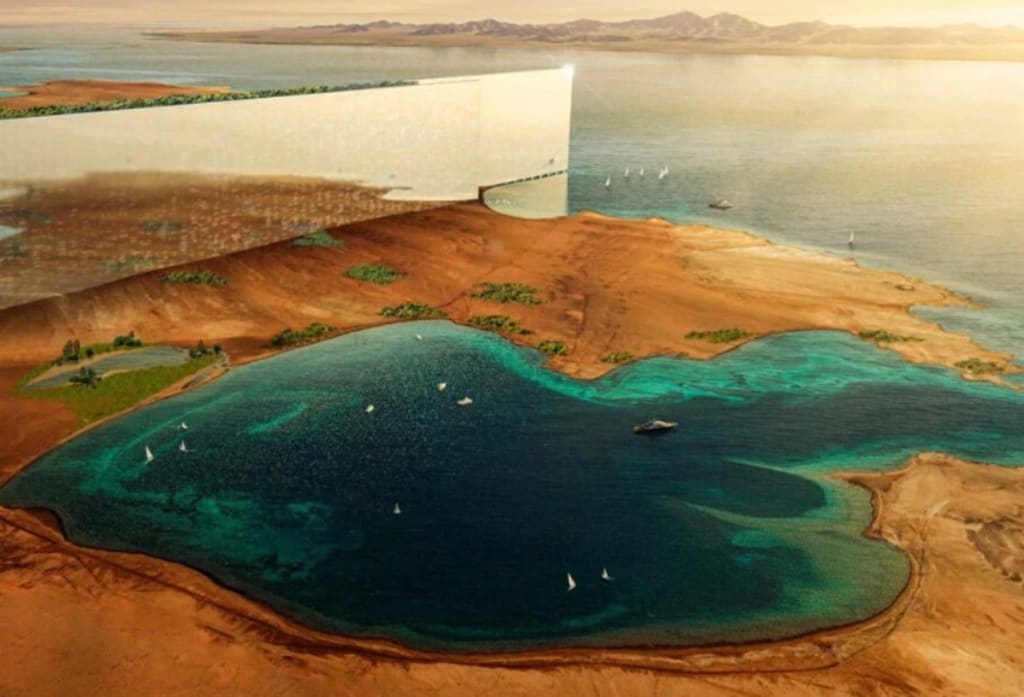
Saudi Arabia’s dream of building the world’s most futuristic megacity is hitting an unexpected crossroads. What was once imagined as a revolutionary place for millions of people to live, work, and thrive is now being quietly re-evaluated. Instead of glass-clad homes, walkable neighborhoods, and car-free living, a new priority is emerging: data centers, artificial intelligence, and digital infrastructure.
So the big question now is—why build housing when you can build a data center?
The Grand Vision Behind Saudi Arabia’s Megacity
When Saudi Arabia unveiled Neom under its ambitious Vision 2030 plan, the world paid attention. The project promised a radical rethinking of urban life. At the heart of Neom was The Line, a 170-kilometer linear city designed to house millions of residents without cars, streets, or pollution.
Everything about it sounded futuristic: renewable energy, high-speed transit, AI-driven governance, and seamless connectivity. It wasn’t just a city—it was meant to be a symbol of Saudi Arabia’s transformation from an oil-dependent economy into a global innovation hub.
But bold ideas don’t always translate smoothly into reality.
Reality Sets In: Costs, Delays, and Scale-Backs
As construction began, so did the challenges. The scale of The Line proved extraordinarily complex and expensive. Rising material costs, engineering hurdles, and logistical issues slowed progress. Reports began to surface that the original plan—housing up to nine million people—was no longer realistic, at least in the near future.
Instead of building an entire megacity all at once, planners began looking for projects that could deliver faster economic returns. That’s where data centers entered the conversation.
From Smart Homes to Server Farms
Saudi Arabia is aggressively positioning itself as a global leader in artificial intelligence, cloud computing, and digital services. Data centers are the backbone of this digital future, powering everything from AI models to financial systems and smart infrastructure.
Unlike residential developments, data centers:
Require fewer people on-site
Generate steady long-term revenue
Attract global tech partnerships
Strengthen national digital sovereignty
Within Neom itself, large investments are already flowing into sustainable data center campuses, particularly in industrial zones like Oxagon. These facilities are designed to run on renewable energy and support next-generation computing at massive scale.
From a purely economic perspective, the logic is hard to ignore.
What Happens to Housing?
This shift doesn’t mean housing has disappeared from the plan—but it does mean it has been pushed down the priority list.
Instead of building a vast linear city filled with residents, the focus has moved toward:
Smaller, phased residential zones
Worker housing and temporary communities
Limited high-end residential clusters
Housing is now being developed mainly to support workers, engineers, and specialists tied to construction and tech operations, rather than millions of everyday residents.
The result? A future city that may be far more populated by servers than by people—at least in its early decades.
Why Data Centers Make Strategic Sense
Saudi Arabia’s pivot reflects a broader global trend. Countries around the world are racing to secure digital infrastructure, recognizing data as the new oil. Whoever controls computing power controls innovation, economic growth, and geopolitical influence.
For Saudi Arabia, investing in data centers offers several advantages:
Economic diversification beyond oil
Attracting global tech giants and investors
Building local AI and tech talent ecosystems
Strengthening regional digital leadership
In contrast, experimental urban living models like The Line, while visionary, don’t yet offer the same guaranteed return on investment.
A Symbolic Shift in Priorities
The dilemma facing Saudi Arabia’s megacity is symbolic of a larger question confronting modern development: Should nations prioritize idealistic visions of how people might live, or practical infrastructure that powers the global economy?
In this case, practicality appears to be winning—at least for now.
That doesn’t mean the dream is dead. Elements of Neom are still under construction, including tourism projects, industrial hubs, and specialized districts. But the emphasis has clearly shifted toward what delivers measurable impact sooner.
Looking Ahead: A Hybrid Future
Saudi Arabia’s futuristic megacity may ultimately become something very different from what was first imagined. Instead of a continuous city stretching across the desert, Neom could evolve into a network of specialized zones—part urban experiment, part digital powerhouse.
Housing may come later, once infrastructure, investment, and economic stability are firmly in place. Until then, rows of servers may rise faster than rows of homes.
And in today’s digital-first world, that might be the most futuristic decision of all.
About the Creator
Keep reading
More stories from Aqib Hussain and writers in The Swamp and other communities.
Mexico Shelves Planned Shipment of Oil to Cuba Amid US Tensions
In a move that has caught regional analysts and policymakers by surprise, Mexico has shelved a planned shipment of oil to Cuba, signaling a potential shift in its energy diplomacy as tensions with the United States intensify. The canceled delivery, originally scheduled for mid-January, underscores how energy, politics, and foreign relations are increasingly intertwined in the Western Hemisphere.
By Aqib Hussaina day ago in The Swamp
Hill Democrats — and Even Some Republicans — Plot an Exit for Noem
Bipartisan pressure mounts on Homeland Security Secretary Kristi Noem amid fallout from aggressive immigration enforcement and deadly shootings, sparking impeachment talk and calls for resignation
By Salaar Jamaliabout 5 hours ago in The Swamp
Procter & Gamble Revenue Ticks Up, Helped by Higher Prices
Procter & Gamble, one of the world’s largest consumer goods companies, has reported a modest increase in revenue, largely driven by higher prices rather than a surge in sales volume. The update highlights a broader trend shaping the global economy: companies are maintaining growth by passing rising costs on to consumers, even as shoppers grow more cautious with their spending.
By Muhammad Hassan6 days ago in The Swamp




Comments
There are no comments for this story
Be the first to respond and start the conversation.