
Russian Submarine Near France: Rising Tensions Beneath the Atlantic Waves
Subtitle: A mysterious Russian submarine sighting off the French coast has stirred military attention and diplomatic debate—revealing how deep the currents of tension still run beneath Europe’s calm waters. Would you like me to provide 3 alternative subtitle options so you can choose the best one for publishing?

The Unexpected Sighting
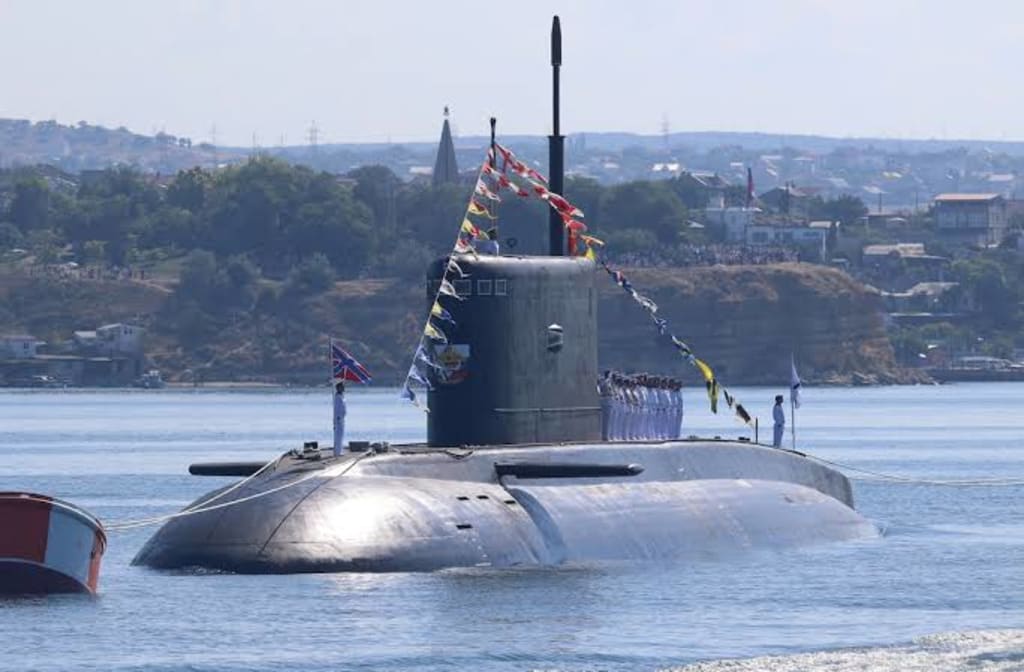
On an ordinary October morning, French naval authorities noticed something unusual on their radar screens—a Russian submarine operating unusually close to the French coast. What followed was a surge of military attention, diplomatic concern, and global speculation. The incident—reported near Brittany, north-western France—quickly became a symbol of how fragile European security has become in today’s world.
While France and NATO described the event as a “routine observation,” the presence of a Russian submarine in such waters inevitably sparked questions: Was it a mechanical failure, a covert mission gone wrong, or a deliberate show of power?
---
What We Know So Far
The submarine involved is believed to be the Novorossiysk (B-261), a Kilo-class diesel-electric attack submarine belonging to Russia’s Black Sea Fleet. These submarines are known for their stealth, endurance, and ability to carry Kalibr cruise missiles, which can strike both sea and land targets with precision.
Reports suggest that the Novorossiysk surfaced unexpectedly off the coast of Brittany. French sources claim it was closely monitored by a French Navy frigate, which followed standard NATO protocols to ensure regional security.
However, accounts differ on why the submarine surfaced. Some Western defense analysts say a technical malfunction—possibly a fuel leak or battery issue—forced the sub to surface for safety. Russian officials, on the other hand, firmly deny any technical failure, insisting that the surfacing was part of a “planned and lawful transit” through international waters.
---
A Battle of Narratives
In the information age, every international incident becomes a narrative war. On one side, NATO sources describe the surfacing as “unusual and unplanned,” implying a possible loss of stealth or control. On the other side, the Russian Defense Ministry accuses Western media of dramatizing a routine operation.
For Moscow, admitting a malfunction would be embarrassing—especially given that the Novorossiysk belongs to one of Russia’s most modern submarine classes. For NATO, highlighting the incident underscores concerns about Russian military behavior in European waters.
This back-and-forth isn’t just about one submarine—it reflects the larger strategic tension between Russia and Western Europe since the Ukraine conflict began. Every movement of a vessel, every radar ping, and every surfacing event now carries political weight.
---
Why It Matters
To the average reader, a submarine incident may sound distant and technical. But beneath the waves, these events reveal a deeper story about power, surveillance, and deterrence.
1. Strategic Waters
The Atlantic Ocean and the English Channel are some of the most heavily monitored waters on Earth. They connect NATO’s European heartland with North America and are key routes for trade, energy, and defense operations. Any unannounced or unexpected presence—especially from a Russian military vessel—is treated as a potential threat.
2. Symbolic Messaging
Even if the Novorossiysk was simply transiting the area, its presence sends a message: Russia’s naval forces can reach and operate near NATO shores. This kind of “strategic signaling” is common in modern geopolitics—showing capability without crossing the line into open provocation.
3. Safety and Environment
If the submarine indeed had a mechanical issue or fuel leak, it raises safety and environmental concerns. Submarines operate with sensitive fuel systems, high pressure, and complex electrical setups. A malfunction could endanger not only the crew but also local marine ecosystems.
---
A Glimpse Into Modern Naval Power
Russia’s Kilo-class submarines are often described as “black holes” by NATO sailors—so quiet that they’re nearly impossible to track underwater. The Novorossiysk, commissioned in 2014, represents the newer generation of these submarines, designed for both defensive patrols and long-range strike missions.
But modern warfare isn’t just about firepower—it’s about endurance, intelligence, and communication. When a submarine like the Novorossiysk surfaces unexpectedly, it can suggest stress on those systems, whether mechanical or human. And when that happens near another country’s coast, it’s immediately a matter of national and international concern.
---
France’s Calm but Firm Response
The French Ministry of Defense handled the situation with professional restraint. A naval spokesperson confirmed that the French Navy “monitored a foreign submarine transiting international waters in accordance with maritime law.”
Behind that calm statement, however, was swift action: surveillance aircraft were deployed, a frigate shadowed the submarine, and NATO partners were informed. The coordination demonstrates how Europe’s defense network remains alert and cohesive—even in peacetime.
French President Emmanuel Macron has repeatedly emphasized the need for Europe to strengthen its maritime vigilance, especially amid increasing global instability. This latest incident serves as a reminder of why that vigilance is necessary.
---
The Bigger Picture
The Russian submarine near France is not an isolated event. It fits into a growing pattern of military probing in European airspace and waters—Russian jets flying near NATO borders, unidentified ships near undersea cables, and shadow fleets operating in the Mediterranean.
Such actions test response times, gather intelligence, and sometimes serve as psychological pressure. Each event adds to an invisible chess game being played between global powers.
At the same time, incidents like this also remind nations of their mutual dependence on rules and communication. International waters are governed by maritime law, and while military vessels have the right to pass through, they must do so safely and transparently to prevent accidents or escalation.
---
What Happens Next
NATO Surveillance: Allied forces will likely increase submarine tracking in the North Atlantic and the English Channel.
Diplomatic Communication: France and Russia will exchange official statements, carefully worded to de-escalate while asserting their respective positions.
Public Attention: For many, this event is a symbol of how fragile peace and perception have become in today’s Europe.
---
Conclusion
The story of the Russian submarine near France is more than just a naval episode—it’s a reflection of our times. It shows how, in a world where technology makes every movement visible, even a submarine—a weapon designed for secrecy—can become a stage for global politics.
Whether the Novorossiysk surfaced due to technical failure or as a quiet show of strength, one thing is certain: the ocean depths remain one of the most unpredictable frontiers of international power. And for France, NATO, and Russia alike, what happens below the surface can ripple far beyond the waves.
About the Creator
Fiaz Ahmed
I am Fiaz Ahmed. I am a passionate writer. I love covering trending topics and breaking news. With a sharp eye for what’s happening around the world, and crafts timely and engaging stories that keep readers informed and updated.
Keep reading
More stories from Fiaz Ahmed and writers in The Swamp and other communities.
The Abraham Accords: A New Chapter in Middle East Diplomacy
Introduction In 2020, a surprising shift happened in the Middle East. The Abraham Accords changed how several Arab countries and Israel relate to one another. These agreements marked the first time in decades that nations formally normalized diplomatic ties with Israel without the usual precondition of resolving the Israeli-Palestinian conflict first. Five years later, the Abraham Accords still shape politics, trade, and security in the region—and face tests as well.
By Fiaz Ahmed 3 months ago in The Swamp
Japan Nuclear Agency Worker Loses Phone with Confidential Data in China
In a surprising international security incident, an employee of Japan’s Nuclear Regulation Authority (NRA) lost a work-issued smartphone containing confidential information while in China last year. The loss has triggered concerns over information security practices within Japan’s nuclear watchdog and prompted official reports to domestic privacy authorities. �
By Ayesha Lashari3 days ago in The Swamp
Trump Says UK Handing Over Chagos Islands Sovereignty Is an Act of “Great Stupidity”
The debate over the future of the Chagos Islands has reignited global political discussion after former U.S. President Donald Trump sharply criticized the United Kingdom’s decision to hand over sovereignty of the archipelago. Calling the move an act of “great stupidity,” Trump’s remarks have once again placed the strategically important islands at the center of international geopolitics, colonial legacy debates, and security concerns in the Indian Ocean. A Brief History of the Chagos Islands The Chagos Archipelago, located in the central Indian Ocean, has long been a point of contention. Administered by Britain since the 19th century, the islands were separated from Mauritius in 1965, just before Mauritius gained independence. This separation laid the groundwork for decades of legal and political disputes. The most prominent island, Diego Garcia, hosts a major U.S.-UK military base that plays a critical role in regional security operations. Over the years, international pressure has mounted on the UK to resolve the sovereignty issue. In 2019, the International Court of Justice issued an advisory opinion stating that Britain’s continued administration of the islands was unlawful and that the territory should be returned to Mauritius. Although the ruling was non-binding, it significantly shifted global opinion against London’s position. Trump’s Strong Reaction Donald Trump’s condemnation of the UK’s decision reflects his long-standing emphasis on hard power, military strategy, and national interest. From Trump’s perspective, relinquishing control of the Chagos Islands risks undermining Western security interests, particularly those of the United States. Diego Garcia has been vital for military logistics, intelligence gathering, and operations in the Middle East and Asia. Trump’s statement suggests that he views the handover as a concession that weakens strategic dominance rather than a step toward correcting historical injustice. His use of blunt language aligns with his broader political style—direct, confrontational, and dismissive of international institutions that prioritize legal or moral arguments over strategic considerations. Britain’s Rationale for the Decision The UK government, however, sees the issue through a different lens. Handing over sovereignty is framed as an effort to comply with international law, repair diplomatic relations, and finally address a colonial-era dispute that has lingered for decades. British officials have emphasized that any transfer would include guarantees ensuring continued military access to Diego Garcia, preserving its role as a defense hub. This approach reflects a shift in British foreign policy toward rule-based international cooperation and post-colonial reconciliation. For London, the decision is not about abandoning security interests but modernizing diplomacy in a changing global order. Strategic and Global Implications The controversy highlights the tension between geopolitics and international law. Supporters of the handover argue that respecting court rulings strengthens global norms and enhances the UK’s moral credibility. Critics, including Trump, warn that such moves may embolden rival powers by signaling weakness or indecision. The Indian Ocean is increasingly important as global trade routes expand and strategic competition intensifies. Any change in control over key locations like the Chagos Islands inevitably draws scrutiny from major powers. While Mauritius has pledged to maintain security cooperation with the UK and the U.S., skeptics remain unconvinced that long-term strategic interests can be fully safeguarded. The Human Dimension Often overlooked in the geopolitical debate is the fate of the Chagossian people, who were forcibly displaced from the islands in the 1960s and 1970s to make way for the military base. For many, the sovereignty transfer represents a long-awaited acknowledgment of historical injustice. Trump’s remarks, focused solely on strategic calculations, contrast sharply with this humanitarian perspective. The situation underscores a broader global reckoning with colonial legacies, where nations are increasingly challenged to balance strategic priorities with ethical responsibility. A Debate Far from Over Trump’s criticism ensures that the Chagos Islands will remain a contentious issue, particularly in transatlantic political discourse. His comments resonate with those who prioritize military strength and geopolitical realism, while others see the UK’s move as a necessary step toward justice and international legitimacy. As the handover process unfolds, the world will be watching closely to see whether security assurances hold and whether this decision becomes a model for resolving other colonial-era disputes—or a cautionary tale, as Trump suggests. One thing is certain: the Chagos Islands are no longer a quiet corner of the map. They have become a symbol of the complex choices modern nations face when history, law, and power collide.
By Fiaz Ahmed Brohiabout 15 hours ago in The Swamp


Comments
There are no comments for this story
Be the first to respond and start the conversation.