
The Abraham Accords: A New Chapter in Middle East Diplomacy
Here are suitable subtitles for your article on “Abraham Accords”, formatted for Vocal Media style and SEO optimization:

Introduction
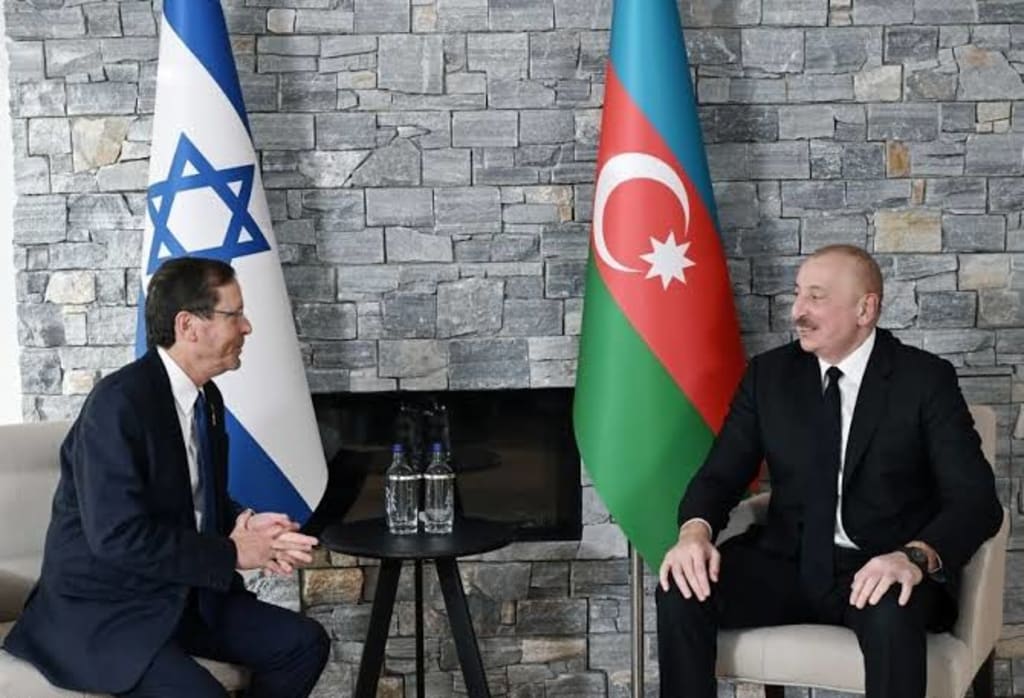
In 2020, a surprising shift happened in the Middle East. The Abraham Accords changed how several Arab countries and Israel relate to one another. These agreements marked the first time in decades that nations formally normalized diplomatic ties with Israel without the usual precondition of resolving the Israeli-Palestinian conflict first. Five years later, the Abraham Accords still shape politics, trade, and security in the region—and face tests as well.
---
What Are the Abraham Accords?
The Abraham Accords are a series of agreements, starting in 2020, that created diplomatic relations between Israel and some Arab states. The key countries that signed on were:
United Arab Emirates (UAE)
Bahrain
Morocco
Sudan (though Sudan’s implementation has been delayed by internal issues)
These agreements include general declarations plus bilateral agreements on things like trade, tourism, security, and cultural exchange. The idea was to move from hostility or frozen relations to cooperation.
---
Why They Were Made: Motivations Behind the Accords
Several factors pushed these countries and Israel into this historic shift:
1. Shared Security Concerns
Many Arab states saw Iran’s growing influence and nuclear aspirations as threats. Closer ties with Israel offered strategic benefit in countering these concerns.
2. Economic and Technological Opportunities
Israel is known for its tech sector, innovation, and strong research institutions. Partnerships offered Arab states access to technology, investment, and new trade flows. Some special projects in renewable energy, water tech, and health were part of the plans.
3. Diplomatic Realities and Changing Priorities
Over the years, even before 2020, unofficial or semi-covert cooperation had been happening—military intelligence, trade pathfinding, and security talks. The Accords made some of that more public. Also, many countries decided that holding onto old diplomatic positions wasn’t serving them as the world changed.
4. U.S. Mediation Role
The United States played a critical role in brokering and supporting the agreements. This included guarantees, diplomatic pressure, and providing frameworks for future cooperation.
---
What’s Been Achieved So Far
Five years after they were signed, the Abraham Accords have had a mix of successes, challenges, and unresolved issues.
Successes:
Diplomatic Normalization: Embassies opened, ministers visited, airlines began flights, and cooperation in many sectors started.
Trade and Economic Cooperation: Trade between Israel and UAE has increased dramatically. Economic agreements and free trade-type arrangements have made some barriers lower.
Security and Strategic Partnerships: Some military cooperation, intelligence sharing, joint interest in countering non-state threats. States have grown closer in actions under US-led or US-supported frameworks.
Challenges & Strains:
Conflict in Gaza & Palestine Issue: Israel’s conflict with Hamas, war in Gaza, and Palestinian grievances remain a major flashpoint. Many people in Arab states and among Palestinians feel the peace with Israel is hollow unless more progress is made on the Palestinian side.
Public Opinion: While governments in some Arab states support the Accords, many citizens remain skeptical or critical. They often see them as ignoring Palestinian rights or legitimizing Israeli actions.
Delays and Internal Instability: Sudan’s internal politics, Morocco’s and Bahrain’s differing domestic pressures, and larger regional instability have slowed aspects of the Accords. Plus, when crises occur—such as security incidents or violence—the Accords face tests of resilience.
---
What’s Next? Expansion & The Future
The Accords are not static. Several possible developments are in motion:
More Members: Countries like Saudi Arabia, Syria, and possibly Lebanon have expressed interest or are being talked about in diplomatic circles as possible additions. But there are big hurdles.
Conditions & Preconditions: Countries considering joining often demand progress on issues like the West Bank, Gaza, the Golan Heights, or broader Palestinian statehood. These are complex political, religious, humanitarian issues that many leaders say can’t be ignored.
Maintaining Trust: As shown in recent events (such as criticisms over Israeli policies, military actions, or civilian harm), trust is fragile. If one party feels betrayed, it could lead to diplomatic cooling or even withdrawal of support.
---
Why the Abraham Accords Are Important
Changing Regional Map: For the first time in many decades, more Arab states are publicly co-operating with Israel in trade, travel, diplomacy. The region’s alliances are shifting.
New Models for Peace: They present an alternative to the idea that one must solve the whole Israel-Palestine conflict before any normalization. Some see this as pragmatic: build cooperation first, then tackle harder issues.
Impact on Economics: Opening markets, tech transfers, investments, tourism—these create real economic benefits for ordinary people (jobs, market access, cultural exchanges).
Strategic Balancing: With concerns about Iran, Islamist extremism, climate change, water scarcity, and technology breakthroughs, having stable diplomatic relations helps in coordinating on big regional issues.
---
Risks & What Could Undermine the Accords
Escalations in Conflict: Wars, military incursions, violence against civilians—all damage trust. A single incident can shift public opinion sharply.
Neglecting the Palestinian Issue: Without tangible progress for Palestinians, many see the Accords as one-sided. If peace and rights for Palestinians are ignored, support will erode.
Domestic Opposition: Leaders have to balance external diplomacy with internal public opinion. If people in signatory states feel the Accords betray moral or cultural priorities, governments might face pressure.
Geopolitical Shifts: Changes in U.S. foreign policy, Iranian actions, or global conflicts can pull countries away or force them to reconsider their position.
---
Conclusion
The Abraham Accords are a bold experiment in Middle East diplomacy. They mark a shift away from decades of clear boundaries and hostilities toward cooperation—even when peace was thought impossible without solving everything first.
In five years, they’ve shown both what’s possible and what’s difficult: new trade, new partnerships, new dreams—but also conflict remains, trust is fragile, and many voices demand justice and inclusion.
If the Accords can expand, strengthen, and include more voices—including those of Palestinians—they might become a more lasting peace framework in the region. But for now, they remain a complex, hopeful, imperfect but serious attempt at rewriting some chapters of Middle Eastern history.
About the Creator
Fiaz Ahmed
I am Fiaz Ahmed. I am a passionate writer. I love covering trending topics and breaking news. With a sharp eye for what’s happening around the world, and crafts timely and engaging stories that keep readers informed and updated.
Keep reading
More stories from Fiaz Ahmed and writers in The Swamp and other communities.
The Royal Marine Sniper: Precision, Training, and Purpose
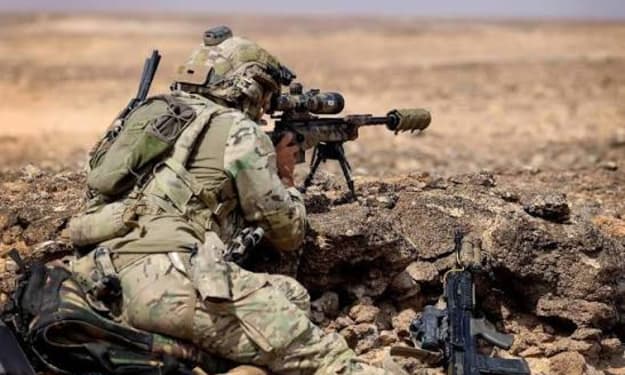
What Makes a Royal Marine Sniper Special A Royal Marine sniper is among the most elite combat marksmen in the UK military. They are part of the Royal Marines—an amphibious and highly mobile force. But not every Marine becomes a sniper. Those who do undergo rigorous selection, training, and must earn the trust of their comrades. Their job isn’t just shooting; it’s about planning, observation, camouflage, and protecting lives.
By Fiaz Ahmed 3 months ago in The Swamp
RWE Secures Contracts for Difference for 6.9 Gigawatts of Offshore Wind Capacity in UK Allocation Round 7 and Agrees a Long-Term Partnership with KKR
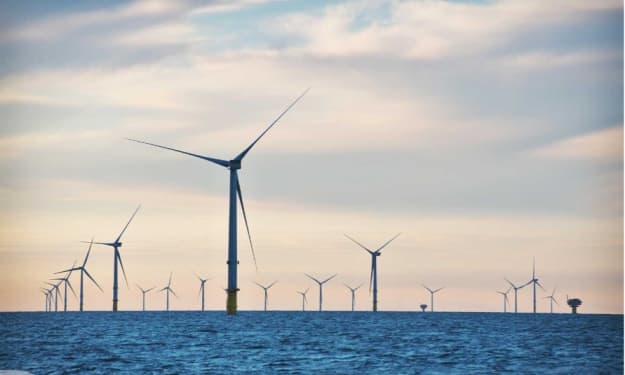
The United Kingdom’s renewable energy sector reached a significant milestone as RWE, one of Europe’s leading renewable energy companies, secured Contracts for Difference (CfDs) for 6.9 gigawatts (GW) of offshore wind capacity in UK Allocation Round 7 (AR7). Alongside this achievement, RWE also announced a long-term strategic partnership with global investment firm KKR, reinforcing confidence in the UK’s offshore wind market. This development highlights the UK’s continued leadership in offshore wind and signals strong investor confidence despite global economic challenges. Understanding the Contracts for Difference (CfD) Scheme The Contracts for Difference scheme is a key mechanism used by the UK government to support low-carbon electricity generation. It guarantees renewable energy developers a fixed price for the electricity they produce, protecting them from market volatility while ensuring consumers benefit from stable energy costs. By securing CfDs in Allocation Round 7, RWE has ensured long-term revenue stability for its offshore wind projects, enabling large-scale investment and timely project delivery. Scale and Impact of the 6.9 Gigawatts Offshore Wind Capacity The 6.9 GW of offshore wind capacity secured by RWE represents one of the largest allocations in the latest funding round. Once operational, these projects are expected to generate enough clean electricity to power millions of UK homes. This capacity will significantly reduce carbon emissions, lower dependence on fossil fuels, and contribute directly to the UK’s target of achieving net-zero emissions by 2050. Contribution to the UK’s Net-Zero and Energy Security Goals Offshore wind is central to the UK’s clean energy strategy, with a national goal of reaching 50 GW of offshore wind capacity by 2030. RWE’s successful bids in Allocation Round 7 make a substantial contribution toward this target. In addition to environmental benefits, these projects strengthen energy security by increasing domestic power generation and reducing exposure to global energy market volatility. Strategic Long-Term Partnership Between RWE and KKR Alongside its success in AR7, RWE announced a long-term partnership with KKR, a global investment firm with a strong track record in infrastructure and energy investments. This partnership combines RWE’s technical expertise in offshore wind development with KKR’s financial strength and investment capabilities, allowing both companies to scale projects efficiently and manage long-term risks. Boosting Investor Confidence in the UK Renewable Market The RWE–KKR collaboration sends a strong message to international investors about the attractiveness of the UK offshore wind sector. Despite challenges such as inflation, rising interest rates, and supply chain constraints, the UK remains a stable and competitive market for renewable energy investment. Such partnerships are crucial in maintaining momentum as global competition for clean energy capital intensifies. Economic Growth and Job Creation Opportunities Large-scale offshore wind projects bring wide-ranging economic benefits. From turbine manufacturing and port infrastructure to maintenance and engineering services, RWE’s projects are expected to support thousands of jobs across the UK. The long-term nature of these developments ensures sustained employment opportunities, particularly in coastal and industrial regions. Challenges Facing Offshore Wind Development While the announcement is largely positive, the offshore wind sector continues to face challenges, including rising construction costs, grid connection delays, and complex regulatory processes. However, the success of Allocation Round 7 demonstrates that with stable policy frameworks and strong private-sector partnerships, these challenges can be effectively managed. A Defining Moment for the UK Energy Transition RWE securing 6.9 GW of offshore wind capacity and entering a long-term partnership with KKR marks a defining moment in the UK’s clean energy journey. This achievement underlines offshore wind’s role as a cornerstone of the UK energy system, driving sustainability, economic growth, and long-term energy resilience.
By Aarif Lashari4 days ago in The Swamp


Comments
There are no comments for this story
Be the first to respond and start the conversation.