
Rupee Beats Dollar for the 90th Day in a Row
Currency stability, strong inflows, and policy discipline drive an unprecedented streak in the foreign exchange market

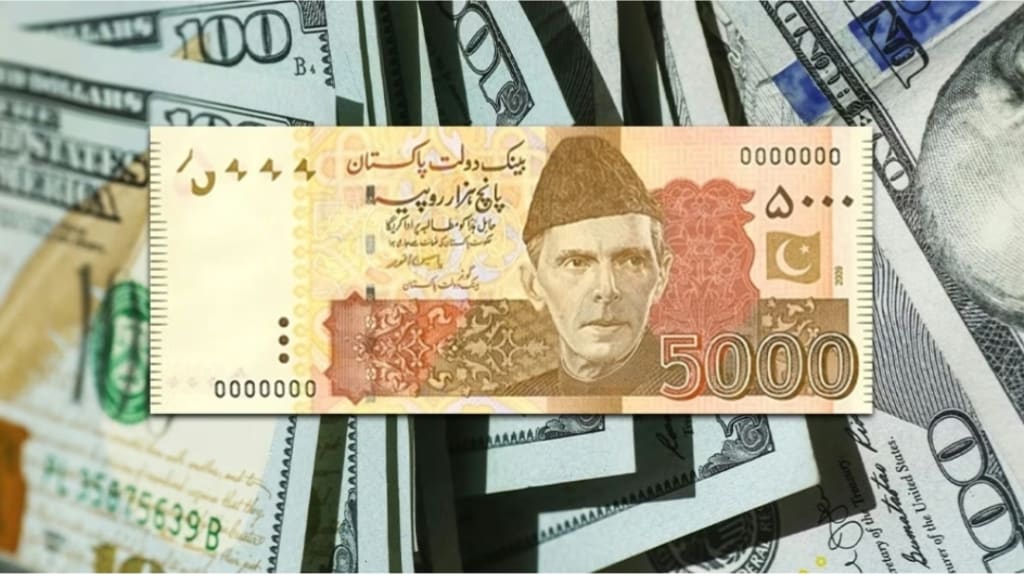
The rupee has extended its remarkable run against the US dollar, outperforming the greenback for the 90th consecutive trading day and marking one of the longest periods of currency stability in recent history. The milestone has drawn widespread attention from economists, investors, and policymakers, who view the streak as a sign of improved macroeconomic management and renewed confidence in the country’s financial outlook.
At a time when many emerging market currencies remain under pressure from global volatility, the rupee’s sustained strength stands out as a notable exception.
Understanding the 90-Day Streak
The phrase “rupee beats dollar” does not necessarily mean a dramatic appreciation. Instead, it reflects the currency’s consistent ability to hold its ground or register marginal gains against the dollar over an extended period. For 90 trading sessions, the rupee has avoided sharp depreciation, closing either flat or stronger each day.
Currency experts say this kind of stability is often more valuable than short bursts of appreciation. Predictability in the exchange rate helps businesses plan imports and exports, reduces inflationary pressure from imported goods, and supports investor confidence.
Key Drivers Behind Rupee Strength
Several interconnected factors have contributed to the rupee’s steady performance.
Strong foreign inflows have played a central role. Remittances from overseas workers, export earnings, and improved portfolio inflows have boosted the supply of dollars in the market. These inflows have helped ease pressure on foreign exchange reserves and reduced the need for emergency interventions.
Tighter monetary and fiscal discipline has also reassured markets. By curbing excessive spending and signaling a commitment to reforms, policymakers have reduced fears of runaway deficits—often a key trigger for currency weakness.
Lower import pressure compared with previous periods has further supported the rupee. Energy prices, while still volatile, have remained relatively stable, limiting the dollar outflow needed to pay for fuel and essential commodities.
Central Bank’s Role
The central bank’s cautious and consistent approach to currency management has been widely credited for the 90-day streak. Rather than aggressively defending a specific level, authorities have focused on smoothing volatility and allowing market forces to play a greater role.
This approach has discouraged speculative attacks, as traders are less likely to bet against a currency when policy signals are clear and reserves are stable. Market participants say the central bank’s credibility has improved, making the rupee less vulnerable to sudden swings.
Impact on Inflation and the Economy
A stable rupee has had positive knock-on effects across the economy. Imported inflation has eased, particularly for essential items such as fuel, food inputs, and industrial raw materials. This has provided some relief to consumers and businesses alike, helping contain overall price pressures.
For manufacturers, currency stability has lowered uncertainty around input costs, enabling better production planning. Exporters, while sometimes preferring a slightly weaker currency for competitiveness, benefit from predictability that allows them to hedge risks more effectively.
Investor Sentiment and Market Confidence
The rupee’s performance has also improved investor sentiment. Stability in the foreign exchange market is often seen as a barometer of broader economic health. Foreign investors, in particular, closely monitor currency trends when deciding whether to commit capital to bonds, equities, or direct investment projects.
The 90-day streak has reinforced perceptions that the economy is moving away from crisis management toward consolidation and recovery. Analysts caution, however, that confidence can be fragile and depends on continued policy consistency.
Global Context
The rupee’s resilience is especially notable given the global backdrop. The US dollar has remained relatively strong amid changing expectations around interest rates and global growth. Many emerging market currencies have struggled to keep pace, facing capital outflows and external financing pressures.
Against this backdrop, the rupee’s ability to hold steady reflects not just domestic factors but also a favorable balance between global risks and local buffers.
Challenges Ahead
Despite the positive momentum, economists warn against complacency. Structural issues such as trade imbalances, external debt servicing, and reliance on imports remain long-term challenges. A sudden rise in global commodity prices or renewed dollar strength could test the rupee’s resilience.
Sustaining the streak will require continued reforms, export diversification, and prudent debt management. Any slippage in fiscal discipline or unexpected political uncertainty could quickly reverse gains in the currency market.
What the Milestone Means
The rupee beating the dollar for 90 consecutive days is more than a symbolic achievement. It signals growing confidence in economic management and offers breathing space for policymakers to focus on growth-oriented reforms rather than firefighting currency crises.
For households and businesses, the streak translates into greater stability and predictability. For investors, it serves as a reminder that disciplined policy and credible institutions can still make a difference in volatile global markets.
As the rupee enters its 91st day of resilience, the key question is not just how long the streak will last, but whether the underlying fundamentals can support sustained stability in the months ahead.
About the Creator
Keep reading
More stories from Salaar Jamali and writers in The Swamp and other communities.
From Political Drama to Personal Trauma, Fatima Bhutto Details All in Her New Memoir
Fatima Bhutto, a prominent writer and member of Pakistan’s most famous political dynasty, has returned to the public spotlight with a new memoir that blends political history with intimate personal reflection. In From political drama to personal trauma, Bhutto offers readers a rare and unfiltered account of life shaped by power, violence, exile, and grief. The book moves beyond headlines and slogans, revealing the emotional cost of growing up within a family whose name has been synonymous with both hope and tragedy in Pakistan’s modern history.
By Salaar Jamalia day ago in The Swamp
The Smell of Fuzz
There is a smell that doesn’t come from flowers or rain or burning wood. It doesn’t rise from kitchens or factories or forests. It isn’t visible, yet everyone recognizes it the moment it appears. It hangs heavy in the air, sharp and unmistakable. It tightens the chest, slows the steps, and makes conversations suddenly quieter. People call it many things. Oppression. Surveillance. Fear. But on the street, in whispers and jokes, it has another name. The smell of fuzz. This smell appears long before sirens wail or boots hit the ground. It shows up before questions are asked, before doors are knocked, before anyone says, “You’re under arrest.” It’s the invisible signal that authority is nearby — watching, listening, waiting. And once you learn to recognize it, you never forget it. What Does “The Smell of Fuzz” Really Mean? At its simplest, “the fuzz” is slang for law enforcement. But the smell of fuzz isn’t about police cars or uniforms. It’s about presence without permission. It’s the feeling that someone else controls the space you’re standing in. You feel it when: A peaceful protest suddenly goes quiet Conversations lower their volume mid-sentence People instinctively check their phones, bags, and pockets Jokes stop being funny The smell of fuzz isn’t always tied to wrongdoing. Often, no crime is being committed at all. That’s what makes it powerful — and unsettling. It’s not about guilt. It’s about power. Fear Has a Scent Humans have evolved to detect danger without seeing it. Long before laws and governments, our ancestors learned to sense predators, storms, and threats through subtle changes in their environment. Today, the predator isn’t a wild animal. It’s uncertainty. The smell of fuzz is the modern equivalent of rustling bushes in the dark. Your brain asks the same ancient question: “Am I safe right now?” Even people who respect the law, even those who have never been arrested, feel it. Because fear doesn’t require wrongdoing — it only requires imbalance. Why Silence Follows Authority One of the strangest things about the smell of fuzz is how quickly it changes behavior. Laughter fades. Opinions soften. Truth becomes careful. People don’t stop talking because they are guilty. They stop talking because being misunderstood carries consequences. In many societies, authority doesn’t need to act harshly to be effective. It only needs to be present. The possibility of punishment is often more powerful than punishment itself. That’s why the smell lingers. The Thin Line Between Safety and Control Supporters of strong law enforcement argue — often correctly — that police presence can prevent crime, protect communities, and maintain order. Streets without rules can quickly become dangerous. But there’s a difference between safety and intimidation. Safety feels calm. Control feels tense. When authority reassures, people relax. When authority dominates, people withdraw. The smell of fuzz appears when the balance tilts too far toward control — when protection begins to feel like surveillance. Who Smells It First? Not everyone experiences the smell of fuzz equally. For some, it’s faint. For others, it’s overwhelming. History shows that marginalized communities often smell it first and strongest. People who have been stopped, searched, questioned, or targeted before develop a sharper sensitivity. To them, authority doesn’t represent neutrality. It represents memory. Memory of: Being assumed guilty Being watched without reason Being treated as a suspect before a citizen Once fear has a history, it returns faster. The Smell in the Digital Age Today, the smell of fuzz isn’t limited to streets and crowds. It has entered the digital world. You feel it when: Posts are deleted without explanation Accounts are shadow-banned Messages feel unsafe to send Algorithms quietly decide what is “acceptable” No sirens. No uniforms. No visible force. Yet the silence is the same. Digital authority doesn’t knock on doors — it reshapes reality. It decides what is seen, what is hidden, and what disappears. And yes, it has a smell too. When Protection Becomes Performance There’s another layer to the smell of fuzz: performance. Sometimes authority isn’t present to protect — it’s present to be seen. Riot gear at peaceful gatherings. Armored vehicles on quiet streets. Aggressive postures where none are required. This kind of presence sends a message, intentional or not: “We are in charge. Don’t forget it.” The smell intensifies not because of danger, but because of theatrics. Why People Joke About It Humor is a survival tool. When people joke about “the fuzz,” they’re not being disrespectful — they’re reclaiming a small piece of control. Laughter weakens fear. Nicknames shrink authority to something manageable. But jokes also reveal truth. If authority felt universally fair and humane, it wouldn’t need a slang name whispered under breath. Can the Smell Be Washed Away? Yes — but not easily. The smell of fuzz fades when trust replaces fear. When authority is transparent, accountable, and human, its presence feels different. Trust grows when: Questions are answered, not punished Power is explained, not imposed Mistakes are acknowledged, not denied Communities are partners, not targets When people believe they will be treated fairly, the air changes. Listening Changes the Air The most powerful antidote to the smell of fuzz isn’t force — it’s listening. When authority listens, people speak. When people speak, fear loosens. When fear loosens, trust can grow. Listening doesn’t weaken authority. It legitimizes it. Why This Conversation Matters Some will say: “If you’re not doing anything wrong, you have nothing to fear.” History disagrees. Many of the world’s darkest chapters were written under systems where “doing nothing wrong” offered no protection. Rights exist precisely because innocence alone is not enough. The smell of fuzz reminds us of that truth. The Smell as a Warning System Rather than dismiss it, we should treat the smell of fuzz as a signal — not of criminality, but of imbalance. When people feel watched instead of protected, something needs attention. When silence replaces dialogue, something is broken. Ignoring the smell doesn’t make it disappear. It only makes it stronger. A Different Kind of Presence Imagine authority that smells like: Calm instead of tension Confidence instead of dominance Service instead of control That kind of presence exists in some places. It proves the smell of fuzz is not inevitable — it’s a result of choices. Choices about tone. Choices about power. Choices about humanity. Final Thoughts: Naming the Smell Matters To name something is to acknowledge it. “The smell of fuzz” is more than slang. It’s a shared human experience, a quiet understanding passed through generations. It tells us when power feels heavy and trust feels thin. If we want safer societies, we must aim not just for order — but for dignity. Because the best kind of authority doesn’t announce itself with fear. It walks in quietly… and the air stays easy to breathe.
By Zahid Hussaina day ago in The Swamp
Gold and Silver Rebound After Historic Wipeout as Analysts Say Thematic Drivers Stay Intact
After one of the most brutal sell-offs in recent memory, gold and silver have staged a notable rebound, easing fears that the long-standing bull case for precious metals had been permanently damaged. While the recent “wipeout” sent shockwaves through commodity markets and rattled investor confidence, analysts argue that the underlying thematic drivers supporting gold and silver remain firmly intact.
By Ayesha Lashariabout 10 hours ago in The Swamp



Comments
There are no comments for this story
Be the first to respond and start the conversation.