
Rehabilitation or Recycling? The Broken Logic of America's Prison System
We claim prisons are about rehabilitation. However, with over 80% of inmates being rearrested within ten years, the evidence suggests otherwise. This system punishes more than the guilty, and it's time we talked about it.

We often say that prisons are about rehabilitation, that jail time is just a hard but necessary detour to help someone get back on track. It sounds good. It makes us feel better about locking people up. But let's be honest: it doesn't hold up.
If the system really helped people turn their lives around, they wouldn't keep coming back. But they do. The Bureau of Justice Statistics reports that two-thirds of state prisoners are rearrested within three years of release. After ten years, that number climbs to over 80%.
That's not bad luck. That's a system failing the people in it, and the people around them. So we need to ask the tricky question: Is prison really about helping people change, or is it designed to keep them stuck?
They call it "corrections," but not much gets corrected. Most people leave prison worse off than they were going in. There's barely any education. Job training? Minimal. Mental health support? Often nonexistent. Instead of preparing people to rejoin society, we lock them in concrete blocks and act surprised when they return to crime just to survive.
Prison is supposed to be where people "pay their debt to society." But what happens when they've done their time, and society still treats them like they're worthless? We end up with a revolving door. People go in, get broken down, come out with no help, and wind up back inside. Not because they didn't want to change, but because we gave them no real way to do it.
And the punishment doesn't stop with them. Every prison sentence echoes through families and communities. When a parent goes to prison, their child loses more than just time, they lose stability, emotional safety, and often their future. Kids of incarcerated parents are more likely to grow up in poverty, struggle in school, and eventually face incarceration themselves. The punishment spreads, even to those who've never committed a crime.
The ripple effect is long-lasting. Spouses become single parents overnight. Grandparents step in to raise grandchildren. Entire households are thrown into emotional and financial instability. This isn't just about inmates, it's about generations impacted by one person's sentence.
Communities, especially lower-income and minority neighborhoods, pay the price. When people return home from prison without support, job prospects, or purpose, the chances they'll re-offend go up. That burden falls on neighbors, schools, churches, and already struggling economies. We claim to be protecting the public by locking people up. But if the result is broken communities and people set up to fail again, who are we really protecting?
Even after someone finishes their sentence, the punishment doesn't end. A felony record becomes a permanent scarlet letter. It shows up on job applications, housing searches, and background checks. Employers hesitate to hire. Landlords say no. People are judged not for who they are now, but for a mistake they already paid for.
In many states, former inmates lose the right to vote. Others can't obtain student loans, food assistance, or licenses to work in trades such as plumbing or cosmetology. We tell people to "get their life back together" while blocking nearly every road to make that happen. It's no wonder so many return to prison. We never gave them a fair chance to stay out.
And all of this comes at a massive cost, not just to people's lives, but to taxpayers. The U.S. spends over $80 billion a year on incarceration. However, we invest almost nothing in programs that actually reduce repeat offenses, such as job training, counseling, or drug treatment. That's not just wasteful—it's backward.
One study found that in-prison vocational training delivers a $7 return for every $1 invested. However, those programs are underfunded or unavailable in most facilities. Instead, we keep dumping billions into a system that fails the same way over and over. It's like trying to fix a leaking pipe by turning up the water pressure.
So, if the system isn't working for inmates, their families, or their communities—who is it working for?
The answer isn't pretty. Some private prisons generate revenue by keeping beds full. Specific government contracts pay per inmate. The more people cycle in and out, the more stable the income stream. Even in public systems, large bureaucracies and outdated budgets depend on high incarceration rates to justify their size. And yes, some politicians accept donations from industries tied to incarceration. The incentives are clear: keep the cells full and keep real reform off the table.
That doesn't mean everyone working in the system is corrupt. Many correctional officers, counselors, and staff are doing the best they can in a broken system. But the structure itself is slanted. When keeping people locked up is profitable, real rehabilitation becomes inconvenient. As a result, it gets ignored, underfunded, or written off entirely.
And that's the real tragedy, because we already know what works.
Programs like The Last Mile teach inmates coding and web development skills, preparing them for real jobs. Their graduates have an 85% employment rate within six months of release. Some go on to start their own businesses. In Missouri, restorative justice programs resulted in a 15% decrease in repeat offenses. These aren't experiments. They're success stories.
Other countries prove it even more clearly. In Norway, prisons are designed like college campuses. Inmates are treated with dignity, taught life skills, and supported through their reentry. Their recidivism rate? Around 20%. One of the lowest in the world.
What makes systems like that work isn't just kindness. It's logic. When people are treated like human beings, and given tools to rebuild, they're far more likely to succeed. When we treat them like they're broken beyond repair, we shouldn't be surprised when they stay that way.
The good news is that we have the option to choose differently.
We could build a justice system that holds people accountable, and helps them heal. One that doesn't just protect society by removing threats, but by actually reducing them. A system that sees people as more than their worst mistake and helps them grow beyond it.
It won't be easy. But the cost of doing nothing is far greater.
Because every person who walks out of prison walks back into someone's life. A child. A partner. A neighborhood. A second chance. And suppose we don't change the way we approach rehabilitation. In that case, we're not just punishing the guilty—we're punishing everyone around them.
We don't need more cages. We need more chances.
About the Creator
Keep reading
More stories from Robert Lacy and writers in The Swamp and other communities.
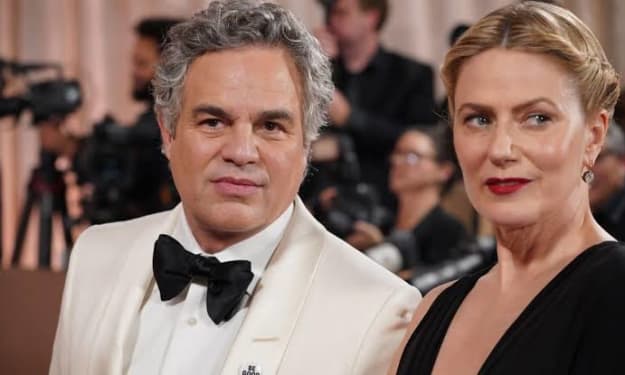
Mark Ruffalo’s Howl of Frustration Was the Golden Globes’ Finest Hour
The Golden Globes 2026 may be remembered for its glitz, glamour, and star-studded appearances, but for many viewers, the true highlight of the evening wasn’t a meticulously choreographed acceptance speech or a red-carpet gown—it was Mark Ruffalo’s raw, unfiltered moment of frustration. The veteran actor, known as much for his activism as his role as the Hulk in the Marvel Cinematic Universe, gave the awards ceremony a humanizing jolt that cut through the predictable spectacle, reminding audiences why we still care about live television moments. Ruffalo’s howl, spontaneous and sincere, erupted in the midst of the Golden Globes’ proceedings when a controversial snub left him visibly perturbed. Unlike the carefully curated smiles and rehearsed thank-yous, his reaction was immediate, genuine, and relatable. In a room dominated by optics and etiquette, this brief lapse into authenticity stood out—an unguarded expression of disappointment that was as entertaining as it was telling. The context of Ruffalo’s outburst is critical. The Golden Globes, despite their longstanding prestige, have faced increased scrutiny over the years. Criticism has centered around perceived biases, questions over nominations, and the influence of Hollywood’s inner politics. Many fans have voiced frustration over films and performances that seemingly go unnoticed by the Hollywood Foreign Press Association, the body responsible for the awards. Ruffalo’s moment of honesty, therefore, resonated widely: it was not just about a single snub but about the broader sense of exasperation felt by artists and audiences alike. Social media immediately seized upon the moment. Clips of Ruffalo’s exasperated exclamation spread like wildfire on platforms such as Twitter, Instagram, and TikTok, sparking commentary, memes, and debates. Fans praised him for speaking truth to the unspoken pressures of awards season, while critics reminded viewers of the line between public frustration and professionalism. Regardless of perspective, the consensus was clear: this was a memorable instance that reinvigorated discussion around the Golden Globes in a year when ceremony fatigue is a real concern. Ruffalo’s reaction also highlighted a key shift in celebrity culture. Audiences are increasingly drawn to vulnerability and candor. In an era dominated by perfectly filtered Instagram posts and scripted interviews, raw, emotional honesty resonates powerfully. Ruffalo’s howl wasn’t just a response to being overlooked—it was an emblem of authenticity, a reminder that behind the glamour and bright lights, artists are human, passionate, and deeply invested in their craft. For a few seconds, viewers were allowed to glimpse the man beyond the roles he plays, connecting him with fans in a way no carefully curated appearance could achieve. Moreover, this moment provided a stark contrast to the expected formalities of the evening. The Golden Globes, like many awards ceremonies, have become synonymous with politeness and PR-friendly statements. Acceptance speeches are meticulously timed, jokes are rehearsed, and expressions of emotion are filtered through layers of etiquette. Ruffalo disrupted this rhythm, delivering a genuine reaction that injected a much-needed sense of unpredictability into the event. In doing so, he reminded audiences that live television’s greatest power lies in its ability to capture unplanned, unscripted moments that transcend entertainment and spark conversation. The lasting impact of Ruffalo’s outburst extends beyond the ceremony itself. In interviews following the event, the actor explained that his frustration stemmed not from personal grievances but from a desire to see deserving artists recognized. His statement emphasized solidarity and advocacy within the industry, reflecting broader conversations about equity, visibility, and acknowledgment in Hollywood. By voicing his dissent so publicly, Ruffalo encouraged other artists to embrace authenticity, even in spaces traditionally governed by propriety. Ultimately, Mark Ruffalo’s howl at the Golden Globes will likely be remembered as one of the defining moments of 2026’s awards season. It was a fleeting instance, yet its resonance was amplified by its honesty. It reminded viewers that the human element—the joy, the disappointment, the genuine emotion—is what makes these events compelling. For a night that often celebrates image over substance, Ruffalo offered a reminder of what truly matters: the people behind the work, and the emotions that make art worth celebrating. In a ceremony often critiqued for its predictability, Ruffalo’s exclamation was the Golden Globes’ finest hour. It was spontaneous, relatable, and undeniably human—a rare moment that cut through the veneer of Hollywood perfection and left audiences laughing, empathizing, and talking long after the lights dimmed.
By Fiaz Ahmed Brohi5 days ago in The Swamp



Comments
There are no comments for this story
Be the first to respond and start the conversation.