
Freedom of Religion Doesn’t Mean Freedom from Religion
Why belief belongs in public—not just behind closed doors.
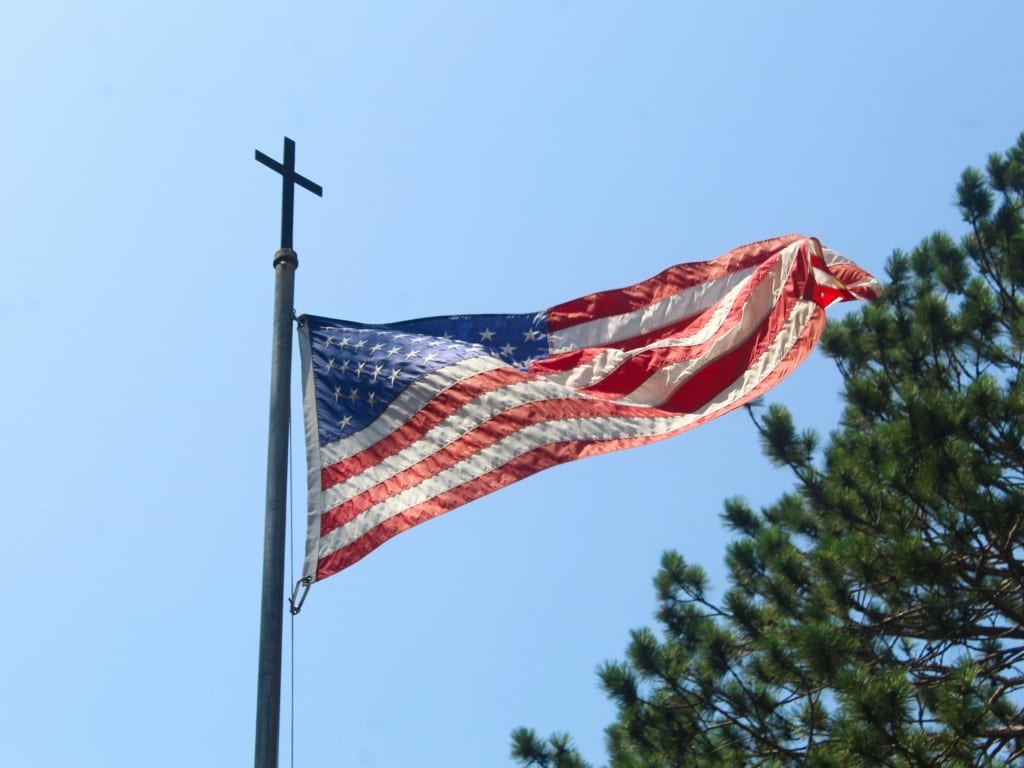
"Freedom of religion" is a cornerstone of American liberty—but somewhere along the way, many have twisted it into something it was never meant to be: freedom from ever encountering religion.
That's not what the Constitution promises. The First Amendment protects your right to believe—or not believe—but it also protects the right of others to live out their faith openly, not just quietly behind closed doors.
And this isn't just about Christianity. This applies to all faiths. Whether someone is Muslim, Jewish, Christian, Sikh, or holds any sincere belief, their right to speak, gather, pray, and express that belief is not up for debate just because someone else finds it inconvenient.
Freedom of religion means you can't force your beliefs on others, and they can't force you to hide yours.
The First Amendment is clear:
"Congress shall make no law respecting an establishment of religion, or prohibiting the free exercise thereof…"
This one sentence protects two essential rights:
The government can't create or enforce a state-sponsored religion, and
It can't interfere with someone's right to practice their religion freely.
These aren't competing ideas—they work together. The founders didn't want a government church, but they also didn't want a government that tells people how, when, or where they can live out their faith.
That second part—the "free exercise thereof”—is too often ignored. People act like religion is only allowed in private and must be removed from any public setting to protect others' comfort. But that's not what the Constitution says. It protects the individual, not the offended bystander.
You have the right to speak your beliefs, to pray in public, to wear religious symbols, and to gather with others who share your faith. That right doesn't disappear just because someone else doesn't agree with it.
One of the most misunderstood phrases in American political discourse is "separation of church and state." It gets thrown around as if it were part of the Constitution—but it's not. The phrase actually comes from an 1802 letter written by Thomas Jefferson to the Danbury Baptist Association, in which he spoke of a "wall of separation" meant to protect the church from government interference, not to scrub faith from public life.
Over time, that phrase has been distorted. It's now used to justify removing religious expression from schools, government property, or public events—not because the government is establishing a religion, but simply because someone is uncomfortable with its presence.
That was never the intent.
Jefferson's wall was meant to keep the government out of religion, not to keep religious people out of the public square.
Religious freedom doesn't mean everyone else has to pretend faith doesn't exist. It means no one should be forced to adopt a belief, and no one should be punished for living theirs.
If "separation of church and state" is now used to silence individuals rather than restrain government power, we've lost its meaning and the protection it was meant to provide.
A dangerous mindset is gaining traction today: the idea that if someone disagrees with a religious belief, they have the right to remove it from public view.
But disagreeing with someone's faith doesn't give you the power to silence it.
Freedom of religion includes the right to express that belief publicly through prayer, speech, gatherings, clothing, and symbols. That right doesn't vanish the moment someone feels uncomfortable or disagrees—that's not how freedom works.
We live in a society where people of many beliefs and backgrounds interact. That means we will inevitably see, hear, and encounter things we disagree with. That's not oppression—it's liberty in action.
Wanting to avoid offense is understandable. However, freedom of speech and religion isn't dependent on whether someone finds it agreeable. If it were, we wouldn't have freedom—we'd have conditional permission based on popular opinion.
And history has shown what happens when freedom is governed by the loudest outrage: everyone loses.
Too often, discussions about religious freedom are framed around a single faith—usually Christianity. However, freedom of religion in America was never meant to protect just one religion. It was designed to protect all of them.
That means if you want to defend your right to pray, wear a cross, speak about your beliefs, or gather with others—you must also protect the rights of others to wear a yarmulke, a hijab, a turban, or carry a prayer mat.
You don't have to agree with someone's theology to stand up for their right to live it.
This isn't about favoring one religion over another. It's about recognizing that religious liberty is a shared shield, not a selective privilege.
When we allow society to shame or silence one group, we open the door for everyone's beliefs to be dismissed next. Protecting your neighbor's freedom today ensures your own tomorrow.
Freedom of religion doesn't mean we'll all believe the same thing. It means we're free to think—and live out—what we each hold to be true without fear of punishment, censorship, or forced silence.
And that includes the right not to believe. But your right to reject religion doesn't override someone else's right to practice it. That's the balance the Constitution protects.
A pluralistic society doesn't thrive by demanding silence. It thrives by allowing space—for all people, all faiths, and even those with none. You don't have to agree with someone's beliefs to defend their right to hold them.
Suppose we continue treating religious expression as something that must be hidden or erased to avoid offense. In that case, we'll soon find that we've traded freedom for comfort and lost both.
Freedom of religion does not mean freedom from religion. It means we all have the right to live our convictions, not just privately but publicly—and respectfully—in a society that protects liberty for everyone.
About the Creator
Keep reading
More stories from Robert Lacy and writers in The Swamp and other communities.
We Don’t Need More Rights—We Need to Defend the Ones We Already Have
Every few months, it seems like a new "right" is demanded: the right to housing, the right to healthcare, the right to a guaranteed income, the right to Wi-Fi. The list never ends—and neither does the assumption that the government has the power (and responsibility) to provide all of it.
By Robert Lacy10 months ago in The Swamp
The Forsyth House Fire
Since 1851, Forsyth House has stood on the corner of Union Street and Gordon Street in the heart of Glasgow. Its iconic, or was... because on Sunday 8th of March, 2026, a fire broke out in a small, seemingly un-named shop in the building and tore all that history down. As I write, the rubble is still unsettled and the street is still blocked off. Central Station is quiet on the upper level, and around 30 small businesses have quite literally gone up in smoke.
By S. A. Crawford3 days ago in The Swamp


Comments
There are no comments for this story
Be the first to respond and start the conversation.