
Punjab’s Ber Cultivation: Farmers Elevate the ‘Poor Man’s Fruit’ and Make It Commercially Viable Beyond Wheat and Paddy
How Traditional Jujube Farming Is Driving Crop Diversification, Higher Incomes, and Sustainable Agriculture in Punjab

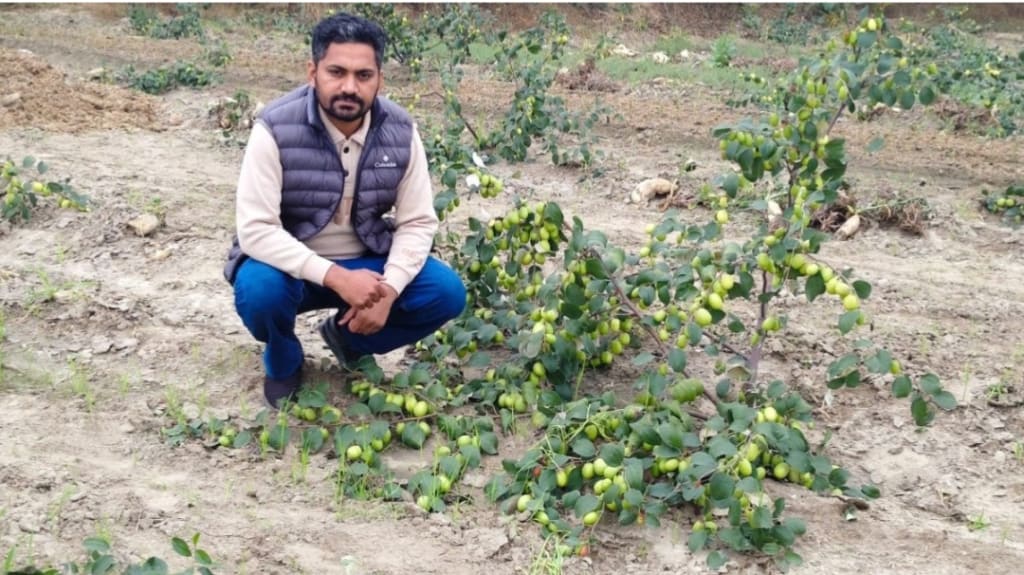
Punjab’s ber cultivation is emerging as a powerful example of how farmers are redefining traditional agriculture and moving beyond the long standing dominance of wheat and paddy. Once dismissed as the “poor man’s fruit,” ber, also known as Indian jujube, is now gaining commercial recognition due to its low input costs, high nutritional value, and growing market demand. Across several districts of Punjab, progressive farmers are transforming ber orchards into profitable ventures, signaling a quiet but meaningful shift in the state’s agricultural landscape.
Breaking the Wheat–Paddy Cycle
For decades, Punjab’s agriculture has revolved around wheat and paddy. While this system ensured food security, it also led to severe environmental consequences, including groundwater depletion, soil degradation, and rising input costs. Farmers have increasingly realized that relying solely on these two crops is no longer sustainable.
Ber cultivation offers a viable alternative. The fruit thrives in semi arid conditions, requires significantly less water than paddy, and adapts well to Punjab’s climatic conditions. As concerns over water scarcity intensify, ber has emerged as a crop that aligns both economic and environmental priorities.
Why Ber Is Gaining Popularity
Ber is not a new fruit in Punjab, but its commercial potential was long overlooked. Traditionally grown in small quantities for household consumption or local markets, ber was associated with marginal lands and subsistence farming. That perception is now changing.
One of the biggest advantages of ber cultivation is its resilience. The crop can tolerate drought, salinity, and temperature fluctuations, making it ideal for regions facing climate stress. Compared to wheat and paddy, ber requires fewer fertilizers, pesticides, and irrigation cycles, significantly reducing production costs.
Additionally, ber trees have a long productive life. Once established, an orchard can yield fruit for decades, providing farmers with a stable and recurring source of income.
Improved Varieties and Scientific Practices
The transformation of ber from a neglected fruit to a commercial crop has been supported by improved varieties and modern farming techniques. Agricultural universities and horticulture departments have introduced high yielding and better tasting ber varieties such as Umran, Gola, and Seb, which fetch higher prices in the market.
Farmers are also adopting scientific orchard management practices, including proper pruning, drip irrigation, and integrated pest management. These methods not only improve fruit quality but also increase overall yield. With better post harvest handling and grading, ber from Punjab is now reaching urban markets and even being processed into value added products.
Economic Benefits for Farmers
Punjab’s ber cultivation is proving economically attractive, especially for small and marginal farmers. Initial investment is relatively low compared to other fruit crops. Once the orchard starts bearing fruit, returns can be significantly higher than traditional cereal crops on a per acre basis.
Ber harvesting spans several months, allowing farmers to stagger sales and avoid market gluts. The fruit enjoys steady demand in local mandis, roadside markets, and urban retail outlets, particularly during the winter season. Some farmers have also tapped into wholesale supply chains, ensuring better price realization.
By diversifying into ber cultivation, farmers reduce their dependence on minimum support price procurement systems and gain greater control over their income.
Value Addition and Market Expansion
A key factor in making ber commercially viable is value addition. Beyond fresh consumption, ber is used to make candies, pickles, chutneys, powders, and health supplements. These products have a longer shelf life and open doors to new markets.
Entrepreneurial farmers and self help groups in Punjab are exploring small scale processing units, packaging innovations, and direct to consumer sales. With growing awareness about the nutritional benefits of ber, including its high vitamin C, fiber, and antioxidant content, demand is expanding among health conscious consumers.
Online platforms and farmers’ markets are further helping bridge the gap between growers and buyers, increasing profitability and visibility.
Environmental and Social Impact
The shift toward ber cultivation carries important environmental benefits. Reduced water usage helps conserve groundwater, a critical concern in Punjab. Ber trees also contribute to soil health by preventing erosion and improving organic matter over time.
Socially, ber orchards create employment opportunities in rural areas, particularly for women involved in harvesting, sorting, and processing activities. The crop’s adaptability to marginal lands allows farmers with limited resources to participate in commercial horticulture.
Challenges That Remain
Despite its promise, ber cultivation faces challenges. Price fluctuations, lack of cold storage facilities, and limited processing infrastructure can affect profitability. Many farmers still need training in advanced orchard management and marketing strategies.
There is also a need for stronger policy support, including subsidies for drip irrigation, saplings, and processing units. Improved extension services and better market linkages can further accelerate adoption.
A New Direction for Punjab Agriculture
Punjab’s ber cultivation represents more than just a shift to a new crop. It reflects a broader transformation in how farmers are thinking about sustainability, diversification, and resilience. By elevating a once overlooked fruit into a commercially viable option, farmers are challenging outdated notions and paving the way for a more balanced agricultural future.
As ber orchards continue to expand across Punjab, they offer a compelling model for moving beyond the wheat–paddy cycle. In doing so, farmers are not only improving their livelihoods but also contributing to the long term health of the state’s agriculture and environment.
About the Creator
Keep reading
More stories from Salaar Jamali and writers in The Swamp and other communities.
China Pulls the Plug on Russian Electricity Imports: What It Means for Energy, Economics, and Geopolitics
China pulls the plug on Russian electricity imports, a move that has drawn global attention and raised important questions about the future of regional energy cooperation. As two countries often described as strategic partners, any shift in energy trade between China and Russia carries significant economic and geopolitical implications. This decision is not just about power supply. It reflects deeper trends in energy security, domestic priorities, and the changing balance of global influence.
By Salaar Jamali3 days ago in The Swamp
US Says Canada Will Regret Decision to Allow Chinese EVs Into Their Market
The global electric vehicle (EV) race is heating up, and Canada has just made a move that has caught the attention — and criticism — of its closest ally. The United States has warned that Canada may “regret” its decision to allow Chinese-made electric vehicles into its domestic market, a statement that underscores rising trade tensions, geopolitical rivalry, and fears over the future of North America’s auto industry.
By Aqib Hussain4 days ago in The Swamp
Trump Calls UK Handing Over Chagos Islands Sovereignty an Act of “Great Stupidity”
Former U.S. President Donald Trump has sharply criticized the United Kingdom’s decision to transfer sovereignty of the Chagos Islands to Mauritius, calling the move an “act of great stupidity” and a sign of “total weakness.” His comments have reignited a global debate over sovereignty, security, and geopolitics.
By Aarif Lashariabout 14 hours ago in The Swamp
Smart phones, Humans and Aliens.
WARNING. I will be tapping into one of your favorite creative tensions: The absurdity of humans worshipping their glowing rectangles as if they were tiny oracles. There’s something deliciously poetic about that contradiction, and it lends itself beautifully to an instructive proviso.
By Novel Allen4 days ago in Poets




Comments
There are no comments for this story
Be the first to respond and start the conversation.