
Presidential Bromances Gone Bad
From First-Bud to Bust


Franklin D. Roosevelt and Joseph P. Kennedy Sr.
Bros: Roosevelt and Kennedy, a wealthy businessman and investor, developed a close alliance in the 1930s. Kennedy supported FDR's New Deal and campaigned for him, leveraging his wealth and influence. FDR appointed Joseph Kennedy as the first SEC chairman and later as ambassador to the UK.
The Break-Up: During Kennedy's tenure as ambassador to the UK (1938–1940), his sympathy toward appeasing Nazi Germany clashed with FDR's interventionist policies.
His private correspondence and meetings with German officials, indicated a willingness to explore diplomatic solutions to prevent conflict. However, these actions were unauthorized by the State Department and angered both President Roosevelt and British leaders, particularly after Churchill took office.
In a notable interview with the Boston Sunday Globe on November 10, 1940, while the UK was under attack in the Battle of Britain, he stated, “Democracy is finished in England. It may be here [next].” This statement was seen as defeatist and led to significant backlash, contributing to his resignation later that month.
The Aftermath: Kennedy never regained FDR's trust, and their rift persisted, with Kennedy later supporting his sons' political careers.
John Adams and Thomas Jefferson
The Bond: Key figures in the American Revolution, Adams and Jefferson were close allies, corresponding frequently and collaborating on the Declaration of Independence.
The Breakup: Political differences emerged as Adams (a Federalist favoring a strong central government) and Jefferson (an Anti-Federalist advocating decentralized power) clashed. The 1796 election, where Adams defeated Jefferson, strained their relationship, and the 1800 election saw Jefferson's supporters smear Adams, while Jefferson undermined Adams' administration as vice president. They ceased communication for years.
Reconciliation: In 1809, mutual friend Benjamin Rush facilitated their reconciliation, leading to a renewed correspondence. They died on the same day, July 4, 1826, cementing their complex legacy.

Tony Blair and Rupert Murdoch
The Bond: In the 1990s, UK Prime Minister Tony Blair and media mogul Rupert Murdoch developed a mutually beneficial relationship. Murdoch's newspapers, like The Sun, backed Blair's New Labour in the 1997 election, helping secure his landslide victory.
The Break: By the late 2000s, their relationship soured. Murdoch's outlets criticized Blair's handling of the Iraq War and domestic policies. Blair's shift toward European integration clashed with Murdoch's euroskepticism. In 2010, Murdoch's media empire backed the Conservatives, abandoning Blair's Labour Party.
Outcome: The fallout was permanent, with Murdoch's influence shifting against Labour.
Harry S. Truman and Douglas MacArthur
War Buddies — Douglas MacArthur, a highly decorated general, was seen as a key figure in the post-war reconstruction of Japan. Harry S. Truman relied on his expertise during the early stages of the Cold War.
A Bridge Too Far — MacArthur, appointed as the commander of UN forces in the Korean War, initially achieved successes, but his aggressive approach in attacking North Korea's Yalu River bridges with China was in opposition to Truman's desire to limit the conflict and avoid a broader war with China. The breaking point came in 1951 when MacArthur publicly criticized Truman's decision to negotiate a ceasefire and suggested expanding the war into China, directly challenging the president's authority. Truman saw it as a threat to civilian control over the military, leading to MacArthur's dismissal on April 11, 1951 - a decision that sparked widespread controversy.
Outcome — MacArthur returned to the United States to a hero's welcome, including the famous address to Congress where he declared, “Old soldiers never die, they just fade away.”

Bill Clinton and Jeffrey Epstein
The Bond: In the 1990s and early 2000s, former President Bill Clinton and financier Jeffrey Epstein developed a close relationship. Epstein, a wealthy donor, provided Clinton access to his private plane and networked with him at elite events, aligning with Clinton's post-presidency global initiatives.
The Break: Epstein's 2008 conviction for soliciting minors and subsequent allegations of widespread criminal activity led Clinton to distance himself. The public exposure of Epstein's crimes tainted their association, and Clinton's team minimized their ties as scrutiny grew.
Outcome: The relationship ended abruptly, with Clinton avoiding further contact amid Epstein's legal troubles and eventual death in 2019.
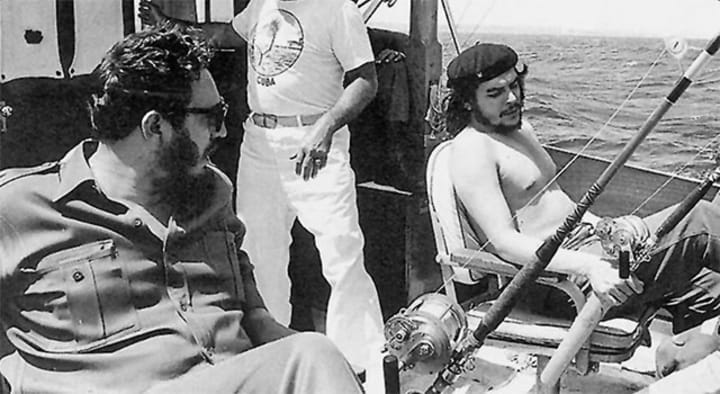
“El Presidente” Fidel Castro and Che Guevara
The Bond: Meeting in 1954 in Mexico, Castro and Guevara bonded over shared revolutionary ideals. Guevara's guerrilla warfare expertise was crucial to Castro's 1959 Cuban Revolution, and Castro appointed him to key roles like head of the national bank and prison overseer.
The Break: By 1965, ideological and strategic differences emerged. Guevara sought to export revolution globally, while Castro focused on consolidating power in Cuba. Guevara left to pursue revolutions elsewhere, and Castro reportedly distanced himself, offering no support when Guevara was hunted by the Bolivian army and CIA in 1967, leading to Guevara's capture and execution.
Outcome: Their friendship never recovered, with Castro's inaction marking a betrayal of their once-close alliance.

Bill Clinton (again) and David Mixner
The Bond: Clinton and Mixner, meeting in 1969, shared working-class roots and became close friends. Mixner helped Clinton fundraise and mobilize the gay vote during his 1992 presidential campaign.
The Break: Clinton's 1993 “Don't Ask, Don't Tell” policy and 1996 Defense of Marriage Act were seen as betrayals by Mixner, who protested publicly, including getting arrested outside the White House. The policies, viewed as politically motivated, fractured their friendship, and they didn't speak for years.
Outcome: Clinton later apologized, but their relationship never fully recovered.
To be continued...
Author's Note -- due to the historical nature of this topic, I needed to rely heavily on AI for portions of this article.
About the Creator
Scott Christenson🌴
Born and raised in Milwaukee WI, living in Hong Kong. Hoping to share some of my experiences w short story & non-fiction writing. Have a few shortlisted on Reedsy:
https://blog.reedsy.com/creative-writing-prompts/author/scott-christenson/
Keep reading
More stories from Scott Christenson🌴 and writers in The Swamp and other communities.
Dave Smith's Best Argument Against War (and Neoconservatives)
Political commentator Dave Smith has been a staunch critic of neoconservatives and their advocacy for military intervention. His skillful defense when facing attacks from Douglas Murray on a recent podcast catapulted him into the national spotlight.
By Scott Christenson🌴8 months ago in The Swamp
South Africa’s Strained Ties With the U.S. Face New Test After War Games With China, Iran, and Russia
Introduction South Africa’s already fragile relationship with the United States is facing renewed scrutiny following its participation in joint military exercises with China, Iran, and Russia. The war games have drawn attention from Western governments and analysts, who see the drills as a symbolic and strategic signal at a time of heightened global tensions.
By Mohammed Azam3 days ago in The Swamp


Comments (2)
Interesting historical summary and good use of AI
I only knew about the tony Blair thing personally. Nice to see this with what is going on in the States.