
Pakistan’s Military Chief Consolidates Power Unseen in Years
Political instability, weakened civilian leadership, and regional tensions fuel unprecedented military dominance

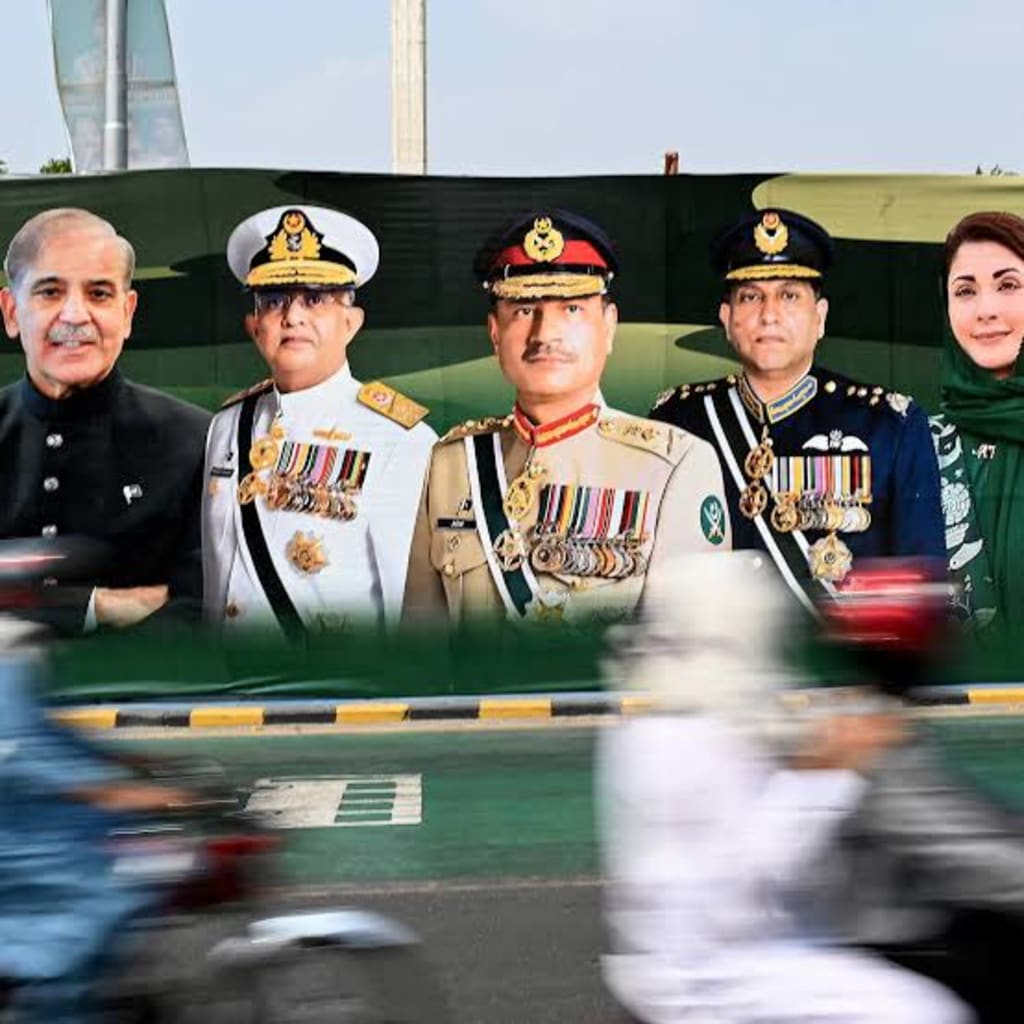
Pakistan has entered a familiar yet intensified phase of civil-military imbalance, as the country’s military chief consolidates authority at a level rarely witnessed in recent decades. While the armed forces have long been a dominant force in Pakistan’s political landscape, current developments suggest a deeper and more institutionalized consolidation of power—one that extends beyond security matters into governance, politics, and national narrative-building.
A Historical Pattern, Renewed With Force
Pakistan’s history is punctuated by periods of overt military rule and indirect control. From Ayub Khan to Pervez Musharraf, generals have repeatedly stepped into leadership roles, citing instability or corruption among civilian governments. What distinguishes the present moment is not a formal coup, but a gradual tightening of influence within a nominally democratic framework.
The military chief’s authority now appears entrenched across key state institutions. Civilian leaders operate under clear constraints, with policy red lines increasingly drawn by the security establishment. This consolidation has occurred without tanks on the streets or the suspension of the constitution, making it subtler—and arguably more durable.
Control Beyond the Barracks
The military’s expanding role is evident in areas traditionally managed by civilian authorities. Economic decision-making, internal security policy, and foreign relations—especially with neighboring countries and global powers—are now closely shaped by military priorities. Strategic sectors such as media regulation and political accountability mechanisms have also seen a stronger security footprint.
Political parties, regardless of ideology, are recalibrating their strategies to avoid confrontation with the military leadership. This has narrowed the space for dissent and reduced competitive politics to carefully managed boundaries. The result is a political environment where civilian authority exists, but rarely challenges the center of power.
Media, Narrative, and Public Perception
One of the most significant aspects of this consolidation is narrative control. The military’s messaging emphasizes stability, national unity, and security at a time when Pakistan faces economic stress and social unrest. By positioning itself as the ultimate guarantor of order, the institution has cultivated public acceptance—even support—for its expanded role.
Independent media voices, meanwhile, face increasing pressure. Journalists and commentators critical of the establishment often encounter legal, economic, or social constraints. This environment shapes public discourse, limiting the range of perspectives available to citizens and reinforcing the military’s preferred narratives.
Civilian Leadership on the Back Foot
Civilian governments in Pakistan have historically struggled to assert autonomy, but current conditions make that challenge even steeper. Fragmented political parties, internal rivalries, and leadership crises have weakened the civilian front. In this vacuum, the military chief’s authority appears not only dominant but indispensable.
Key appointments, policy directions, and crisis responses increasingly align with military preferences. Even when elected leaders hold office, their room for independent maneuvering remains narrow. This dynamic raises critical questions about the long-term health of Pakistan’s democratic institutions.
Regional and Global Implications
The consolidation of power by Pakistan’s military chief also carries implications beyond national borders. Foreign governments engaging with Islamabad often recognize the military as the primary decision-maker, particularly on security and regional diplomacy. This reality shapes international negotiations, aid discussions, and strategic partnerships.
While some global actors value the predictability that strong military leadership can provide, others express concern over democratic backsliding and human rights constraints. Balancing security cooperation with democratic principles remains a delicate challenge for Pakistan’s partners.
Stability Versus Democracy
Supporters of the military’s expanded role argue that Pakistan’s complex challenges—terrorism, economic fragility, and political polarization—require decisive leadership. From this perspective, the military chief’s consolidation of power is seen as a stabilizing force in turbulent times.
Critics, however, warn that long-term stability cannot be sustained without strong civilian institutions. Concentrated power, even when efficient in the short term, risks eroding accountability and weakening democratic norms. History suggests that sidelining civilian governance often leads to deeper institutional crises down the line.
A Defining Moment for Pakistan
Pakistan now stands at a crossroads. The military chief’s unprecedented consolidation of power reflects both the strength of the institution and the fragility of civilian politics. Whether this phase leads to sustained stability or entrenches long-term democratic deficits will depend on how power is exercised—and whether space is eventually restored for civilian leadership to grow.
For citizens, policymakers, and observers alike, the current moment is a reminder that Pakistan’s future hinges not just on who holds power, but on how institutions balance authority, accountability, and representation. The coming years will reveal whether this consolidation marks a temporary response to crisis—or a lasting transformation of the country’s political order.
About the Creator
Fiaz Ahmed
I am Fiaz Ahmed. I am a passionate writer. I love covering trending topics and breaking news. With a sharp eye for what’s happening around the world, and crafts timely and engaging stories that keep readers informed and updated.
Keep reading
More stories from Fiaz Ahmed and writers in The Swamp and other communities.
Lebanon Claims First Phase of Hezbollah’s Disarmament Close to Complete
Lebanon has made a striking announcement that could reshape its political and security landscape: officials claim the first phase of Hezbollah’s disarmament is nearing completion. For a country long defined by the presence of armed non-state actors, this declaration represents a potentially historic shift. While details remain limited and skepticism persists, the statement has reignited debates about sovereignty, stability, and Lebanon’s future role in a volatile Middle East. A Longstanding and Sensitive Issue Hezbollah’s weapons have been at the heart of Lebanese politics for decades. The group emerged as a resistance movement during Israel’s occupation of southern Lebanon in the 1980s and gradually evolved into a powerful military and political force. Unlike other militias that disarmed after Lebanon’s civil war, Hezbollah retained its arsenal, arguing that its weapons were necessary to deter Israeli aggression. This exception, however, has always been controversial. Many Lebanese citizens and political factions argue that no group outside the state should possess arms, viewing Hezbollah’s military power as a direct challenge to national sovereignty. International actors, including the United Nations, have repeatedly called for the disarmament of all militias in Lebanon. What Does “First Phase” Mean? Lebanon’s claim that the first phase of disarmament is nearly complete suggests a gradual, negotiated process rather than an abrupt surrender of weapons. Analysts believe this phase may involve withdrawing heavy weaponry from certain areas, reducing visible armed presence, or placing specific arms under state supervision rather than fully dismantling Hezbollah’s military wing. Officials have been careful with their wording, likely to avoid inflaming internal tensions. Hezbollah remains deeply embedded in Lebanese society and politics, and any attempt at forced disarmament could risk unrest or violence. By framing the process as phased and cooperative, the government appears to be prioritizing stability over speed. Hezbollah’s Calculated Silence Notably, Hezbollah has neither fully confirmed nor outright denied the government’s claims. This ambiguity may be intentional. The group has historically framed its weapons as a “national necessity” rather than a political bargaining chip. However, shifting regional dynamics, economic collapse in Lebanon, and growing domestic pressure may be forcing a recalibration. If Hezbollah is indeed participating in a partial disarmament process, it may be seeking to preserve its political legitimacy while easing international pressure. Cooperation—at least symbolically—could help the group maintain influence within Lebanon’s political system without appearing defiant. Domestic Reactions: Hope and Doubt Reactions within Lebanon have been mixed. Supporters of stronger state authority see the announcement as a long-overdue step toward restoring national unity and rule of law. For them, disarmament represents hope that Lebanon can finally move beyond militia politics and rebuild its institutions. Others remain deeply skeptical. Critics question whether the most significant weapons—particularly long-range missiles—are truly being addressed. Some fear the process may amount to little more than a symbolic gesture, designed to satisfy international demands without altering the balance of power on the ground. Regional and International Implications If verified, progress on Hezbollah’s disarmament would have major regional consequences. Hezbollah is widely viewed as a key ally of Iran and a major actor in regional conflicts. Any reduction in its military capacity could affect tensions with Israel and alter strategic calculations across the Middle East. Internationally, Lebanon’s claim has been met with cautious optimism. Western governments and financial institutions have long tied economic support to reforms and the strengthening of state authority. Demonstrable progress on disarmament could improve Lebanon’s standing and unlock much-needed diplomatic and economic assistance. Economic Pressure as a Catalyst Lebanon’s devastating economic crisis cannot be ignored in this context. With widespread poverty, a collapsing currency, and failing public services, the cost of prolonged political paralysis has become unbearable. Many observers believe economic desperation has created rare momentum for compromise among rival factions. Disarmament—or even partial steps toward it—may be seen as a necessary concession to stabilize the country and attract international support. In this sense, financial survival may be driving political change more than ideology. A Fragile Path Forward Despite the government’s optimistic tone, the road ahead remains uncertain. Disarmament is not just a technical process but a deeply political one, touching on identity, resistance, and power-sharing. Any misstep could reignite old divisions or provoke backlash. The success of future phases will depend on transparency, trust-building, and the state’s ability to offer security guarantees to all communities. Without these elements, progress could stall or reverse. A Turning Point or a Tactical Move? Lebanon’s claim that the first phase of Hezbollah’s disarmament is close to completion marks a moment of cautious significance. Whether this represents a genuine turning point or a carefully managed tactical move remains to be seen. What is clear is that Lebanon is testing the possibility of redefining authority in a country long shaped by compromise and conflict. For a nation in desperate need of stability and renewal, even tentative steps toward restoring state control could carry profound meaning. The coming months will reveal whether this promise translates into lasting change—or fades into another chapter of unfulfilled reform.
By Fiaz Ahmed 29 days ago in The Swamp
Bill and Hillary Clinton Refuse to Testify in House Epstein Investigation
Former US President Bill Clinton and former Secretary of State Hillary Clinton have refused to testify in a House investigation examining the handling of the Jeffrey Epstein case, a decision that has reignited political controversy and public scrutiny. The refusal has drawn sharp reactions from lawmakers, victims’ advocates, and political commentators, reopening long-standing questions about accountability, transparency, and elite power in one of the most disturbing criminal cases in recent US history.
By Aarif Lashari5 days ago in The Swamp


Comments
There are no comments for this story
Be the first to respond and start the conversation.