
Lebanon Claims First Phase of Hezbollah’s Disarmament Close to Complete
A cautious step toward state authority raises questions about sovereignty, regional stability, and Hezbollah’s future role

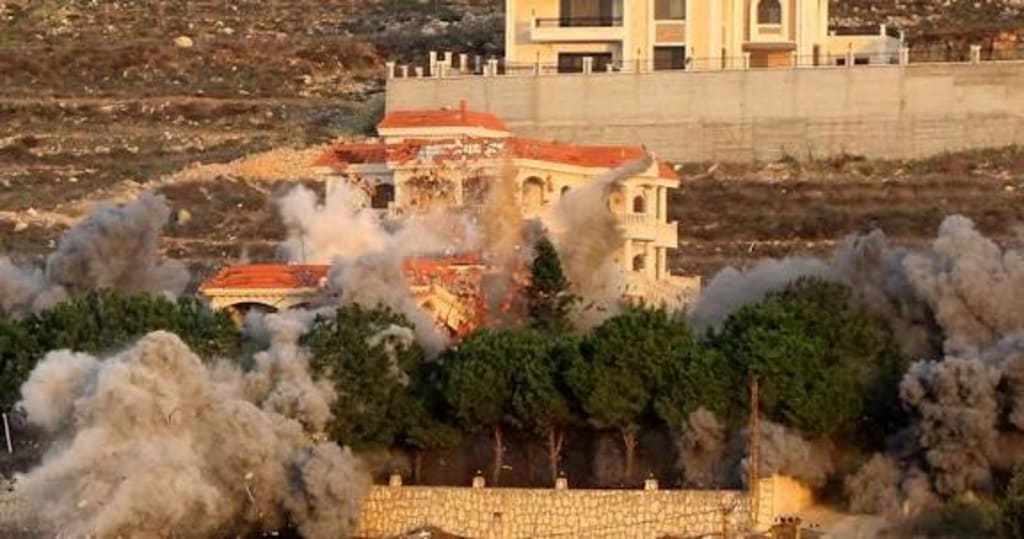
Lebanon has made a striking announcement that could reshape its political and security landscape: officials claim the first phase of Hezbollah’s disarmament is nearing completion. For a country long defined by the presence of armed non-state actors, this declaration represents a potentially historic shift. While details remain limited and skepticism persists, the statement has reignited debates about sovereignty, stability, and Lebanon’s future role in a volatile Middle East.
A Longstanding and Sensitive Issue
Hezbollah’s weapons have been at the heart of Lebanese politics for decades. The group emerged as a resistance movement during Israel’s occupation of southern Lebanon in the 1980s and gradually evolved into a powerful military and political force. Unlike other militias that disarmed after Lebanon’s civil war, Hezbollah retained its arsenal, arguing that its weapons were necessary to deter Israeli aggression.
This exception, however, has always been controversial. Many Lebanese citizens and political factions argue that no group outside the state should possess arms, viewing Hezbollah’s military power as a direct challenge to national sovereignty. International actors, including the United Nations, have repeatedly called for the disarmament of all militias in Lebanon.
What Does “First Phase” Mean?
Lebanon’s claim that the first phase of disarmament is nearly complete suggests a gradual, negotiated process rather than an abrupt surrender of weapons. Analysts believe this phase may involve withdrawing heavy weaponry from certain areas, reducing visible armed presence, or placing specific arms under state supervision rather than fully dismantling Hezbollah’s military wing.
Officials have been careful with their wording, likely to avoid inflaming internal tensions. Hezbollah remains deeply embedded in Lebanese society and politics, and any attempt at forced disarmament could risk unrest or violence. By framing the process as phased and cooperative, the government appears to be prioritizing stability over speed.
Hezbollah’s Calculated Silence
Notably, Hezbollah has neither fully confirmed nor outright denied the government’s claims. This ambiguity may be intentional. The group has historically framed its weapons as a “national necessity” rather than a political bargaining chip. However, shifting regional dynamics, economic collapse in Lebanon, and growing domestic pressure may be forcing a recalibration.
If Hezbollah is indeed participating in a partial disarmament process, it may be seeking to preserve its political legitimacy while easing international pressure. Cooperation—at least symbolically—could help the group maintain influence within Lebanon’s political system without appearing defiant.
Domestic Reactions: Hope and Doubt
Reactions within Lebanon have been mixed. Supporters of stronger state authority see the announcement as a long-overdue step toward restoring national unity and rule of law. For them, disarmament represents hope that Lebanon can finally move beyond militia politics and rebuild its institutions.
Others remain deeply skeptical. Critics question whether the most significant weapons—particularly long-range missiles—are truly being addressed. Some fear the process may amount to little more than a symbolic gesture, designed to satisfy international demands without altering the balance of power on the ground.
Regional and International Implications
If verified, progress on Hezbollah’s disarmament would have major regional consequences. Hezbollah is widely viewed as a key ally of Iran and a major actor in regional conflicts. Any reduction in its military capacity could affect tensions with Israel and alter strategic calculations across the Middle East.
Internationally, Lebanon’s claim has been met with cautious optimism. Western governments and financial institutions have long tied economic support to reforms and the strengthening of state authority. Demonstrable progress on disarmament could improve Lebanon’s standing and unlock much-needed diplomatic and economic assistance.
Economic Pressure as a Catalyst
Lebanon’s devastating economic crisis cannot be ignored in this context. With widespread poverty, a collapsing currency, and failing public services, the cost of prolonged political paralysis has become unbearable. Many observers believe economic desperation has created rare momentum for compromise among rival factions.
Disarmament—or even partial steps toward it—may be seen as a necessary concession to stabilize the country and attract international support. In this sense, financial survival may be driving political change more than ideology.
A Fragile Path Forward
Despite the government’s optimistic tone, the road ahead remains uncertain. Disarmament is not just a technical process but a deeply political one, touching on identity, resistance, and power-sharing. Any misstep could reignite old divisions or provoke backlash.
The success of future phases will depend on transparency, trust-building, and the state’s ability to offer security guarantees to all communities. Without these elements, progress could stall or reverse.
A Turning Point or a Tactical Move?
Lebanon’s claim that the first phase of Hezbollah’s disarmament is close to completion marks a moment of cautious significance. Whether this represents a genuine turning point or a carefully managed tactical move remains to be seen.
What is clear is that Lebanon is testing the possibility of redefining authority in a country long shaped by compromise and conflict. For a nation in desperate need of stability and renewal, even tentative steps toward restoring state control could carry profound meaning. The coming months will reveal whether this promise translates into lasting change—or fades into another chapter of unfulfilled reform.
About the Creator
Fiaz Ahmed
I am Fiaz Ahmed. I am a passionate writer. I love covering trending topics and breaking news. With a sharp eye for what’s happening around the world, and crafts timely and engaging stories that keep readers informed and updated.
Keep reading
More stories from Fiaz Ahmed and writers in The Swamp and other communities.
Australia Was Seen as a World Leader in Gun Control — Bondi Has Exposed a More Complicated Reality
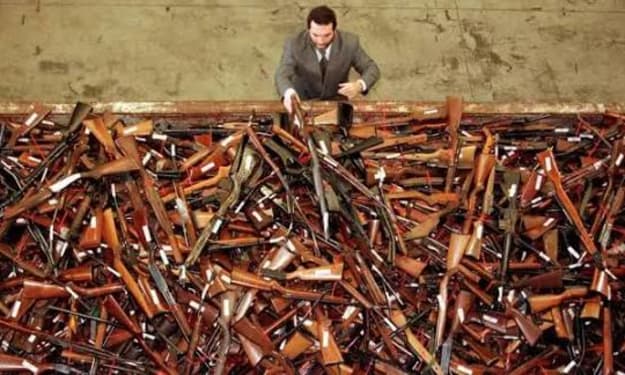
For decades, Australia has been held up as a global success story in gun control. After the 1996 Port Arthur massacre, the country enacted sweeping firearm reforms that dramatically reduced gun violence and mass shootings. International leaders, researchers, and activists frequently cited Australia as proof that strict gun laws save lives. However, the tragic Bondi attack has shaken this long-held perception, revealing that Australia’s relationship with violence and public safety is far more complex than many believed. The Bondi incident, which unfolded in one of Sydney’s most iconic public spaces, was not a mass shooting in the traditional sense. Yet its impact was profound. The attack reignited national and global conversations about security, mental health, policing, and the limits of gun control laws in preventing all forms of violence. While firearms were not the primary weapon involved, the tragedy challenged the assumption that strict gun laws alone are enough to guarantee public safety. Australia’s gun reforms remain among the strictest in the world. Semi-automatic weapons were banned, buyback schemes removed hundreds of thousands of firearms from circulation, and licensing requirements became rigorous. These measures undeniably reduced gun-related deaths and mass shootings. But Bondi highlighted a critical truth: violence adapts. When access to guns is restricted, other forms of harm can still emerge if deeper societal issues remain unaddressed. One of the most pressing questions raised after Bondi is whether Australia has become overly reliant on its gun control narrative. While the laws are effective in reducing firearm violence, they do not eliminate the risks posed by individuals experiencing severe mental health crises, radicalization, or social alienation. Experts argue that focusing exclusively on gun legislation can create blind spots in broader prevention strategies. Mental health services have come under intense scrutiny following the attack. Australia, like many developed nations, faces challenges in providing timely and comprehensive mental health care. Long waiting lists, underfunded services, and gaps in early intervention mean that vulnerable individuals can slip through the cracks. Bondi exposed how failures in mental health systems can have devastating consequences, regardless of gun access. Policing and public safety strategies are also being reassessed. Australia’s police forces are generally well-trained, but Bondi raised concerns about response times, preparedness for unpredictable threats, and the balance between public openness and security. In a country that values freedom of movement and relaxed public spaces, increasing security without creating fear or over-policing is a delicate challenge. Another uncomfortable reality exposed by Bondi is the role of complacency. Australia’s success in preventing gun violence may have fostered a sense of immunity — the belief that “it can’t happen here.” This mindset can delay necessary reforms in areas such as threat assessment, public awareness, and emergency response training. Bondi served as a painful reminder that no society is entirely insulated from violence. Internationally, the incident has prompted more nuanced discussions about Australia’s gun control model. While it remains a strong example of effective firearm regulation, Bondi shows that gun laws are only one part of a larger safety ecosystem. Countries looking to replicate Australia’s approach must also invest in mental health care, social support systems, community policing, and early warning mechanisms. Public reaction in Australia has been complex. Many citizens continue to strongly support existing gun laws, viewing them as essential and non-negotiable. At the same time, there is growing recognition that additional measures are needed. Calls for better mental health funding, improved data sharing between agencies, and more proactive intervention strategies have grown louder. Importantly, Bondi has also sparked conversations about how tragedies are discussed. Community leaders and families of victims have urged restraint, warning against politicizing grief or using fear to push extreme narratives. This measured response reflects a broader Australian value: confronting hard truths without abandoning compassion or reason. In the end, Bondi does not invalidate Australia’s reputation as a leader in gun control — but it does complicate it. The country’s laws have saved lives and prevented countless tragedies, yet they are not a cure-all. Violence is shaped by human behavior, social conditions, and systemic failures that extend beyond firearms. Australia now stands at a crossroads. The challenge is not to dismantle successful gun laws, but to build upon them with a more holistic approach to public safety. Bondi has shown that true security requires vigilance, investment, and humility — an acknowledgment that even the best systems must continue to evolve.
By Fiaz Ahmed 30 days ago in The Swamp
Carney’s China Embrace Widens Gap With US in Trump’s Tariff Era
Canada is making waves on the global stage, and not necessarily where the U.S. wants. Prime Minister Mark Carney’s embrace of China is widening a gap with Washington at a time when President Trump’s tariff policies are shaking up international trade. What was once unthinkable — Canada leaning toward Beijing — now looks like a pragmatic move in a world of rising tariffs and disrupted supply chains.
By Aqib Hussainabout 10 hours ago in The Swamp
Center Stage with Paul Stewart
*** I'm keen to republish the interviews I did for my series with Vocal creators. It's been a few years and I thought it might be nice to revisit these wonderful conversations. I'll be releasing them one at a time for a few weeks/months.
By Heather Hubler3 days ago in Interview



Comments
There are no comments for this story
Be the first to respond and start the conversation.