
Pahalgam Terror Attack: A Tragedy That Shook the Nation
A Nation Mourns, Tensions Escalate
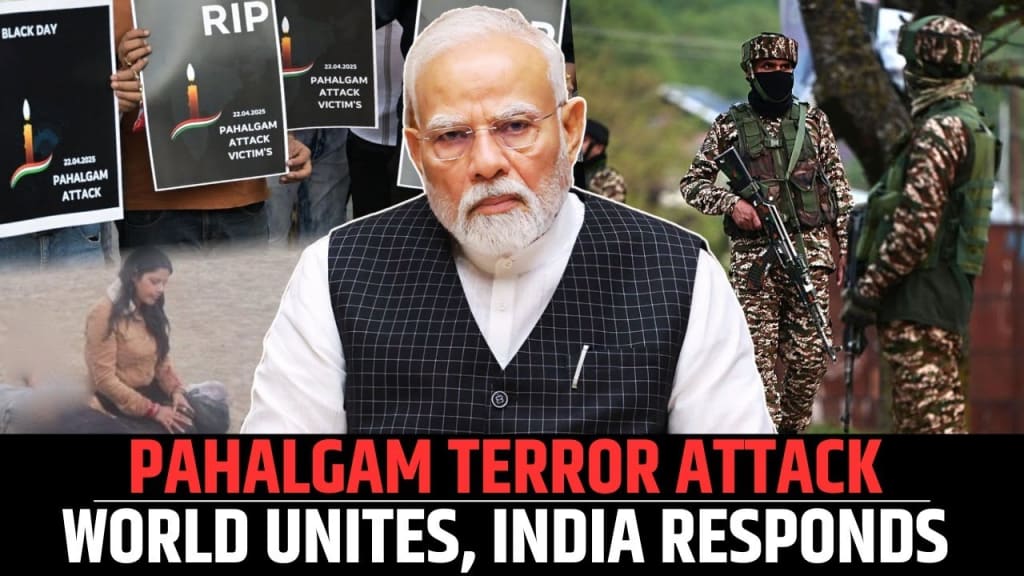
On April 22, 2025, the serene Baisaran Valley near Pahalgam in Jammu and Kashmir was shattered by a brutal terrorist attack, marking one of the deadliest assaults on civilians in India since the 2008 Mumbai attacks. The massacre claimed 26 lives and left over 20 injured, predominantly targeting Hindu tourists from various Indian states and a few foreign nationals. The Resistance Front (TRF), an offshoot of the Pakistan-based Lashkar-e-Taiba, claimed responsibility, citing opposition to alleged demographic changes in the Kashmir Valley.
The Attack: A Calculated Massacre
The assault unfolded in the picturesque Baisaran Valley, a popular tourist destination accessible only by foot or horseback. Five militants, armed with AK-47s and M4 carbines and dressed in military-style uniforms, infiltrated the area. Survivors recounted harrowing details: the assailants segregated victims based on religion, forcing men to remove clothing to check for circumcision and demanding recitation of Islamic verses. Those identified as non-Muslims were executed at close range. A local pony operator, Syed Adil Hussain Shah, heroically attempted to protect tourists and was killed in the process.
The victims included individuals from Arunachal Pradesh, Karnataka, Kerala, Maharashtra, Odisha, Gujarat, Haryana, Tamil Nadu, Uttar Pradesh, and West Bengal, as well as tourists from Nepal and the United Arab Emirates. Among the deceased were recently married officers from the Indian Air Force and Navy, and an Intelligence Bureau official.
Immediate Aftermath and Rescue Efforts
In the wake of the attack, local residents and pony-handlers played a crucial role in rescue operations, transporting injured victims on ponies and improvised stretchers. Gurudwaras in the region opened their doors to shelter fleeing tourists. Emergency services, including military helicopters, were deployed to evacuate the critically injured to hospitals in Anantnag and Srinagar. A joint search operation was launched by the army, paramilitary forces, and Jammu and Kashmir Police to apprehend the perpetrators, who reportedly fled to the upper reaches of the Pir Panjal range.
National and International Reactions
The attack drew widespread condemnation across India. President Droupadi Murmu described it as a "dastardly and inhuman act," while Prime Minister Narendra Modi termed it "shocking and painful," vowing to bring the perpetrators to justice. Defence Minister Rajnath Singh labeled it an "act of cowardice," and opposition leader Rahul Gandhi emphasized support for the victims while criticizing the ruling government.
Internationally, countries including the United States, United Kingdom, Saudi Arabia, and neighboring nations like Bangladesh and Sri Lanka condemned the attack and expressed condolences. The United Nations and European Union also issued statements urging restraint and peaceful resolution.
Escalation of Indo-Pakistani Tensions
India accused Pakistan of supporting the assailants, a claim Islamabad denied. In response to the attack, India took several measures:
Suspended the Indus Waters Treaty with Pakistan.
Closed the Attari–Wagah border crossing.
Revoked visas for Pakistani nationals and expelled Pakistani military advisers.
Reduced the staff strength of the Indian High Commission in Islamabad.
Pakistan retaliated by suspending visas for Indian nationals, closing its airspace to Indian aircraft, and announcing the suspension of all bilateral treaties, including the 1972 Simla Agreement. Pakistan warned that any disruption of the Indus Waters Treaty would be considered an act of war.
Conclusion
The Pahalgam terror attack has not only inflicted deep wounds on the nation but also escalated tensions between India and Pakistan to alarming levels. As both countries navigate this crisis, the international community watches closely, urging restraint and dialogue to prevent further escalation and ensure regional stability.
About the Creator
Keep reading
More stories from Kratika Saxena and writers in The Swamp and other communities.
The Midnight Heist- Code, Cash & Betrayal
In the neon-lit sprawls of 2025’s megacities, where AI governs traffic and cryptocurrency fuels black markets, crime wears a new face. This is the story of Project Phantom—a heist so flawless, so brazen, it left Interpol scrambling and Silicon Valley CEOs sweating. But like all great criminal tales, it began not with a bang, but with a whisper.
By Kratika Saxena11 months ago in Criminal
A Gathering of Evil Bosses
“I’m the queen of chin jutting while I smooth my hair, attacking, insulting, and deflecting to protect my appointer.” “Oh, please, Blondi, my hair is curled, highlighted, and longer than yours. I feature television commercials telling immigrants that we will give them a free plane ride home, and if they voluntarily turn themselves in, they will be allowed to legally apply for re-entry. It runs everywhere, and I look good in it! You can’t compete because of your blond hair. Mine is nicer, and my lips are prettier than yours.”
By Andrea Corwin 17 days ago in The Swamp
The Most Shocking Revelation of the Clinton Epstein Testimony
In 2019, Jeffrey Epstein, a man who made multiple trips to visit the Whitehouse during the Clinton years, and was tied to at least one other president, Donald J. Trump, was indicted and taken into custody on human trafficking charges as a result of a long standing investigation into illicit sexual encounters, sex with and the trafficking of minors, and other varied accusations.
By Jason Ray Morton 4 days ago in The Swamp
A More Human Vocal
When we launched Vocal nearly a decade ago, the world was a very different place. LLMs did not exist, and stories were created one at a time by people sitting down to write, revise, and share something personal. Many of our assumptions about publishing, trust, and participation were built for a world where effort and output were inseparable.
By Justin @ Vocal3 days ago in Resources



Comments (1)
Sad To hear That very Disappointed 😢