
One Deal, Three Setbacks: How India Gained an Edge Over Turkey, Pakistan, and Bangladesh With an EU Trade Agreement
India’s growing EU trade ties reshape competition for key regional exporters

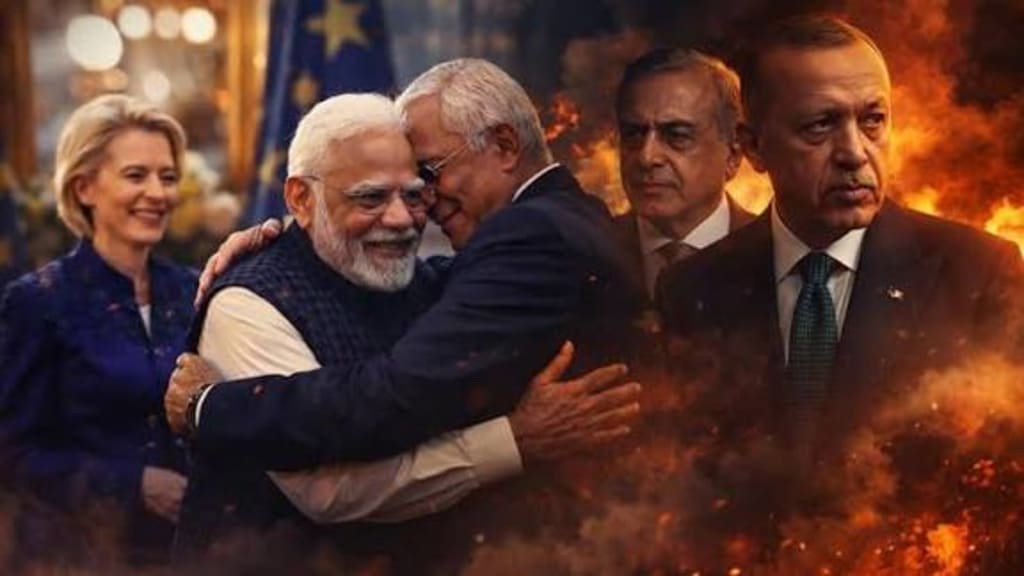
A shifting trade landscape reshapes competition between emerging economies
India’s expanding trade engagement with the European Union has begun to reshape global economic competition, creating new opportunities for New Delhi while presenting fresh challenges for regional rivals such as Turkey, Pakistan, and Bangladesh. As negotiations around EU–India trade cooperation move forward, the effects are already being felt across textiles, manufacturing, and export-driven sectors.
Rather than a sudden disruption, this shift reflects a long-term strategic recalibration—one where India’s scale, policy reforms, and diplomatic outreach have aligned to strengthen its position in European markets.
Why the EU–India Trade Relationship Matters
The European Union is one of the world’s largest trading blocs and a critical export destination for developing economies. Preferential access to the EU can significantly boost competitiveness, especially in sectors like:
Textiles and apparel
Pharmaceuticals
Automotive components
Technology services
India’s growing alignment with EU standards and trade priorities has helped position it as a reliable long-term partner, particularly as Europe seeks to diversify supply chains away from overdependence on a single region.
India’s Strategic Advantage
India’s trade strategy with the EU has focused on:
Improving regulatory compatibility
Expanding manufacturing capacity
Strengthening labor and sustainability standards
Leveraging its large domestic market
These factors have increased India’s appeal as a production and sourcing hub. As a result, European buyers are increasingly viewing India as a stable and scalable alternative to other exporters.
This shift has not occurred in isolation. It has coincided with economic and political challenges faced by several competing economies.
Turkey: Facing Competitive Pressure
Turkey has long enjoyed strong trade ties with the EU, particularly in textiles and consumer goods. However, rising production costs, inflation, and regulatory uncertainties have begun to weaken its advantage.
India’s lower labor costs and expanding textile capacity allow it to compete aggressively in price-sensitive segments. Additionally, Indian exporters have invested heavily in meeting EU environmental and labor requirements, reducing compliance gaps that once favored Turkey.
While Turkey remains an important EU supplier, India’s growing presence has increased competition, forcing Turkish manufacturers to reassess pricing and market positioning.
Pakistan: Structural Challenges Exposed
Pakistan has traditionally relied on textile exports to Europe, benefiting from preferential access under EU trade schemes. However, several factors have reduced its competitiveness:
Energy shortages
Currency instability
Limited industrial diversification
India’s broader manufacturing base and improved logistics infrastructure have made it easier for European firms to source a wider range of products from a single country. This efficiency advantage has slowly shifted orders away from Pakistan in certain segments.
Trade analysts note that Pakistan’s challenge is not exclusion, but relative loss of market share as buyers diversify toward larger, more stable suppliers.
Bangladesh: A Narrow Export Base
Bangladesh’s success in the EU market has largely been built on ready-made garments. While this specialization has delivered growth, it has also created vulnerability.
India’s textile sector is more diversified, spanning:
Cotton and synthetic fabrics
Finished garments
Technical textiles
As EU buyers increasingly seek supply chain resilience, India’s ability to offer multiple product categories under one trade framework has proven attractive. This does not eliminate Bangladesh’s role, but it adds competitive pressure in areas where both countries overlap.
Beyond Tariffs: The Real Impact
The impact of India’s EU trade engagement extends beyond tariff advantages. Key non-tariff factors include:
Faster delivery times
Compliance with sustainability rules
Digital trade readiness
Policy stability
European firms are placing greater emphasis on transparency and long-term reliability. India’s reforms in taxation, digital infrastructure, and manufacturing incentives have helped address these concerns.
This shift highlights that modern trade competition is about systems and scale, not just price.
Geopolitical Context Matters
Global politics has also played a role. The EU’s interest in strengthening ties with India reflects broader strategic goals, including:
Reducing dependence on limited supply sources
Supporting democratic trade partners
Securing resilient supply chains
In this environment, India’s geopolitical positioning has enhanced its economic appeal. Turkey, Pakistan, and Bangladesh are not excluded, but they now operate in a more crowded and competitive landscape.
What This Means for Regional Economies
For Turkey, Pakistan, and Bangladesh, India’s progress is a signal rather than a defeat. Trade experts suggest that each country can respond by:
Diversifying export products
Investing in higher-value manufacturing
Strengthening compliance with EU standards
Improving energy and logistics reliability
Competition driven by trade agreements often encourages reform and innovation. In this sense, India’s success may act as a catalyst for broader regional upgrades.
India’s Next Challenge
While India has gained momentum, maintaining its advantage will require continued effort. European markets demand:
Consistent quality
Environmental responsibility
Labor protections
Policy predictability
Any slowdown in reforms or infrastructure development could weaken India’s position just as quickly as it improved.
Conclusion
India’s expanding trade engagement with the European Union has reshaped regional export dynamics, creating challenges for Turkey, Pakistan, and Bangladesh while strengthening India’s global standing. This outcome reflects strategic planning, scale, and sustained reform, rather than a single agreement alone.
In a rapidly evolving trade environment, success belongs to economies that adapt quickly and invest deeply. For India, the EU partnership offers opportunity. For its neighbors, it presents a reminder that competitiveness is not static—but something that must be continuously earned.
About the Creator
Fiaz Ahmed
I am Fiaz Ahmed. I am a passionate writer. I love covering trending topics and breaking news. With a sharp eye for what’s happening around the world, and crafts timely and engaging stories that keep readers informed and updated.
Keep reading
More stories from Fiaz Ahmed and writers in The Swamp and other communities.
Imran Khan’s Health in ‘Grave Danger’ After Eye Blockage Diagnosis, Party Says
Political tensions rise as concerns grow over the former prime minister’s medical condition Fresh concerns have emerged over the health of former Pakistani Prime Minister Imran Khan, after his political party warned that his condition is in “grave danger” following a diagnosis related to an eye blockage. The statement has drawn widespread attention, adding a new layer of urgency to Pakistan’s already tense political climate. According to party representatives, the condition requires immediate and proper medical care. They argue that delays or restrictions in treatment could lead to serious and potentially irreversible consequences. While official medical details remain limited, the warning has sparked debate over prisoner health rights, transparency, and political accountability. What the Party Has Claimed Imran Khan’s party has stated that doctors identified a blockage affecting his eye, a condition that can interfere with blood flow and vision. Party officials say the diagnosis raises serious concerns and should be treated as a medical emergency. They have emphasized that eye-related blockages, if left untreated, may lead to long-term damage. The party insists that timely access to specialists, diagnostic tests, and treatment is essential to prevent further complications. The use of strong language such as “grave danger” reflects growing frustration among supporters, who believe Khan’s health situation is not being handled with the seriousness it deserves. Why Health Claims Matter in Detention Health concerns involving detained political leaders often draw public attention, especially in countries where politics is deeply polarized. International norms stress that detainees, regardless of status, are entitled to adequate medical care. Legal experts note that access to healthcare is not a political privilege but a basic right. When health warnings are ignored or delayed, they can become human rights issues, attracting scrutiny from courts, civil society, and international observers. In Khan’s case, supporters argue that medical transparency would help reduce speculation and restore public confidence. Understanding Eye Blockage Conditions While exact medical details have not been officially released, eye blockages generally refer to restricted blood flow affecting vision. These conditions can vary in severity and cause. Possible risks include: Sudden vision loss Persistent pain or pressure Long-term damage if untreated Medical professionals often stress early diagnosis and intervention. However, without official medical reports, it remains unclear how advanced the condition may be. Political Context Behind the Concern Imran Khan remains one of Pakistan’s most influential and divisive political figures. His legal troubles and detention have fueled ongoing political tensions across the country. Any development related to his health quickly becomes politically charged, with supporters viewing it as a test of fairness and opponents urging caution against politicizing medical issues. This situation highlights the difficulty of separating health matters from politics in high-profile cases. Calls for Transparency and Independent Review Human rights groups and legal analysts have repeatedly emphasized the importance of independent medical assessments in cases involving detained leaders. Transparent medical evaluations help ensure credibility and prevent misinformation. Party leaders have demanded that: Independent doctors be allowed to examine Khan Medical reports be shared with legal teams Treatment decisions remain free from political influence Such steps, they argue, would reduce tensions and reassure the public. Public Reaction and Supporter Response News of Khan’s reported health condition has triggered strong reactions among his supporters. Many have taken to social media to express concern and demand immediate action. Public gatherings, online campaigns, and legal petitions have followed similar health-related claims in the past. Analysts warn that continued uncertainty could lead to increased unrest if supporters believe medical needs are being ignored. At the same time, others urge patience, calling for verified information rather than emotionally driven conclusions. Government Silence and Official Position So far, official responses have been limited. Authorities have not released detailed medical statements addressing the party’s claims, which has fueled speculation. In high-profile cases, delays in communication often worsen public mistrust. Observers note that clear and factual updates could help ease tensions and prevent rumors from spreading. Silence, even if procedural, can be interpreted as indifference in politically sensitive situations. Health, Law, and Political Stability The situation underscores how health issues intersect with law and political stability. When the health of a prominent political figure is questioned, the impact extends beyond personal well-being. Such moments test: Legal safeguards for detainees Institutional transparency Public trust in governance Pakistan has faced similar challenges in the past, where unresolved health controversies added pressure to already fragile political environments. What Happens Next The coming days may prove crucial. Much will depend on whether: Independent medical evaluations are allowed Official health updates are shared Treatment access is clearly confirmed If authorities address the concerns openly, tensions may ease. If not, the issue could continue to dominate political discourse and legal proceedings. Conclusion The claim that Imran Khan’s health is in “grave danger” following an eye blockage diagnosis has intensified scrutiny on how health issues are managed in politically sensitive cases. While medical facts remain limited, the situation highlights broader questions about detainee rights, transparency, and accountability. In a deeply divided political landscape, clear communication and proper medical care are essential—not only for Khan’s well-being but also for maintaining public confidence. As attention remains focused on his condition, the response from authorities may shape both political reactions and public trust in the days ahead.
By Fiaz Ahmed a day ago in The Swamp
Exclusive: Trump Says Iran Wants a Deal as U.S. “Armada” Arrives
In a revealing development that adds a dramatic new chapter to U.S.–Iran relations, U.S. President Donald Trump has stated that Iran is interested in negotiations, even as the United States positions a large naval force — described by Trump as an “armada” — near Iranian waters. The comments, made in a recent interview with Axios and reported across major outlets, come during one of the most volatile periods in the region’s recent history.
By Salaar Jamali3 days ago in The Swamp
Mexico Shelves Planned Shipment of Oil to Cuba Amid US Tensions
In a move that has caught regional analysts and policymakers by surprise, Mexico has shelved a planned shipment of oil to Cuba, signaling a potential shift in its energy diplomacy as tensions with the United States intensify. The canceled delivery, originally scheduled for mid-January, underscores how energy, politics, and foreign relations are increasingly intertwined in the Western Hemisphere.
By Aqib Hussain3 days ago in The Swamp


Comments
There are no comments for this story
Be the first to respond and start the conversation.