
North Korea Fires Ballistic Missiles, Condemns U.S. Strikes on Venezuela
Pyongyang’s Missile Tests and Diplomatic Outcry Raise Global Tensions

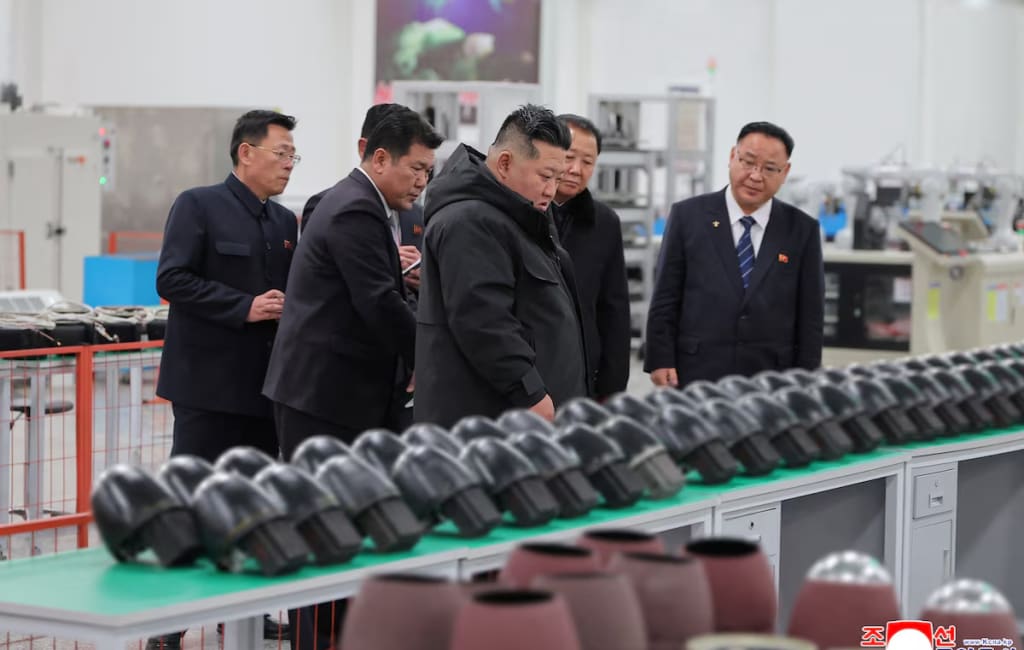
The world woke up to shocking headlines at the start of 2026. North Korea launched several ballistic missiles while also condemning U.S. military strikes on Venezuela, sending a clear message of defiance toward Washington. These developments have shaken international capitals and are raising serious questions about global stability.
Missile Launches: A Bold Statement
On January 4, 2026, North Korea fired multiple ballistic missiles from near Pyongyang into waters off its east coast. South Korean military officials confirmed that the missiles traveled about 900 kilometers before landing in the sea. These launches clearly violate United Nations Security Council resolutions that prohibit North Korea from testing ballistic weapons.
The timing of these launches was notable. They coincided with South Korean President Lee Jae-Myung’s state visit to China, which focused on nuclear diplomacy and peace talks for the Korean Peninsula. Analysts believe Pyongyang wanted to show not just the U.S., but also China, that it remains a force to be reckoned with and won’t bow to pressure.
Sending Messages to Multiple Audiences
North Korea’s missile tests are not just about showing off military strength—they carry a layered message.
To China: Pyongyang seems to be asserting that it will make independent decisions, even if it risks angering its closest ally.
To the United States: The missile tests came right after the U.S. carried out military strikes in Venezuela, which included removing Venezuelan President Nicolás Maduro. For North Korea, this intervention was a stark warning about what they perceive as the U.S.’s willingness to unilaterally intervene in other countries.
Pyongyang’s state media called the U.S. strikes “the most serious form of encroachment on sovereignty” and described Washington’s actions as “rogue and brutal.” The North Korean government demanded the international community recognize the “catastrophic consequences” of such interventions.
Linking Missile Tests to Political Protest
While North Korea didn’t explicitly link the missile launches to the Venezuela operation, the connection is clear to analysts. Historically, Pyongyang views U.S. military interventions as existential threats. Seeing a foreign leader captured and removed by U.S. forces reinforces North Korea’s belief that it needs a strong military deterrent, including nuclear and missile capabilities, to survive.
Some experts even argue that the spectacle of Maduro’s swift capture prompted a defensive, show-of-force response from Pyongyang. It’s a reminder that in international politics, symbolic actions—like missile launches—can send as much of a message as direct military strikes.
Reactions in the Region
The response to North Korea’s missile tests was swift.
South Korea convened an emergency security meeting, calling the launches “provocative” and a threat to peace.
Japan also condemned the tests, emphasizing the risk they pose to regional security.
Meanwhile, global reactions to the U.S. strikes in Venezuela were mixed. Countries like Mexico and Russia strongly criticized Washington, calling the operation a blatant violation of international law. Mexico’s government called it “unlawful,” while Russia demanded clarity on Maduro’s fate.
The United States defended its actions, calling the strikes necessary to address corruption and security threats posed by Maduro’s regime. President Donald Trump framed the operation as part of a broader effort to stabilize the region and oversee a transitional period in Venezuela.
Implications for Diplomacy and Security
These events highlight a major challenge in today’s geopolitics: the clash between great power rivalry and international norms. North Korea’s missile tests and denunciation of the U.S. strike show a regime unwilling to yield to external pressures, especially from Washington.
For countries like South Korea and Japan, these developments underscore the persistent threat posed by North Korea’s weapons programs. At the same time, U.S. military actions elsewhere—like in Venezuela—can complicate diplomacy and provoke unintended reactions in other regions.
Pyongyang’s rhetoric, including calls for increased weapons production, also suggests it may harden its stance ahead of the upcoming Workers’ Party Congress, where defense strategy will be debated.
A Global Flashpoint
The combination of missile tests and condemnation of U.S. actions in Venezuela illustrates just how interconnected global security issues have become. Regional events in East Asia and Latin America now have ripple effects worldwide.
Actions that might be seen as unilateral or aggressive—whether missile tests or military interventions—can deepen distrust and destabilize international relations. For world leaders, this period is a test: can diplomacy hold firm under such pressures, or are we moving toward more entrenched global rivalries?
What Comes Next?
As we move further into 2026, all eyes will be on North Korea, the U.S., and the diplomatic channels trying to keep tensions from escalating. The missile tests signal that Pyongyang is prepared to assert its military strength, while U.S. actions in Venezuela suggest Washington is willing to take bold moves to shape the global order.
The world now faces a delicate balancing act. Managing these crises will require careful negotiation, strong alliances, and a clear understanding that actions in one part of the globe can have consequences thousands of miles away.
About the Creator
Muhammad Hassan
Muhammad Hassan | Content writer with 2 years of experience crafting engaging articles on world news, current affairs, and trending topics. I simplify complex stories to keep readers informed and connected.
Keep reading
More stories from Muhammad Hassan and writers in The Swamp and other communities.
UK and France Bomb Underground IS Arms Bunker in Syria
In a rare show of military cooperation, the United Kingdom and France launched coordinated airstrikes against a suspected Islamic State (IS) arms bunker in Syria this week. Officials have described the strike as a targeted operation aimed at disrupting the terrorist organization’s supply lines and preventing further attacks in the region. While the details of the operation remain classified, Western authorities emphasized that intelligence indicated the bunker housed large quantities of weapons, ammunition, and explosives intended for future IS operations. Precision Strikes in a Volatile Region According to military sources, the operation involved a combination of aerial surveillance and precision-guided munitions. The UK’s Royal Air Force and France’s Armée de l’Air carried out simultaneous strikes on the underground facility, located in eastern Syria, near the border regions that have been historically contested by IS fighters. “This action demonstrates our commitment to confronting terrorism wherever it threatens international security,” a spokesperson for the UK Ministry of Defence said. The strikes were reportedly timed to minimize civilian casualties. Western officials claim that intelligence indicated the site was primarily used for storing weaponry and planning operations rather than housing civilians. However, independent verification on the ground remains challenging due to ongoing conflict in the region, making it difficult to confirm the full extent of the damage or casualties resulting from the airstrikes. Disrupting Islamic State Operations Islamic State, although weakened since its territorial peak in 2014, continues to operate as an insurgent network in parts of Syria and Iraq. Underground bunkers like the one targeted by the UK and France play a critical role in sustaining the group’s activities. Weapons caches, improvised explosive device (IED) components, and other supplies are often stored in these hidden facilities, allowing IS fighters to maintain mobility while evading detection by international forces. “Operations like this disrupt their logistical networks and force them to spend more time hiding supplies rather than launching attacks,” said a Middle East security analyst. “While they no longer control large swaths of territory, their ability to strike unpredictably still poses a serious threat to regional stability.” Regional Implications The joint operation highlights growing Western concern over the persistence of extremist elements in Syria. Analysts suggest that the strike could also serve as a warning to other groups considering the reestablishment of IS strongholds. However, the operation may complicate relationships with regional powers, including Russia and Iran, who have a significant military presence in Syria. Both countries have historically opposed unilateral Western military interventions, arguing that such strikes risk further destabilization. In addition to its tactical objectives, the operation may also carry political significance. The UK and France have both faced domestic pressure to show decisive action against terrorism. Recent threats from IS affiliates in Europe have reignited public debate over national security measures, making visible military actions an important aspect of political messaging. Challenges of Fighting an Underground Threat One of the main difficulties in targeting underground bunkers is the high risk of intelligence errors. Military planners rely on satellite imagery, drone reconnaissance, and human intelligence to locate and verify these facilities. Even a small miscalculation can result in unintended damage or missed targets. Experts note that the design of underground facilities is often sophisticated. Bunkers may include reinforced concrete walls, ventilation systems, and multiple concealed entrances, making them difficult to neutralize completely. Precision-guided bombs and specialized munitions are therefore crucial tools for reducing collateral damage while achieving operational goals. “Striking a target like this requires detailed intelligence and careful coordination between multiple military units,” said an independent defense consultant. “It’s not just about dropping bombs—it’s about disrupting an entire network without creating new security risks.” Reactions and Consequences The airstrikes have received mixed reactions internationally. Western allies, including the United States, praised the operation as a necessary step to prevent IS from reconstituting its capabilities. A spokesperson for the U.S. State Department stated, “This joint strike demonstrates our ongoing commitment to defeating terrorist organizations in the region and protecting civilians from future attacks.” Conversely, some regional actors have criticized the operation, warning that it could inflame local tensions and provoke retaliatory attacks. Human rights organizations also emphasized the need for transparency and accountability in military operations, especially in areas where civilians may be at risk. While it is too early to assess the long-term impact of the strike, analysts suggest that targeting critical supply hubs is a strategy likely to continue. Disrupting logistics not only weakens IS operational capacity but also forces the group to rely on riskier supply routes, making them more vulnerable to detection and interdiction. The Broader Fight Against IS The operation in Syria reflects a broader international strategy to combat the remnants of Islamic State. Over the past decade, coalition forces have pursued a combination of military, intelligence, and diplomatic measures aimed at dismantling IS networks. This approach has seen varying degrees of success, with territorial defeat achieved in key areas but insurgent activity persisting in pockets of Syria and Iraq. Experts argue that ongoing vigilance is essential. “Even when the headlines suggest IS is defeated, their ideology and underground networks can persist,” said a counterterrorism researcher. “Operations like this, while not decisive on their own, contribute to a larger, coordinated effort to prevent resurgence.” Looking Ahead The UK and France’s operation in Syria signals a continued willingness among Western nations to conduct targeted strikes against terrorist infrastructure. While immediate effects may be limited to the destruction of weapons caches and disruption of logistical networks, the psychological and strategic impact could be significant. For IS and other extremist groups, the message is clear: their ability to operate with impunity in Syria is increasingly constrained. As international observers monitor developments in the region, the broader challenge remains: ensuring long-term stability in Syria while addressing the persistent threat of extremist violence. The success of operations like this one may hinge not only on military precision but also on coordinated efforts to support political reconciliation and economic recovery in conflict-affected areas. The joint UK-France strike on the underground IS arms bunker thus represents more than a tactical action; it is part of an ongoing, multifaceted struggle to curtail extremist influence in a volatile and strategically critical region.
By Muhammad Hassan15 days ago in The Swamp
Europe Direct Drive Wind Turbine Market Size and Forecast 2025–2033
Market Snapshot The Europe Direct Drive Wind Turbine Market is anticipated to reach US$ 8.94 billion in 2033 from US$ 4.11 billion in 2024, growing at a CAGR of 9.02% during 2025–2033. This expansion is driven by rising investments in renewable energy, supportive government policies, and growing demand for efficient, low-maintenance turbine systems. As Europe accelerates toward carbon-neutral targets, direct drive technology is emerging as a cornerstone of its sustainable energy future.
By Marthan Sir4 days ago in The Swamp
Rachel Reviews: The Spiral Archive by Pieter Hendrik
It's difficult for me to know where to start with a review of this book as it was, for me, an entirely unique experience and one that I'll probably never have again. I don't want that to be interpreted as unenjoyable but it has left me scratching my head a little and ruminating on its content, its themes and its characters.
By Rachel Deemingabout 18 hours ago in BookClub



Comments
There are no comments for this story
Be the first to respond and start the conversation.