
Niagara Falls Has Frozen Over and It’s a Breathtaking Icy Wonderland
When one of the world’s most powerful waterfalls transforms into a frozen fairytale
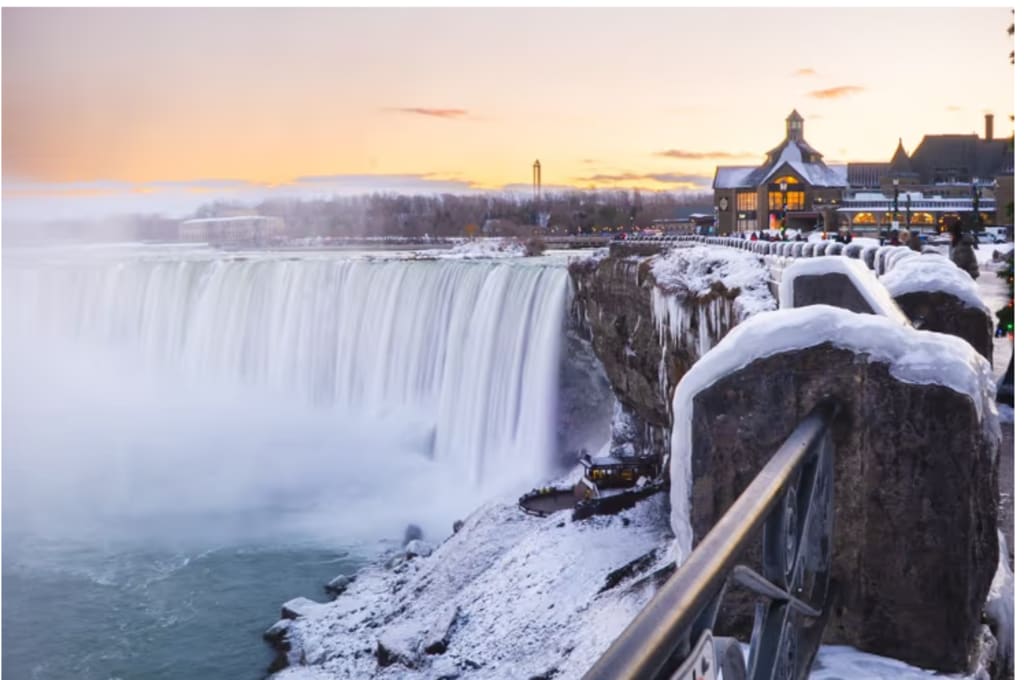
Niagara Falls has long been a symbol of raw natural power — a roaring cascade of water that thunders across the border of the United States and Canada. Millions of gallons plunge over the cliffs every minute, reminding visitors just how small humans are in comparison to nature. But on rare winter days, that power seems to pause. The mist freezes, the river slows, and Niagara Falls transforms into something almost unbelievable: a shimmering, icy wonderland.
This winter phenomenon captivates locals, tourists, photographers, and nature lovers alike. While the falls never fully stop flowing, the illusion of a frozen waterfall is enough to feel like stepping into a real-life snow globe.
A Rare Transformation of a Natural Giant
When temperatures plunge well below freezing for extended periods, the constant mist rising from Niagara Falls begins to crystallize. Ice forms along the cliffs, coats trees and railings, and builds massive frozen sculptures at the base of the falls. The Niagara River, though still flowing beneath, develops thick sheets of ice that drift and pile up, creating what looks like a frozen ocean.
The result is breathtaking. Horseshoe Falls, American Falls, and Bridal Veil Falls appear partially locked in time, with icy formations clinging to every surface. Sunlight reflects off the frozen mist, turning the entire area into a glittering landscape of whites, blues, and silvers.
For visitors witnessing this transformation, it feels surreal — as if nature briefly traded its roar for a whisper.
Has Niagara Falls Really Frozen Solid?
Despite appearances, Niagara Falls does not freeze completely. The sheer volume of water moving through the river makes that physically impossible. What people see during extreme cold snaps is surface ice and frozen mist, not a total shutdown of the falls.
Historically, however, there have been moments when ice bridges formed across the river. In the late 1800s and early 1900s, people even walked, skated, and set up small shops on the frozen river — a practice that was later banned for safety reasons. Today, ice booms are installed to manage ice flow and prevent dangerous blockages.
Still, the illusion of a frozen waterfall remains powerful enough to spark awe and wonder across social media every time it happens.
A Photographer’s Dream Come True
When Niagara Falls freezes over, it becomes one of the most photographed winter scenes in North America. Icicles hang like chandeliers from observation decks. Snow-covered trees frame the falls perfectly. The constant mist freezes mid-air, creating a soft, dreamlike fog.
Professional photographers and casual visitors alike rush to capture the moment. Sunrise and sunset are especially magical, as the golden and pink hues of the sky contrast against the icy blues of the falls. At night, the illuminated falls add another layer of beauty, casting colorful reflections across the frozen landscape.
It’s the kind of scenery that feels too perfect to be real — yet it is.
Tourism in the Coldest Season
Winter is often considered Niagara Falls’ quiet season, but freezing temperatures bring a surprising surge of visitors. Travelers bundle up in heavy coats, scarves, and gloves, braving icy winds for a chance to witness this rare spectacle.
Hotels offer winter deals, viewing platforms are less crowded, and the experience feels more intimate compared to the busy summer months. The nearby town transforms as well, with snow-covered streets, cozy cafés, and steaming cups of hot chocolate becoming part of the adventure.
For those willing to face the cold, winter reveals a completely different side of Niagara Falls — one that feels calm, peaceful, and almost otherworldly.
Nature’s Reminder of Its Power
While the frozen beauty is enchanting, it also serves as a reminder of nature’s strength and unpredictability. Extreme cold can disrupt travel, damage infrastructure, and create dangerous conditions near the falls. Authorities often close certain walkways and viewing areas to protect visitors from falling ice and slippery surfaces.
Yet even in its frozen state, Niagara Falls commands respect. Beneath the ice, the water continues its relentless journey, unstoppable and powerful. The frozen exterior is temporary — a delicate mask over immense force.
Why This Frozen Wonderland Matters
Moments like these remind us why natural wonders hold such emotional power. Seeing Niagara Falls frozen over is not just visually stunning; it’s humbling. It challenges our expectations and shows us how familiar places can transform completely under the right conditions.
In a world driven by constant movement and noise, the frozen falls feel like a pause — a quiet breath taken by nature itself. It’s a reminder that beauty can appear when we least expect it, shaped by cold, patience, and time.
A Once-in-a-Lifetime Experience
For many, witnessing Niagara Falls in its icy form becomes a lifelong memory. Photos may capture the scene, but standing there — feeling the cold air, hearing the muffled roar beneath the ice, and watching frozen mist sparkle in the sunlight — is something else entirely.
Niagara Falls frozen over is not just a winter event; it’s a reminder of nature’s artistry. Powerful, fragile, temporary, and breathtaking, this icy wonderland proves once again that even the most familiar landmarks can still surprise us.
About the Creator
Keep reading
More stories from Aqib Hussain and writers in The Swamp and other communities.
Security, Sovereignty, and the Question Facing a New Generation of Europeans
This is not just a theoretical debate for policymakers in Brussels or military strategists in NATO. It is a deeply personal question—one that touches on identity, values, security, and the future of Europe itself. As the EU faces external threats, internal divisions, and shifting public opinion, the idea of defending “EU borders” raises complex moral, political, and emotional issues.
By Aqib Hussain20 days ago in The Swamp
Italian Eurofighters Intercept Rare Russian Navy Be-200 Flying Boat Over the Baltic
European airspace witnessed an unusual and symbolically charged moment when Italian Air Force Eurofighter Typhoons intercepted a rare Russian Navy Be-200 amphibious aircraft over the Baltic Sea. While intercepts between NATO jets and Russian military aircraft are not uncommon, this particular incident stood out due to the type of aircraft involved and the broader geopolitical context surrounding Europe’s eastern flank.
By Aarif Lashariabout 4 hours ago in The Swamp
Ludacris and Nelly draw backlash over bookings at MAGA-coded music festival
Ludacris and Nelly headlining a mostly right-wing event is good for them. It’s also great for the genre of hip hop. The two rap veterans have showcased their talents on other stages. Why can’t they perform for mostly MAGA folks and grab that bag?
By Skyler Saunders4 days ago in Beat



Comments
There are no comments for this story
Be the first to respond and start the conversation.