
New Zealand Looks to Strengthen Regional Ties Amid Bulging U.S.–China Trade Tensions
As the world’s two biggest economies clash, New Zealand is quietly building its safety net through smarter regional alliances.”

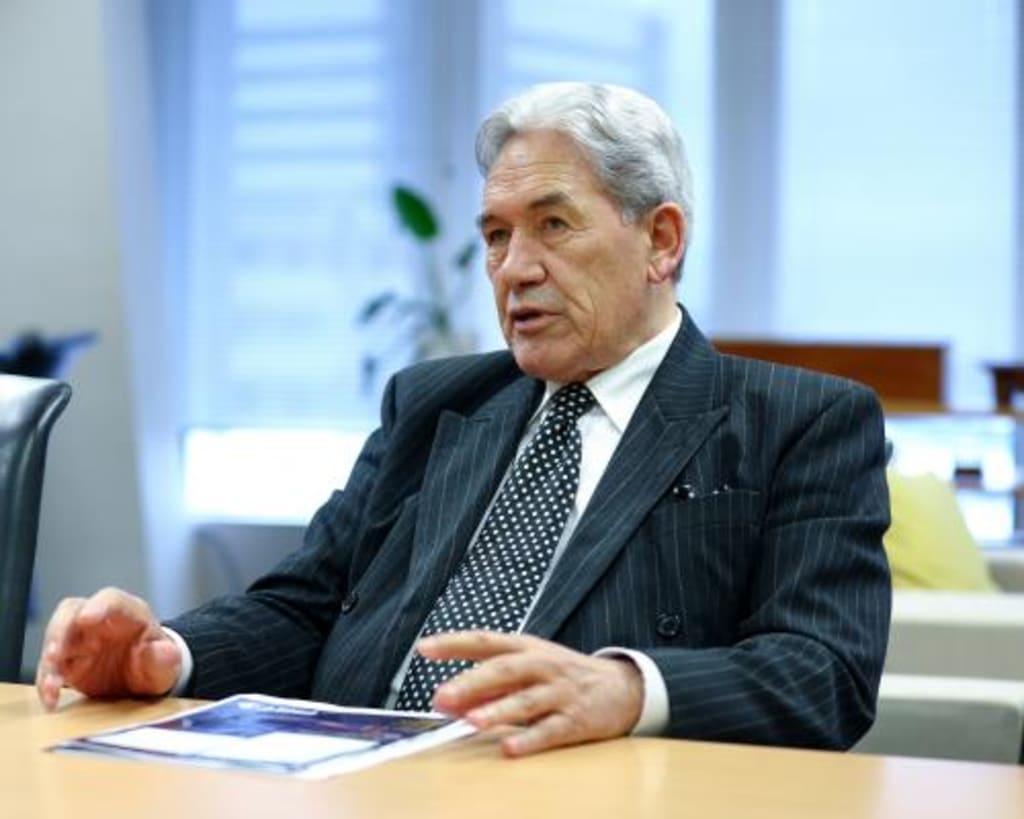
ELLINGTON – In a climate of increasing geopolitical strain between the United States and China, New Zealand’s Finance Minister Nicola Willis signalled that Wellington is doubling down on regional and bilateral trade relationships to hedge against the fallout of a potential widening trade war.
A New Zealand Strategy in a Shifting World
At the annual meetings of the International Monetary Fund and the World Bank, Willis emphasised the imperative for smaller open economies like New Zealand to fortify multiple trade channels. She cited the resilient performance of the Comprehensive and Progressive Agreement for Trans‑Pacific Partnership (CPTPP) and potential new deals such as one with the United Arab Emirates as core components of the strategy.
“The message we’re getting from our partners is they wish to continue to build on them and expand them, rather than go the other way.” — Willis
In so doing, New Zealand is attempting to navigate a complex environment where the world’s two largest economies — the U.S. and China — are locked in escalating tariff and non-tariff measures that threaten to disrupt global supply chains, markets and growth.
Key Dimensions of the Approach
1. Diversifying trade links
New Zealand has long had strong trade ties with China (including a Free Trade Agreement signed in 2008).
This history gives Wellington an established foothold. But recognising that a narrow dependence is risky, especially if trade frictions widen globally, Willis stressed the value of diversification: maintaining partnerships within the CPTPP, exploring links with the UAE, and responding to interest from the European Union.
2. Climate action as trade enabler
Willis framed climate commitments not only as moral imperatives but as strategic trade levers. She pointed out that consumers and trading partners increasingly scrutinise the emissions profile of exporting countries, thereby making emission reduction programmes a commercial as well as a reputational asset.
3. Geopolitics and defence under-currents
While her primary remit is finance, Willis did not shy away from recognising strategic and defence dimensions. New Zealand remains part of the Five Eyes intelligence alliance and is increasing defence spending amid a more fraught regional environment.
This suggests that trade policy is being calibrated within a broader geopolitical matrix.
Why Now? The U.S.–China Wildcard
Analysts warn that deeper U.S.–China decoupling could shave as much as 7 per cent off global GDP in the long term.
For economies like New Zealand, which rely heavily on open markets, resilient rules-based trade and diversified supply chains, that is no abstract risk. The global trade system—while under pressure—is still bearing up better than many feared, but the fragility is evident.
In this context, New Zealand’s push to deepen regional ties and strengthen trade architectures can be seen as a pre-emptive pivot: maintaining continuity when global trade dynamics might start to fragment.
Challenges and Trade-Offs
Nevertheless, the strategy has its tensions:
Balancing China and the U.S.: While New Zealand maintains healthy trade with China, it also values its traditional ties with the United States and its Pacific neighbours. A shift too far in one direction may raise diplomatic risks.
Implementation & Scale: The growth of new trade relationships (e.g., with the UAE) may take time to match the scale of established ones.
Climate commitments vs. export base: While climate credentials may open market doors, certain sectors in New Zealand (agriculture, dairy) will face pressure to adapt their production methods and demonstrate sustainability credentials.
Global uncertainty remains high: Even the best-laid diversification plans can be disrupted by tariff surprises, supply chain shocks or changes in major-power bloc alignment.
What to Watch
Whether New Zealand secures formal trade agreements or frameworks with new partners (such as the UAE or deeper ties to the EU) in the coming 12–24 months.
Domestic policy shifts in New Zealand aimed at meeting climate-linked trade requirements (for example, emissions mitigation in agriculture and food exports).
How New Zealand manages its diplomacy in the Pacific – ensuring that it remains a credible partner to Pacific island states amid China’s rising influence.
Signs of escalation in the U.S.–China trade dispute that might force smaller nations to pick sides or to accelerate contingency planning.
Final Words
In an era of heightened trade uncertainty, New Zealand appears to be embracing a dual-track approach: deepen and strengthen what already works (such as CPTPP) while pursuing new trade avenues and aligning closely with climate and regional security imperatives.
As Finance Minister Nicola Willis puts it, Wellington is “cautious and nervous” about backsliding but not seeing signs of it yet.
Whether this posture proves sufficiently resilient in the face of deeper global fault-lines remains to be seen.
About the Creator
sehzeen fatima
Sehzeeen Fatima is a writer with a Master’s in Science who shares inspiring stories about sports, life, and people. She writes in simple, clear language to connect with readers and spark meaningful thought.
Keep reading
More stories from sehzeen fatima and writers in The Swamp and other communities.
Viral Border Patrol Videos Spark a New Debate on Immigration and Human Rights in America
A few weeks ago, several videos showing Border Patrol officers stopping migrants near the U.S.–Mexico border went viral on social media. The clips spread quickly on X (formerly Twitter), gaining millions of views within hours.
By sehzeen fatima3 months ago in The Swamp
Iran’s Khamenei Lashes Out as Tehran Struggles to Quell Protests
Iran is once again gripped by widespread unrest as protests erupt across multiple cities, exposing deep fractures between the state and society. Supreme Leader Ayatollah Ali Khamenei has responded with fiery rhetoric, blaming foreign enemies, media manipulation, and “sedition” for the growing dissent. His sharp tone reflects not confidence, but pressure. As Tehran struggles to contain demonstrations fueled by economic hardship, social restrictions, and political frustration, Khamenei’s remarks underline a leadership facing one of its most serious legitimacy challenges in years. The latest wave of protests did not emerge overnight. Years of inflation, unemployment, and sanctions have eroded living standards for ordinary Iranians. The collapse of the national currency has made basic necessities increasingly unaffordable, while corruption scandals involving elites continue to circulate widely on social media. For many protesters, the issue is not a single policy failure but a system that appears unresponsive to their daily struggles. Khamenei’s reaction has followed a familiar pattern. In speeches broadcast on state television, he has accused Western governments, especially the United States and its allies, of orchestrating unrest to weaken Iran from within. He has also criticized Iranian dissidents abroad, calling them “tools of foreign intelligence agencies.” While such rhetoric resonates with hardline supporters, it has failed to calm the streets. Instead, many Iranians see these statements as an attempt to deflect responsibility rather than address real grievances. Security forces have been deployed heavily in major cities, including Tehran, Isfahan, Mashhad, and Shiraz. Reports from human rights groups suggest mass arrests, internet restrictions, and the use of force to disperse crowds. Despite this, protests have continued in waves, often reigniting after nighttime lulls. The persistence of demonstrations suggests that fear is no longer as effective a deterrent as it once was. A notable feature of the current unrest is the diversity of participants. Students, workers, women, shopkeepers, and even retirees have joined protests, each bringing their own demands. While some chant against economic mismanagement, others openly question clerical rule — a red line in Iran’s political system. This broad coalition makes it harder for authorities to isolate the movement or dismiss it as the work of a single group. Women have played a particularly visible role, challenging strict social codes and demanding greater personal freedoms. Their participation has transformed the protests from isolated economic demonstrations into a broader cultural and political movement. This shift has alarmed the leadership, which views challenges to social control as threats to the ideological foundations of the Islamic Republic. Khamenei’s lashing out also reflects growing unease within Iran’s power structure. While the Supreme Leader remains the ultimate authority, cracks are appearing beneath the surface. Some officials have called for dialogue and limited reforms, while hardliners insist on zero tolerance. This internal tension complicates the government’s response, as mixed signals weaken its ability to present a unified front. Internationally, the protests have drawn renewed scrutiny of Iran’s human rights record. Western governments have condemned the crackdown and imposed additional sanctions on Iranian officials and security bodies. Tehran, however, has doubled down on its narrative of foreign interference, expelling diplomats and restricting foreign media coverage. This confrontation further isolates Iran at a time when it is already struggling economically and diplomatically. The economic dimension of the crisis cannot be overstated. Sanctions linked to Iran’s nuclear program have cut off vital revenue streams, while mismanagement has discouraged foreign investment. Ordinary citizens feel trapped between international pressure and domestic policy failures. For many protesters, the leadership’s defiant posture offers little comfort when jobs are scarce and prices soar. Despite the unrest, the Iranian state still commands significant tools of control: loyal security forces, state media, and a network of ideological institutions. Khamenei’s authority, while challenged, remains intact for now. Yet history shows that prolonged unrest can gradually reshape political realities, even in tightly controlled systems. Each protest, each chant, chips away at the narrative of unanimous support. The critical question is whether Iran’s leadership will adapt or continue relying on repression and rhetoric. Khamenei’s harsh words may rally his base, but they do little to bridge the widening gap between rulers and ruled. Without meaningful economic relief and social reforms, protests are likely to resurface, regardless of how forcefully they are suppressed. For the Vocal Media audience, Iran’s unfolding crisis offers a stark reminder that stability built on fear is fragile. As Tehran struggles to quell protests, Khamenei’s lashing out reveals a leadership under strain, confronting not just dissent in the streets, but a deeper reckoning over Iran’s future direction.
By Fiaz Ahmed 2 days ago in The Swamp


Comments
There are no comments for this story
Be the first to respond and start the conversation.