
Military recruitment is impressive.
Basic training in your feed: Meet the Gen-Z and TikTok military.

Introduction: The new front line is online.
The U.S. military has always adapted to the cultural tides of American life — from the iconic Uncle Sam “I want you” posters of World War I to the cinematic Super Bowl commercials that tug at patriotic hearts. But now, a different battleground has emerged: social media. With Gen-Z spending an estimated 5-7 hours a day on platforms like TikTok, Instagram, and YouTube, the military’s recruitment efforts are going where the eye can see.
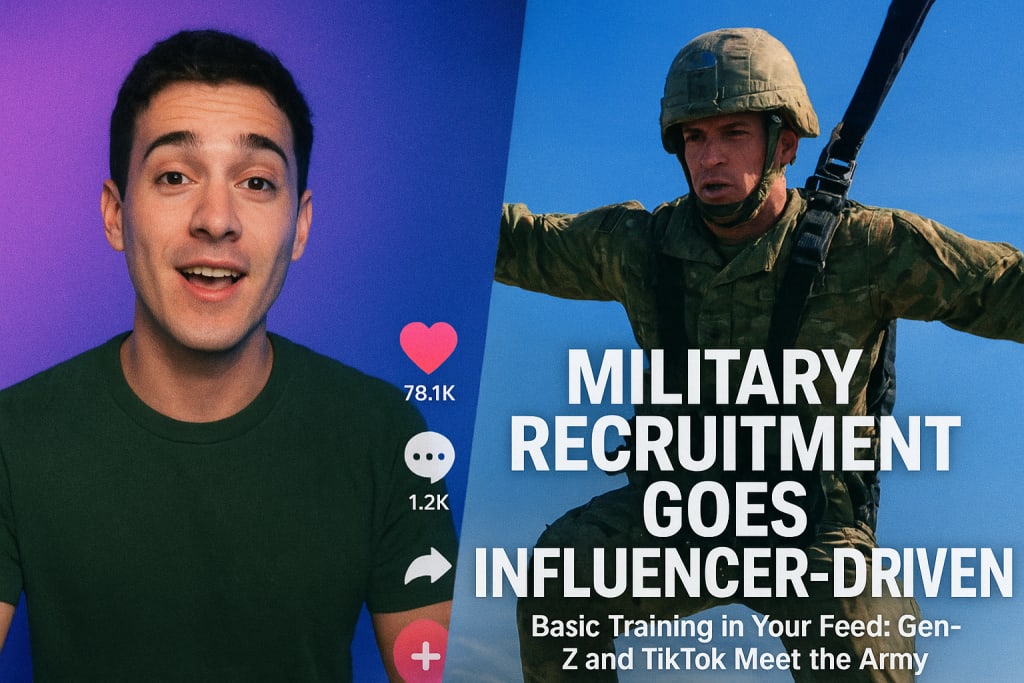
Instead of a starched uniform on a billboard, you’re more likely to see a skydiving influencer in camo gear, a Twitch streamer joking about field rations, or a TikTok creator filming “day in the life” blogs from boot camp. It’s not just advertising — it’s influence-driven recruiting.
Why does the military need Gen Z on board?
The U.S. military has seen a decline in enlistment numbers in recent years. Growing skepticism about institutions, post-pandemic career changes, and competing for civilian opportunities all play a role. Gen-Z, the generation born between 1997 and 2012, has a complicated relationship with authority but a strong desire for authenticity.
Traditional advertising doesn’t resonate with them. But an influencer they follow? It’s someone they trust. If that creator is flying out of helicopters or sharing unfiltered “behind the scenes” stories of Army life, enlistment suddenly feels less abstract and more accessible.
TikTok as a Recruiting Ground (Despite Sanctions)
Technically, TikTok is banned from U.S. government devices — but that hasn’t stopped recruiters from acknowledging its magnetic pull. Independent influencers are stepping into the space, often partnering indirectly through sponsorships, brand deals, or simple “mutually beneficial” collaborations.
- Example: A skydiving influencer partners with a local army unit to film a parachute jump, captioning it “Want to do this for real? Army recruiting.”
- Example: Gamers livestream from barracks, mixing Call of Duty banter with real-world training conversations.
The recruiting pipeline is seamlessly blending into the entertainment ecosystem.
Influencer campaigns: What they look like.
Unlike a 30-second ad, influencer content thrives on relatability. The military isn’t just paying for flashy highlight reels — they’re encouraging influencers to show the raw, dirty, and sometimes funny side of military life.
“Day in the Life” Vlogs: Young recruits film waking up at 5 a.m., grabbing chow, training in the field, and then FaceTiming their families before lights out.
Challenges and Memes: TikTok dances or challenges have been rebranded with a military twist, combining humor with discipline.
Crossover Collaborates: Fitness influencers team up with drill sergeants for boot camp-style workout content.
The style feels authentic, and authenticity is the currency Gen-Z trusts.
Supporters vs. Critics
Supporters argue that influencer marketing is smart marketing: meeting young people where they are, showcasing real opportunities, and dispelling myths. If influencers can inspire someone to try a skincare product or a crypto app, why not a career path with a steady paycheck, benefits, and a sense of purpose?
But critics raise ethical concerns. Influencers profit by recruiting young people into an organization that carries very real risks. By cataloging them in modern, bite-sized videos, critics say, the gravity of military service — the combat, the trauma, the sacrifice — can be erased. Some see it as weaponizing virality to appeal to an influencer audience.
The Big Picture: Branding the Army as a Lifestyle
It’s not just recruiting — it’s branding. The Army isn’t just selling a job. It’s selling a lifestyle. Social media is the perfect vehicle for this, turning soldiers into micro-celebrities and everyday life into compelling stories.
- Just as Nike sells more than shoes, the Army is selling adventure, identity, and community.
- Just as Red Bull sponsors extreme athletes, the Army sponsors influencers who push the boundaries of endurance and courage.
The difference, of course, is that this “brand” comes with uniforms, deployments, and potentially life-and-death decisions.
Conclusion: The Future of Enlistment in the Feed
Will influencer-driven recruiting solve the Army’s enlistment woes? It may not solve everything, but it is undeniably changing the conversation. Gen-Z may scroll through over a hundred ads a day—but when their favorite creator straps on a parachute or does push-ups with a platoon, they stop, watch, and maybe even imagine themselves in that uniform.
The question isn’t whether this strategy works—the question is whether America is ready for a future where the most important recruiting poster is a TikTok thumbnail.
About the Creator
Echoes of Life
I’m a storyteller and lifelong learner who writes about history, human experiences, animals, and motivational lessons that spark change. Through true stories, thoughtful advice, and reflections on life.
Keep reading
More stories from Echoes of Life and writers in The Swamp and other communities.
California's Redistricting Battle: A Response to Republican Gerrymandering
Introduction The lines that shape America’s political map are rarely neutral. Across the country, redistricting battles have become fierce, with accusations of gerrymandering dominating debates about fairness and representation. In California, Governor Gavin Newsom has endorsed a new Democratic-led redistricting package designed to push back against what Democrats describe as Republican attempts to secure long-term control through partisan maps in other states.
By Echoes of Life7 months ago in The Swamp
Parallel Protests
I haven't written for quite some time, but I have A LOT of thoughts about yesterday's protest rally against our government's involvement and complicity in America's war on Iran, on the harbourside of my home city Bristol, and I need to put them somewhere. My gorgeous girlfriend is always a loving and listening ear and sharing it all with her will always be a healthy and happy way of processing the mental and emotional weight, but getting it straight in my brain to share means writing it all down in straight lines, so, here we are and thanks for being here.
By Steph Cole7 days ago in The Swamp
Three killed, 112 injured in UAE since start of missile and drone attacks
Intense aerial assault tests Gulf nation’s defences amid regional escalation Abu Dhabi — The United Arab Emirates has reported three civilian deaths and 112 injuries since a sustained wave of missile and drone attacks began, according to official statements from the country’s Ministry of Defence and emergency authorities. The attacks — attributed by Emirati authorities to retaliation linked to the broader US–Israel conflict with Iran — have seen hundreds of aerial threats launched toward UAE territory over recent days. Despite the overwhelming majority being intercepted by state air defences, debris and falling projectiles have caused casualties and disrupted life in major cities including Abu Dhabi and Dubai. Nature of the Attacks In the most recent reported assault on March 7, UAE air defence systems tracked and intercepted 15 ballistic missiles and 119 unmanned aerial vehicles (UAVs) as part of a fresh wave of attacks. One missile reportedly fell into the sea outside national territory. Since the onset of the hostilities, the Ministry of Defence said it has detected 221 ballistic missiles and 1,305 drones, with the vast majority successfully destroyed or neutralised by air defence systems. Only a small number of projectiles — including drones — have struck within UAE territory. In addition, eight cruise missiles were detected and destroyed during the same period, part of what officials have described as an “unprecedented” volume of aerial threats aimed at the Gulf state. Casualties and Impact Official figures confirm three fatalities, involving nationals of Pakistan, Nepal, and Bangladesh. The 112 injuries reported thus far are described as minor and encompass residents of diverse nationalities including Emirati, Egyptian, Ethiopian, Filipino, Pakistani, Iranian, Indian, Bangladeshi, Sri Lankan, Azerbaijani, Yemeni, Ugandan, Eritrean, Lebanese, Afghan, Bahraini, Comorian, and Turkish communities. These figures have been updated as attacks continued over subsequent days. Some earlier reports indicated a lower number of injuries as the situation evolved. Beyond human harm, fragments from intercepted projectiles have caused scattered property damage. In previous episodes of the escalation, debris has ignited fires and damaged infrastructure in urban areas. Government Response and Civil Defence The UAE’s Ministry of Defence has repeatedly reiterated its readiness to respond decisively to any threats that endanger the country’s security and sovereignty. Authorities continue to underscore the effectiveness of air defence systems, noting interception success rates above 90 percent for both missiles and drones in many recent engagements. Meanwhile, the National Emergency Crisis and Disaster Management Authority (Ncema) has issued safety alerts for residents in Emirates such as Abu Dhabi and Dubai during periods of heightened threat. These advisories have urged the public to follow official guidance and remain indoors when alerts are active. To reduce panic and misinformation, UAE authorities have also cautioned against filming or sharing unverified footage of the attacks on social media, warning that it could lead to legal repercussions if it misrepresents the security situation. Leadership and Public Solidarity Amid ongoing operations, President His Highness Sheikh Mohamed bin Zayed Al Nahyan visited survivors of the strikes receiving treatment in hospitals. In remarks reported by state media, the president praised the solidarity and cooperation shown by the community, emphasizing that such unity has been crucial in managing public safety during the crisis. Several of the injured have been treated and discharged, local reports indicate, reflecting both the quality of medical response and the relatively minor nature of most injuries sustained. The UAE’s confrontation with missile and drone attacks occurs within the wider milieu of escalating tensions in the Middle East. A broader conflict involving US and Israeli strikes on Iran has drawn retaliatory actions across multiple fronts, affecting several Gulf states. International diplomatic efforts continue alongside these military developments. As of March 7, the UAE continues to operate its civil and economic functions while maintaining heightened military readiness and coordinating with allied partners to monitor and deter further threats.
By Fiaz Ahmed 3 days ago in The Swamp




Comments
There are no comments for this story
Be the first to respond and start the conversation.