
Middle East Air Conditioner Market Size and Forecast 2025–2033
Extreme Heat, Urban Expansion, and Sustainable Cooling Technologies Drive HVAC Growth Across the Region


The Middle East Air Conditioner Market is entering a transformative decade, shaped by rising temperatures, massive construction activity, and a growing emphasis on sustainable cooling. According to Renub Research, the market is projected to expand at a CAGR of 5.20% from 2025 to 2033, increasing from US$ 5,780 Million in 2024 to US$ 9,122 Million by 2033. This growth reflects not only the extreme heat characteristic of the region but also changes in lifestyle, rapid urbanization, and government-led sustainability programs.
From smart cooling systems to stringent energy-efficiency standards, the region’s air conditioning landscape is undergoing a rapid evolution. As populations grow and cities rise vertically, demand for efficient, reliable, and environmentally responsible cooling solutions is stronger than ever.
Middle East Air Conditioner Industry Overview
The Middle East’s harsh climate—marked by scorching summers, low humidity, and months of temperatures surpassing 40°C (104°F)—creates a natural dependency on air conditioning. AC units are a necessity not just for comfort but also for maintaining productivity, health, and economic activity. This need spans residential, commercial, and industrial sectors, driving a robust and diverse air conditioning market.
Large-scale construction projects continue to reshape the region. From skyscrapers and luxury hotels to shopping malls and smart city districts, modern infrastructure requires advanced cooling solutions. These developments heavily rely on systems like VRF, split units, precision air conditioning, and central cooling networks.
In recent years, the industry has observed an accelerated shift toward eco-friendly cooling technologies. Government regulations, climate goals, and consumer preferences are aligning to reduce energy consumption. The adoption of inverter compressors, intelligent cooling systems, and low-GWP refrigerants is becoming a defining trend across the region.
Nations such as the United Arab Emirates, Saudi Arabia, and Qatar are setting benchmarks for HVAC innovation. Their rising living standards, rapid urban expansion, and sustainability commitments are enabling strong market growth and opportunities for global as well as regional HVAC players.
Energy Efficiency: A Top Priority in the Region
One of the primary concerns shaping the market is the region’s high energy consumption. Rapid population growth, expanding commercial sectors, and rising temperatures all contribute to increased power usage.
Among the strongest examples is the United Arab Emirates, where both government and private sectors have embraced sustainable building practices. Dubai alone reported 56.52 terawatt hours of electricity consumption in 2023, with the commercial sector accounting for nearly half. This surge in power demand is driving a parallel demand for energy-efficient HVAC solutions.
The UAE has launched one of the most ambitious retrofitting programs in the Middle East, aiming to convert 30,000 buildings and reduce energy use by 30% by 2030. These initiatives are expected to significantly accelerate the adoption of high-efficiency air conditioners, smart cooling systems, and inverter-based technologies.
Driving Forces of the Middle East Air Conditioner Market
1. Infrastructure Development and Urbanization
Urban areas in the Middle East—especially Dubai, Abu Dhabi, Riyadh, Jeddah, and Doha—continue to experience historically high rates of construction and modernization. Residential complexes, corporate towers, commercial hubs, and industrial zones all require dependable air conditioning systems.
Cooling is essential not just for comfort but for maintaining safety and operational efficiency in:
Corporate and commercial buildings
Energy-intensive industrial facilities
High-density residential developments
Hospitality and tourism infrastructure
As cities become denser and vertical construction remains the norm, the demand for high-performance, low-energy AC units continues to surge.
2. Sustainability and Energy Efficiency
Sustainability is no longer optional—it is now a regulated requirement across major Middle Eastern markets. Governments have enacted and enforced energy-efficiency standards for air conditioners, influencing consumer choices and guiding product innovation.
Key policy features include:
Mandatory Minimum Energy Performance Standards (MEPS)
Eco-labeling requirements
Restrictions on high-GWP refrigerants
Building codes mandating efficient HVAC installations
Incentives for adopting green technologies
Regional programs such as Saudi Arabia’s Vision 2030 and Dubai’s Green Building Code serve as major catalysts in encouraging manufacturers and consumers to shift toward greener cooling solutions.
3. Expansion of Government Initiatives
Government bodies are actively collaborating with industry stakeholders, utility companies, and sustainability councils to reduce overdependence on energy-intensive cooling.
Initiatives such as:
Smart city projects
Carbon reduction commitments
Incentive schemes for energy-efficient appliances
Public awareness campaigns
Investment in local manufacturing capabilities
are helping shape a future where cooling is more sustainable and less energy-intensive. These programs also make the region an attractive market for global HVAC manufacturers seeking long-term opportunities.
Middle East Air Conditioner Market Overview by Country
United Arab Emirates
The UAE remains one of the largest and most technologically advanced air conditioner markets in the Middle East. Its intense climate and rapidly expanding urban centers create continuous demand for high-quality cooling systems.
Growth factors in the UAE include:
Temperatures consistently exceeding 40°C
A flourishing construction sector in Dubai and Abu Dhabi
Tourism-driven commercial development
High consumer preference for smart, inverter-based AC units
Strong compliance with sustainability regulations
Inverter-based split units and VRF systems are gaining rapid traction due to their efficiency, comfort control, and reduced environmental impact.
Saudi Arabia
Saudi Arabia is the largest market by population and one of the strongest in overall cooling demand. With summer temperatures approaching 50°C (122°F), air conditioning is indispensable in homes, workplaces, and industries.
Major contributors to market growth include:
Fast-paced urban expansion across Riyadh and Jeddah
Mega-projects such as NEOM, The Line, and Qiddiya
Increasing adoption of low-GWP, environmentally friendly cooling
Vision 2030 sustainability goals
Expanding residential construction supporting population growth
Saudi Arabia’s investment in green building initiatives is expected to significantly increase demand for next-generation air conditioning systems.
Qatar
Qatar’s market has evolved rapidly due to major infrastructure projects, especially those completed or initiated during the years surrounding the FIFA World Cup 2022.
Key drivers include:
High temperatures necessitating year-round cooling
Heavy investments in Doha’s commercial and residential districts
New hotel, stadium, and public infrastructure projects
Growing consumer preference for smart AC technologies
Sustainable construction initiatives aligned with national vision programs
The uptake of inverter technology, VRF systems, and intelligent cooling is rising quickly as Qatar strengthens its commitment to environmentally conscious development.
Market Segmentation
By Type
Window Air Conditioners
Cost-effective and prevalent in budget-conscious households.
Split Air Conditioners
The dominant segment, preferred for energy efficiency, quiet operation, and modern design.
Precision Air Conditioning
Critical for data centers, telecom hubs, laboratories, and IT environments requiring exact temperature control.
Variable Refrigerant Flow (VRF)
A rapidly expanding segment suitable for large buildings, offering energy savings, zoned cooling, and superior control.
By End Users
Residential – Driven by population growth and rising living standards.
Commercial – Hotels, malls, offices, schools, and hospitals.
Industrial – Manufacturing plants, warehouses, logistics centers, and other temperature-sensitive applications.
By Countries Covered
Saudi Arabia
United Arab Emirates
Oman
Qatar
Kuwait
Others (including Bahrain, Jordan, etc.)
Leading Companies in the Middle East Air Conditioner Market
Top players in the region continue to innovate with advanced cooling solutions, energy-efficient models, and climate-resistant designs.
1. Daikin Industries, LTD.
A global HVAC leader known for VRF systems, inverter technology, and environmentally friendly refrigerant advancements.
2. Fujitsu General (Middle East) FZE
Offers a strong range of split and VRF ACs tailored for Middle Eastern climates.
3. Blue Star
Well-established in commercial cooling, including ducted systems, packaged ACs, and central air solutions.
4. Samsung
A major innovator in smart air conditioning, emphasizing IoT integration and energy-efficient inverter systems.
5. Lloyd
Popular for affordable residential cooling options with good energy performance.
6. Hisense
A fast-growing brand offering cost-effective and durable residential and light-commercial ACs.
7. Super General
A longstanding regional favorite known for reliability and affordability across residential and commercial categories.
Final Thoughts
The Middle East Air Conditioner Market is poised for strong and sustained growth through 2033. The combination of extreme climatic conditions, rapid urban development, and a rising standard of living ensures that cooling will remain a basic necessity.
At the same time, government mandates and global sustainability goals are transforming how cooling systems are manufactured, purchased, and used. The future of the region’s HVAC market will be shaped by:
Advanced inverter and VRF technologies
Eco-friendly refrigerants
Smart and connected cooling systems
Massive construction and urban expansion
Strong regulatory support for energy efficiency
With the market set to reach US$ 9.12 billion by 2033, manufacturers, investors, and policymakers will play vital roles in shaping a sustainable and technologically advanced cooling future for the Middle East.
About the Creator
Diya Dey
Market Analyst
China Luxury Car Market Size and Forecast 2025–2033
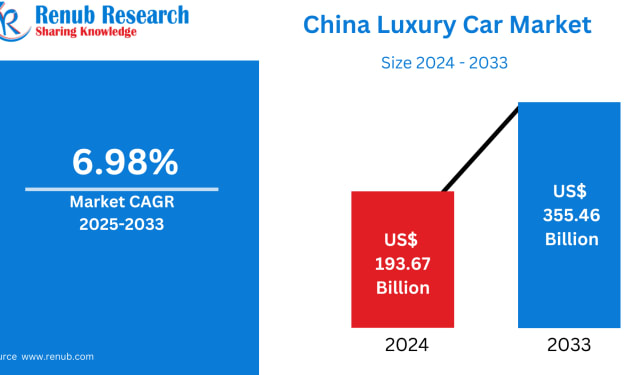
Introduction The luxury car market in China is bound to grow at a highly incremental rate from US$ 193.67 billion in 2024 to US$ 355.46 billion by 2033, witnessing a CAGR of 6.98% from 2025 to 2033. This sustained expansion is driven by rising disposable income, an expanding affluent middle class, and increasing consumer interest in high-end vehicles that combine prestige, performance, and technology. China, already the world’s largest automobile market by volume, is rapidly becoming the epicenter of luxury automotive innovation.
By Renub Research6 days ago in The Swamp



Comments
There are no comments for this story
Be the first to respond and start the conversation.