
Mandelson Appointment ‘Ignored Warnings’: Brian Wilson Raises Serious Questions About Political Accountability
Why the Controversy Surrounding Peter Mandelson’s Appointment Reflects Deeper Problems in Modern Governance
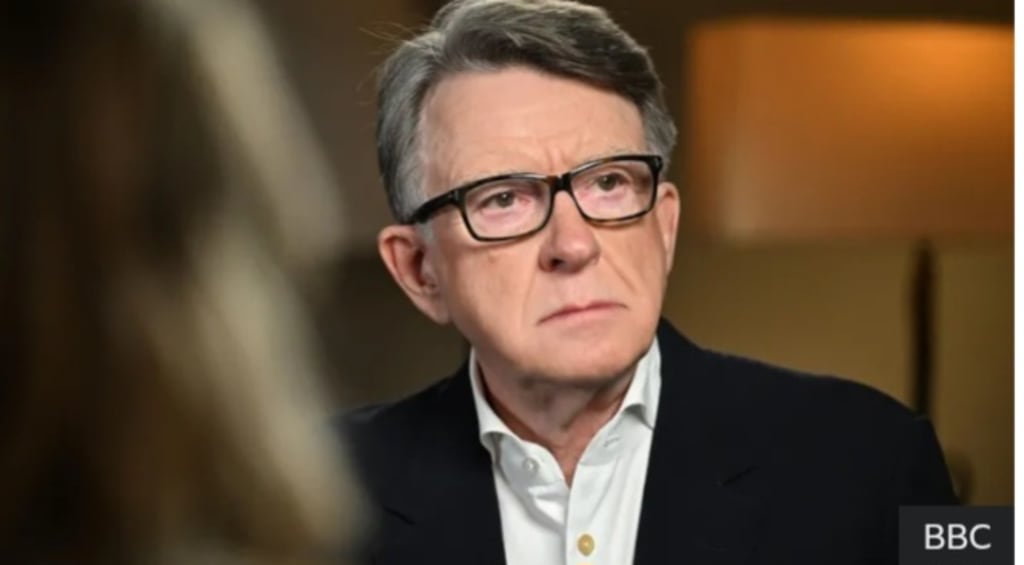
The appointment of Peter Mandelson has once again ignited debate about political accountability, transparency, and the persistent culture of ignoring warnings within elite decision-making circles. Brian Wilson’s sharp criticism — that clear warnings were overlooked — has resonated with a public already weary of political appointments that appear insulated from scrutiny. This controversy is not merely about one individual; it reflects broader structural weaknesses in how power is exercised and justified in modern politics.
Peter Mandelson is no stranger to controversy. A highly influential figure in British politics, he has long been associated with strategic brilliance, political survival, and, at times, ethical ambiguity. Supporters argue that his experience and political acumen make him uniquely qualified for high-level roles. Critics, however, see his appointment as emblematic of a political system that prioritizes loyalty and insider status over caution and public trust.
Brian Wilson’s assertion that warnings were ignored cuts to the heart of this debate. According to Wilson, concerns were raised well before Mandelson’s appointment — concerns that should have prompted deeper evaluation and restraint. Instead, those warnings were brushed aside, reinforcing the perception that political elites often operate in echo chambers where inconvenient advice is sidelined.
This pattern is not new. Governments across democratic systems frequently emphasize “experience” when justifying controversial appointments. While experience is undeniably valuable, it can also become a shield against accountability. In Mandelson’s case, critics argue that his past controversies should have served as red flags rather than footnotes. Ignoring such warnings risks sending a dangerous message: that past conduct matters less than political utility.
Wilson’s criticism also highlights the imbalance between political power and public oversight. Appointments of this magnitude are often decided behind closed doors, with limited transparency. The public is expected to trust that due diligence has been carried out, even when evidence suggests otherwise. When warnings are ignored, that trust erodes further, deepening cynicism toward democratic institutions.
Defenders of Mandelson argue that political leadership requires pragmatism. They claim that governing is not about moral perfection but about results, strategy, and effectiveness. From this perspective, Mandelson’s appointment is a calculated move — one designed to leverage his skills in navigating complex political landscapes. Yet this argument assumes that competence and controversy are separable, an assumption many voters no longer accept.
Brian Wilson’s remarks reflect a broader frustration felt by many citizens: that political consequences rarely match political mistakes. When warnings are raised by insiders or experts and subsequently ignored, accountability becomes symbolic rather than real. Apologies are offered, inquiries are promised, but structural behavior remains unchanged.
The Mandelson controversy also raises questions about institutional memory. If previous scandals and concerns fail to influence present decisions, what purpose does historical accountability serve? A system that repeatedly overlooks its own warning signs risks normalizing failure. Over time, this normalization weakens democratic resilience and fuels public disengagement.
Moreover, the issue extends beyond Mandelson as an individual. It speaks to a culture in which political rehabilitation is often swift and unquestioned for powerful figures, while ordinary citizens face lasting consequences for far smaller mistakes. This perceived double standard undermines the principle of equality before the law and contributes to widespread disillusionment.
Wilson’s intervention is significant because it challenges the silence that often surrounds elite appointments. By openly stating that warnings were ignored, he forces a conversation that political leaders may prefer to avoid. Such interventions are essential in democratic systems, serving as reminders that authority must be questioned, not merely accepted.
At its core, this controversy is about trust. Trust in leadership, trust in institutions, and trust in the processes that shape national decisions. When appointments appear to disregard valid concerns, trust becomes fragile. Restoring it requires more than defending individual decisions; it demands systemic change in how warnings are evaluated and acted upon.
In conclusion, the Mandelson appointment controversy, as highlighted by Brian Wilson, is a cautionary tale. It illustrates how ignoring warnings can have consequences far beyond a single political decision. Whether one views Mandelson as a capable strategist or a controversial figure, the real issue lies in the process that enabled his appointment despite expressed concerns. If democratic governance is to remain credible, warnings must be taken seriously — not dismissed as inconvenient noise in the pursuit of political advantage.
About the Creator
Keep reading
More stories from Ayesha Lashari and writers in The Swamp and other communities.
Don’t Drop PM Over Mandelson, Minister Urges Labour MPs
As tensions simmer within the Labour Party, a senior minister has urged MPs not to abandon the Prime Minister over the controversial role of Peter Mandelson. The warning comes amid rising internal criticism, renewed factionalism, and growing concerns that infighting could weaken Labour at a crucial political moment. While Mandelson’s return to influence has reignited old debates, party leadership is calling for unity and strategic discipline over internal revolt.
By Ayesha Lashariabout 13 hours ago in The Swamp
Why Black History Matters in America?
The United States of America is celebrating their 250th anniversary in 2026. I'm proud to be an American and as someone who was born here, I wouldn't imagine myself living anywhere else. This is a country where opportunities are possible. Where anyone can be successful in anything they desire to do. Equality, community, and togetherness are the backbones of what America is and should be about. However, we have an administration who wants to erase and disregard those who have made positive, meaningful impacts in our country, specifically Black figures, such as Martin Luther King, Jr., Rosa Parks, and Maya Angelou. President Trump and his administration have been constantly complaining and fighting against what they call the "Woke agenda". They use this excuse as a distraction from other issues they refuse to address, such as the high cost of living, climate change, and inflation. That equality is dividing America, when in reality, it's bringing us together. Being woke is not tied to a specific political party. No matter where you stand on the political spectrum, you can still care about other people and their plights. Compassion and empathy for others isn't tied to a political party, either. We were taught as children to treat others the way we want to be treated and not judge others because they're different from us. Caring about others isn't a personal attack on your beliefs. It doesn't make you any less of a person. People who are easily offended over African American figures, past or present, or anything related to it, are grasping at straws. Current and future generations need to know who people like Harriet Tubman and Shirley Chisholm were, especially in the classroom. Black History is part of American History. It should be recognized, not hidden or forgotten. Besides, you can't shield children from everything, just because your feelings are easily hurt.
By Mark Wesley Pritchard 7 days ago in The Swamp
India Is Reportedly ‘Ready’ to Buy Up to $80 Billion in Boeing Aircraft Following Trade Deal with the U.S.
India is reportedly preparing to place one of the largest commercial aircraft orders in aviation history, with plans to purchase up to $80 billion worth of Boeing aircraft following a new trade agreement with the United States. The potential deal signals a deepening of economic and strategic ties between the two countries and reflects India’s growing ambitions to become a global aviation powerhouse. According to industry sources, the proposed purchase would include a mix of narrow-body and wide-body jets to serve India’s rapidly expanding domestic and international travel market. While negotiations remain confidential, the scale of the order underscores both India’s surging demand for air travel and Boeing’s need to strengthen its global market position after years of production and safety challenges. A Strategic Trade Signal The reported aircraft order is closely linked to a broader U.S.–India trade framework aimed at reducing trade imbalances and expanding industrial cooperation. Aircraft purchases have long been used as diplomatic and economic tools in trade negotiations, and this potential deal is being viewed as a symbol of trust between Washington and New Delhi. For the United States, the agreement could translate into thousands of jobs across Boeing’s manufacturing supply chain, particularly in Washington state and South Carolina. For India, it strengthens access to modern aviation technology while helping secure favorable trade terms with one of its most important strategic partners. Analysts say the deal also sends a geopolitical message at a time when India is seeking to diversify its partnerships beyond traditional suppliers and reduce dependence on any single foreign power. Meeting Soaring Demand India is currently one of the world’s fastest-growing aviation markets. Rising incomes, urbanization, and government investment in airport infrastructure have driven a sharp increase in air travel. Domestic passenger traffic has already surpassed pre-pandemic levels, and international routes are expanding rapidly. Major Indian airlines have been aggressively modernizing their fleets. In recent years, record-breaking aircraft orders have been announced as carriers compete for market share in an increasingly crowded industry. A large Boeing order would further accelerate this transformation, allowing airlines to introduce fuel-efficient aircraft with longer ranges and lower operating costs. Industry experts note that the demand is not limited to passenger flights. Cargo transport, defense-related aviation, and leasing companies are also expected to benefit from the expansion. What the Order May Include Although official details have not been released, aviation insiders suggest the package could include Boeing’s 737 MAX series for short-haul routes and 787 Dreamliner jets for long-haul international services. The 777X, Boeing’s newest wide-body aircraft, could also be part of the deal for premium international operations. Such a mix would help Indian airlines strengthen their presence in key markets such as Europe, North America, Southeast Asia, and the Middle East. The focus on newer aircraft types aligns with India’s environmental commitments to reduce carbon emissions through more fuel-efficient fleets. Boost for Boeing For Boeing, the potential $80 billion deal represents a critical boost at a time when the company is working to restore confidence after production slowdowns and regulatory scrutiny. A massive order from India would help stabilize its order book and reinforce its competitive standing against European rival Airbus. The company has invested heavily in strengthening relationships with Indian airlines and government agencies. Boeing also operates engineering and support centers across India, employing thousands of workers and contributing to the country’s aerospace ecosystem. Executives have repeatedly described India as one of Boeing’s most important long-term growth markets, making the reported agreement a strategic milestone. Economic and Industrial Impact Beyond aviation, the deal could have broader industrial consequences. Large aircraft purchases typically include agreements on maintenance, training, and manufacturing cooperation. India may seek greater technology transfer and domestic assembly opportunities under its “Make in India” initiative. Such provisions could strengthen India’s aerospace industry and create skilled jobs in engineering, maintenance, and logistics. Training programs for pilots and technicians would also expand, helping address the country’s growing workforce needs in aviation. In the United States, the agreement would support production lines and suppliers at a time when global competition remains intense. Challenges and Risks Despite optimism, challenges remain. Aircraft delivery timelines are under pressure due to global supply chain constraints and manufacturing bottlenecks. Boeing has faced ongoing regulatory oversight that could affect production schedules. Financing such a massive purchase will also require careful structuring, particularly as airlines manage fuel price volatility and economic uncertainty. Any slowdown in global travel demand could complicate long-term projections. Political shifts in either country could also influence the final terms of the agreement, making implementation as important as announcement. A Turning Point in Bilateral Relations If finalized, the Boeing deal would mark one of the most significant commercial agreements between India and the United States in recent years. It reflects a broader alignment of economic and strategic interests, particularly in technology, defense, and infrastructure. For India, the move strengthens its position as a major aviation hub connecting East and West. For the United States, it reinforces a partnership with one of the world’s largest emerging markets. Conclusion India’s reported readiness to buy up to $80 billion in Boeing aircraft represents more than a commercial transaction. It is a statement of confidence in long-term growth, international partnership, and modernization. While negotiations continue behind closed doors, the potential deal highlights the shifting balance of global aviation and the deepening ties between two of the world’s most influential democracies. If completed, it could reshape airline fleets, industrial cooperation, and trade relations for decades to come.
By Fiaz Ahmed 3 days ago in The Swamp
Writing About Writing: The Rainbow Trap
The good thing about living in modern times is that LGBTQ representation in media is increasing. Not just in niche and Independant media, either, but also in mainstream media. Books, movies, TV shows, comics... they're finally catching on that LGBTQ+ people form a significant part of their audience, and deserve to see themselves on screen and in fiction, not just as victims in documentaries and true crime shows.
By Natasja Rose5 days ago in Writers


Comments
There are no comments for this story
Be the first to respond and start the conversation.