
Male 'Heroes' Are Just Janitors Cleaning Up Other Men's Messes.
Why Patriarchy Calls Women "Too Emotional"

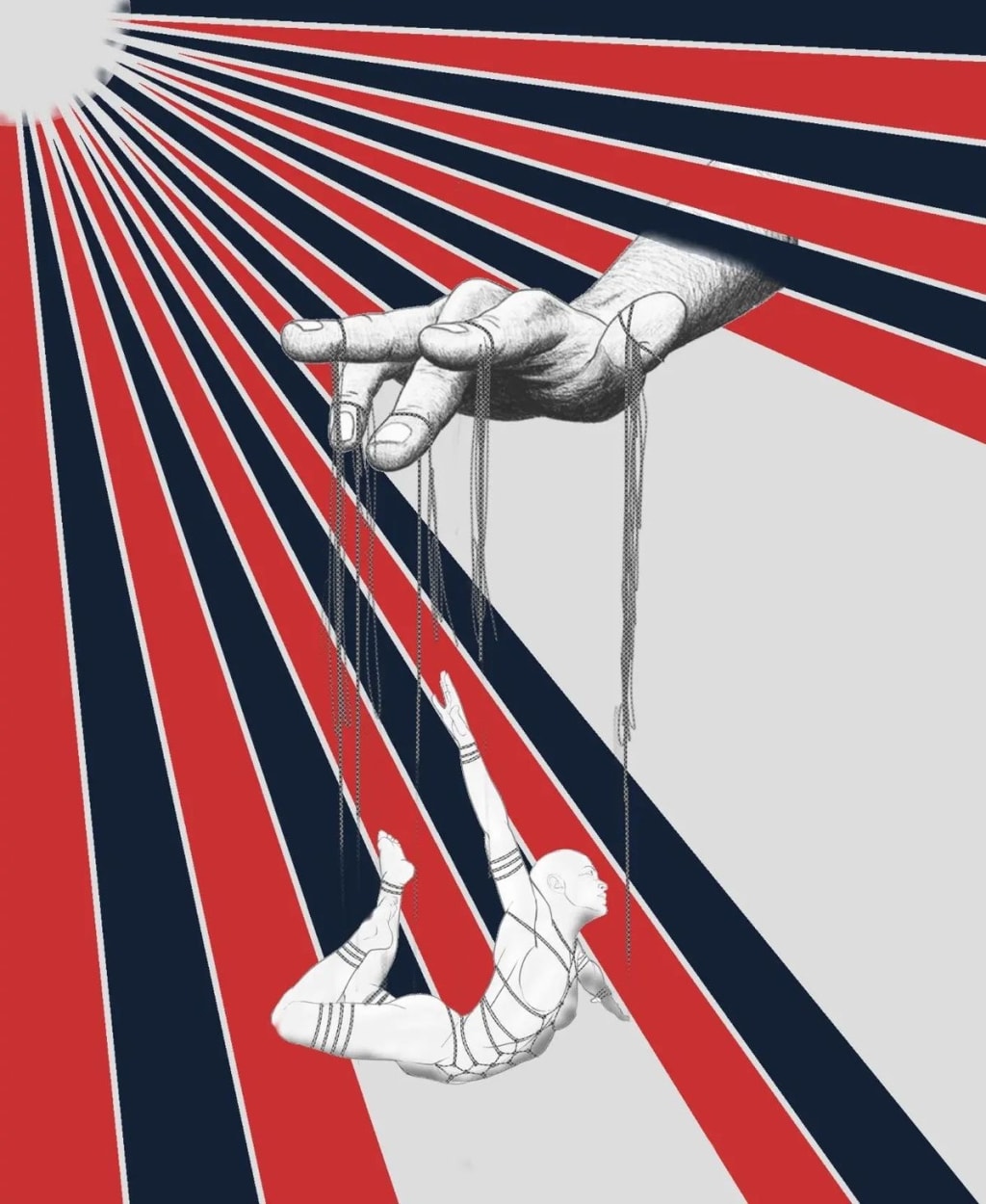
Name one war started because a woman was "too emotional." Go ahead, I'll wait. You can't name a single one. But you could easily list dozens started by men's wounded pride, fragile egos, and emotional outbursts disguised as political strategy - from World War I (sparked by wounded male honor after an assassination) to the genocide in Rwanda (fueled by male leaders' tribal insecurities). The pattern is undeniable: when men's emotions run hot, people die. When women get emotional, we're told to calm down.
This glaring double standard forms patriarchy's foundation stone. For centuries, the ruling class of men has labeled women as "too emotional" to lead, speak with authority, or hold power. But history's ledger reveals the devastating truth: the most destructive, irrational decisions humanity has ever witnessed weren't made by women - they were exclusively the domain of the men who call us "hysterical."
The Undeniable Historical Record
Let's examine the receipts. The evidence speaks for itself with brutal clarity:
Every major war in recorded history? Started by men making emotional decisions. The Crusades? Men's religious fervor. The World Wars? Men's imperial ambitions and treaty violations. Vietnam? Men's Cold War paranoia. The pattern holds through hundreds of conflicts across every continent.
Slavery, colonization, and genocides? Orchestrated by men to feed their economic and territorial greed. The transatlantic slave trade's roots lie in male plantation owners' emotional need for dominance. Colonialism sprang from kings' fragile masculinity demanding more land. The Holocaust grew from one man's emotional hatred and millions of men willing to follow orders.
Economic crashes and corrupt systems? Overwhelmingly caused by men's reckless behavior. The 2008 financial crisis? Male bankers' emotional gambling with global markets. Enron? Male executives' emotional need to appear successful. The dot-com bubble? Male tech bros' irrational exuberance.
Yet with this millennia-long track record of emotional decision-making with catastrophic consequences, women are still dismissed as the irrational ones. The cognitive dissonance would be darkly amusing if it weren't so lethal in its consequences.
The Janitor Theory of Male Heroism
Society worships male "heroes" like Mandela, Lincoln, and Churchill as saviors who descended to fix humanity's problems. But examine their legacies honestly through the lens of who created the problems they "solved":
- Nelson Mandela ended apartheid? Absolutely a monumental achievement - but apartheid only existed because generations of white men created and maintained it to protect their privilege. Dismantling oppression isn't heroism; it's the belated paying of a moral debt centuries overdue.
- Abraham Lincoln "freed" the slaves? A historic moment - but slavery was a male-engineered atrocity that never should have existed. Ending crimes your gender perpetuated isn't virtue - it's the bare minimum of human decency, arriving several centuries late.
- Winston Churchill "saved Europe"? While conveniently ignoring that the same man callously engineered the Bengal Famine that starved 3 million Indians to feed British war efforts. His heroism came with a mountain of non-European bodies in its wake.
This isn't true leadership or moral courage. It's janitorial work - men reluctantly mopping up the worst bloodstains left by other men's emotional decisions, then demanding statues and history books celebrate their cleanup efforts while the original architects face little scrutiny.
The Women History Erased
Behind every celebrated male "savior" stand the forgotten women who did the real work of creating change:
Martin Luther King Jr. gave moving speeches, but Black women like Ella Baker organized the entire Civil Rights Movement behind the scenes while facing even greater violence and erasure. Baker created the organizational structure for the Southern Christian Leadership Conference and Student Nonviolent Coordinating Committee, mentoring young activists while receiving little credit.
Nelson Mandela received the Nobel Peace Prize, but South African women like Lilian Ngoyi and Helen Joseph led the anti-apartheid resistance for decades before international attention arrived. The 1956 Women's March of 20,000 to Pretoria showed the movement's strength years before Mandela's release.
Labor rights are credited to male union leaders, but women and children literally bled on picket lines first during early industrial strikes. The 1911 Triangle Shirtwaist Factory fire that galvanized labor reforms killed mostly young immigrant women who had been organizing for better conditions.
Oppression depends on this systematic erasure. By centering male narratives in our history books and media, power structures ensure we never ask the fundamental question: Who actually did the work of building a better world? The answer, consistently, is women - working in the shadows while men take both the credit and the podium.
The Philanthropy Scam
Male "benevolence" rarely survives honest scrutiny when examined in its full context:
Modern "charity" often means male billionaires donating 0.1% of wealth accumulated through worker exploitation, tax avoidance, and environmental destruction - then demanding praise for their "generosity." The Rockefeller and Carnegie foundations built their reputations on money from brutally exploited workers.
"Scientific progress" frequently involved men stealing credit from female researchers. Rosalind Franklin's X-ray diffraction images were crucial to discovering DNA's structure, yet Watson and Crick took the Nobel Prize. NASA's "human computers" like Katherine Johnson did the math that put men in space while fighting for basic workplace recognition.
"Civilization-building" mythology ignores how every so-called great society was built on slave labor, stolen indigenous land, and women's unpaid domestic work. The Egyptian pyramids, Roman aqueducts, and Industrial Revolution factories all relied on brutal exploitation that male historians romanticize as progress.
True virtue doesn't require press releases and naming rights. Real justice doesn't wait until the oppressed have to violently demand it. The fact that these male-celebrated "acts of goodness" consistently follow generations of oppression reveals their true nature: not moral courage, but reluctant concessions.
The Emotionality Double Standard
Consider what "emotional" behavior truly looks like when examined without gender bias:
Wars have been waged because kings and emperors felt personally disrespected. The Trojan War mythologized men fighting over a woman's affection. Real wars have started over assassinated archdukes, sunk ships, and even soccer matches.
Economies have crashed because male bankers and investors got emotionally attached to unsustainable growth. The 17th century Dutch tulip mania saw men bankrupt themselves over flower bulbs. The 1929 stock market crash followed years of male traders' irrational exuberance.
Genocides have been executed because male leaders emotionally feared "replacement" or contamination. The Holocaust, Rwandan genocide, and Cambodian killing fields all sprang from men's emotional hatred rather than rational calculation.
These aren't examples of cool-headed rationality - they're the ultimate emotional outbursts, with death tolls instead of tears. Yet the men responsible are remembered as "strong leaders," while a woman expressing anger in a meeting is labeled "unhinged." The pattern reveals patriarchy's core lie: that masculinity means rationality, when history proves it often means unchecked emotion with deadly consequences.
The Savior Scam
History's greatest con job is pretending social progress comes from exceptional male individuals rather than collective struggle. This myth serves three key purposes:
1. It reduces systemic change to dramatic "great man" moments - the Emancipation Proclamation, the fall of the Berlin Wall - erasing the decades of work by nameless women and marginalized groups that made these moments possible.
2. It erases women's intellectual and organizational labor from the historical record, maintaining the fiction that women haven't contributed to human progress.
3. It excuses current oppression by suggesting we should wait for the "right man" to solve problems, rather than empowering those already doing the work.
The uncomfortable truth? There are no true heroes in hierarchical systems. Only people who eventually listen to those already doing the work of justice - and often take both the credit and the rewards.
The Accountability Challenge
Next time someone praises male "saviors," ask these three questions:
1. Who created the problem they supposedly "solved"? (Almost always other men)
2. Who did the daily, unglamorous work of activism before the cameras arrived? (Mostly women and marginalized people)
3. Where are the monuments to the women who paid the price for progress? (Mostly nonexistent)
And when a man claims women are "too emotional" for leadership? Pose one devastating question:
"Name one war started over PMS."
The silence that follows will tell you everything about patriarchy's fragile foundations.
The Inconvenient Truth
Patriarchy's greatest trick was convincing civilization that destruction is masculine rationality while compassion is feminine weakness. The historical data proves the exact opposite: when you give unchecked power to those socialized to prioritize ego over empathy, the results are written in bloodstains across every century.
Real strength isn't measured in domination over others - it's demonstrated by dismantling systems of domination. By that true metric, women have always been civilization's strongest leaders - we just rarely received the titles to prove it. The record is clear: if you want emotional stability in leadership, history suggests you'd have better luck with women. After all, they're the only ones who haven't started wars when their feelings were hurt.
About the Creator
Keep reading
More stories from writers in The Swamp and other communities.
The Forsyth House Fire
Since 1851, Forsyth House has stood on the corner of Union Street and Gordon Street in the heart of Glasgow. Its iconic, or was... because on Sunday 8th of March, 2026, a fire broke out in a small, seemingly un-named shop in the building and tore all that history down. As I write, the rubble is still unsettled and the street is still blocked off. Central Station is quiet on the upper level, and around 30 small businesses have quite literally gone up in smoke.
By S. A. Crawford3 days ago in The Swamp
Strait of Hormuz: Which Countries’ Ships Has Iran Allowed Safe Passage To?
Tehran, Iran (Al Jazeera / Reuters / Multiple Sources) — Amid one of the most acute disruptions to global energy shipping in decades, Iran has begun to selectively allow certain foreign vessels to transit the strategically critical Strait of Hormuz — but only under tightly controlled and highly politicized conditions. The Strait, which connects the Persian Gulf to the Gulf of Oman and lies between Iran and Oman, normally sees about 20 million barrels per day of oil transit — nearly a fifth of global petroleum supplies — and is one of the world’s most vital chokepoints for both oil and liquefied natural gas (LNG). The disruption stems from a widening military conflict in the Middle East involving Iran, the United States, and Israel. Iran closed much of the waterway to global shipping at the beginning of March — threatening that any vessel from nations it deems hostile could become a legitimate target. However, in recent days Tehran has shifted from a blanket closure toward a selective opening for certain countries’ vessels, highlighting evolving diplomacy and Tehran’s willingness to leverage maritime access for broader geopolitical goals. 1. Indian‑Linked Ships One of the most notable developments has been Iran’s decision to allow Indian‑flagged or India‑bound vessels to sail through the Strait after diplomatic talks between Indian and Iranian officials. According to Iran’s ambassador in New Delhi, Tehran has granted safe passage for some Indian energy shipments, creating “rare exceptions” to its effective blockade. Two Indian‑linked LPG tankers — Shivalik and Nanda Devi — were reported to have successfully transited the strait and are en route to India without naval escort. India, heavily reliant on Gulf energy imports, has been actively negotiating with Tehran to secure continued supply routes. Officials in New Delhi have also called for transit clearance for dozens of its vessels stranded near the strait’s western entrance, underscoring the strategic importance of keeping maritime traffic alive even amid hostilities. However, not all reports of Indian transits have been uniformly confirmed. Some sources — including Indian media — indicated earlier that at least two Indian oil tankers were poised to pass, but this was later denied by Iranian officials, illustrating the sensitivity and fluidity of the arrangements. 2. Pakistani Oil Tanker Karachi In a significant diplomatic breakthrough, a Pakistani‑operated Aframax oil tanker named Karachi was reported to have crossed the Strait of Hormuz carrying crude oil for Pakistan. This marked the first openly tracked non‑Iranian commercial ship to transit the waterway since the conflict began, and it did so with its identification signal active — suggesting negotiated safe passage with Iranian authorities. Islamabad’s balanced diplomatic stance — seeking good relations with Tehran while also engaging with other regional powers — appears to have been a key factor enabling this safe transit. Pakistan’s navy reportedly coordinated closely with Iranian authorities to secure assurances for the tanker’s movement without an escort, highlighting the role of bilateral diplomacy in bypassing the broader maritime disruption. 3. Bangladesh Energy Ships Beyond India and Pakistan, Bangladesh has also secured assurances from Iran for safe passage for its energy vessels. Dhaka’s government engaged in diplomacy with Tehran, resulting in a commitment that Bangladeshi tankers carrying oil and LNG would not face obstruction when passing through the Strait, provided Iranian authorities are informed in advance. Bangladesh’s efforts reflect its heavy dependence on energy imports from the Gulf and demonstrate how even smaller energy‑importing countries are seeking to negotiate exemptions amid escalating maritime risk. 4. China and Other Countries (Conditional or Proposed) China — another major consumer of Middle Eastern oil — has been reported to be in ongoing talks with Iran to allow safe passage for its vessels, including crude oil and Qatari LNG shipments, though details remain emerging. Satellite tracking data suggest at least some Chinese‑associated ships have transited the strait under adjusted identifiers amid the crisis. Iran’s Islamic Revolutionary Guard Corps (IRGC) has also signaled that vessels from Arab or European states that choose to expel U.S. and Israeli envoys from their territories could be granted the right to pass freely through the Strait of Hormuz — an overtly political condition linking diplomatic positions to maritime access. 5. Who Is Not Allowed By contrast, Tehran has made clear that ships belonging to or serving the interests of the United States, Israel, or their allies will not be permitted to transit, and could be considered “legitimate targets” if they attempt passage. This has driven Western‑flagged and allied commercial vessels to halt or suspend operations in the Strait, causing a dramatic reduction in traffic and contributing to global energy price volatility. Implications for Global Trade The selective reopening offers a narrow lifeline for certain countries’ energy supplies, but Iran’s highly conditional approach — tied to diplomatic alignment and wartime politics — means that the Strait of Hormuz remains far from fully open. Even permitted transits occur under heightened risk, with insurance costs surging and shipping firms wary of unpredictable escalation. As the conflict continues to shape who is allowed safe passage, the Strait of Hormuz has effectively become another arena for geopolitical competition — with Tehran using access as leverage in broader strategic negotiations.
By Fiaz Ahmed 30 minutes ago in The Swamp
Pandora’s Burden
“My brother warned me to not accept gifts from the one who commissioned you,” said Epimetheus to the woman clad in silvery raiments standing at the entrance to the temple. Her silver tiara and the silver rings on her fingers and toes glinted in the firelight cast by torches set on either side of the doorway. Lingering in the shadows, beyond the reach of the flames as she was, he could not tell what she held in her hands. At first what appeared to be a box was perhaps a funerary urn, or maybe merely an apple.
By J. Otis Haas3 days ago in Fiction
Sometimes It's Like That and That'sThe Way It Is
It was the late 1960s, and ten-year-old Gloria Coleman was standing with her grandmother on the side of the highway waiting for the bus. As the Greyhound pulled up, it seemed monstrous and intimidating. Grandma Elizabeth grabbed Gloria's hand, holding it tightly as they boarded.
By Cheryl E Preston3 days ago in Fiction



Comments
There are no comments for this story
Be the first to respond and start the conversation.