
Major Plumbing Headache Haunts $13 Billion U.S. Carrier Off the Coast of Venezuela
A closer look at how a critical onboard system failure is disrupting operations aboard one of America’s most advanced aircraft carriers.

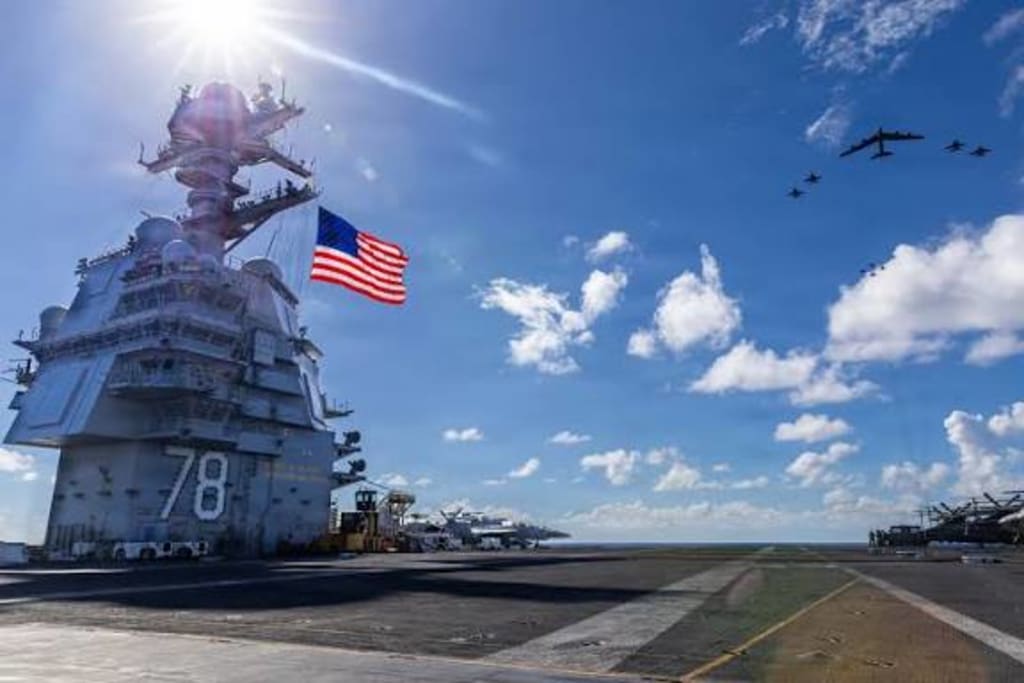
The USS Gerald R. Ford, the most advanced and expensive aircraft carrier in the United States Navy, has found itself in an unexpected battle — not with missiles or warplanes, but with its own plumbing. While deployed off the coast of Venezuela as part of a U.S. naval buildup in the Caribbean, the carrier’s crew has been grappling with persistent issues in the ship’s toilet and waste management system, highlighting how even cutting-edge warships can be undermined by overlooked engineering flaws. �
kaxe.org
A Floating City with a Serious Problem
At a cost of roughly $13 billion, the USS Gerald R. Ford (CVN-78) was intended to represent a leap forward in naval technology, featuring a smaller crew, advanced weapons systems, and cutting-edge automation. But one vital system — the Vacuum Collection, Holding, and Transfer (VCHT) plumbing — has not lived up to expectations. �
wlrn.org
Crew members have reported daily breakdowns of the vacuum-based toilet system, which was adapted from the cruise ship industry to conserve water aboard the carrier. Instead of serving as a technological improvement, the complex system has frequently malfunctioned, causing toilets to go offline for hours and forcing maintenance teams to work around the clock. �
kaxe.org
The Human Cost Below Deck
For a ship with approximately 4,600 sailors, the problem is more than an inconvenience. According to internal emails obtained by NPR, there were days when engineers logged more than 200 breakdowns in just four days, and service personnel were working 19-hour days trying to keep up with repairs. �
kaxe.org
The narrow vacuum pipes are easily clogged — sometimes by as little as torn paper or even a four-foot length of rope mistakenly fed into the system. When a single valve fails in one of the carrier’s ten plumbing zones, all toilets in that zone lose suction, leaving sailors without functioning heads for extended periods. �
wlrn.org
One of the most challenging issues has been calcium build-up within the plumbing, particularly on the ship’s lower decks. This mineral accumulation blocks pipes, necessitating costly cleaning procedures that can only be performed while the carrier is in port. Each acid flush to clear the calcium costs around $400,000, and the ship has undergone the process multiple times since it was first deployed. �
wlrn.org
Design Choices Under Scrutiny
The Ford-class carrier represents a major investment in new technology, and some experts argue that adopting a cruise-inspired waste system on a warship was a misstep. Unlike cruise liners, which make frequent port calls, nuclear aircraft carriers are designed to remain at sea for months at a time. The VCHT system’s water-saving vacuum design may be efficient under certain conditions, but its complexity has made it vulnerable to frequent failures in a high-use military environment. �
kaxe.org
The plumbing woes are not new — similar systems on the older USS George H. W. Bush carrier also experienced issues shortly after installation. The Navy acknowledges these design challenges and plans to upgrade the system during the carrier’s upcoming maintenance period at Norfolk Naval Shipyard in Virginia. Lt. Cmdr. David Carter of Fleet Forces Command told reporters that improvements will help, even though a permanent solution is likely years away. �
cfpublic.org
Operational Impact and Wider Significance
Despite its plumbing challenges, the Navy maintains that the USS Gerald R. Ford’s waste system failures have had “no operational impact” on its mission near Venezuela. The carrier remains a central element of the U.S. naval presence in the region, supporting missions that include countering sanctioned oil shipments and enhancing maritime security. �
cfpublic.org
However, the ongoing issues offer a stark reminder that even the most advanced military tools are only as strong as their weakest components. A ship designed to lead battle groups thousands of miles from home can be brought down to earth — or at least below deck — by plumbing that cannot keep up with daily use. The contrast between cutting-edge combat capability and basic facilities underscores the complexity of modern warship design. �
kaxe.org
Lessons for Military Engineering
The Ford’s plumbing woes invite broader questions about military procurement and engineering priorities. As the U.S. Navy continues to innovate with new classes of ships, aircraft, and autonomous systems, it may need to reassess how new technologies are tested and implemented — especially when they replace longstanding designs that worked reliably in earlier vessels. �
wlrn.org
Meanwhile, sailors aboard the USS Gerald R. Ford continue their mission off Venezuela, carrying out their duties despite frequent bathroom disruptions. Their experience highlights how even everyday systems — toilets, waste pipes, and valves — play a crucial role in the morale, health, and operational endurance of a ship at sea. �
kaxe.org
Conclusion
The plumbing challenges aboard the USS Gerald R. Ford are more than an amusing anecdote; they are a practical illustration of the unforeseen complications that can arise when cutting-edge technology meets the realities of life at sea. As the carrier continues its deployment, and as future ships are designed and built, this unusual headache may serve as a valuable lesson for naval engineers and military planners alike. �
kaxe.org
About the Creator
Fiaz Ahmed Brohi
I am a passionate writer with a love for exploring and creating content on trending topics. Always curious, always sharing stories that engage and inspire.
Keep reading
More stories from Fiaz Ahmed Brohi and writers in The Swamp and other communities.
Ex-Air Commodore Explains Why Pakistan’s JF-17 Excels in Today’s Fighter Jet Market
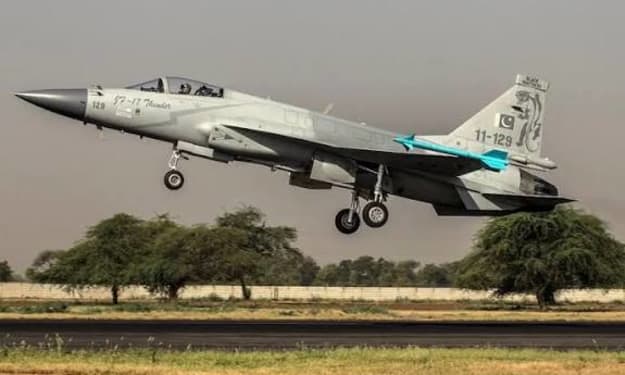
In an era where modern air combat is defined as much by affordability and adaptability as by raw power, Pakistan’s JF-17 Thunder has emerged as one of the most competitive multirole fighter jets in the global market. According to a former Pakistan Air Force (PAF) Air Commodore, the aircraft’s growing appeal lies not in trying to outmatch fifth-generation stealth fighters, but in offering a smart, balanced solution for countries seeking reliable air power without unsustainable costs. Designed for Real-World Needs The JF-17 was conceived with a clear purpose: to meet the operational requirements of air forces that cannot afford expensive Western fighters or are constrained by political and logistical barriers. The ex-Air Commodore explains that many nations do not need ultra-high-end platforms; instead, they require jets that are versatile, easy to maintain, and capable of performing multiple missions effectively. From air defense and ground attack to maritime strike and reconnaissance, the JF-17 is built as a true multirole aircraft. Its design philosophy prioritizes flexibility, allowing air forces to tailor the jet according to their specific security environments. Cost-Effectiveness Without Compromise One of the JF-17’s strongest advantages is its cost-effectiveness. Compared to Western fighters such as the F-16 or Eurofighter Typhoon, the JF-17 costs significantly less to acquire, operate, and maintain. The former Air Commodore highlights that affordability does not mean sacrificing combat capability. Lower lifecycle costs make the JF-17 especially attractive to developing countries that need to modernize their air fleets without placing excessive strain on national budgets. Maintenance requirements are simpler, spare parts are more accessible, and training pipelines are shorter—factors that collectively enhance operational readiness. Modern Avionics and Combat Systems Contrary to outdated perceptions, the JF-17 is far from technologically basic. The latest Block III variant incorporates advanced avionics, including an Active Electronically Scanned Array (AESA) radar, modern electronic warfare systems, and an improved cockpit with a wide-area display and helmet-mounted sight. The ex-Air Commodore notes that these upgrades significantly enhance situational awareness and survivability in contested airspace. AESA radar, in particular, places the JF-17 in a competitive category, enabling better target detection, tracking, and engagement compared to older mechanically scanned systems. Weapons Integration and Operational Flexibility Another key reason for the JF-17’s success is its broad weapons compatibility. The aircraft can carry a wide range of air-to-air, air-to-ground, and anti-ship missiles, including beyond-visual-range (BVR) weapons. This allows operators to adapt the jet for diverse mission profiles without relying on a single supplier. The former Air Commodore emphasizes that this flexibility reduces political dependency. Unlike some Western platforms that come with strict usage and upgrade restrictions, the JF-17 offers greater autonomy in weapons integration, a crucial factor for many countries navigating complex geopolitical realities. Proven in Service, Not Just on Paper Operational credibility is essential in today’s fighter jet market, and the JF-17 has demonstrated its reliability through active service with the Pakistan Air Force. It has participated in numerous exercises and real-world operations, showcasing its effectiveness in both defensive and offensive roles. According to the retired Air Commodore, combat-proven platforms inspire confidence among potential buyers. The JF-17’s consistent performance under demanding conditions reinforces its reputation as a dependable aircraft rather than a purely experimental design. Export Success and Strategic Appeal The JF-17’s export record further underscores its market strength. Countries such as Myanmar and Nigeria have inducted the aircraft, while others have expressed interest. For many air forces, the jet represents a strategic entry point into modern air combat capability without long-term financial or political constraints. The ex-Air Commodore points out that Pakistan’s willingness to offer technology transfer, training, and long-term support makes the JF-17 package even more appealing. This partnership-based approach contrasts with traditional arms deals that often leave buyers dependent and constrained. A Fighter Built for Today’s Realities In a fighter jet market dominated by expensive fifth-generation platforms, the JF-17 occupies a vital middle ground. It does not aim to replace stealth fighters, but it excels as a practical, modern, and affordable solution for nations focused on sovereignty, readiness, and sustainability. As the former Air Commodore concludes, the JF-17’s success lies in understanding what most air forces truly need: a reliable aircraft that delivers modern combat capability without overwhelming costs or political limitations. In today’s complex security environment, that balance makes Pakistan’s JF-17 Thunder not just competitive, but highly relevant.
By Fiaz Ahmed Brohi2 days ago in The Swamp
Many Fiery Remarks, Little Clarity on What’s Next at Security Council Meeting on Iran
When the United Nations Security Council met on January 15, 2026, to discuss the escalating crisis in Iran, it was anything but calm. The chamber was filled with passionate speeches, heated accusations, and urgent warnings, yet by the end of the session, one thing was clear: there was very little clarity on what comes next.
By Aqib Hussain2 days ago in The Swamp



Comments
There are no comments for this story
Be the first to respond and start the conversation.