
Maine Governor’s Stand on Transgender Athletes Sparks National Debate
Maine Governor

The fight over transgender athletes in sports is one of America's hottest conversations these days. Right in the middle of it all stands Maine Governor Janet Mills’s position on transgender inclusion has brought both applause and criticism from all sides. As former President Donald Trump embraces the repeal of Obama-era rules and other conservative leaders work to bar transgender athletes from playing on girls’ and women’s sports teams, Governor Mills’ stand shows a chasm growing wider within U.S. politics. Here’s how things started to roll in Maine, why they’re important now and what Maine’s governor will do on this issue in the years ahead.
What is the Debate About?
The question raised by the debate is simple enough but loaded with implications: Should transgender athletes—transgender girls and women in particular—be allowed to compete on sports teams that conform their gender identity? Advocates for inclusion contend that transgender students have the same rights to participate as anyone else. Detractors, however, argue that athletic competition could be unfair if transgender women are stronger or taller than cisgender women (those whose gender is the same as the sex assigned at birth). Maine has emerged as a key battleground in this fight.
Under Governor Mills, the state has taken a clear stand in favor of transgender rights, including in sports. This contrasts sharply with the direction being taken by states such as Florida or Texas, where new laws forbid transgender athletes from competing on teams aligned with their gender identities.
Who Is Maine Governor Janet Mills?
A Democrat, Janet Mills became Maine’s first female governor in 2019. Known for her progressive policies, she has fought for LGBTQ+ rights, healthcare expansion and environmental protection. Her stance on transgender athletes is in keeping with this broader vision of equality.
In 2023, Mills vetoed a bill that sought to prohibit transgender girls from participating in girls’ school sports. She argued that the proposal was “discriminatory” and would do damage to vulnerable youth. “We should be promoting inclusivity, not exclusion, Mills said. Her decision was hailed by LGBTQ+ advocates but criticized by conservatives, including Trump. Former President
Trump has made it clear that he intends to use the banning of transgender.
Athlete policies as part of his political programme. During rallies and speeches, he called it a way to “protect women’s sports” with bans. Trump praised states which had enacted laws to restrict various things in early 2024. At the same time, he blasted leaders like Mills for "putting woke politics ahead of fairness."
The issue again made headlines when Trump mentioned Maine in a press conference on February 25, 2025, or, more precisely, stated that Governor Mills’ policies are "a disaster for women and girls." This clash between Trump and Mills has been reproduced on a national level, with red and blue states standing diametrically opposed positions toward each other.
For a small state like Maine
The dispute over transgender athletes isn’t just about sports. It’s about morals. Maine takes pride in having long been known for its precocious social policies, from the legalization of same-sex marriage in 2012 to strong anti-discrimination laws. The policy stance adopted by Governor Mills reinforces this identity.
But not everyone agrees. In Maine, parents and athletes say that giving transgender girls a chance to participate could hamper the chances of cisgender girls. “It’s about justice,” said one high school coach, who requested anonymity. “Biological variances cannot be overlooked.”
At the same time, transgender students and their families say exclusion from sports would only isolate an already marginalized group further. “Sports saved my life,” states Alex, a 16-year-old transgender boy from Portland. “By being a part of the squad I felt embraced.”
The Science Behind the Debate
The opposing sides each have their own set of supporting research. Studies on whether transgender women retain any physical advantages after hormone therapy are inconclusive. Some indicate that muscle mass and strength diminish post-transition; other characteristics such as bone density remain unchanged.
The International Olympic Committee (IOC) permits transgender athletes to compete if they maintain specified hormone levels. But different aims are set by rules governing high school sports across the country. According to a state law bill awaiting signature from Governor Mills in Maine, schools are required to give priority in dealing with these questions that concern everyone with an emphasis on participation and subsequently allow the most inclusive practices possible.
How Other States Are Handling It
More than 20 states have enacted laws barring transgender athletes from playing sports. The laws tend to echo national GOP leaders’ talking points, casting the issue as a matter of “protecting women.”
By contrast, states like California and New Jersey have policies that are relatively inclusive as with Maine. Strikingly binary, the situation has turned transgender athletes into a political symbol with little room for any middle ground.
What Supporters of Inclusion Say
Proponents put forth that banning transgender athletes addresses a problem that does not exist. Over the past ten years fewer than five transgender athletes as recognized by the Maine Principals’ Association have competed in high school sports statewide. There has been no authority on rules and none of these athletes had any special advantages. They did not come.
“This is an attempt to spread fear,” said Sarah, a Bangor mother whose child is transgender. “Politicians are just using kids. Generation after generation has been dragged into it now with the same results. Let children play, and let their coaches take care of any concerns.”
Introduction of bans could violate Title IX, the federal law against sex discrimination in schools warn groups like the ACLU and Human Rights Campaign.
What Critics Want
Critics, who include many Republican legislators, want definite rules to bar transgender women from competing against females. Even if few cases have been identified so far, they argue that a lack of guidelines could lead to future difficulties.
“Girls deserve a level playing field. That’s what we’re defending,” says Maine State Rep. Laurel Libby, aRepublican who sponsored the vetoed bill. “We need to take action before it’s too late.”
People criticizing the Governor also say she's not listening to her people. A survey in 2024 showed the split among Maine residents, with 48% in support of restrictions and 46% against.
Effect on Transgender Youth
Many mental health experts are worried that excluding transgender children from sport may lead to even greater levels of depression and suicide. A 2022 Trevor Project survey on the mental health of recruited or drafted soldier who commit suicide has found 58% trans teenagers considered killing themselves in last year.
"Sociocultural sports-related exercise participation is linked to better self-esteem and social connections in general," says Dr. Emily Porter, a Maine-basedPsychologist. "For transgender kids, who are often bullied, losing that outlet could be absolutely devastating."
In Maine Next
Governor Mill’s veto is unlikely to be the last word on the matter. Groups on the political right are pushing for new laws while advocates prepare legal challenges if bans resurface. The matter may also play into the 2026 Maine gubernatorial race, where Mills is widely expected to seek re-election.
For now, Maine’s schools will keep allowing transgender athletes to compete using current antidiscrimination guidelines. Coaches and administrators should work with families and athletes to handle any concerns case by case.
The Broader Picture
The fight over transgender team sports is not just about sports. It touches on larger issues that make up society's definition of what's fair, what's equal and identity itself. As red and blue states drive different policies, maybe the U.S. government will have to come in and settle things. The Supreme Court has not yet pronounced on the matter, but with similar cases in lower courts, maybe a national standard will emerge.
This is a personal question for the governor. "These are kids," she said in an interview last week. "They should grow up feeling respected and a part of things. That's the Maine I believe in."
Summary
Even as national figures like Donald Trump lust for a return to the Rust Belt and play up states' rights over the Affordable Care Act — Maine Governor Janet Mills has made her state the leading one in civil rights for transgender people. Whether her template will stand and be copied for other states remains to be seen. What's eminently clear is that the debate over transgender athlete can hardly be said to be finished. Maine will therefore stay at the center of attention, even when the story changes.
For the time being at least, the message from Maine’s Governor is simple: Let kids play.
About the Creator
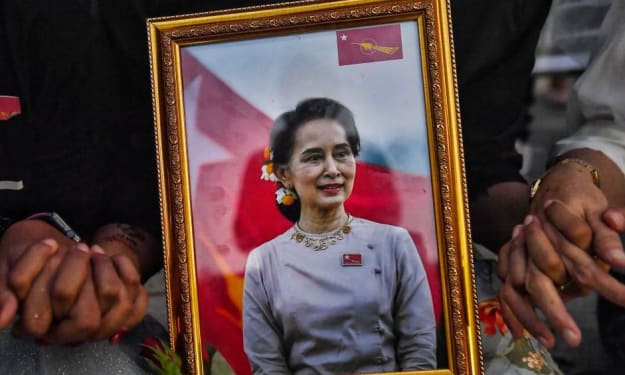
From Behind Bars, Aung San Suu Kyi Casts a Long Shadow Over Myanmar
Aung San Suu Kyi, Myanmar’s former civilian leader and Nobel Peace Prize laureate, continues to influence the nation’s political landscape despite being imprisoned since the February 2021 military coup. Her detention has not only intensified global attention on Myanmar’s political crisis but also shaped the country’s ongoing struggle for democracy, human rights, and international recognition.
By Fiaz Ahmed Brohi3 days ago in The Swamp



Comments (1)
I hated his ignorant treatment of that governor!! He is a bully and hates it if someone stands their ground, especially a woman! Great article with good format to layout the points.